


Navigating Medicare can be complex, particularly when it comes to understanding the Medicare donut hole. This term refers to a coverage gap in Medicare Part D prescription drug plans that historically resulted in higher out-of-pocket costs for beneficiaries. As of 2025, the donut hole has been eliminated and replaced with a spending cap, ensuring your out-of-pocket expenses are limited to $2,000.
Knowing how this change affects your coverage is crucial. You no longer need to worry about skyrocketing costs after reaching a specific spending threshold. Instead, you can enjoy more predictable expenses when managing your prescription medications.
At The Modern Medicare Agency, we understand that each individual’s situation is unique. Our licensed agents are ready to assist you one-on-one, helping you identify the right Medicare packages tailored to your needs without burdening you with unnecessary fees. Having a knowledgeable partner in this process makes all the difference in maximizing your healthcare benefits.
Medicare Donut Hole Explained
The Medicare donut hole, officially known as the coverage gap, is a crucial aspect of Medicare Part D that has evolved over the years. Understanding its definition, historical context, impact on beneficiaries, and the changes brought about by the Affordable Care Act will help you navigate your Medicare options more effectively.
Definition and History of the Donut Hole
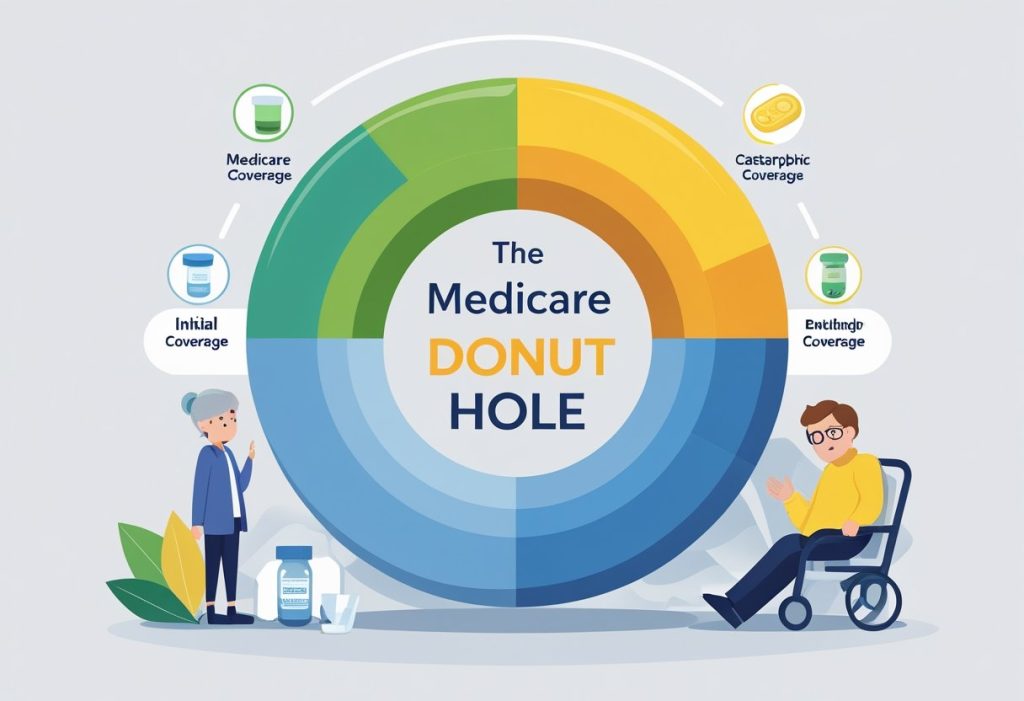
The term “donut hole” refers to a specific phase in Medicare Part D coverage where beneficiaries face increased out-of-pocket costs for prescription medications. Initially implemented in 2006, the coverage gap emerged after beneficiaries exceeded their plan’s initial coverage limit but had not yet reached the catastrophic coverage threshold.
Historically, this gap required beneficiaries to pay a high percentage of their medication costs. By 2020, the implementation of discounts and gradual reductions in the gap began, transforming the burden of this coverage phase. As of 2025, the donut hole has been eliminated entirely, replaced by a spending cap of $2,000 under the Inflation Reduction Act.
How the Coverage Gap Affected Beneficiaries
The Medicare donut hole significantly impacted Part D beneficiaries by increasing their out-of-pocket expenses during the coverage gap. Before the changes, once you reached the initial coverage limit, you were responsible for 100% of your drug costs until reaching the catastrophic coverage threshold.
Many individuals found this financially burdensome, especially those with chronic medical conditions requiring costly medications. This gap in coverage often led beneficiaries to skip doses or forgo necessary medications, jeopardizing their health.
With the implementation of the legislative changes, beneficiaries now experience a more predictable and manageable cost structure, providing relief and allowing for better access to necessary medications.
Role of the Affordable Care Act in Closing the Gap
The Affordable Care Act (ACA) played a significant role in addressing the Medicare donut hole. One of its key provisions aimed at closing the coverage gap by implementing gradual reductions in the beneficiary’s share of prescription drug costs.
Starting in 2011, the ACA introduced discounts on brand-name drugs during the donut hole phase. Over the years, these discounts increased, ultimately paving the way for the full elimination of the donut hole by 2025.
These changes have made a notable difference for Part D beneficiaries, allowing them to save money on prescriptions and ensuring that financial barriers do not compromise their healthcare needs. For personalized assistance with Medicare options, reach out to The Modern Medicare Agency, where our licensed agents will help you find the right plan without the burden of extra fees.
2025 Changes: End of the Donut Hole and New Spending Cap
The Medicare landscape is undergoing significant changes in 2025, particularly with the elimination of the donut hole and the introduction of a new out-of-pocket spending cap. These alterations are geared toward providing greater financial relief for beneficiaries and simplifying the overall structure of Medicare Part D coverage.
Elimination of the Donut Hole in 2025
As of January 1, 2025, the Medicare Part D donut hole will no longer exist. Previously, this coverage gap had required beneficiaries to pay a higher percentage of their medication costs once they reached a certain spending threshold. The new solution eliminates this gap entirely, establishing a more straightforward method for managing prescription drug costs. Under the new system, you will only navigate three phases of coverage, making it easier to predict your out-of-pocket expenses throughout the year.
Introduction of the Out-of-Pocket Cost Cap
A significant aspect of the 2025 changes is the introduction of an out-of-pocket spending cap set at $2,000 annually for covered prescriptions. Once you reach this limit, you will pay no additional costs for your medications for the rest of the year. This cap aims to alleviate the financial pressure on Medicare beneficiaries by ensuring that there is a definitive ceiling on what you could potentially spend out-of-pocket within a given year. This change can significantly benefit those with chronic conditions requiring expensive medications.
Impact of the Inflation Reduction Act
The changes in 2025 stem from the Inflation Reduction Act, which was designed to enhance Medicare benefits while controlling prescription drug prices. The elimination of the donut hole and the new spending cap directly reflect a commitment to making medications more affordable. By placing a limit on costs and removing the coverage gap, beneficiaries like you will experience improved financial predictability. This legislation intends to bridge gaps and ensure that more individuals can access the medications they need without the burden of exorbitant costs.
Prescription Payment Plan Option
To navigate these changes effectively, you may want to explore various Medicare prescription drug plan options available under the updated structure. These plans will operate more transparently, allowing you to take full advantage of the new spending cap and absence of the donut hole. The Modern Medicare Agency can help you identify the packages that best fit your needs, ensuring you understand your options without hidden fees. Licensed agents can provide personalized support, helping you choose a plan that aligns with your budget and medication requirements.
Understanding Medicare Part D Coverage Phases
Medicare Part D consists of several coverage phases that determine how much you pay for prescription drugs. Each phase has distinct features and costs that can significantly impact your out-of-pocket expenses throughout the year.
Deductible Phase Overview
During the deductible phase, you are responsible for paying the full cost of your prescription drugs until you reach the deductible amount set by your specific Part D plan. This deductible can vary from plan to plan, typically ranging from $0 to $505 in 2025.
Be aware that not all drugs may count toward the deductible, and some plans may offer tiers of drugs with varying costs. Understanding your plan’s deductible can help you budget your healthcare expenses effectively.
Initial Coverage Phase Explained
Once you meet your deductible, you enter the initial coverage phase. In this phase, your Part D plan covers a significant portion of your drug costs. You will only pay a copay or coinsurance for each prescription, depending on your plan’s structure.
For 2025, the initial coverage phase lasts until your total drug costs reach $4,660. At this point, you’ll start navigating the coverage gap, also known as the donut hole. Keeping track of these costs during this phase is essential for managing your expenses.
Catastrophic Coverage Phase
If your spending exceeds the initial coverage limit, you will enter the catastrophic coverage phase. In this phase, your costs are significantly reduced. You will typically pay a small copayment or coinsurance for each prescription.
To qualify for catastrophic coverage, you must have out-of-pocket costs that exceed a specified threshold, which is $7,400 in 2025. While you still contribute some payment, Medicare Part D significantly lowers your overall financial burden.
Choosing the right plan is crucial. The Modern Medicare Agency offers personalized assistance. Our licensed agents work with you to find Medicare packages that fit your unique needs without overwhelming costs. You’ll receive one-on-one support to make the best choices for your Medicare insurance.
Drug Costs and Cost-Saving Strategies
Understanding drug costs and the different strategies available can significantly reduce your out-of-pocket expenses. Being informed about various options helps you make smarter choices regarding your prescription drug needs.
Brand-Name and Generic Drugs
Brand-name drugs are often more expensive than their generic counterparts. Generic drugs contain the same active ingredients and are equivalent in dosage and form.
Cost Comparison:
- Brand-name: Typically priced higher due to research and advertising costs.
- Generic: Generally, 30-80% cheaper than brand-name medications.
Choosing generics when available can lead to substantial savings. Always consult with your healthcare provider to ensure a generic alternative is suitable for your treatment.
Manufacturer Discounts and Assistance Programs
Many pharmaceutical companies offer discounts and assistance programs to help patients manage prescription drug costs. These programs often target individuals facing financial hardships.
Key Points:
- Manufacturer Discounts: Short-term savings through coupons or promotional deals can be accessed directly from the manufacturer.
- Assistance Programs: Typically require an application and can offer free or reduced-cost medication based on your income level.
Always check with the drug manufacturer or a licensed agent from The Modern Medicare Agency for guidance on these programs. Our agents provide personalized support to help you navigate available options.
Formularies and Prescription Drug Costs
Understanding your plan’s formulary can significantly impact your prescription drug costs. A formulary is a list of covered medications that your insurance plan agrees to pay for.
Tips for Navigating Formularies:
- Check Tiers: Drugs in different tiers have varying costs. Higher-tier drugs usually cost more.
- Prior Authorization: Some plans may require additional approval for specific medications, which can delay access.
By familiarizing yourself with your plan’s formulary, you can make informed choices to save money. Consult with a licensed agent at The Modern Medicare Agency to find plans that best meet your needs, ensuring that you’re not overspending on essential medications. Our dedicated agents are ready to help you every step of the way.
Medicare Plan Options and Additional Support
Understanding your Medicare plan options is crucial for maximizing your benefits. Various plans provide essential coverage, including additional support programs specifically designed to assist you financially.
Medicare Advantage and Drug Coverage
Medicare Advantage plans offer an alternative to Original Medicare, combining coverage from Parts A and B, and often include Part D prescription drug plans. With these plans, you can receive coordinated care, which makes managing your health simpler.
Your choices in a Medicare Advantage plan might include Health Maintenance Organizations (HMOs) or Preferred Provider Organizations (PPOs). Each has different rules regarding how you see specialists and manage referrals. Look for plans that suit your medical needs while considering their drug coverage options.
The Modern Medicare Agency can help you navigate these plans, ensuring you choose the one that fits your health needs and budget best.
Extra Help Program and Social Security Assistance
The Extra Help Program provides financial assistance for those who qualify, reducing out-of-pocket costs for prescription drugs. This program is available to individuals who meet certain income and resource limits, helping you save significantly on your monthly premiums and deductibles.
Additionally, Social Security can assist you in applying for Extra Help. If you’re struggling with drug costs or understanding your coverage, connecting with a representative can streamline this process. They can clarify your eligibility and guide you through the application.
Choosing The Modern Medicare Agency means you gain personalized support. Our licensed agents are real people who focus on finding Medicare packages tailored to your needs, without hidden fees.
Frequently Asked Questions
Understanding the Medicare donut hole can help you better navigate your prescription drug costs. Below are answers to common questions regarding its structure, costs, recent changes, and options for assistance.
How is the Medicare donut hole structured?
The Medicare donut hole, or coverage gap, is a phase in Medicare Part D plans. It begins after you and your plan have spent a certain amount on covered drugs. Once in the donut hole, you are responsible for a percentage of your medication costs until you reach a specified total out-of-pocket spending limit.
What are the costs associated with the Medicare donut hole?
During the donut hole, you typically pay 25% of the cost for covered prescription medications, in addition to any pharmacy dispensing fees. The percentage may vary by year, following guidelines set by Medicare. It’s crucial to stay updated on these costs to budget effectively for your medications.
What changes have been made to the Medicare donut hole in recent years?
Recent reforms have aimed to simplify Medicare Part D by reducing costs associated with the donut hole. Key changes include the introduction of a spending cap and adjustments to the percentages you pay for medications. These improvements help lessen the financial burden on beneficiaries.
How can one avoid the Medicare donut hole?
To avoid entering the donut hole, you may consider switching to a plan with a different structure or exploring generic options for your medications. Discussing your specific needs with a licensed agent from The Modern Medicare Agency can provide tailored advice and help you find a plan that minimizes your risk.
What assistance is available for those affected by the Medicare donut hole?
Several assistance programs can aid those impacted by the Medicare donut hole. These may include state programs, extra help from Social Security, or special enrollment periods. A representative from The Modern Medicare Agency can help you identify available programs based on your unique situation.
Do all Medicare Part D plans have a coverage gap or donut hole?
Not all Medicare Part D plans have a donut hole, but most do have some form of coverage gap. It’s essential to review your plan’s specific details. The Modern Medicare Agency can help you navigate your options and find a plan that best suits your needs without hidden fees.