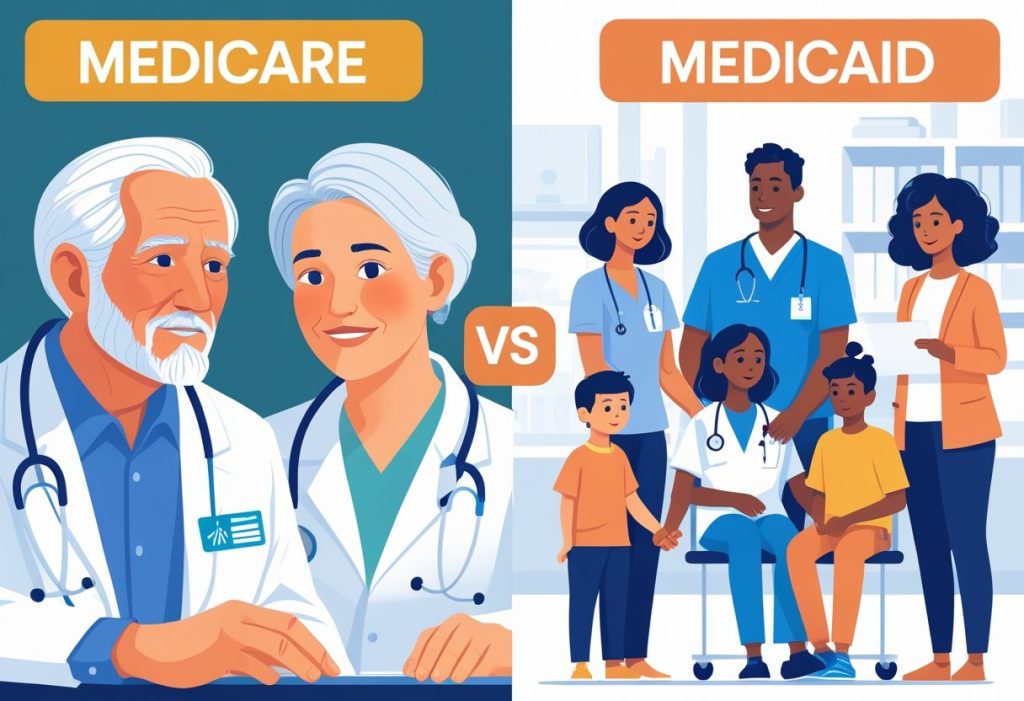
Understanding the difference between Medicare and Medicaid is essential for navigating the complex world of healthcare options. Medicare is a federal program primarily for individuals aged 65 and older, while Medicaid is a joint federal and state program designed to assist low-income individuals of all ages with medical costs. Both programs serve vital roles but cater to different demographic groups and financial situations.
If you’re exploring your healthcare coverage options, it’s important to know how each program works. Medicare covers a broad range of healthcare services for older adults and some younger individuals with specific disabilities. Medicaid, on the other hand, supports those with limited income and resources, providing critical assistance that helps ensure access to necessary medical care.
At The Modern Medicare Agency, we specialize in helping you find the right Medicare insurance solutions tailored to your needs. Our licensed agents are ready to assist you in identifying suitable packages without imposing heavy fees, allowing you to focus on what truly matters—your health and well-being.
Key Differences Between Medicare and Medicaid
Understanding the distinctions between Medicare and Medicaid is essential for individuals assessing their healthcare options. Each program serves different purposes and populations, has separate administration processes, and exhibits unique characteristics in coverage and cost.
Purpose and Target Populations
Medicare is primarily designed for individuals aged 65 and older, as well as certain younger people with disabilities. It offers health insurance coverage across several services, ensuring access to necessary medical care.
In contrast, Medicaid targets low-income individuals and families, including children, pregnant women, and persons with disabilities. State Medicaid programs administer the health coverage, adjusted based on federal guidelines but varying by state. This reflects the intended goal of supporting those most in need of financial assistance.
Program Administration
Medicare is a federally administered program run by the Centers for Medicare & Medicaid Services (CMS). This means that Medicare provides a standardized level of coverage across the entire country.
Medicaid, however, is administered at the state level, allowing flexibility in how states design their programs. Each state has its own set of eligibility criteria and benefits, which can result in significant differences in what is covered. You may find that some services are available in one state’s Medicaid program but absent in another.
Differences in Coverage and Services
Coverage differences between Medicare and Medicaid are notable. Medicare consists of various parts—Part A covers hospital stays, while Part B addresses outpatient services. There are additional options like Part D for prescription drug coverage.
Medicaid generally provides more comprehensive coverage, including hospital stays, doctor visits, preventive care, and long-term services. Additionally, many states offer extra benefits not typically covered by Medicare, such as dental, vision, and transportation services.
This variety allows you to select a plan that fits your personal healthcare needs.
Cost and Out-of-Pocket Expenses
When considering costs, Medicare often requires various out-of-pocket expenses such as premiums, deductibles, coinsurance, and copayments. For instance, you may pay a monthly premium for Part B, along with coinsurance percentages for services.
Medicaid, on the other hand, typically has lower out-of-pocket costs. Many recipients face minimal or no premiums, and copayments are often capped. This affordability makes Medicaid an appealing choice for those on tight budgets.
Understanding your financial obligations under both programs can help you plan accordingly. The Modern Medicare Agency can assist you in navigating your Medicare options, ensuring you find the right package without unnecessary fees. Our licensed agents are available for one-on-one consultations, prioritizing your specific needs and preferences.
Medicare: Coverage, Eligibility, and Plans
Medicare is essential for many individuals needing health insurance as they age or face certain disabilities. This section provides clarity on eligibility requirements, the different Medicare plans available, and additional coverage options to help you navigate your choices effectively.
Medicare Eligibility Requirements
To qualify for Medicare, you must be 65 or older, a citizen or permanent resident of the U.S., and have lived in the country for at least five years. Young individuals under 65 may qualify if they have specific disabilities or conditions, such as amyotrophic lateral sclerosis (ALS) or end-stage renal disease (kidney disease). Additionally, individuals receiving Social Security disability benefits are often automatically eligible after 24 months of receiving those benefits. Certain Medicare beneficiaries may also qualify for both Medicare and Medicaid based on income and other factors.
Original Medicare (Part A and Part B)
Original Medicare consists of Part A and Part B. Part A is known as hospital insurance, covering inpatient hospital stays, skilled nursing facility care, hospice care, and some home health care. Most people do not pay a premium for Part A if they have paid Medicare taxes for at least 10 years.
Part B is medical insurance, covering outpatient services, doctor visits, preventive services, and some home health care. Beneficiaries usually pay a monthly premium for Part B, which is adjusted based on income. Together, these Parts provide broad coverage but may leave some gaps that additional coverage can fill.
Medicare Advantage (Part C) and Medicare Part D
Medicare Advantage, or Part C, offers an alternative to Original Medicare and typically includes coverage for Part A, Part B, and often Part D, which is prescription drug coverage. Advantage plans are provided by private insurance companies and may include additional benefits such as vision and dental care. This option can often simplify your health management through one policy.
Part D specifically addresses prescription drugs and is vital for those requiring ongoing medication. While Original Medicare does not provide drug coverage, you can add this plan to maintain your access to necessary medications at a lower cost.
Medigap Plans and Supplemental Coverage
Medigap plans are supplemental insurance policies that fill the gaps in coverage not addressed by Original Medicare. These policies cover costs like copayments, coinsurance, and deductibles associated with Part A and Part B. It’s important to know that Medigap plans are standardized and labeled from Plan A to Plan N, with each offering different levels of coverage.
The Modern Medicare Agency can assist you in finding the most suitable Medigap plan tailored to your personal health needs. Our licensed agents will guide you through the options available, ensuring you receive the best coverage without incurring unnecessary fees.
Medicaid: Coverage, Eligibility, and State Differences
Understanding Medicaid involves examining eligibility criteria, the scope of coverage available, and the variations among state programs. This program plays a pivotal role in providing essential health care services to individuals with limited income.
Medicaid Eligibility Criteria
To qualify for Medicaid, you typically need to meet specific income and resource limits determined by your state. Generally, eligibility is available for low-income individuals, families, pregnant women, and those with disabilities. Most states expanded access under the Affordable Care Act, allowing more adults to enroll.
For children, coverage extends to families with higher income thresholds. Medicaid eligibility also includes asset tests, which can vary by state. For detailed criteria specific to your situation, it’s beneficial to consult healthcare.gov.
Standard and Optional Medicaid Benefits
Medicaid provides a range of standard benefits, including essential health services such as:
- Nursing home care
- Physical therapy
- Doctor visits
- Preventive care services
- Outpatient care
In addition to standard benefits, states can choose to offer optional services like dental care and prescription drug coverage. This flexibility allows states to tailor their programs according to local needs. Thus, benefits can differ significantly, impacting your specific access to care.
Differences in State Medicaid Programs
Each state administers its Medicaid program, leading to substantial differences in coverage and eligibility. While federal guidelines set the baseline, decisions regarding income limits and covered services can vary widely. For instance, some states provide extensive home health care services, while others may have limited options available.
Furthermore, states can also implement their unique approaches to manage care, such as using managed care organizations or fee-for-service models. This makes it essential for you to understand the specifics of your state’s Medicaid program to maximize your benefits. Assistance from professionals like those at The Modern Medicare Agency can help you navigate these distinctions effectively.
Costs, Enrollment, and Additional Support
Understanding the costs and enrollment aspects of Medicare and Medicaid is crucial for managing your healthcare expenses effectively. Both programs have specific elements regarding premiums, deductibles, copayments, and additional support programs to help you navigate costs.
Medicare and Medicaid Premiums, Deductibles, and Copayments
Medicare typically requires beneficiaries to pay premiums, deductibles, and copayments. For most enrollees, Medicare Part A has no monthly premium if you or your spouse paid Medicare taxes long enough. Part B has a standard monthly premium, which may vary based on income.
Medicaid costs are often minimal or nonexistent for eligible individuals. Enrollees may face no premiums and lower out-of-pocket expenses. Some states impose nominal copayments for certain services, but many Medicaid benefits come at little to no cost. Understanding these costs helps you budget effectively.
Key Component Summary
- Medicare Part A: Usually no premium
- Medicare Part B: Variable premium based on income
- Medicaid: Minimal or no cost for most beneficiaries
Enrollment Processes and Resources
Enrollment for Medicare occurs during specific periods. Initial enrollment begins three months before you turn 65 and extends for three months after. There are also annual open enrollment periods for adjustments to your plan.
Medicaid enrollment varies by state but is typically available year-round for those who qualify. Your state’s health insurance marketplace, like healthcare.gov, provides resources for enrollment assistance and can help determine your eligibility. Additionally, the State Health Insurance Assistance Program (SHIP) offers personalized, local support through licensed counselors.
Programs to Help Cover Costs
Several Medicare Savings Programs (MSP) can assist with costs, such as premiums and deductibles. These programs vary by state and may help reduce your out-of-pocket expenses.
For example, some MSPs can lower your Part B premium or eliminate deductibles altogether if you meet income requirements.
It’s essential to consult with reliable resources, like The Modern Medicare Agency, for personalized guidance. Our licensed agents can assist you in identifying MSPs tailored to your needs, ensuring you get the best options without unnecessary fees.
Special Considerations: Dual Eligibility and Complex Needs
Navigating the landscape of healthcare can be particularly challenging for those who qualify for both Medicare and Medicaid, known as dual eligible beneficiaries. This section addresses essential aspects of dual eligibility, including coordination of benefits, coverage for disabilities and chronic conditions, and additional services like nursing home and long-term care.
Dual Eligible Beneficiaries and Coordination of Benefits
For recipients of both Medicare and Medicaid, understanding how to coordinate benefits is crucial. Medicare usually serves as the primary payer, covering hospital stays, outpatient care, and skilled nursing facilities. Medicaid steps in to cover out-of-pocket expenses, such as copayments, deductibles, and some services not included in Medicare.
Beneficiaries often face complexities when managing different billing systems and coverage limits. It is vital to communicate with providers to ensure that both Medicare and Medicaid cover eligible expenses. This helps prevent any gaps in care or unexpected bills. If you find the process daunting, consider assistance from agencies like The Modern Medicare Agency, where licensed agents guide you through the specific coverage benefits available to you.
Coverage for Disabilities and Chronic Conditions
Dual eligible individuals often contend with conditions such as ALS or kidney disease, which significantly affect their healthcare needs. Medicare provides essential coverage for treatments related to these conditions, including hospital visits and necessary therapies.
Medicaid expands on this by offering additional support for long-term care services and home healthcare, which can be crucial for those with profound disabilities. Many state Medicaid programs have special provisions for individuals with chronic conditions, making it essential to explore these options to ensure you receive comprehensive care tailored to your situation.
By working with experts from The Modern Medicare Agency, you can gain insights into specialized plans that suit your health requirements and minimize costs.
Additional Services: Nursing Home and Long-Term Care
For dual eligible beneficiaries, accessing nursing home care is another critical area of concern. Medicare provides limited coverage for skilled nursing care, typically after a hospital stay. However, it does not cover long-term nursing home care. This is where Medicaid plays a significant role.
Medicaid generally covers long-term care services, including extended stays at nursing facilities, helping you manage costs effectively. The eligibility for these services can vary by state and depends on financial criteria. It’s essential to stay informed about the rules surrounding nursing home care under your state Medicaid program.
Engaging with The Modern Medicare Agency allows you to understand better the nuances of these services, ensuring you have the support you need for long-term care arrangements. Our agents provide tailored service without the burden of hidden fees, making the process easier for you and your loved ones.
Frequently Asked Questions
Navigating Medicare and Medicaid can be challenging. Understanding eligibility, coverage differences, and costs associated with each program can help clarify what you need to know.
Who is eligible for both Medicare and Medicaid?
Individuals typically eligible for both programs include seniors aged 65 or older and younger individuals with disabilities. Each program has its specific guidelines, so it’s important to review your qualifications for both.
Can you have Medicare and Medicaid at the same time?
Yes, you can have both Medicare and Medicaid simultaneously. This is known as being “dual eligible.” Having both can provide you with more comprehensive coverage for your healthcare needs.
What are the primary differences in coverage between Medicare and Medicaid?
Medicare primarily covers hospital stays, outpatient care, and preventive services. Medicaid, on the other hand, may cover additional services such as long-term care and personal care assistance that Medicare does not.
Is Medicaid coverage free or are there associated costs?
Medicaid coverage is often free for those who qualify, although some states may impose nominal fees or copayments for certain services. It’s essential to check your specific state’s Medicaid guidelines.
How do Medicare and Medicaid differ for senior citizens?
For seniors, Medicare typically provides health insurance focused on hospital and medical services. Medicaid can offer more extensive benefits, including long-term care, which may be crucial for aging populations.
Which program is generally more beneficial, Medicare or Medicaid?
The suitability of Medicare or Medicaid varies based on individual circumstances. If you require comprehensive health services or have low income, Medicaid might be more beneficial. The Modern Medicare Agency is here to help you assess your specific needs to find the best coverage options. Our licensed agents work one-on-one with you to identify Medicare packages that meet your needs without extra fees.