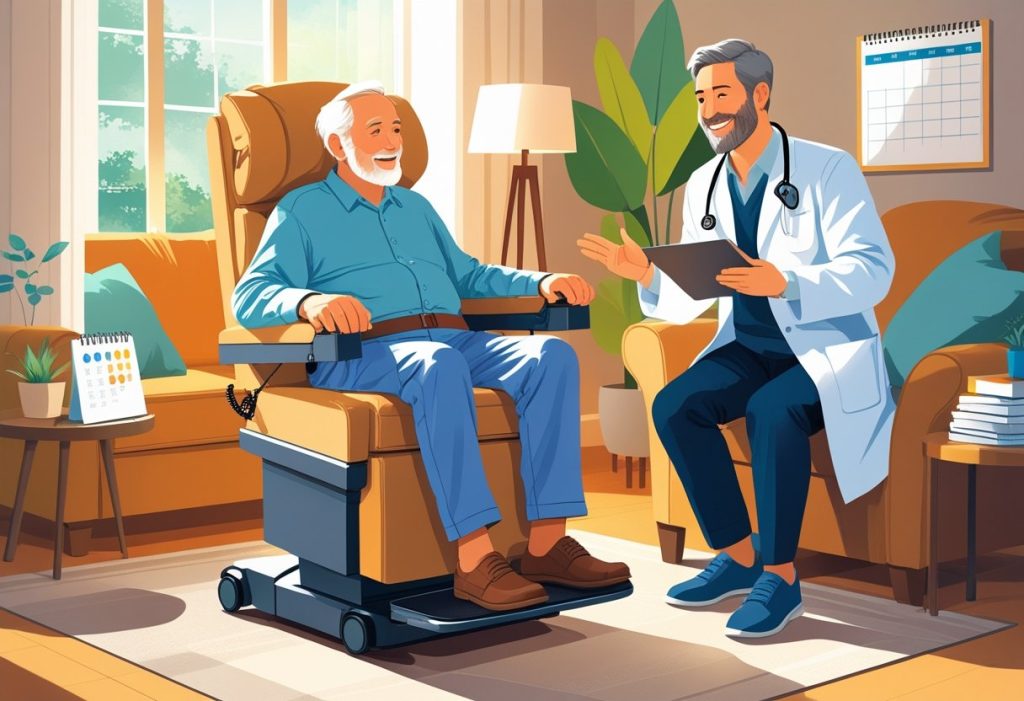
As you consider options for mobility assistance at home, understanding Medicare’s coverage can be crucial. Medicare Part B does cover some costs related to lift chairs for seniors, specifically for the lifting mechanism, provided it is deemed medically necessary by your doctor. This means that if you have a lift chair recommended to you, there are financial avenues available to help alleviate the expense.
Navigating the Medicare system can be complex, but you don’t have to do it alone. At The Modern Medicare Agency, our licensed agents are readily available to discuss your specific needs in a personalized manner. They will help you identify Medicare packages that fit your criteria without incurring additional fees, ensuring you receive the support you need without breaking the bank.
Understanding your options can empower you to make informed decisions regarding your mobility and overall health. With accurate information and dedicated support from The Modern Medicare Agency, you can confidently explore solutions that best meet your needs.
What Is a Lift Chair and Who Benefits
Lift chairs are specially designed recliners equipped with a lift mechanism to assist individuals in standing up from a seated position. These chairs are particularly beneficial for seniors or individuals with mobility challenges, including those with arthritis. Understanding how lift chairs work and their advantages can help you make an informed decision about their necessity.
How Lift Chairs Work
Lift chairs operate using an electric motor that helps elevate the seat to a standing position. This mechanism allows you to transition smoothly from sitting to standing without straining your body.
Most models offer reclining options, enabling users to adjust their position for added comfort. When the chair is activated, it tilts forward, reducing the physical effort you would otherwise need to rise.
This feature is especially advantageous for those recovering from surgery or dealing with chronic conditions that limit mobility.
Mobility Challenges and Arthritis Support
Mobility challenges affect many seniors, leading to difficulties in performing everyday tasks. Conditions like arthritis can diminish strength and flexibility, making simple movements painful or exhausting.
Lift chairs provide essential support by enabling you to sit and rise independently. The lifting mechanism reduces strain on your joints, particularly the knees and hips.
Moreover, using a lift chair can promote a safer living environment. Fewer falls or accidents can result from the ease of getting in and out of the chair correctly. This aspect can significantly enhance your overall quality of life, fostering independence as you age.
Differences Between Lift Chairs, Recliners, and Patient Lifts
While lift chairs, recliners, and patient lifts all serve to assist individuals, they have distinct functions.
Lift chairs feature a lifting mechanism specifically designed to help individuals stand up. Recliners allow you to lean back but do not provide lift assistance.
On the other hand, patient lifts are more specialized devices used primarily for transferring individuals from one location to another, such as from a bed to a wheelchair.
Understanding these differences helps you choose the most suitable option based on your specific needs and preferences. Prioritizing your comfort and mobility can greatly impact your day-to-day life.
For Medicare-related questions, consider consulting with The Modern Medicare Agency. Our licensed agents can identify Medicare packages tailored to your unique specifications, ensuring you receive the best care possible without incurring unnecessary costs.
Medicare Coverage for Lift Chairs
Understanding Medicare’s coverage for lift chairs can help you make informed decisions regarding your mobility needs. This section will highlight the components covered by Medicare, the specifics of Medicare Part B and durable medical equipment (DME), and the requirements for medical necessity.
Components Covered by Medicare
Medicare primarily covers the lift mechanism of the chair, which is considered durable medical equipment (DME). This motorized lifting mechanism assists users in sitting down and standing up safely.
It’s important to note that Medicare does not cover the entire chair. You will be responsible for the costs associated with the chair itself, including materials and design. Only the lift mechanism portion qualifies for coverage.
Before making a purchase, ensure that the lift mechanism is prescribed by a doctor to qualify for coverage. Working with Medicare-approved suppliers is essential for proper billing of the lift mechanism.
Medicare Part B and Durable Medical Equipment
Medicare Part B covers various types of durable medical equipment, including lift chairs. When you get a doctor’s prescription for a motorized lifting mechanism, it should meet the qualifications established by Medicare.
The coverage typically pays for 80% of the costs related to the lift mechanism, leaving you with the remaining 20%. This percentage applies after meeting your Part B deductible, so it’s wise to consider timing your purchase accordingly.
Choosing a supplier that participates in Medicare ensures that the billing process will be smooth and that you receive the correct benefit amounts.
Medical Necessity Requirements
For Medicare to authorize coverage for a lift chair, you must demonstrate medical necessity. Your doctor needs to certify that the lift chair is essential for your mobility needs, particularly if you have health conditions that impair your ability to stand or sit safely.
Documentation is crucial in this process. Your doctor should provide a detailed report outlining your situation and the need for a lift mechanism. Without this evidence, Medicare may deny your claim, resulting in out-of-pocket expenses.
Choosing the right Medicare plan is important. At The Modern Medicare Agency, our licensed agents specialize in matching you with plans tailored to your needs without extra fees. Speaking with a real person ensures you understand all your options for Medicare coverage, including lift chairs.
How to Qualify and Apply for Medicare Lift Chair Coverage
To qualify for Medicare lift chair coverage, you need to follow specific steps involving medical documentation and selecting the right suppliers. Understanding these processes will help you navigate your options effectively.
Prescription and Medical Documentation Process
The first step in obtaining Medicare coverage for a lift chair is securing a prescription from a Medicare-approved physician. This prescription must state that the lift chair is medically necessary for your condition.
You will also need a Certificate of Medical Necessity (CMN). This document confirms that the lift chair is essential for your mobility and safety. Your doctor usually handles the completion of the CMN, but you should ensure that it includes all required details.
Once you have your prescription and CMN, submit these documents to Medicare. They will review your information to determine your eligibility for coverage. Be prepared to provide additional medical records if requested.
Choosing Medicare-Approved DME Suppliers
After you have your prescription and necessary documents, the next step is to find a Medicare-approved Durable Medical Equipment (DME) supplier. It’s crucial to choose a supplier that is enrolled in Medicare.
Make sure the lift chair you want meets Medicare’s specifications. The lifting mechanism must be the only covered part; the chair’s fabric and cushions are not included in the coverage.
When selecting a supplier, consider working with The Modern Medicare Agency. Our licensed agents are knowledgeable and can help you identify Medicare packages that align with your needs without unnecessary fees. Speaking to a real person one-on-one can simplify the process, ensuring you get the right coverage.
Costs, Out-of-Pocket Expenses, and Supplemental Insurance Options
Understanding the financial responsibilities associated with Medicare coverage is crucial when considering lift chairs. Various factors, including cost-sharing, deductibles, and supplemental insurance options can significantly impact your out-of-pocket expenses.
Medicare Cost-Sharing and Deductibles
With Medicare, you incur certain out-of-pocket costs, including premiums, deductibles, and coinsurance. For durable medical equipment like lift chairs, Medicare usually covers 80% of the approved amount after you meet the deductible.
Your standard Part B deductible for 2025 is $226. This means you pay this amount before Medicare starts contributing. The remaining 20% becomes your responsibility, potentially leading to significant out-of-pocket expenses, especially if additional services or equipment are needed.
Role of Medigap in Reducing Expenses
Medigap, or Medicare Supplement Insurance, can be invaluable in managing your costs. These plans cover various out-of-pocket expenses not fully covered by Medicare, including copayments and coinsurance.
By enrolling in a Medigap plan, you can reduce your financial burden significantly. Depending on the policy you choose, some plans cover the Medicare Part B deductible as well. This can make a substantial difference in your annual healthcare costs, providing peace of mind that you have financial assistance paired with your Medicare coverage.
Overview of Medicare Advantage Plans
Medicare Advantage Plans, or Part C, offer a different pathway for your Medicare coverage. These plans are offered by private insurers and typically provide additional benefits beyond Original Medicare.
Many Medicare Advantage Plans include an out-of-pocket maximum, protecting you from excessive costs in a given year. They may also cover services like vision and dental, which Original Medicare does not. Depending on your plan, a lift chair might be covered under additional benefits, thus offering further financial relief.
The Modern Medicare Agency is here to help you navigate these options. Our licensed agents provide personalized assistance to identify plans tailored to your needs without extra fees.
Additional Financial Assistance and Alternative Funding Sources
Navigating the costs associated with lift chairs can be challenging. Fortunately, various options exist to help alleviate financial burdens and make these assistive devices more accessible.
State and Local Aid Programs
Many states operate assistance programs to help seniors obtain necessary medical equipment, including lift chairs. Medicaid is a significant resource for those who qualify, as it may cover part of the costs associated with the purchase of a lift chair. Coverage varies by state, so you will need to check your local Medicaid program’s specific guidelines.
Additionally, some local agencies provide support through grants or low-interest loans. It’s essential to directly contact your state’s Department of Health or Aging Services to inquire about available state aid programs. They can guide you on eligibility criteria, application processes, and any necessary documentation required.
Non-Profit and Charitable Support
Non-profit organizations often play a critical role in assisting seniors with mobility challenges. Organizations like the National Council on Aging provide resources to find local non-profits that offer financial support for medical equipment. These can include lift chairs, particularly for individuals with limited financial means.
Additionally, some churches and community centers may have funds allocated to assist seniors in need. Research local non-profits in your area or ask your healthcare provider for recommendations. Many organizations appreciate donations of used medical equipment, which can sometimes be refurbished and offered to those most in need.
Exploring Payment Plans and Credit Options
If financial assistance from programs and non-profits is insufficient, consider exploring payment plans or credit options. Many retailers offer financing solutions for healthcare equipment, including lift chairs. These allow you to make smaller, manageable payments over time instead of a lump-sum payment.
It’s crucial to read the terms and conditions carefully. Look for competitive interest rates and flexible repayment options that suit your budget. Some credit options may be available through your bank or credit union, which might offer favorable rates for medical expenses.
For personalized help navigating these options, The Modern Medicare Agency is here for you. Our licensed agents will work one-on-one to identify Medicare packages that suit your needs without hidden fees, making the process straightforward and stress-free.
Frequently Asked Questions
Understanding Medicare coverage for lift chairs involves several specific criteria and processes. Here are the key points to clarify common questions seniors may have regarding eligibility, costs, and procedures.
What is the eligibility criteria for a senior to get a lift chair covered by Medicare?
To qualify for Medicare coverage for a lift chair, you must have a doctor’s prescription stating that the chair is medically necessary. This typically involves demonstrating a condition that impairs your mobility. Your healthcare provider will need to provide documentation that supports your need for the lifting mechanism.
Can seniors receive a free lift chair, and if so, under what conditions?
While you may not receive a completely free lift chair, Medicare does cover 80% of the cost of the lift mechanism if it’s deemed medically necessary. You will be responsible for the Part B deductible and any additional costs not covered by Medicare. The device must meet specific criteria outlined by Medicare.
What types of lift chairs qualify for Medicare coverage?
Only lift chairs that include a motorized lifting mechanism are eligible for coverage. The chair must be classified as durable medical equipment (DME) and must be prescribed by a healthcare professional. Standard recliners without a lifting feature do not qualify.
How can seniors find Medicare-approved lift chair dealers?
To locate Medicare-approved lift chair dealers, you can utilize the Medicare website or contact The Modern Medicare Agency for assistance. Our licensed agents can guide you through the process and recommend dealers who meet Medicare’s criteria, ensuring a smoother transaction.
Are there specific forms or procedures to follow when applying for a Medicare-covered lift chair?
Yes, you will need to follow specific procedures to apply for coverage. This usually includes obtaining a prescription from your doctor and submitting it, along with any necessary documentation, to your Medicare provider. It’s advisable to keep a record of all forms and correspondence.
Is there a list of lift chair models or brands that Medicare specifically covers?
Medicare does not provide a specific list of approved models or brands. Coverage generally applies to the mechanism rather than the chair itself. Therefore, it’s important to confirm with your supplier that the lift chair meets Medicare’s criteria, ensuring you receive the coverage you need.
If you have further questions about your options, The Modern Medicare Agency is here to help. Our licensed agents provide personalized assistance to help you navigate your Medicare options without any hidden fees.