



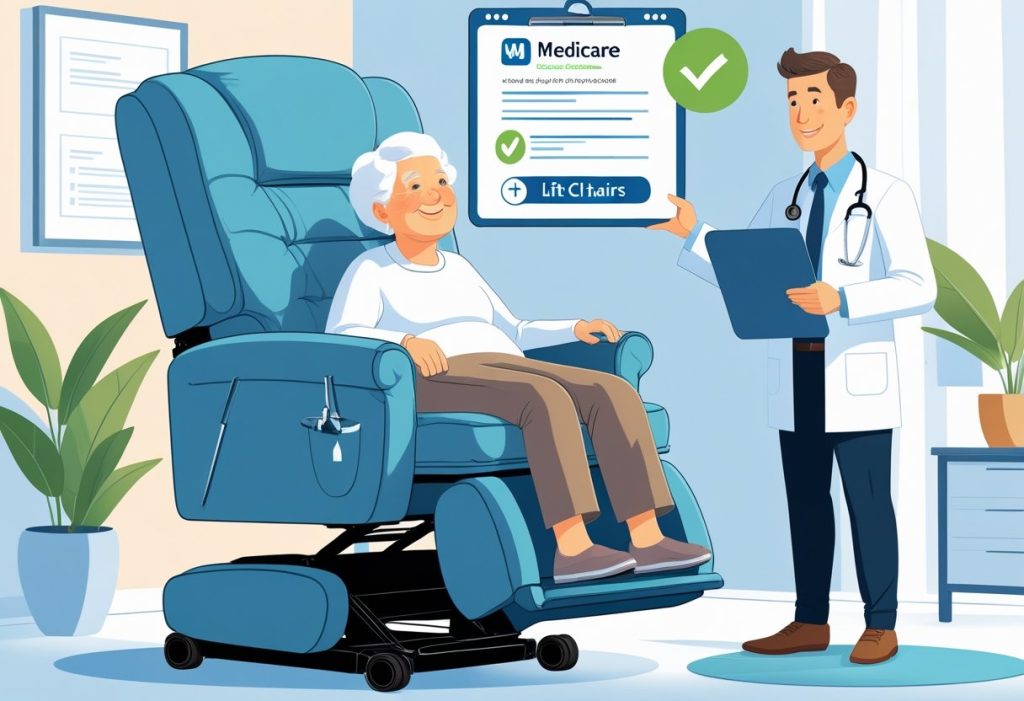
You may get partial Medicare help for a lift chair, but coverage is limited. Medicare Part B can pay for the lift mechanism as durable medical equipment, not the whole chair, and you’ll usually pay 20% of the approved amount after meeting your deductible.
You’ll learn which Medicare parts apply, what costs to expect, how to apply, and common exclusions so you can plan ahead. Our licensed agents speak with you one-on-one, match Medicare options to your needs, and work to keep fees low while helping you pursue the right coverage for a lift chair.
Medicare Coverage for Lift Chairs
Medicare can help pay for the lift mechanism on certain chairs if you meet specific rules. You will still likely pay part of the cost, and you must use a Medicare-enrolled supplier and have a doctor’s order.
Overview of Lift Chair Coverage
Medicare Part B treats the lift mechanism that helps you stand as durable medical equipment (DME). Medicare pays for the motor and lifting device itself, not the upholstery, cushions, or the chair shell.
You may get the motor purchased and installed if a Medicare-enrolled supplier bills Medicare. You must meet Part B rules, including using a supplier that accepts assignment.
Medicare typically pays 80% of the approved amount after you meet the Part B deductible. You pay the remaining 20% unless your plan or extra coverage lowers that cost.
Eligibility Criteria for Coverage
You need a doctor’s written order stating a medical need for the lift mechanism. The order should explain how the lift device improves mobility or safety and why a standard chair won’t meet your needs.
Keep the order current and specific. You must be enrolled in Medicare Part B.
The supplier must be enrolled in Medicare and must bill Medicare directly. If you have a Medicare Advantage plan, follow the plan’s prior authorization and supplier rules.
Types of Lift Chairs Covered
Medicare covers the lift mechanism classified as DME. This includes motors and control systems that raise and tilt you to a standing position.
Simple seat lifts that attach to a regular chair may qualify if prescribed and supplied by a Medicare provider. Medicare does not cover non-DME parts such as fabric, framing, or premium features like massage or heat.
If you want the full chair, expect to pay the parts not covered. Ask the supplier for a written estimate that separates the motor cost from the chair cost.
Required Prescription and Documentation
Your doctor must provide a signed prescription or detailed order. The paperwork should list diagnosis, functional limitations, and how the lift device meets medical needs.
Include documentation of prior treatments tried and why they failed. The supplier will need the doctor’s order and may ask for additional medical records.
Keep copies of the prescription, supplier estimate, and any submitted claims. If Medicare denies coverage, ask the supplier about appeals and contact The Modern Medicare Agency for help from licensed agents.
Medicare Parts and Lift Chairs
Medicare can help pay for the motorized lifting mechanism of a lift chair, but not the full chair. Coverage depends on medical need, who provides the device, and which part of Medicare you use.
Medicare Part B and Durable Medical Equipment
Medicare Part B covers certain durable medical equipment (DME), and the lift mechanism can qualify if a doctor documents a medical need. To get coverage, your doctor must write a prescription stating the specific medical reason, and a Medicare-enrolled DME supplier must provide the lifting device.
Medicare pays 80% of the approved amount for the lift mechanism after you meet your Part B deductible. You will pay the remaining 20% coinsurance plus any cost for the chair’s non-covered parts, like upholstery and the frame.
Keep records: prescription, supplier invoice, and any medical notes that support the need are key if Medicare reviews the claim.
Role of Medicare Advantage Plans
Medicare Advantage (Part C) plans must cover at least what Original Medicare covers, but many offer extra benefits and different rules for DME. If you have a Medicare Advantage plan, check whether the plan requires prior authorization or uses a specific vendor network for lift chairs.
Some plans may cover more of the chair or offer allowances for home medical equipment, but you still often must show medical necessity. You may also face different copays or prior authorization steps.
Call your plan or speak with an agent at The Modern Medicare Agency to confirm coverage rules, supplier lists, and any cost-sharing before you buy or rent a lift chair.
Medicare Supplement Plans and Out-of-Pocket Costs
Medicare Supplement (Medigap) plans only work with Original Medicare and can reduce what you pay out of pocket for Part B-covered items. A Medigap policy may pay the 20% coinsurance for the lift mechanism that Medicare leaves you responsible for.
It will not cover the chair’s non-covered parts. If you have a Medicare Advantage plan instead, Medigap does not apply.
To lower costs, compare Medigap coverage levels and premiums with help from The Modern Medicare Agency. Our licensed agents talk with you one-on-one, find plans that match your needs, and explain any fees so you avoid surprises.
Cost and Reimbursement Process
Medicare can cover the motorized lifting device inside a lift chair but not the furniture portion. You should expect some out-of-pocket cost, a specific claims process, and rules about which suppliers can bill Medicare.
Out-of-Pocket Expenses for Beneficiaries
Medicare Part B covers the lifting mechanism as durable medical equipment (DME) when your doctor documents medical necessity. Medicare typically pays 80% of the approved amount after you meet the Part B deductible.
You pay the remaining 20% coinsurance plus any difference if the supplier charges more than Medicare’s approved price. Costs you may face include the Part B deductible and 20% coinsurance.
You may also pay any extra charge if the supplier’s price exceeds Medicare’s approved amount, and the full cost of the chair’s furniture portion, which Medicare does not cover. If you have a Medicare Advantage plan, your cost-sharing can differ.
Call your plan or speak with The Modern Medicare Agency to get exact figures for your situation. Our licensed agents explain cost details and check benefits with no extra fees.
Reimbursement Steps and Timeline
Start with a doctor’s written order showing why the lift device is medically necessary. The supplier must submit documentation and a claim to Medicare or your Medicare Advantage plan.
If Medicare approves the device, payment for the lifting mechanism goes to the supplier or to you if you paid up front and then filed for reimbursement. Typical timeline:
- Doctor’s order: 1–2 weeks depending on scheduling.
- Supplier submission and Medicare processing: 2–8 weeks on average.
- Reimbursement to you (if applicable): several weeks after approval.
Keep copies of the doctor’s order, supplier invoice, and claim forms. The Modern Medicare Agency helps you track paperwork and follow up on claims.
Participating Suppliers and Assignment
Medicare only pays if the supplier accepts Medicare assignment or is enrolled in Medicare. Assignment means the supplier agrees to accept Medicare’s approved amount as full payment for the covered DME portion.
If a supplier does not accept assignment, you may face higher costs and more paperwork. How to choose a supplier:
- Verify the supplier accepts Medicare assignment.
- Confirm the supplier is enrolled in Medicare and experienced with lift chairs.
- Ask for a clear written estimate separating the lift mechanism from the chair furniture cost.
The Modern Medicare Agency can connect you with suppliers who accept Medicare assignment. Our licensed agents talk with suppliers for you, confirm enrollment, and explain any extra charges.
How to Apply for a Lift Chair Through Medicare
You will need a doctor’s written order, a Medicare-enrolled supplier, and proper claim paperwork. Follow each step carefully to increase the chance Medicare pays for the lift mechanism portion.
Steps to Obtain a Doctor’s Prescription
Ask your doctor for a written prescription that states the lift mechanism is medically necessary to help you stand from a seated position. The order should include your diagnosis, how the chair helps your condition, and specific device details (for example, “seat-lift mechanism for single-motor lift chair”).
Bring relevant medical records to the visit, such as notes on mobility limits, fall history, and physical therapy reports. These documents support medical necessity and speed approval.
Request the exact language Medicare requires and a dated signature. If your doctor is unsure, contact The Modern Medicare Agency for guidance.
Filing a Medicare Claim
Buy or rent the lift chair from a Medicare-approved supplier and make sure the supplier bills Part B for the lift mechanism, not the chair upholstery. Keep copies of the prescription, supplier invoice, and any delivery or setup forms.
File the claim through the supplier or submit it yourself to your Medicare Administrative Contractor (MAC) if the supplier won’t bill Medicare. Include itemized bills that separate the lift mechanism cost from the furniture portion.
Track the claim status and note your Part B deductible and 20% coinsurance responsibility. If Medicare denies payment, request a written denial, check for missing signatures or documentation, and file an appeal within the stated deadlines.
The Modern Medicare Agency can help you prepare documentation and guide you through appeals at no extra fee.
Verifying Supplier Credentials
Confirm the supplier is enrolled in Medicare before you buy. Ask for their Medicare supplier number and verify it through Medicare’s supplier lookup or by calling Medicare.
A non-enrolled supplier may refuse to bill Medicare, leaving you to pay the lift mechanism cost yourself. Ask the supplier for an itemized quote that separates the lift mechanism from the chair.
Verify they will submit all required documentation, accept assignment (so Medicare pays the supplier directly), and provide a written warranty and return policy. Work with The Modern Medicare Agency if you want help vetting suppliers.
Our licensed agents speak with you one-on-one to confirm supplier credentials and ensure billing practices match Medicare rules.
Exclusions and Coverage Limitations
Medicare can pay for the lift mechanism in certain cases, but many parts and situations are not covered. Know which costs you will likely pay, what features are considered non-medical, and how to handle denials.
What Medicare Does Not Cover
Medicare Part B does not pay for the furniture portion of a lift chair. You will usually pay the full price for the upholstery, frame, and non-lifting parts of the chair.
Medicare only covers the medically necessary lifting mechanism when your doctor prescribes it and a Medicare-approved DME supplier bills the lift device separately. Medicare also won’t cover cosmetic changes, custom fabrics, or additions that aren’t essential to the lifting function.
If your Part B deductible or coinsurance applies, you pay those costs too. Medicare Advantage plans vary, so check your plan for different rules or extra benefits.
Non-Medical Lift Chair Features
Features that improve comfort but do not help with medical function are not covered. Examples include decorative upholstery, cup holders, massage or heat options, basic recliner styling, and upgraded wood or metal accents.
If a feature does not directly assist with standing, sitting, or mobility, expect to pay for it. Ask the supplier for an itemized quote separating the lift mechanism from the chair portion.
That makes it clear what Medicare may consider DME. Keep receipts and supplier documentation showing the DME model numbers and the physician’s prescription in case Medicare requests proof.
Denial of Coverage and Appeal Options
If Medicare denies coverage, you’ll get a written notice explaining the reason. Common reasons include lack of medical necessity documentation, supplier billing errors, or the supplier not being enrolled in Medicare.
Act quickly—appeals have strict deadlines, often 120 days from the date on the denial notice. You can request redetermination, file an appeal, and submit additional medical records or a supporting letter from your doctor.
Work with The Modern Medicare Agency: our licensed agents help you gather paperwork, contact suppliers, and submit appeals. You can speak 1-on-1 with a real agent who matches Medicare plans to your needs without hidden fees.
Alternative Funding Sources for Lift Chairs
You can look beyond Medicare to find help paying for a lift chair. Options include state programs, veteran benefits, and nonprofit grants that may cover part or all of the cost.
Medicaid Coverage
Medicaid rules vary by state, but many programs will cover the motorized lift mechanism as durable medical equipment when a doctor documents medical necessity. You must apply through your state’s Medicaid office and submit a prescription plus clinical notes that show difficulty standing or transferring.
Coverage often depends on whether you get services through a fee-for-service plan or a Medicaid-managed care plan. Prior authorization is common, so expect a waiting period and paperwork.
If Medicaid approves, it may pay for the lift mechanism only, not the full chair, and you might still owe a portion if your state uses co-pays or rental-to-own policies.
Veterans Affairs Benefits
If you are a veteran, the Department of Veterans Affairs (VA) can help pay for mobility aids, including lift chairs or their lift mechanisms, when they’re medically necessary. Start by contacting your local VA medical center or your VA case manager to request an evaluation and prescription.
The VA often covers equipment through its prosthetics and sensory aids programs. Eligibility depends on service-connected conditions, income, and VA enrollment priority group.
Expect the VA to require medical records and may coordinate delivery through approved suppliers. Your VA contact will explain any cost-share rules and how long coverage lasts.
Charitable Organizations and Assistance Programs
Nonprofit groups, local community programs, and disease-specific foundations sometimes offer grants or vouchers for mobility equipment. Examples include disability advocacy groups, aging services agencies, and disease charities that fund adaptive equipment for eligible applicants.
Application processes differ: many require proof of need, income limits, and medical documentation. Call local Area Agencies on Aging, United Way, or social services to find programs near you.
If you want help navigating options or comparing Medicare plans that may lower your out-of-pocket costs, The Modern Medicare Agency can connect you with licensed agents. Our agents are real people who speak with you one-on-one, match Medicare packages to your needs, and work without extra fees that break the bank.
Key Considerations When Choosing a Lift Chair
Think about your medical needs first. Your doctor must prescribe the lift mechanism for Medicare to consider coverage.
Ask if the motorized lift, not the whole chair, qualifies as durable medical equipment. Measure your space and body size.
Chairs come in different widths and weight limits. Choose one that fits your room and supports your weight safely.
Check features that matter to you. Basic lift and recline functions often meet Medicare rules.
You may want extra padding, heat, or massage, but Medicare usually does not pay for those extras. Confirm supplier and documentation requirements.
Medicare covers the lifting device only if the supplier is enrolled in Medicare and you have a proper written order. Keep all paperwork to avoid denied claims.
Compare costs and payment options. Medicare Part B generally pays a portion for the lift mechanism after deductibles and coinsurance.
You may still owe for the chair fabric and accessories. Work with trusted help.
The Modern Medicare Agency connects you with licensed agents you can speak to one-on-one. They help you navigate coverage rules.
Recent Changes and Updates in Medicare Policy
Medicare has clarified coverage for lift chairs. As of recent updates, Medicare Part B may cover the motorized lift mechanism if a doctor prescribes it as durable medical equipment (DME).
The chair’s fabric, cushions, and accessories are not covered. The rules now stress medical necessity and documentation.
You need a written prescription and records showing you cannot safely rise from a regular chair because of a medical condition. Providers must be enrolled in Medicare to bill for the covered lifting device.
Out-of-pocket costs remain a factor. Medicare typically pays a portion of the DME cost, so you may still owe coinsurance and deductible amounts.
Full-priced lift chairs often cost more than the portion Medicare covers. You can get help choosing plans and navigating paperwork from The Modern Medicare Agency.
Our licensed agents are real people you can speak with one on one. They review your medical needs and find Medicare packages that match your situation without hidden fees.
Ask The Modern Medicare Agency to check provider enrollment, confirm what part of the lift device qualifies as DME, and estimate your expected costs. They guide you through getting a prescription, completing required documentation, and submitting claims to reduce delays.
Frequently Asked Questions
Medicare Part B can pay for the lift mechanism of a lift chair when certain rules are met. You will likely pay part of the cost, need a doctor’s order, and must use a supplier enrolled in Medicare.
What are the requirements for Medicare to cover a lift chair?
Medicare covers the lift mechanism as durable medical equipment (DME), not the whole chair. You must have a written order from your doctor stating medical necessity.
You must meet Medicare’s DME rules, use a Medicare-enrolled supplier, and meet any deductible and coinsurance rules. The supplier will bill Medicare for the covered portion of the lift mechanism.
How does one qualify for a lift chair through Medicare?
Your doctor must document that you cannot stand or sit without help or that you have a condition requiring a lift device. The doctor’s note must support that the lift mechanism treats a medical need.
You must be enrolled in Medicare Part B and have any Part B deductible met before Medicare pays. Expect to pay 20% of the approved DME amount unless you have supplemental coverage.
Which types of lift chairs are eligible for Medicare reimbursement?
Medicare only recognizes the motorized lifting mechanism as eligible DME. Simple recliner features, upholstery, and decorative parts are not covered.
If the chair’s lifting device is sold separately or identified clearly by the supplier, Medicare can apply coverage to that part. Chairs with medically unnecessary features will not have those parts reimbursed.
What is the procedure for obtaining a Medicare-covered lift chair?
Get a written order from your doctor that states medical necessity. Then choose a supplier enrolled in Medicare and request documentation showing the cost split between the lift mechanism and the furniture parts.
The supplier submits the claim to Medicare after you accept the equipment. You pay any Part B deductible and your 20% coinsurance for the approved DME portion.
Are there specific medical diagnoses that entitle patients to a Medicare-covered lift chair?
Medicare does not list a fixed set of diagnoses. Common qualifying conditions include severe arthritis, stroke with weakness, Parkinson’s disease, or conditions that prevent safe standing or sitting.
Your doctor must tie your diagnosis to the need for a lift mechanism and show that the device will help with mobility or safety.
What steps should be taken to find a Medicare-approved lift chair dealer?
Confirm the supplier is enrolled in Medicare before buying. Ask for the supplier’s Medicare supplier number and check enrollment status if you want extra certainty.
Work with licensed Medicare agents from The Modern Medicare Agency. Our agents are real people you can speak with one‑on‑one.
They find Medicare packages that match your needs and explain costs clearly. There are no extra fees that break the bank.