
Supplemental dental insurance for Medicare is a separate insurance product that covers routine and major dental care that Original Medicare and Medigap plans do not pay for. Routine dental services like cleanings, fillings, and dentures are explicitly excluded from Original Medicare under Section 1862(a)(12). That exclusion leaves a real financial gap for millions of seniors. Whether you are turning 65 or already enrolled, understanding your Medicare dental coverage options is the first step toward protecting your teeth and your wallet.
What is supplemental dental insurance with Medicare?
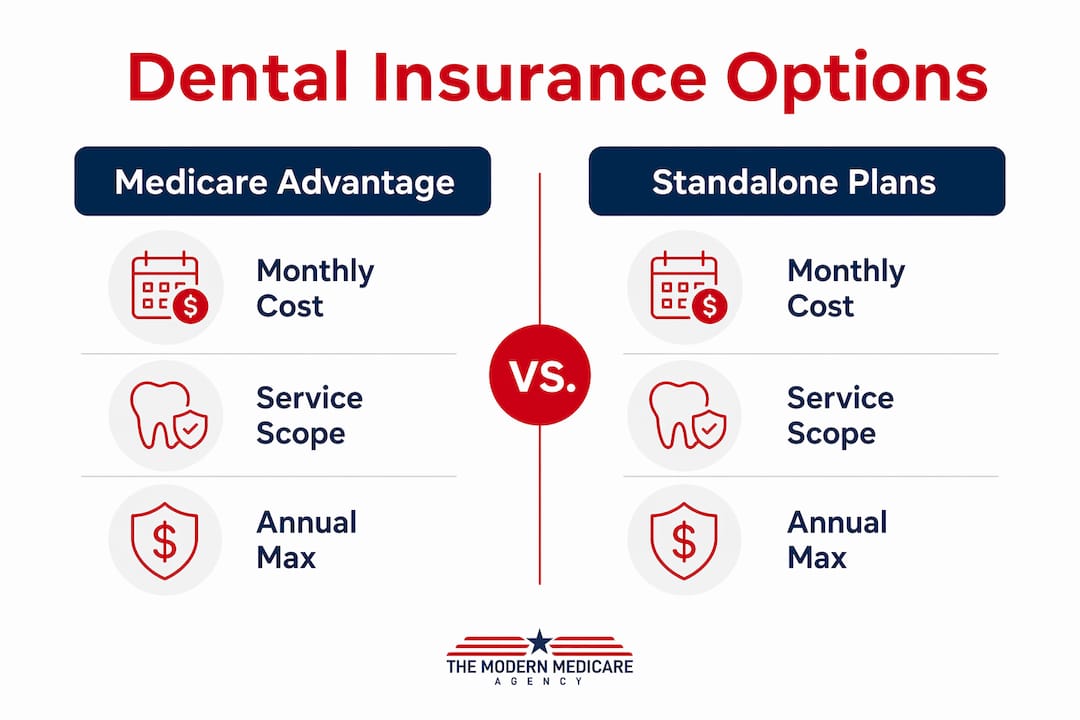
Supplemental dental insurance with Medicare refers to any dental coverage added on top of Original Medicare to pay for services Medicare refuses to cover. The term is informal. The industry recognizes two main product categories that fill this role: Medicare Advantage plans with built-in dental benefits, and standalone dental insurance policies purchased separately.
Original Medicare is divided into Part A (hospital) and Part B (outpatient medical). Neither Part A nor Part B covers routine dental such as annual cleanings, X-rays, fillings, crowns, bridges, or dentures. The only exception is when dental care is medically necessary and directly tied to another covered procedure. For example, Medicare may cover dental surgery required to prepare a patient for a covered organ transplant. That exception is narrow and rarely applies to everyday dental needs.

Medigap, also called Medicare Supplement insurance, does not solve this problem. No standardized Medigap plan includes routine dental coverage because Medigap is designed only to cover cost-sharing for services Original Medicare already covers. Since Medicare excludes routine dental, Medigap has nothing to supplement on that front. This is the single most common misconception Paulbinsurance agents encounter when speaking with new Medicare enrollees.
The practical result is that seniors face two realistic paths to dental coverage: enrolling in a Medicare Advantage plan that includes dental benefits, or buying a standalone supplemental dental plan alongside Original Medicare and Medigap.
What does Original Medicare actually cover for dental?
Original Medicare covers almost nothing in the dental category. The list of excluded services is long and includes the procedures most people need most often.
Services Original Medicare does not cover:
- Routine cleanings and exams
- Dental X-rays
- Fillings and extractions
- Crowns, bridges, and dentures
- Root canals
- Periodontal (gum) treatment
- Dental implants
Dental coverage is waived only when services are inextricably linked to another Medicare-covered procedure. This is a strict legal standard, not a general allowance for dental care related to health conditions. A patient with heart disease, for instance, does not automatically qualify for Medicare-covered dental cleanings, even though oral health and cardiovascular health are connected.
Medigap cannot fill dental coverage gaps because it is structured to cover cost-sharing for Original Medicare benefits only. Since routine dental is excluded from Medicare entirely, Medigap has no dental costs to share.
The gap is significant in dollar terms. A single crown can cost $1,000 to $1,700 out of pocket. Dentures can run $1,500 to $3,500 per arch. Without supplemental dental coverage, these costs fall entirely on the patient. Understanding what Medicare excludes is the foundation for making a smart coverage decision.
How do Medicare Advantage plans provide dental benefits?
Medicare Advantage (Part C) plans are offered by private insurers approved by Medicare. They replace Original Medicare and often include extra benefits, with dental being one of the most common additions. About 94% of Medicare Advantage plans included dental benefits in 2026, making them the most widely available source of dental coverage for Medicare beneficiaries.
The catch is variability. Not all dental benefits are equal, and the differences between plans can be dramatic. Here is what typically varies:
- Coverage tier: Some plans cover only preventive care (cleanings, X-rays, exams). Others include basic services (fillings, extractions) and major services (crowns, dentures, implants).
- Annual maximum: Many plans cap dental benefits at $1,000 per year. Some offer $2,000 or more. A few premium plans go higher, but those are not the norm.
- Cost-sharing: Copays and coinsurance rates differ by plan and by service category. Preventive care is often covered at 100%, while major work may require 50% coinsurance.
- Network restrictions: Most Medicare Advantage dental benefits require you to use in-network dentists. Going out of network often means paying full price.
- Coordination of benefits: If you have both Medicare Advantage dental and a standalone plan, claims must be submitted first to Medicare Advantage and then to the secondary plan for any remaining balance.
Pro Tip: Before enrolling in any Medicare Advantage plan, download the Evidence of Coverage document and search specifically for the dental section. The Summary of Benefits gives you a snapshot, but the Evidence of Coverage contains the exact rules, exclusions, and network requirements that determine what you actually receive.
For a deeper look at how Medicare Advantage dental benefits are structured, the dental plans for Medicare recipients guide at Paulbinsurance walks through the key variables plan by plan.
What is standalone supplemental dental insurance for seniors?
Standalone supplemental dental insurance is a private dental policy purchased separately from Medicare, Medicare Advantage, or Medigap. It is the option most seniors on Original Medicare plus Medigap use to get dental coverage. Standalone plans cover services Original Medicare and Medigap do not, with benefit levels ranging from preventive-only to full major dental work.
Here is how standalone plan coverage is typically structured:
- Preventive care: Cleanings, exams, and X-rays are usually covered at 80% to 100% with no waiting period.
- Basic services: Fillings and simple extractions are covered at 70% to 80% after a short waiting period (often 3 to 6 months).
- Major services: Crowns, bridges, dentures, and root canals are covered at 50% after a longer waiting period (often 6 to 12 months).
- Implants: Some plans include implants; many do not. Always verify this specifically.
Premiums for standalone plans average $360 per year for preventive coverage, which works out to about $30 per month. Plans that include major dental work run $35 to $80 per month. That pricing range means you can find a plan that fits a fixed retirement income, but you need to match the premium to the actual services you expect to use.
| Coverage level | Typical monthly premium | Services included |
|---|---|---|
| Preventive only | $20 to $35 | Cleanings, exams, X-rays |
| Preventive and basic | $30 to $50 | Above plus fillings, extractions |
| Preventive, basic, and major | $45 to $80 | Above plus crowns, dentures, root canals |
Pro Tip: If you already have a Medicare Advantage plan with dental benefits, a standalone plan can layer on top to cover costs above the annual cap. Coordinate carefully. Submit the Medicare Advantage claim first, then submit the remaining balance to the standalone plan.
For seniors who want to keep Original Medicare and Medigap for broader provider access, standalone dental and vision plans are the practical path to dental coverage.
How to compare and choose the best supplemental dental plan
Choosing the right supplemental dental coverage requires comparing more than just the monthly premium. Focus on deductibles, copays, coinsurance, annual maximums, and network availability rather than leading with price. A $25 monthly premium plan that caps benefits at $500 per year may cost you far more than a $55 plan with a $2,000 annual maximum if you need a crown or dentures.
Work through these questions before you enroll:
- What dental care do you actually need? If you have healthy teeth and need only cleanings and X-rays, a preventive plan is sufficient. If you have existing dental issues or expect major work, you need a plan that covers basic and major services.
- Is your current dentist in the plan network? Network restrictions are the most common source of frustration for seniors after enrollment. Verify your dentist’s participation before you sign up.
- What is the annual maximum? A $1,000 cap sounds reasonable until you need two crowns in one year. Look for plans with maximums of $1,500 or higher if you have significant dental needs.
- What are the waiting periods? Most plans impose waiting periods for basic and major services. If you need a crown now, a plan with a 12-month waiting period for major work will not help you this year.
- Can you switch plans? Medicare Advantage plans can be changed during the Annual Enrollment Period (October 15 to December 7). Standalone dental plans can often be changed at any time, but new waiting periods may apply.
| Comparison factor | Why it matters |
|---|---|
| Annual maximum | Determines your real benefit ceiling for the year |
| Waiting periods | Affects when you can use major benefits |
| Network restrictions | Controls which dentists you can see at covered rates |
| Coinsurance on major work | Sets your share of the cost for crowns and dentures |
| Premium vs. expected use | Determines whether the plan pays for itself |
Reviewing the Evidence of Coverage is non-negotiable before enrollment. The Summary of Benefits is a marketing document. The Evidence of Coverage is the legal contract. Read the dental section word for word.
Seniors in specific markets, like Long Island, can also find region-specific guidance on dental insurance for Medicare seniors that accounts for local plan availability and dentist networks.
Key takeaways
Seniors on Medicare need a separate dental product because Original Medicare and Medigap both exclude routine dental care by design.
| Point | Details |
|---|---|
| Medicare excludes routine dental | Cleanings, fillings, crowns, and dentures are not covered by Original Medicare or Medigap. |
| Two main coverage paths exist | Medicare Advantage with dental benefits or a standalone supplemental dental plan are the practical options. |
| Annual maximums matter most | A plan’s benefit cap determines real value more than the monthly premium does. |
| Waiting periods affect timing | Major dental services often require 6 to 12 months of enrollment before benefits apply. |
| Read the Evidence of Coverage | Plan documents contain the actual rules; the Summary of Benefits is only a summary. |
What I have learned after nearly two decades of helping seniors with dental coverage
After helping Medicare consumers since 2007, the pattern I see most often is this: seniors assume Medigap covers dental, discover it does not, and then scramble to find coverage after they already need a procedure. That scramble is expensive. Waiting periods mean the plan you buy today may not cover the crown you need next month.
Many seniors mistakenly assume Medicare Supplement plans cover dental. I understand why. Medigap fills gaps in Medicare, so it seems logical that dental gaps would be included. But the structure of the law does not work that way. Medigap can only supplement what Medicare covers, and Medicare covers almost no dental care.
My honest advice: do not wait until you have a dental problem to think about this. If you are on Original Medicare with a Medigap plan and you have no dental coverage, you are one crown away from a $1,500 out-of-pocket bill. A standalone plan at $40 to $60 per month is a reasonable hedge against that risk. If you are considering Medicare Advantage, verify the dental benefit details before you switch, not after. The 94% of plans that include dental benefits do not all include the same dental benefits. Some cover only two cleanings per year and nothing else.
Budget for dental as part of your total retirement health cost picture. Examining premiums, deductibles, coinsurance, and annual maximums together gives you the real cost of a plan. A plan that looks cheap on the premium line can be very expensive when you factor in what it does not cover.
— Paul
Get personalized help finding the right dental coverage

Sorting through Medicare dental coverage options on your own takes time, and the wrong choice can leave you with unexpected bills. At Paulbinsurance, Paul Barrett and the team of independent agents have been helping seniors find the right supplemental coverage since 2007. Whether you need a standalone dental plan, want to compare Medicare Advantage options with dental benefits, or are starting Medicare for the first time, the team works with multiple carriers to find coverage that fits your actual dental needs and budget. Start with the Medicare guide for seniors to build your foundation, then reach out for a no-pressure consultation.
FAQ
Does Medicare cover routine dental care?
No. Original Medicare excludes routine dental including cleanings, fillings, crowns, and dentures. Coverage applies only when dental care is medically necessary and directly linked to another covered Medicare procedure.
Does Medigap cover dental?
No. No standardized Medigap plan includes dental coverage because Medigap only covers cost-sharing for services Original Medicare covers, and routine dental is excluded from Medicare entirely.
How much does standalone supplemental dental insurance cost?
Standalone dental plans for Medicare beneficiaries typically cost $20 to $80 per month depending on coverage level. Preventive-only plans run on the lower end; plans covering major work like crowns and dentures cost more.
Can I have both Medicare Advantage dental and a standalone dental plan?
Yes. You can layer a standalone dental plan on top of Medicare Advantage dental benefits to cover costs above the annual cap. Submit claims to Medicare Advantage first, then submit remaining balances to the standalone plan.
When can I enroll in or change a Medicare Advantage plan with dental?
Medicare Advantage plans can be changed during the Annual Enrollment Period, which runs from October 15 to December 7 each year. Changes take effect January 1 of the following year. Standalone dental plans can often be purchased at any time, though waiting periods for major services will apply.