
Medicare coverage denial is a formal refusal by Medicare to pay for a healthcare service or claim. Getting that denial notice in the mail feels alarming, but every Medicare beneficiary holds federally protected appeal rights through a structured, multi-level process. Medicare coverage denial explained simply means: Medicare said no, but you can fight back. The most common denial reasons include medical necessity disputes, administrative errors, and coverage exclusions. Knowing why your claim was denied is the first step toward reversing it.
What are the most common reasons Medicare denies coverage?

Medical necessity denials are the leading cause of Medicare coverage refusals. Medicare deems a service “not medically necessary” when it believes the treatment does not meet its clinical criteria for your condition. This type of denial is also the most reversible, because the right physician documentation can directly address the policy criteria used to deny you.
Beyond medical necessity, several other denial categories trip up beneficiaries regularly:
- Coverage exclusions and frequency limits. Medicare does not cover every service. Routine dental, vision, and hearing care are excluded from Original Medicare. Some covered services also have annual frequency limits, such as certain screenings or physical therapy visits.
- Incorrect billing codes. Administrative errors like wrong procedure codes, invalid National Provider Identifiers (NPIs), or missing signatures cause a large share of claim rejections. These are often fixable by resubmitting a corrected claim.
- Prior authorization failures. Medicare Advantage plans require prior authorization for many procedures. In 2024, Medicare Advantage denied 4.1 million prior-authorization requests. That number shows just how common this problem is for people enrolled in Advantage plans.
- Provider enrollment issues. If your provider is not enrolled in Medicare or used an incorrect billing number, Medicare will deny the claim regardless of whether the service was medically appropriate.
- Insufficient documentation. Missing chart notes, unsigned orders, or incomplete records give Medicare a technical reason to deny payment even when the service itself was covered.
Pro Tip: When you receive a denial notice, read the specific reason code carefully. Each denial reason points to a different fix, and addressing the wrong issue wastes time you may not have before your appeal deadline.
How does the Medicare appeals process work for coverage denials?
The Medicare appeals process has five distinct levels. Each level escalates the review to a higher authority, and each has its own deadline and requirements.
- Redetermination. You file with your Medicare Administrative Contractor (MAC) for Original Medicare, or directly with your Medicare Advantage plan. The deadline is 120 days from the denial notice for Original Medicare, and often 60–65 days for Medicare Advantage plans.
- Reconsideration. An Independent Review Entity (IRE) reviews the case. For Original Medicare, this is a separate contractor from the MAC. For Medicare Advantage, as of may 2026, C2C Innovative Solutions handles new Part C IRE appeals, replacing the previous entity.
- Administrative Law Judge (ALJ) hearing. You can request a hearing before an ALJ if the amount in controversy meets the minimum threshold.
- Medicare Appeals Council review. The Council reviews ALJ decisions. This level is handled within the Department of Health and Human Services.
- Federal district court. The final level. For 2026, the amount in controversy required to reach federal court is $1,960. Claims below that amount cannot escalate to this level.
The table below summarizes the key differences between Original Medicare and Medicare Advantage appeals at the first two levels.
| Appeal level | Original Medicare | Medicare Advantage |
|---|---|---|
| Level 1: Redetermination | Filed with your MAC | Filed with your plan |
| Level 2: Reconsideration | Filed with an IRE | Filed with C2C Innovative Solutions (as of may 2026) |
| Initial deadline | 120 days from denial | Often 60–65 days from denial |
| Who handles it | Medicare Administrative Contractors | The plan, then IRE |
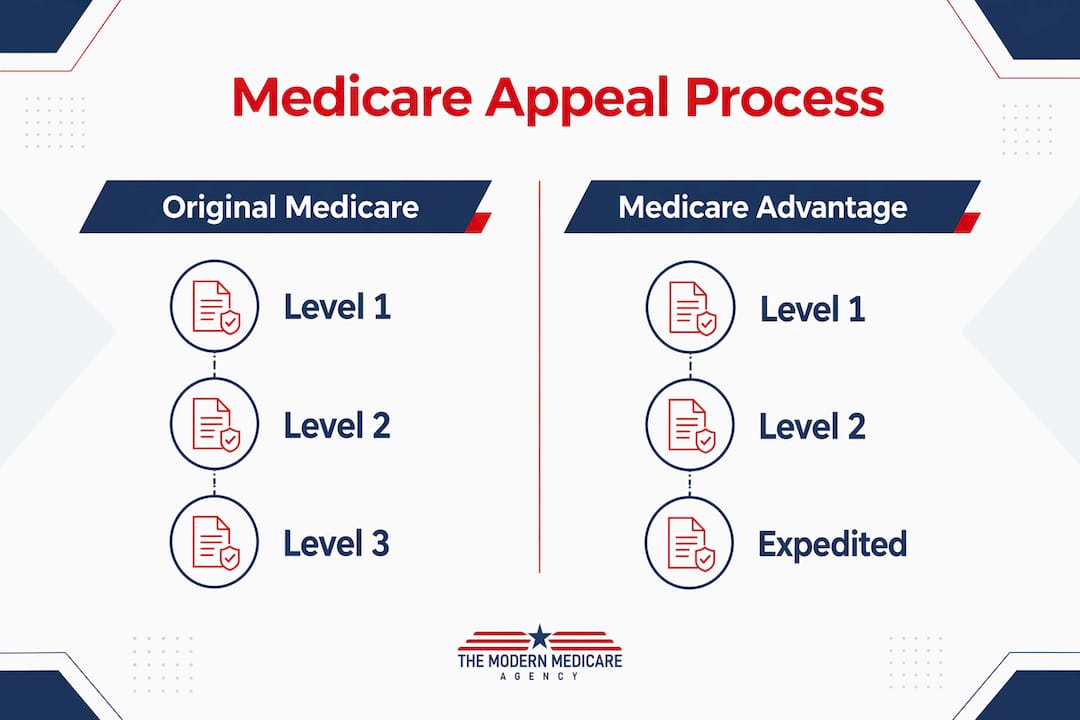
Medicare Advantage appeals follow a faster but stricter timeline than Original Medicare appeals. Missing the shorter Advantage deadline is a common and costly mistake.
Pro Tip: Request an expedited appeal if your health is at risk. Both Original Medicare and Medicare Advantage plans must respond to expedited requests within 72 hours, compared to the standard 30-day window.
What evidence and documentation strengthen a Medicare appeal?
Strong documentation is what separates a successful appeal from a failed one. Most Medicare denial appeals are overturned when the submitted evidence directly addresses the specific coverage policy used in the denial. Generic letters and incomplete records rarely move the needle.
The most persuasive evidence you can submit includes:
- A detailed physician letter. Your treating doctor should write a letter explaining, in clinical terms, why the service was medically necessary for your specific condition. Vague statements like “patient needs this treatment” are not enough. The letter must connect your diagnosis to the Medicare coverage criteria. A physician letter with clear clinical rationale is consistently the most persuasive document in any Medicare appeal.
- Relevant medical records. Include diagnostic test results, treatment history, and chart notes that support the necessity claim. Pull records that directly correspond to the dates of service in question.
- Medicare National Coverage Determinations (NCDs) and Local Coverage Determinations (LCDs). These are the official Medicare policies that define when a service is covered. Citing the specific NCD or LCD that supports your case shows the reviewer exactly where Medicare’s own rules back you up.
- Evidence of Coverage for Medicare Advantage appeals. Your plan’s Evidence of Coverage document outlines what is covered and under what conditions. Reference it directly in your appeal letter.
- Peer-reviewed clinical guidelines. If your physician’s letter references published clinical guidelines from organizations like the American College of Cardiology or the American Diabetes Association, it adds independent medical authority to your case.
Pro Tip: Write the appeal deadline date on your calendar the same day you receive the denial notice. Do not wait until you have gathered all your evidence to check the deadline. Start the clock immediately.
How do timelines and deadlines affect your appeal rights?
Deadlines in the Medicare appeals process are not flexible. Missing an appeal deadline forfeits your right to continue appealing, with very limited exceptions for good cause. This is the single most common reason people lose appeals they could have won.
Key deadlines to track in 2026:
- Original Medicare redetermination: 120 days from the date on your Medicare Summary Notice (MSN) or denial letter.
- Medicare Advantage redetermination: Typically 60 days from the denial notice. Some plans allow 65 days. Check your plan documents.
- ALJ hearing request: 60 days from the IRE reconsideration decision.
- Federal court filing: 60 days from the Medicare Appeals Council decision, and only if the amount in controversy reaches $1,960 for 2026.
The $1,960 threshold for federal judicial review matters because it excludes many individual claim denials from the highest appeal level. If your denied claim is worth less than that amount, your appeal options stop at the Medicare Appeals Council. Knowing this early helps you decide how much time and effort to invest at each level.
Practical tracking steps that prevent missed deadlines:
- Keep a dedicated folder, physical or digital, for all denial notices and appeal correspondence.
- Write the filing deadline on the denial notice itself the day you receive it.
- Set a calendar reminder at least two weeks before each deadline to allow time for document gathering.
- Send all appeal filings by certified mail or through your plan’s secure portal to create a timestamped record.
For a step-by-step walkthrough of what to do after a denial, the 2026 denial action guide at Paulbinsurance covers each stage in plain language.
Key Takeaways
Medicare coverage denial is reversible in most cases when you file on time and submit evidence that directly addresses the specific policy used to deny your claim.
| Point | Details |
|---|---|
| Denial is not final | Every Medicare beneficiary has federally protected rights to appeal through five levels of review. |
| Medical necessity is the top reason | Most denials cite lack of medical necessity, which a strong physician letter can directly counter. |
| Deadlines are strict | Original Medicare allows 120 days; Medicare Advantage often allows only 60–65 days to file. |
| Match evidence to policy | Citing the specific NCD or LCD that supports your case dramatically improves appeal outcomes. |
| Federal court has a cost floor | Only claims exceeding $1,960 in 2026 can escalate to federal district court review. |
What I’ve learned after 17 years of helping Medicare beneficiaries
The single biggest mistake I see people make is accepting the first denial as the final answer. It is not. The majority of appeals yield full or partial reversals when documented correctly, yet most people never file one. That gap between what beneficiaries are entitled to and what they actually pursue is something I have spent my career trying to close.
The second mistake is submitting a weak appeal. Sending in a one-page letter saying “I disagree with this denial” accomplishes nothing. The reviewer needs to see that your physician’s clinical rationale maps directly to Medicare’s own coverage criteria. When those two things align, the denial often falls apart.
Deadlines are unforgiving, and I cannot stress that enough. I have seen people lose winnable appeals simply because they waited too long to start. The day you get that denial notice is the day your clock starts. Do not wait for your doctor’s office to call you back before you mark that deadline.
One thing most articles do not tell you: direct communication between your treating physician and the Medicare reviewer can sometimes resolve a dispute faster than a formal written appeal. Not every plan allows this, but it is worth asking. Your doctor explaining the clinical picture in real time carries weight that paperwork alone sometimes cannot.
Stay persistent. Appealing is your right, and the cost savings when you win are real.
— Paul
How Paulbinsurance helps you navigate Medicare coverage and appeals
Getting a denial notice is stressful, but you do not have to figure out the next steps alone. Paulbinsurance has been helping Medicare consumers since 2007, and our team of independent agents specializes in exactly these situations.

Whether you are enrolled in Original Medicare or trying to understand how your Medicare Advantage plan handles denials and appeals, we can walk you through your options in plain language. We believe you make better decisions when you understand what you are dealing with. Reach out to Paulbinsurance today and get the clarity you need to move forward with confidence.
FAQ
What does Medicare coverage denial mean?
Medicare coverage denial is a formal refusal by Medicare to pay for a specific healthcare service or claim. You have the right to appeal any denial through a structured, multi-level federal process.
How long do I have to appeal a Medicare denial?
Original Medicare gives you 120 days from the denial notice to file a redetermination. Medicare Advantage plans typically require you to appeal within 60–65 days, so check your plan documents immediately.
What is the most common reason Medicare denies a claim?
Medical necessity is the leading denial reason. Medicare concludes the service does not meet its clinical criteria for your condition, but a detailed physician letter can often overturn this decision.
Can I appeal a Medicare Advantage denial differently than Original Medicare?
Yes. Medicare Advantage appeals start with the plan itself, while Original Medicare appeals go to a Medicare Administrative Contractor. The entities involved and the deadlines differ between the two.
What happens if I miss my Medicare appeal deadline?
Missing the deadline typically ends your right to appeal at that level, with very limited exceptions. Send all filings by certified mail and track every deadline from the day you receive your denial notice.