




How a hospital indemnity plan fills Medicare gaps
Medicare covers a lot. But it does not cover everything, and the gaps it leaves can cost you thousands of dollars in a single hospital stay. A hospital indemnity plan is a supplemental insurance policy that pays you a fixed cash benefit when you are admitted to a hospital, typically a set dollar amount per day of confinement or per admission. That cash goes directly to you, not to the hospital, and you spend it however the bills demand.
Here is the part most people miss. Both Medicare Advantage and Medicare Supplement plans leave real out-of-pocket exposure. Medicare Advantage plans charge copays and coinsurance for each hospital day. Medicare Supplement plans, depending on the plan letter, may still leave you responsible for a portion of costs. The 2026 Medicare Part A deductible is $1,736 per benefit period, and that resets every time you go 60 days without inpatient care. Two hospitalizations in a year can mean two separate $1,736 hits.
Hospital indemnity insurance addresses these gaps directly:
- Pays a fixed daily or per-admission cash benefit regardless of your actual bill
- Covers deductibles, coinsurance, and copays your Medicare plan leaves behind
- Provides cash for non-medical costs like transportation, meals, and household bills
- Works alongside Medicare Advantage or Medicare Supplement without reducing either plan’s benefits
- Requires no coordination with Medicare, so claims process quickly and independently
What hospital indemnity insurance actually covers
The core benefit is straightforward: you are hospitalized, and the plan pays. But the specifics vary by policy, and knowing what to look for matters.

Most plans pay a fixed daily benefit for each day you spend in the hospital, with a separate, higher benefit for ICU admission. Some plans also include an admission benefit, a lump sum paid the moment you are admitted regardless of how long you stay. That admission benefit alone can offset the entire Part A deductible in one payment.
Coverage typically includes:
- Inpatient hospital stays for illness or injury
- ICU confinement, usually at a higher daily rate than standard room benefits
- Outpatient surgery in some plans, covering same-day procedures that still generate significant cost
- Deductibles and coinsurance under Medicare Advantage or Supplement plans
- Non-medical expenses such as transportation to the hospital, lodging for family, and household bills during recovery
Pre-existing conditions often come with a waiting period before illness-related claims are covered. Accident-related hospital stays, however, are generally covered immediately after enrollment. That distinction matters for seniors managing chronic conditions, since a new diagnosis may trigger a waiting period while an unexpected fall does not.
Why pairing hospital indemnity with your Medicare plan makes sense
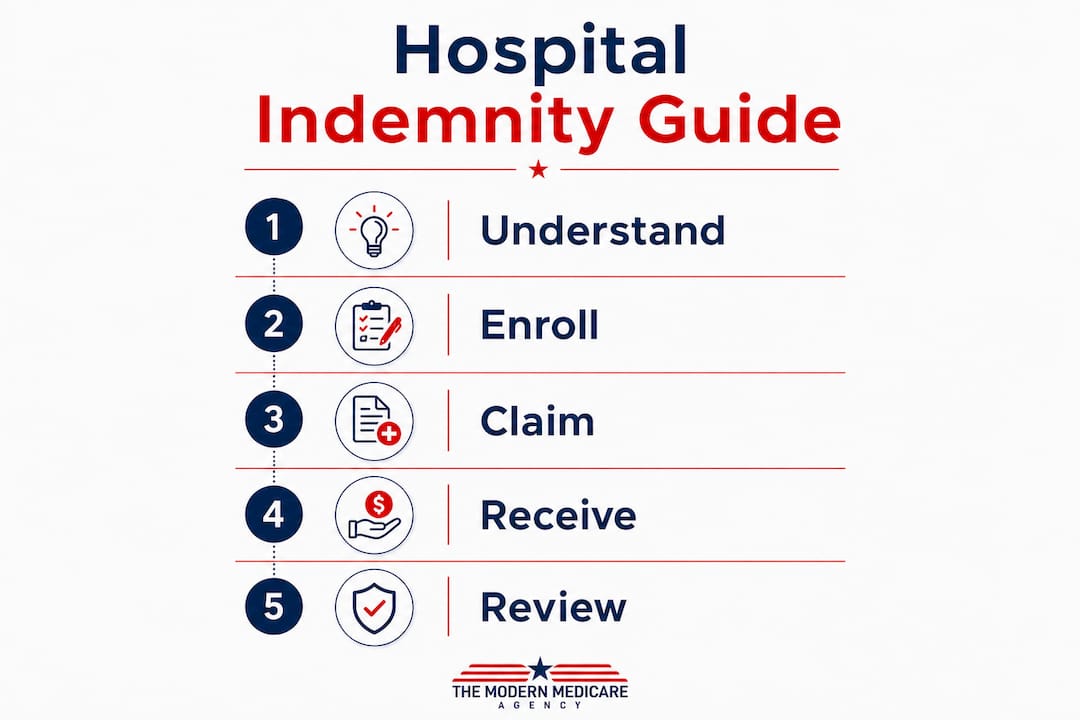
Medicare Advantage plans are popular, and for good reason. They bundle hospital, medical, and often drug coverage into one plan, frequently with low or zero premiums. But they shift cost-sharing onto you through copays and coinsurance, and Medicare Advantage enrollees face real hospital expenses even after their out-of-pocket maximum kicks in during the year. A hospital indemnity plan sits on top of that coverage and absorbs the shock.
Medicare Supplement plans work differently. They cover most or all of the gaps Medicare leaves, but they carry higher monthly premiums and do not always include every cost category. Pairing a hospital indemnity plan with a Supplement can fill the remaining exposure at a lower added cost than upgrading to a more comprehensive Supplement letter.
Key benefits of pairing the two:
- Predictable cash flow during hospitalization, regardless of how long the stay runs
- Faster financial recovery because the cash arrives directly, not after a complex billing cycle
- Flexibility to use benefits for medical or non-medical costs as needed
- Low added cost, since monthly premiums for hospital indemnity plans typically run $20–$100 depending on benefit level and age
- No network restrictions, since the benefit pays based on your admission, not which hospital you chose
Pro Tip: If you are on a Medicare Advantage plan with a high hospital copay in the first few days of a stay, look for a hospital indemnity plan with a strong per-day benefit for days 1–3. That is where most of the cost-sharing hits.
How to use hospital indemnity coverage before, during, and after a hospital stay
Getting the most from a hospital indemnity plan requires more than just having the policy. Knowing the steps at each stage keeps you from leaving money on the table.
Before a hospital stay:
- Review your plan’s waiting periods so you know which conditions are covered from day one and which require a waiting period to pass
- Keep your policy documents and insurer’s claims phone number accessible, not buried in a filing cabinet
- Confirm your benefit amounts: daily confinement rate, ICU rate, and admission benefit if your plan includes one
- Understand your Medicare Supplement eligibility and enrollment windows so you can coordinate both policies effectively
During a hospital stay:
- Notify your hospital indemnity insurer as soon as you are admitted; many plans require prompt notification
- Collect discharge paperwork, itemized bills, and any physician notes, since these support your claim
- Track each day of inpatient status carefully, because observation status does not always count as inpatient under Medicare or your indemnity plan
After discharge:
- File your claim promptly with the required documentation: hospital admission and discharge dates, diagnosis codes, and itemized charges
- Apply the cash benefit first to your Medicare deductible or copay, then to any remaining non-medical costs
- Keep copies of everything submitted in case the insurer requests additional information
What the 2026 Medicare cost numbers actually mean for you
The 2026 Part A deductible of $1,736 per benefit period is not a one-time annual charge. It resets every time you go 60 days without an inpatient stay. For someone hospitalized twice in a year with a gap of less than 60 days between stays, only one deductible applies. But two separate benefit periods mean two separate $1,736 charges.
Beyond the deductible, Medicare Part A coinsurance adds up fast for extended stays. After day 60, coinsurance runs $434 per day for days 61–90. A 75-day stay could generate over $6,000 in coinsurance alone, on top of the deductible. Most people do not plan for that scenario because they assume Medicare handles it.
Paul Barrett, principal agent at Paulbinsurance, has been guiding Medicare beneficiaries through exactly these calculations since 2007. The consistent finding: most people underestimate their hospital cost exposure until they see a real bill. A hospital indemnity plan converts that unpredictable exposure into a known, manageable monthly premium.
How hospital indemnity plans compare across providers
No two hospital indemnity plans are identical, and the differences go beyond price. When comparing options, focus on four variables: the daily benefit amount, the admission benefit, the ICU rider, and the waiting period structure.
Entry-level plans typically offer lower daily benefits, often enough to cover a Medicare Advantage copay for the first few hospital days but not much beyond that. Mid-tier plans add a meaningful admission benefit and a higher ICU daily rate. Premium-tier plans may include outpatient surgery benefits, recovery facility benefits, and waived waiting periods for certain conditions.
Monthly premiums across the market range from $20 to $100, with the spread driven by age, benefit level, and state of residence. A 68-year-old selecting a plan with a $200 per-day benefit and a $500 admission benefit will pay less than a 78-year-old selecting $400 per day with a $1,000 admission benefit. That is expected. What catches people off guard is how much the waiting period terms vary: some plans impose a 12-month wait for illness-related claims, while others use 6 months or waive it entirely for accident-related admissions.
When comparing plans, also check whether benefits are paid as a fixed amount or as a percentage of actual charges. Fixed-benefit plans are simpler and pay regardless of what Medicare covers. Percentage-based plans can produce lower payouts when Medicare picks up most of the bill.
Limitations and exclusions you need to know
Hospital indemnity plans are not unlimited coverage. Every policy carries exclusions, and reading them before you enroll saves frustration later.
The most common limitations include:
- Pre-existing condition waiting periods, typically 6–12 months for illness-related admissions
- Benefit day caps, where the plan stops paying after a set number of days per stay or per year
- Observation status exclusions, since Medicare and most indemnity plans treat observation stays differently from inpatient admissions
- Mental health and substance use exclusions in some older or lower-cost plans
- Skilled nursing facility stays, which may not qualify as inpatient hospital days under the policy terms
Accident-related hospitalizations generally bypass the pre-existing condition waiting period and pay from day one of coverage. That makes hospital indemnity plans particularly useful for seniors who are otherwise healthy but face injury risk. For those managing chronic illnesses, the waiting period is the critical variable to negotiate or shop around.
How claims and reimbursements work alongside Medicare
Hospital indemnity insurance pays cash benefits directly to you, not to your provider or to Medicare. That independence is the defining feature of how these plans work. You do not need to wait for Medicare to process its payment before your indemnity claim can move forward.

The typical claims process runs like this: you submit a claim form along with your hospital admission and discharge dates, your Medicare Explanation of Benefits (EOB), and any itemized billing statements. The insurer reviews the documentation, confirms the admission qualifies under your policy terms, and issues a check or direct deposit for the applicable benefit amount. Most straightforward claims resolve within 10–30 days.
Because the benefit is fixed rather than tied to actual charges, the payout does not change based on what Medicare paid. Whether Medicare covered 80% of your bill or 50%, your indemnity plan pays the same daily or admission benefit. That predictability is what makes these plans useful for budgeting.
How hospital indemnity insurance affects your existing Medicare benefits
Adding a hospital indemnity plan does not reduce, replace, or interfere with your Medicare coverage. Medicare processes your hospital claim first, as it always does. Your indemnity plan then pays its fixed benefit independently, with no coordination required between the two.
This matters because some beneficiaries worry that collecting a cash benefit from an indemnity plan might trigger a Medicare overpayment issue or reduce future benefits. It does not. Hospital indemnity plans are classified as excepted benefits under federal rules, meaning they operate outside the standard coordination-of-benefits framework that governs most health insurance. You can collect from both Medicare and your indemnity plan for the same hospitalization without any conflict.
The one area where coordination does matter is with Medicare Supplement plans. If your Supplement already covers the Part A deductible in full, a hospital indemnity plan’s admission benefit becomes extra cash rather than a gap-filler. That is not a problem, but it does affect how you should size your benefit amounts when shopping. For Medicare Advantage enrollees, where cost-sharing gaps remain real and frequent, the indemnity plan fills a genuine financial hole rather than adding redundant coverage.
For a deeper look at how Medicare Supplement plans interact with hospital costs, Paulbinsurance has resources built specifically for beneficiaries comparing their options in 2026.

Paulbinsurance works with Medicare beneficiaries across the country to find hospital indemnity plans that fit their specific Medicare coverage and budget. Whether you are on Medicare Advantage or a Supplement plan, the team can walk you through your actual cost exposure and match you with coverage that addresses it. Reach out to get a personalized review of your 2026 Medicare hospital cost gaps.
Key Takeaways
Hospital indemnity insurance fills the out-of-pocket gaps Medicare leaves behind by paying fixed cash benefits directly to you, independent of what Medicare reimburses.
| Point | Details |
|---|---|
| 2026 Part A deductible | The Medicare Part A deductible applies per benefit period and resets after 60 days without inpatient care. |
| Fixed cash benefit | Hospital indemnity plans pay a set daily or per-admission amount directly to you, not to your provider. |
| Monthly cost | Premiums typically run $20–$100 per month depending on benefit level and age. |
| Accident coverage | Accident-related hospital stays are generally covered immediately; illness-related stays may carry a waiting period. |
| No Medicare interference | Hospital indemnity plans are excepted benefits and do not reduce or coordinate against your Medicare coverage. |