




If your Medicare Part D plan doesn’t cover a drug your doctor prescribed, you’re not out of options. A non-formulary drug is simply one that isn’t listed on your plan’s approved drug list, called a formulary. But “not listed” doesn’t mean “not accessible.” You have several concrete pathways: ask your doctor about a covered therapeutic alternative, request a formal formulary exception backed by medical necessity documentation, or use a transition fill to bridge a gap while you pursue coverage. If an exception is denied, Medicare’s multi-level appeals process offers further steps to challenge the decision.
Here’s a quick look at your main options:
- Switch to a covered alternative. Most plans cover at least two drugs per therapeutic category, so a similar medication may already be on your formulary.
- Request a formulary exception. Your prescriber submits documentation showing why covered alternatives won’t work for you specifically.
- Use a transition fill. If you recently switched plans, you may qualify for a one-time 30-day supply while you sort out coverage.
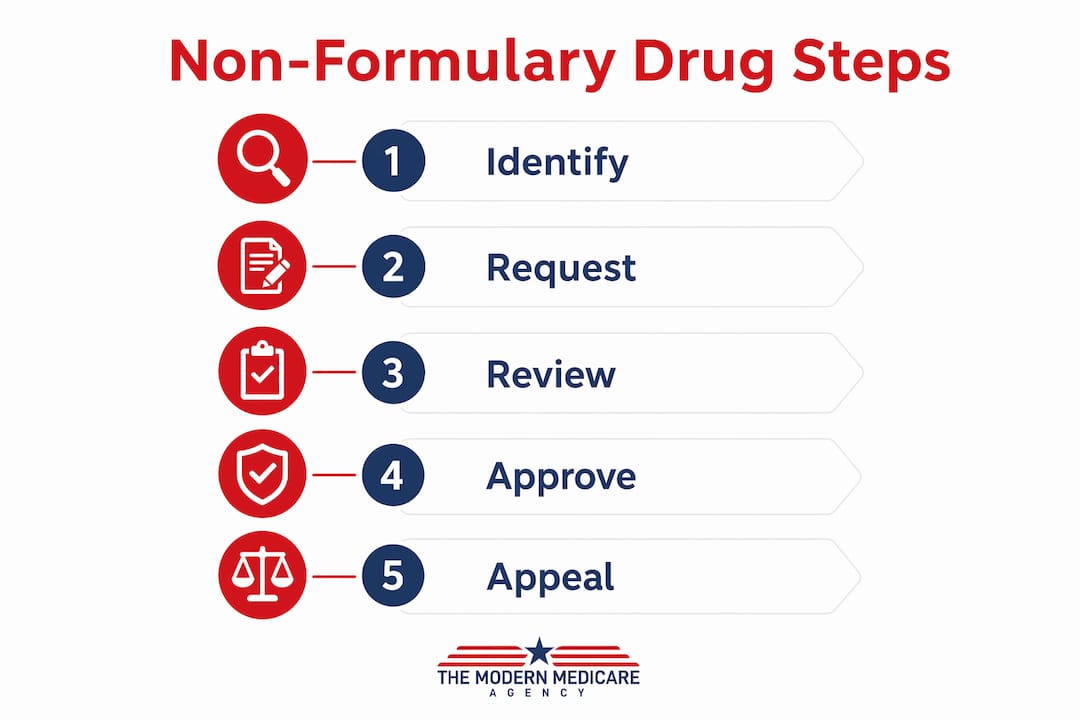
- Appeal a denial. If an exception is rejected, you can escalate through Medicare’s redetermination and administrative law judge hearing process.
- Switch plans during open enrollment. October 15–December 7 is your window to move to a plan with better formulary coverage.
The cost stakes are real. Without an approved exception, you’ll pay the full retail price for a non-formulary drug rather than a copayment or coinsurance amount.
Table of Contents
- How Medicare Part D formularies actually work
- Why your drug might not be on the formulary
- How to request a formulary exception, step by step
- Practical advice for managing non-formulary drug situations
- When can a non-formulary drug be covered?
- Drug tiering and step therapy: two strategies worth understanding
- Paulbinsurance helps you find a Part D plan that actually covers your drugs
- Key Takeaways
How Medicare Part D formularies actually work
A Medicare Part D formulary is the official list of prescription drugs a plan agrees to cover. Every plan that offers Part D coverage must maintain one, and CMS sets the floor: plans must cover at least two drugs in the most commonly prescribed categories and classes. For six protected drug classes, including antipsychotics, anticonvulsants, immunosuppressants, and HIV/AIDS drugs, plans are required to cover nearly all available medications.
Formularies are organized into tiers, and the tier a drug lands on directly determines what you pay:
- Tier 1: Most generic drugs. Lowest copayment.
- Tier 2: Preferred brand-name drugs. Medium copayment.
- Tier 3: Non-preferred brand-name drugs. Higher copayment.
- Specialty tier: Very high-cost drugs. Highest copayment or coinsurance.
Plans update their formularies every year, which means drug coverage can change from one year to the next. Reviewing your plan’s Annual Notice of Change each fall is the single most effective way to catch those shifts before they affect you. You can also verify current coverage using external resources such as the Medicare formulary explained resource at Paulbinsurance, which walks through tier structures in plain language.
Why your drug might not be on the formulary
Non-formulary status usually comes down to one of three factors: cost, clinical equivalence, or timing.

Plans negotiate lower prices for the drugs they include, and a drug that doesn’t fit those pricing agreements often gets left off the list. If a covered alternative is clinically comparable, the plan has little incentive to add a more expensive option. This is where the tension between insurer definitions of “therapeutic equivalence” and a physician’s clinical judgment tends to surface. A plan may consider two drugs interchangeable; your doctor may disagree based on your specific history.
Timing matters too. New drugs often spend months in review by a plan’s Pharmacy and Therapeutics (P&T) committee before they’re added to a formulary. During that window, the drug is technically non-formulary even if it’s the most appropriate treatment for you. Annual formulary revisions can also remove drugs that were previously covered, sometimes mid-treatment.
One distinction worth knowing: a non-formulary drug is different from an excluded drug. Excluded drugs, like most over-the-counter medications and certain weight-loss drugs, are categorically ineligible for Part D coverage regardless of medical necessity. Non-formulary drugs, by contrast, can potentially be covered through an approved exception.
How to request a formulary exception, step by step
A formulary exception is the formal process for asking your plan to cover a drug that isn’t on its list. CMS requires that the request demonstrate medical necessity, meaning covered alternatives have been ineffective, are contraindicated, or would cause adverse effects for you specifically.
-
Talk to your prescriber first. The exception request must come from your doctor or another licensed prescriber, not from you or the pharmacy. A pharmacist override alone won’t satisfy Medicare Part D requirements.
-
Gather patient-specific documentation. The request needs to show why formulary alternatives won’t work for you, not just why the requested drug is generally effective. This means records of past treatment failures, documented adverse reactions, or clinical contraindications tied to your specific conditions.
-
Submit the request to your plan. Your prescriber contacts the plan directly, usually by phone, fax, or through the plan’s online portal. The plan is required to acknowledge receipt and begin review.
-
Wait for the decision. Standard coverage determinations must be resolved within 72 hours. If your health is at serious risk, you or your prescriber can request an expedited review, which carries a 24-hour turnaround. When an exception is approved, the plan must cover the drug, typically at a lower-cost tier where feasible.
-
If denied, appeal immediately. A denial is not the end. Medicare’s appeals process includes redetermination by the plan, review by an independent organization, an Administrative Law Judge hearing, and further escalation if needed. Appeal success depends heavily on the quality and specificity of the clinical documentation your prescriber provides.
Pro Tip: Formulary exceptions differ from prior authorizations. A prior authorization applies to a drug already on the formulary but subject to utilization controls. An exception is specifically for drugs not on the formulary at all, or for requesting a lower tier cost-sharing level. Knowing which process applies saves time.
Practical advice for managing non-formulary drug situations
The beneficiaries who navigate non-formulary situations most successfully tend to do a few things consistently.
Review your ANOC every fall. Medicare plans mail the Annual Notice of Change before October 15. Read it. If a drug you take is moving to a higher tier or being removed entirely, you have until December 7 to switch to a plan that covers it. Switching plans during the October 15–December 7 enrollment period is often the cleanest solution to a formulary problem.
- Ask about transition fills. If you recently switched Part D plans, many plans offer a one-time 30-day supply of a non-formulary drug to prevent a gap in your treatment. Ask your pharmacy or plan directly whether you qualify. This buys time to pursue an exception or find an alternative.
- Use Medicare’s Plan Finder. At Medicare.gov/plan-compare, you can enter your specific medications and compare plans based on actual formulary coverage and out-of-pocket costs. This is the most direct way to find a plan that covers what you take.
- Lean on your prescriber. A doctor who understands the exception process and is willing to document your clinical history thoroughly is your most valuable asset. Generic letters stating a drug is “medically necessary” rarely succeed. Specific documentation referencing your comorbidities, prior treatment failures, and why alternatives are insufficient is what moves the needle.
- Understand the cost difference. Without an exception, a non-formulary drug costs you full retail price. With an approved exception, you pay a copayment or coinsurance, often at a lower tier. That gap can be substantial for specialty medications.
When comparing Part D plans, always check the specific formulary tier for each drug you take, not just whether it’s listed. A drug on Tier 3 versus Tier 1 can mean hundreds of dollars in annual costs.
When can a non-formulary drug be covered?
Coverage for a non-formulary drug is possible under several circumstances. The most common is an approved formulary exception, where your prescriber documents that no covered alternative is clinically appropriate for your situation. Plans must also provide coverage during a transition period when you’re new to a plan, giving you time to request an exception or switch medications without an immediate gap.

Some plans have a process for tiering exceptions as well. If your drug is on the formulary but at a high tier, your prescriber can request that the plan cover it at a lower tier cost-sharing level, citing medical necessity. This isn’t the same as a full formulary exception but follows a similar documentation process.
For the six protected drug classes, coverage is broader by design. If you take an antidepressant, anticonvulsant, or immunosuppressant, your plan is required to cover nearly all drugs in that class, which significantly reduces the chance of a true non-formulary situation. Outside those protected classes, coverage depends on the plan’s specific formulary and your ability to document why alternatives don’t work for you.
Drug tiering and step therapy: two strategies worth understanding
Two plan management tools directly affect your access to medications: tiered formularies and step therapy requirements.
Tiered formularies are the cost-sharing structure described earlier. What many beneficiaries don’t realize is that tier placement is negotiable through an exception request. If your drug sits on Tier 3 or the specialty tier and a covered Tier 1 or Tier 2 alternative exists but doesn’t work for you, your prescriber can request a tier exception to lower your cost-sharing. The plan reviews the same kind of medical necessity documentation it would for a full formulary exception.
Step therapy is a coverage rule requiring you to try one or more lower-cost drugs before the plan will cover a more expensive option. It’s common for conditions like pain management, mental health, and certain chronic diseases. If you’ve already tried and failed the required step therapy drugs, that history is exactly the documentation your prescriber needs to bypass the requirement. Plans cannot require step therapy for drugs in the six protected classes, and CMS rules limit how step therapy can be applied to Medicare Advantage drug coverage.
Both tools are designed to manage plan costs, but both have formal override mechanisms. The key is knowing they exist and working with a prescriber who can document your clinical history clearly.
Paulbinsurance helps you find a Part D plan that actually covers your drugs
Sorting through formularies, exception rules, and tier structures on your own is genuinely time-consuming. Paulbinsurance takes a different approach: instead of handing you a comparison chart and wishing you luck, Paul Barrett and his team of independent Medicare agents work through your specific medication list with you, identify which plans cover your drugs at the lowest cost, and flag any formulary gaps before you enroll.

Paul has been helping Medicare beneficiaries make these decisions since 2007. The team works with Medicare Part D plans, Medicare Advantage, supplements, and the full range of senior insurance products, so the advice you get reflects the whole picture, not just one product line. If you’re dealing with a non-formulary situation right now, or heading into open enrollment and want to avoid one, a conversation with Paulbinsurance is a practical next step. Visit paulbinsurance.com/medicare-part-d-drug-coverage-guide to get started, or explore Medicare Advantage plan options if you’re weighing a broader coverage change.
Key Takeaways
When a drug isn’t on your Medicare Part D formulary, a formal exception request backed by specific clinical documentation from your prescriber is the most direct path to coverage.
| Point | Details |
|---|---|
| Formulary exceptions require medical necessity | Your prescriber must document why covered alternatives are ineffective, contraindicated, or cause adverse effects for you specifically. |
| Review timelines are short | Plans must decide standard exception requests within 72 hours, and expedited requests within 24 hours when health is at serious risk. |
| Annual enrollment is your reset button | Reviewing your ANOC and switching plans during October 15–December 7 is often the most effective way to resolve a formulary problem. |
| Transition fills prevent gaps | Many plans provide a one-time 30-day supply of a non-formulary drug when you switch plans, buying time to pursue an exception. |
| Paulbinsurance guides the process | Paul Barrett’s team helps beneficiaries compare Part D formularies and navigate exception requests with guidance from licensed Medicare agents. |
Recommended
- Medicare Formulary Explained: How Drug Coverage, Tiers, and Costs Work – The Modern Medicare Agency
- How to Check If a Drug Is Covered by Medicare Part D in 2026
- Finding a Medicare Plan That Covers My Specific Medications: A 2026 Guide
- Medicare Part D Drug Coverage Guide: Clear Steps to Compare Plans and Save on Prescriptions – The Modern Medicare Agency