




Guaranteed issue final expense insurance accepts every applicant in the eligible age range with no health questions and no medical exam, but it charges more and holds back the full death benefit for two years in most cases. It’s the right call if you’ve been declined elsewhere or you’re managing a serious health condition. If you can pass a short health questionnaire, simplified issue almost always costs less and pays in full from day one.
TL;DR:
- Guaranteed issue policies include a two-year waiting period for natural deaths, with refunds of premiums plus about 10% interest instead of full benefits.
- Premium costs depend heavily on age, gender, state, coverage amount, and tobacco use, often resulting in higher rates than simplified or underwritten plans.
- Guaranteed issue insurance is mainly suitable for those declined elsewhere or with serious health conditions, not as a first choice for most seniors.
- applicants should compare simplified issue policies first, as they usually offer full benefits immediately at lower premiums if health screening is passed.
- Medicaid asset limits may be affected by final expense policy cash values, so it’s important to check state-specific rules before purchasing if on Medicaid or planning to apply.
Table of Contents
- What Is Guaranteed Issue Final Expense Insurance?
- How the Waiting Period and Graded Benefits Actually Work
- What Guaranteed Issue Really Costs
- Who Should Buy Guaranteed Issue, and Who Shouldn’t
- Pros, Cons, and Red Flags to Watch For
- How to Apply, and What to Ask Before You Sign
- Why Paulbinsurance Starts With Education, Not a Sales Pitch
- Does Final Expense Insurance Affect Medicare or Medicaid?
- A Straight Answer on When Guaranteed Issue Makes Sense
- Get a No-Pressure Quote Comparison From Paulbinsurance
- Where These Numbers and Claims Come From
- Sources
What Is Guaranteed Issue Final Expense Insurance?
Guaranteed issue final expense is a permanent whole life policy built for one job: covering funeral costs, medical bills, and other expenses your family faces right after you die. No nurse visits, no blood draws, no digging through medical records. If you’re within the issue-age window, you’re approved.
That guarantee is also why the coverage stays modest. Carriers like Fidelity Life sell guaranteed issue products with benefits up to $25,000, and most policies share a similar shape:
- Issue ages typically run from 50 to 85, though some carriers extend further
- Coverage amounts generally fall between $2,000 and $40,000
- Premiums lock at issue and never increase, no matter how your health changes
- The policy builds cash value over time, though slowly compared to fully underwritten life insurance
Because acceptance is guaranteed, insurers price in risk across the board rather than testing you individually. That’s the trade you’re making.
How the Waiting Period and Graded Benefits Actually Work
Nearly every guaranteed issue policy includes a two-year waiting period, sometimes called a graded or limited benefit period, that applies to natural-cause deaths. Accidental death is usually a different story. Most policies pay the full benefit from day one if death results from an accident, which is why some agents call this “day one” accidental coverage.
Here’s how a claim typically plays out:
- Natural-cause death in year one: beneficiaries receive premiums paid back, plus modest interest, not the full death benefit.
- Natural-cause death in year two: same refund structure applies in most contracts, though a handful of carriers step up partial benefits.
- Natural-cause death after year two: the full death benefit pays out as written.
- Accidental death at any point: full benefit, no waiting period.
By the numbers: most guaranteed issue final expense plans refund premiums paid plus roughly 10% interest if death occurs from natural causes during the two-year window, rather than paying the stated death benefit.
That refund clause protects your family from losing money outright, but it doesn’t replace the coverage you thought you were buying. If you die 18 months after signing, your family gets your premiums back with a little interest. Not the $15,000 the brochure advertised.
What Guaranteed Issue Really Costs
Advertised rates like $9.95 a month show up constantly in final expense marketing, and they’re not lies exactly, they’re just attached to tiny benefit amounts, often a few thousand dollars. A rate that low rarely buys enough to cover an actual funeral.
Your real premium depends on a handful of factors:
- Age at issue — the single biggest driver; waiting five years to apply can meaningfully raise your rate
- Gender — women typically pay less, reflecting longer average life expectancy
- State of residence — rates vary by state regulation and carrier filings
- Coverage amount — obviously, but the relationship isn’t always linear
- Tobacco use — smokers pay more, even on guaranteed issue plans that skip the health exam
Pro Tip: Before shopping by monthly price, work backward from the average cost of a funeral in your area, then pick a coverage amount that actually covers it. Many buyers choose coverage amounts intended to cover typical funeral costs for that reason.
Rates differ enough by state and carrier that getting a few quotes side by side, rather than anchoring on the first $9.95 headline you see, is worth the ten minutes it takes.
Who Should Buy Guaranteed Issue, and Who Shouldn’t
Guaranteed issue makes sense as a last resort, not a first stop. It fits you well if:
- You’ve already been declined for simplified issue or traditional final expense coverage
- You’re managing a serious or terminal diagnosis that would trigger automatic decline elsewhere
- You have no savings set aside and no prepaid funeral arrangement to fall back on
If none of that applies, pause before buying. Simplified issue policies ask three to five yes-or-no health questions rather than requiring an exam, and if you pass them, you typically get lower premiums and full coverage immediately, no two-year wait.
Pro Tip: Ask an agent to screen you for simplified issue before you commit to guaranteed issue. It takes a few minutes and can save you hundreds of dollars a year if you qualify.
Already prepaid your funeral, or sitting on savings earmarked for final costs? You may not need either product, and that conversation is worth having honestly before signing anything.
Pros, Cons, and Red Flags to Watch For
Guaranteed issue earns its place in the market, but it comes with real limitations you should weigh going in.
- Guaranteed acceptance with a simple, short application, usually no more than a handful of questions about your name, age, and state of residence.
- Fixed premiums for life that never rise, plus accidental death coverage active from day one.
- Higher cost per dollar of coverage than simplified or fully underwritten policies, paired with lower maximum benefit limits.
- Slow cash value growth compared to other permanent life products.
- Contract red flags to check: vague waiting-period language, an unclear refund-interest rate, broad exclusion clauses, or steep surrender charges if you cancel early.
Rule of thumb: buy guaranteed issue only after you’ve confirmed you can’t qualify for something cheaper.
How to Apply, and What to Ask Before You Sign
Applications are short by design. Most take fifteen minutes over the phone or online, and approval is typically immediate to a few business days once you’re within the issue-age range and you’ve answered a handful of basic eligibility questions like your name, state, and age.
Before you sign, ask the agent directly:
- What exactly is the waiting period, and does it apply to accidental death?
- What’s the refund rate if I die during that window?
- Are my premiums truly locked, or can they change with a rider?
- Who are my named beneficiaries, and how do I update them later?
- Are there riders worth adding, and what do they cost?
Pro Tip: Keep a folder with your policy number, beneficiary names, and the insurer’s claims phone number somewhere your family can find it. When the time comes, beneficiaries usually need a certified death certificate and the policy number to file a claim, and having both ready speeds everything up.
An independent agent who isn’t tied to one carrier can pull multiple quotes and flag state-specific rules that a single-carrier salesperson won’t mention.
Why Paulbinsurance Starts With Education, Not a Sales Pitch
Paul Barrett has helped Medicare consumers navigate coverage decisions since 2007, and that same education-first approach carries into final expense conversations. Before recommending guaranteed issue, Paulbinsurance’s agents screen for simplified-issue eligibility first, because passing a short health questionnaire usually means a better rate and no waiting period.
Paulbinsurance operates on a commission-based model, paid by carriers when you enroll, and discloses that openly. The goal is matching you to the right product, not the most expensive one.
Does Final Expense Insurance Affect Medicare or Medicaid?
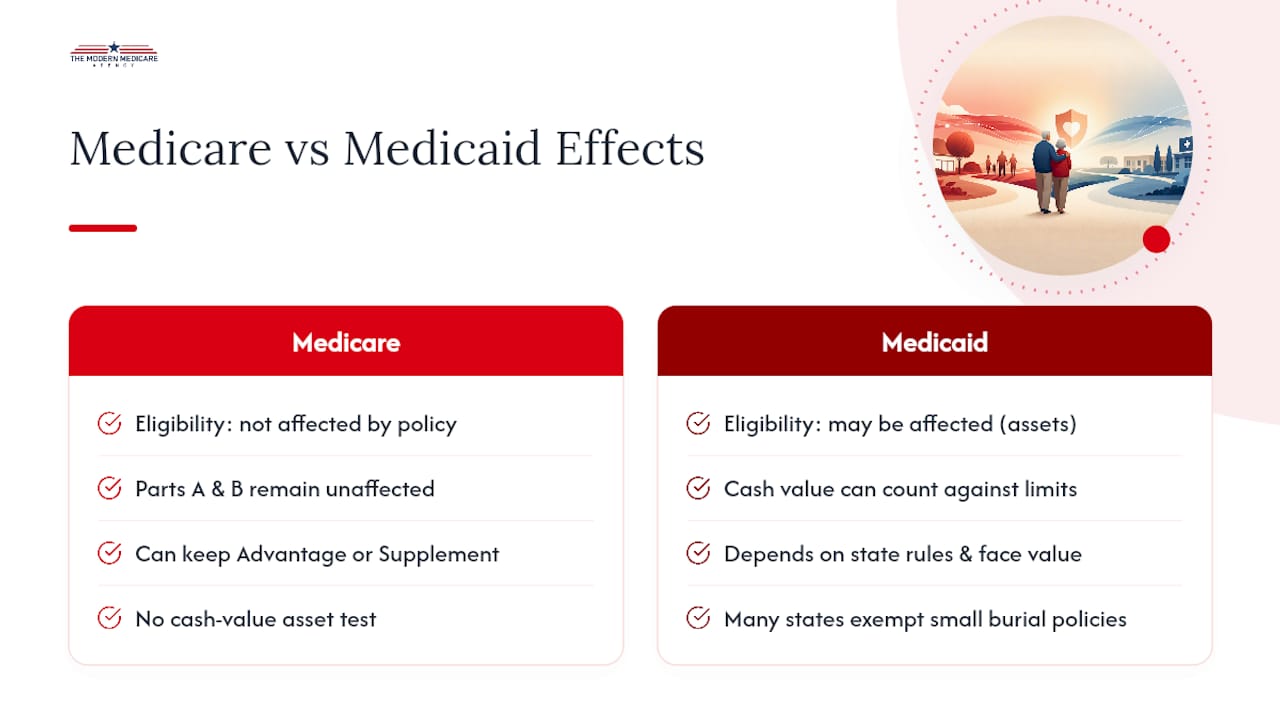
Buying a guaranteed issue final expense policy does not affect your Medicare eligibility or your Medicare Part A and Part B benefits. Medicare eligibility is based on age or disability status and work history, not on what life insurance you own. You can hold a final expense policy and remain fully enrolled in Medicare, a Medicare Advantage plan, or a Medicare Supplement without any conflict.
Medicaid is a different story, and this is where seniors most often get tripped up. Medicaid eligibility, particularly for long-term care Medicaid, depends partly on your countable assets. A life insurance policy’s cash value can sometimes count against Medicaid’s asset limits, depending on your state’s rules and the policy’s face value.
Many states exclude small final expense policies from that asset test entirely, since they’re designed for burial costs rather than wealth accumulation. But limits vary by state, and the threshold that triggers a problem in one state may not apply in another.
If you’re currently on Medicaid or expect to apply within the next few years, don’t guess. Ask the agent specifically how your state treats final expense cash value against Medicaid asset limits before you buy, and consider talking to a Medicaid planning specialist if you’re close to any threshold. It’s a five-minute question that can prevent a much bigger headache later.
A Straight Answer on When Guaranteed Issue Makes Sense
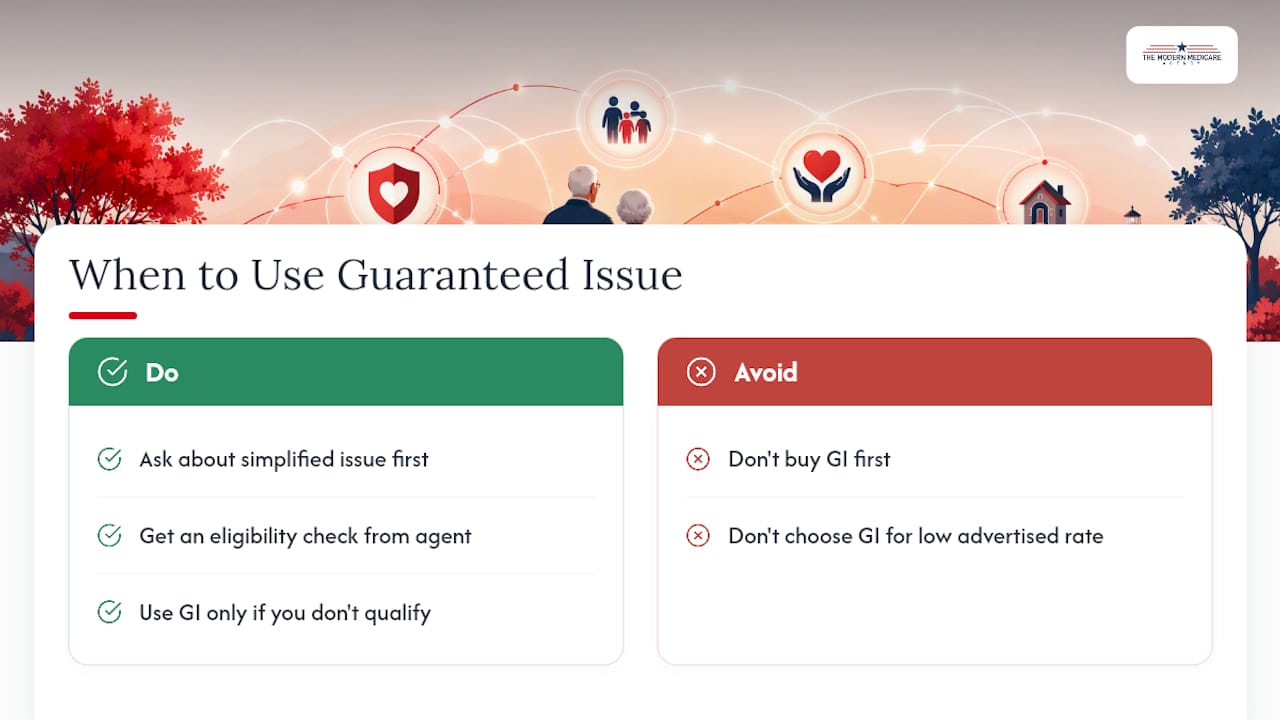
Guaranteed issue exists to catch people other policies turn away, and it does that job well. But too many seniors buy it first because the ad copy is simple and the rate looks small, when a quick health screening would have gotten them a better policy for less money.
My honest advice: never buy guaranteed issue as your first move. Ask about simplified issue before anything else. If you don’t qualify, or you’re dealing with a health situation that makes guaranteed acceptance the only responsible path, then it’s a genuinely good fit and worth having in place. Either way, get a quick eligibility check from an agent before you commit to anything.
— Paul
Get a No-Pressure Quote Comparison From Paulbinsurance
Paulbinsurance works differently than a single-carrier call center pushing one guaranteed issue product regardless of your health. As independent, state-licensed agents, we compare simplified issue and guaranteed issue side by side, across multiple carriers, so you see the real price gap before you decide.

A consultation is free and takes about fifteen minutes. We’ll run a quick eligibility screen, pull quotes that match your health and budget, and walk you through beneficiary setup and waiting-period terms in plain language. Bring your age, general health history, and a target coverage number in mind, something based on your area’s typical funeral costs rather than just a monthly price you saw in an ad. If final expense coverage is one piece of a bigger senior insurance picture, our Medicare Advantage plan guide and Medicare Supplement resources are worth a look too. Reach out through Paulbinsurance to schedule your comparison and get straight answers before you sign anything.
Where These Numbers and Claims Come From
This guide draws on Forbes Advisor’s guaranteed issue life insurance analysis, PolicyGenius’s final expense comparison, TheBurialInsurance’s guaranteed acceptance breakdown, Social Security’s survivor benefits guidance, and NFDA funeral cost statistics. For carrier comparisons, see our final expense companies guide.
This article is general information, not a substitute for advice from a qualified financial advisor. Consult a qualified financial professional about your own circumstances before acting on anything here.
Sources
- Guaranteed Issue Life Insurance (Forbes Advisor)
- Final expense vs. guaranteed issue life insurance (PolicyGenius)
- Guaranteed Acceptance Burial Insurance: How It Works & Who Needs It (TheBurialInsurance)
- NFDA: Funeral and Memorial Information and Statistics