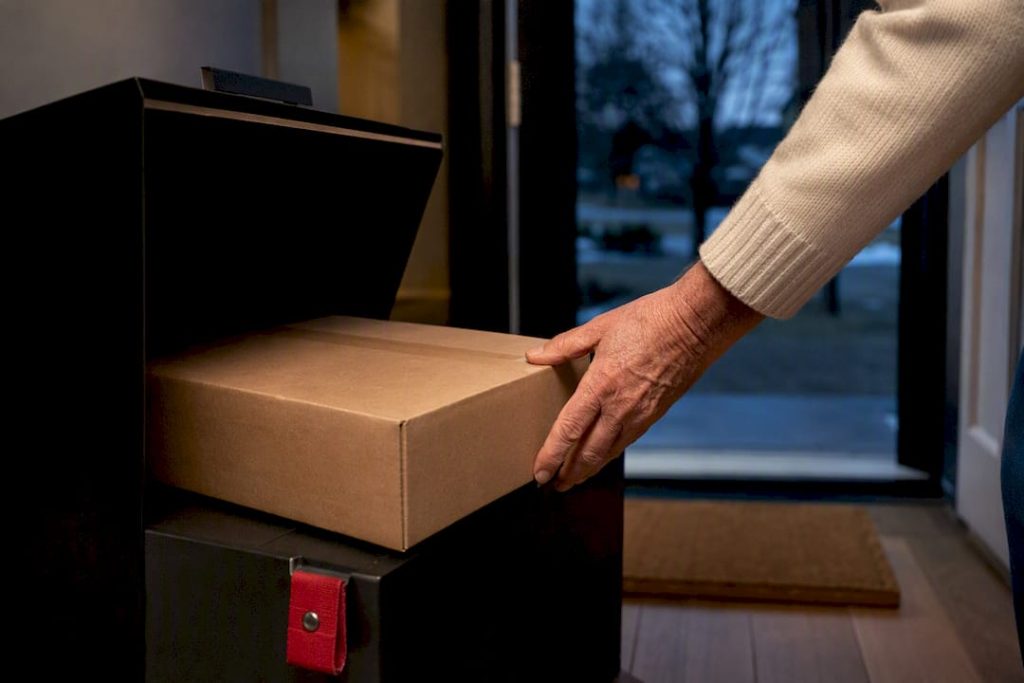
Many Medicare Part D and Medicare Advantage plans let you fill maintenance drugs through mail order, often with a 90-day supply and automatic refills built in. Whether it’s covered, and how much you’ll pay, depends entirely on your specific plan’s pharmacy network and formulary. Before switching, confirm your drugs are covered, check delivery and signature rules, and call your plan or an agent if anything looks unclear.
TL;DR:
- Choosing the right mail-order pharmacy depends on confirming your plan’s preferred in-network location listed in the pharmacy directory and verifying drug coverage in the formulary.
- Delivery times range from a few days to two weeks, and some drugs like controlled substances or those requiring cold storage are excluded or routed through specialty pharmacies.
- For stable, long-term medications, mail order generally offers lower costs and fewer trips, but it is less suitable for changing doses or new drugs due to potential waste or delivery issues.
- Always check your plan’s pharmacy network each year because participation can change, and use independent agents to clarify costs, network status, and coverage details without extra charge.
- Proper planning, such as verifying pharmacy preferred status and starting with short retail fills for new medications, can avoid costly mistakes like unsustainable supply or delayed deliveries.
Table of Contents
- How Mail-Order Pharmacy Works With Medicare
- Part D and Medicare Advantage Coverage: What It Actually Costs
- How to Sign Up for Mail-Order Prescriptions
- Pros, Cons, and Practical Tips
- When Mail Order Makes Sense (And When to Call an Agent)
- In-Network vs. Preferred vs. Out-of-Network Mail Order
- What to Do When Your Prescription Changes Mid-Delivery
- Keeping Your Prescription Information Private
- Verifying a Mail-Order Pharmacy Is Legitimate
- Mail-Order Prescriptions While Traveling or Relocating Temporarily
- Get Help Choosing the Right Part D or Medicare Advantage Plan
- An Agent’s Take on Mail-Order Hype
- Sources
How Mail-Order Pharmacy Works With Medicare
Mail-order pharmacy isn’t a separate benefit bolted onto Medicare. It’s a delivery method your existing Part D or Medicare Advantage plan may offer for drugs already on your formulary. Some Medicare drug plans run a mail-order program that allows up to a 3-month supply of covered medications, and many include automatic refills so you’re not calling in every month.
Getting a prescription into the mail-order pipeline usually happens one of a few ways:
- Your doctor sends an electronic prescription straight to the plan’s mail-order pharmacy.
- You transfer an existing prescription from a retail pharmacy by phone or through the plan’s website.
- You submit a paper mail-order form along with your original prescription.
- You call the pharmacy’s member services line and they handle the transfer for you.
Plans that use large mail-service vendors, such as those run through Express Scripts or CVS Caremark, typically include online refill tracking and text or email alerts when a package ships. A three-month supply is standard, though some plans stretch to a slightly longer supply depending on the drug and your benefit design. depending on the drug and your benefit design.
Delivery generally takes anywhere from a few days to two weeks, and most pharmacies ship in temperature-controlled packaging for drugs that need it, like insulin. Controlled substances often can’t ship by mail at all, or face tighter rules and signature requirements. Specialty drugs, injectables, and anything requiring cold storage may route through a separate specialty pharmacy instead of standard mail order.
Part D and Medicare Advantage Coverage: What It Actually Costs
Coverage exists at the plan level, not at the Medicare level broadly. Every Part D and Medicare Advantage plan negotiates its own pharmacy network, and using an in-network mail-order pharmacy is almost always cheaper than going outside it.
Statistic Callout: Medicare.gov notes that pharmacy participation in a plan’s network can change from year to year, which is why checking your plan’s pharmacy directory annually matters more than most people realize.
Two documents tell you almost everything you need before switching to mail order:
- The formulary — confirms whether your specific drug is covered and at what tier.
- The pharmacy directory — confirms which mail-order pharmacies are in-network for your plan.
Cost structures vary by plan, but common patterns include:
- A flat copay or percentage coinsurance per 90-day fill, often lower per-day-supply than three separate 30-day retail fills.
- Free standard shipping on most mail-order orders.
- Reduced or waived cost-sharing for beneficiaries enrolled in Extra Help or Medicaid.
If you qualify for Extra Help or Medicaid, carry proof of that status when you order, whether that’s an award letter or Medicaid card. Without it, a pharmacy may bill you the standard cost-sharing rate and you’ll have to sort out a refund later. CMS also maintains plan and enrollment data you or your agent can use to double-check a pharmacy’s current network status if the plan’s own directory seems out of date.
How to Sign Up for Mail-Order Prescriptions
Getting started takes fifteen minutes if you have the right documents in hand.
- Ask your doctor to e-prescribe directly to your plan’s mail-order pharmacy, or request a written prescription you can mail in yourself.
- Log into your plan’s member website or call member services to set up a mail-order account and transfer an existing retail prescription.
- Fill out the mail-order form that comes with your welcome packet, attach your prescription, and mail it to the address provided.
- Call the mail-order pharmacy directly if you’d rather set things up over the phone than online.
Bring your photo ID, Medicare card, and plan drug card to any pharmacy interaction, plus proof of Extra Help or Medicaid if that applies to you.
Pro Tip: If your new plan card hasn’t arrived yet, you can still get a prescription filled. Medicare says you can prove coverage with your enrollment confirmation, your Medicare number, or the last four digits of your Social Security number. Keep any receipts if you end up paying out-of-pocket, in case you need to request reimbursement later.
Pros, Cons, and Practical Tips
Mail order earns its popularity honestly. A 90-day supply means fewer trips, fewer forgotten refills, and often a lower per-day cost than monthly retail pickups. Automatic refill programs are genuinely useful for people managing five or six daily medications, since the pharmacy handles the reordering instead of you.
The downsides are real too, and worth planning around:
- Shipping delays happen, especially around holidays or severe weather.
- Some drugs require a signature on delivery, which is a problem if you’re not reliably home.
- A large unused supply becomes a waste issue if your doctor changes your dose or switches you to a different drug. Mail-order medication is usually non-returnable once it ships.
- Controlled substances and some specialty drugs are excluded from mail delivery entirely.
Pro Tip: Don’t order a full 90-day mail supply the first time you start a new medication. Get a 30-day retail fill first to make sure the dose and drug are working for you, then move future refills to mail order once your regimen is stable.
When Mail Order Makes Sense (And When to Call an Agent)
Mail order fits best for beneficiaries on stable, long-term medications, blood pressure drugs, cholesterol medication, diabetes maintenance therapy, where the dose hasn’t changed in months. It also helps people with limited mobility or transportation, since it removes the monthly pharmacy trip entirely.
It fits less well when your prescriptions change often, when you’re testing a new drug, or when you’re not confident you’ll be home to sign for deliveries.
Experienced Medicare agents observe that people often assume mail order is either always cheaper or automatically included, but neither assumption holds true plan to plan. If your out-of-pocket cost seems unusually high, if you’re not sure whether your pharmacy is in-network, or if you think you qualify for Extra Help but aren’t sure how to prove it, that’s exactly when a conversation with an independent agent saves you money and confusion. Independent agents can walk through formulary and network questions with clients to help clarify coverage without cost to the beneficiary.
In-Network vs. Preferred vs. Out-of-Network Mail Order
Not all “in-network” pharmacies price the same. Plans generally sort pharmacies into three tiers, and the difference between them can mean a real gap in what you pay.
In-network pharmacies have a standard contract with your plan. You’re covered, but you’re paying the plan’s regular cost-sharing rate.
Preferred network pharmacies have negotiated deeper discounts with your plan, which usually translates into a lower copay or coinsurance tier for the exact same drug. Many mail-order pharmacies fall into this preferred category specifically because plans want to steer maintenance-drug volume there.
Out-of-network fills are where costs jump. Depending on your plan, an out-of-network pharmacy might not be covered at all, or you might pay the full retail price upfront and file for partial reimbursement, if your plan allows it at all. Medicare Advantage plans in particular can have strict out-of-network rules for prescription drugs, tighter than the medical side of the benefit.
The fix here is simple but easy to skip: check your plan’s pharmacy directory before you assume mail order will save you money, not after. Preferred in-network pharmacies can meaningfully lower your out-of-pocket costs compared to going outside the network, but only if you actually use one.
What to Do When Your Prescription Changes Mid-Delivery
Dose changes and drug switches happen constantly with maintenance medications, and mail order adds a small wrinkle when they do. If your doctor changes your prescription after a mail order has already shipped, call the mail-order pharmacy’s member services line immediately, most have a dedicated line separate from general plan customer service.
Tell them three things: the old prescription details, the new prescription details, and whether the old shipment has already gone out. Some pharmacies can cancel or modify an order before it ships if you catch it in time. Once it’s shipped, though, expect to keep the old medication; most mail-order pharmacies won’t accept returns on dispensed prescription drugs for safety reasons.
If a package arrives damaged, wrong, or missing pills, document it right away with photos and call the pharmacy the same day. Reputable mail-order pharmacies replace damaged or incorrect shipments at no charge, but they usually require you to report the problem within a specific window, often 7 to 14 days.
For ongoing issues, like recurring delays or a drug interaction concern, ask to speak with the pharmacy’s clinical staff, not just the call center. Mail-order pharmacies employ licensed pharmacists who can answer dosing and interaction questions the same way a retail pharmacist would, just over the phone instead of across a counter.
Keeping Your Prescription Information Private
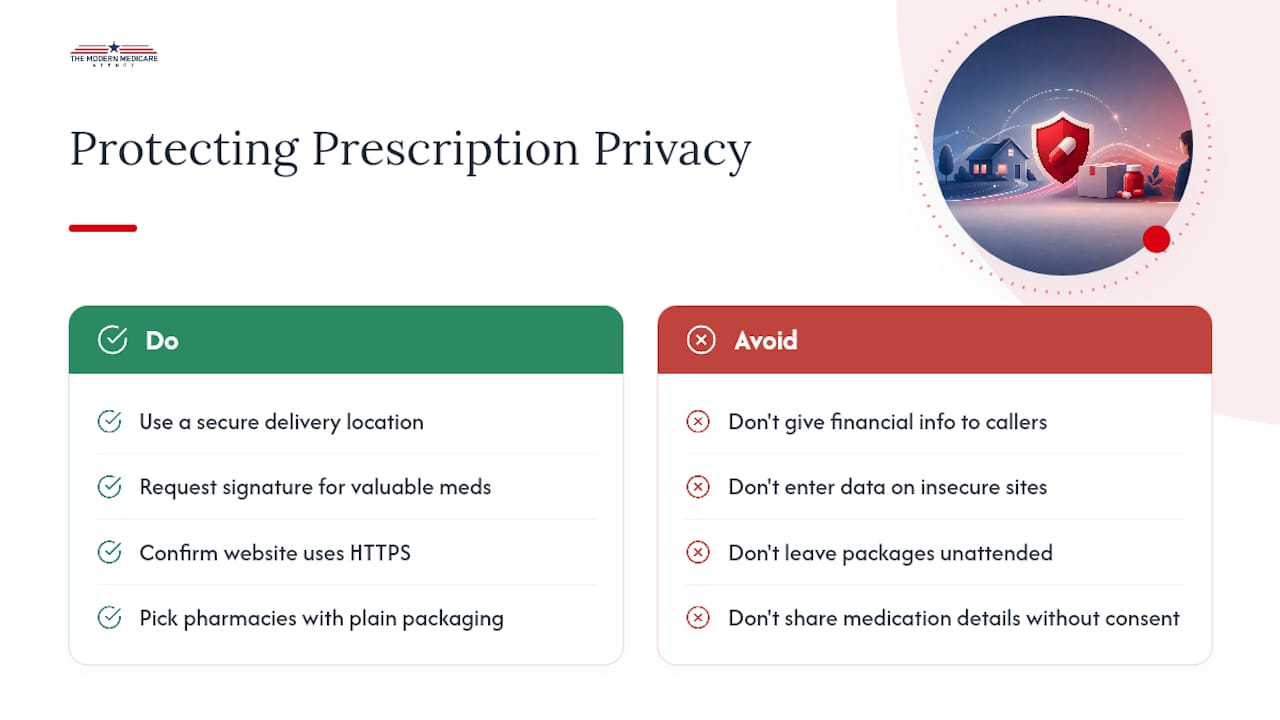
Mailing medication means your name, address, and sometimes your diagnosis travel through the postal system, which raises fair questions about privacy. Legitimate mail-order pharmacies ship in plain, unmarked packaging, no drug names or pharmacy logos visible from the outside, specifically to protect your privacy from anyone else who might see the package.
HIPAA protections apply to mail-order pharmacies the same way they apply to retail ones. Your medication history, diagnosis, and personal information can’t be shared without your authorization, and pharmacies are required to have safeguards in place for how that data is stored and transmitted.
Where you do need to stay alert is delivery security. A package sitting on a porch for hours is a target, both for theft and for anyone curious about what’s inside. If your building has a secure mailroom or you can arrange delivery to a location where someone’s reliably home, use it. Some mail-order pharmacies also offer signature-required delivery specifically for controlled substances or high-value medications, which adds a step but protects against porch theft.
If you’re ordering online through a plan’s website or a mail-order pharmacy’s portal, make sure the connection is secure before entering personal or payment information, and never provide financial details to anyone who calls you unsolicited claiming to be from your pharmacy or Medicare plan. That’s a common scam pattern, not a standard verification step any legitimate pharmacy actually uses.
Verifying a Mail-Order Pharmacy Is Legitimate
Not every online pharmacy operating in the mail-order space is legitimate, and Medicare beneficiaries are a frequent target for prescription drug scams. The FDA recommends verifying a pharmacy’s licensing and prescription requirements before ordering anything by mail.
A few checks take just a few minutes:
- Confirm it’s actually your plan’s pharmacy. The safest mail-order pharmacy is the one listed in your plan’s own pharmacy directory, not one you found through a random search or unsolicited email.
- Check for a required prescription. A legitimate pharmacy will always ask for a valid prescription. If a website offers to sell prescription drugs without one, that’s an immediate red flag.
- Look for a physical U.S. address and licensed pharmacist contact. Real mail-order pharmacies list a location and give you a way to reach a pharmacist directly, not just a chat bot or a generic email box.
- Verify state licensing. Pharmacies must be licensed in the states where they operate and ship, and that information should be available if you ask.
If a deal looks unusually cheap or an email pressures you to order immediately, treat it as suspicious. Your plan’s member services line can confirm whether a pharmacy contacting you is actually part of your network.
Mail-Order Prescriptions While Traveling or Relocating Temporarily
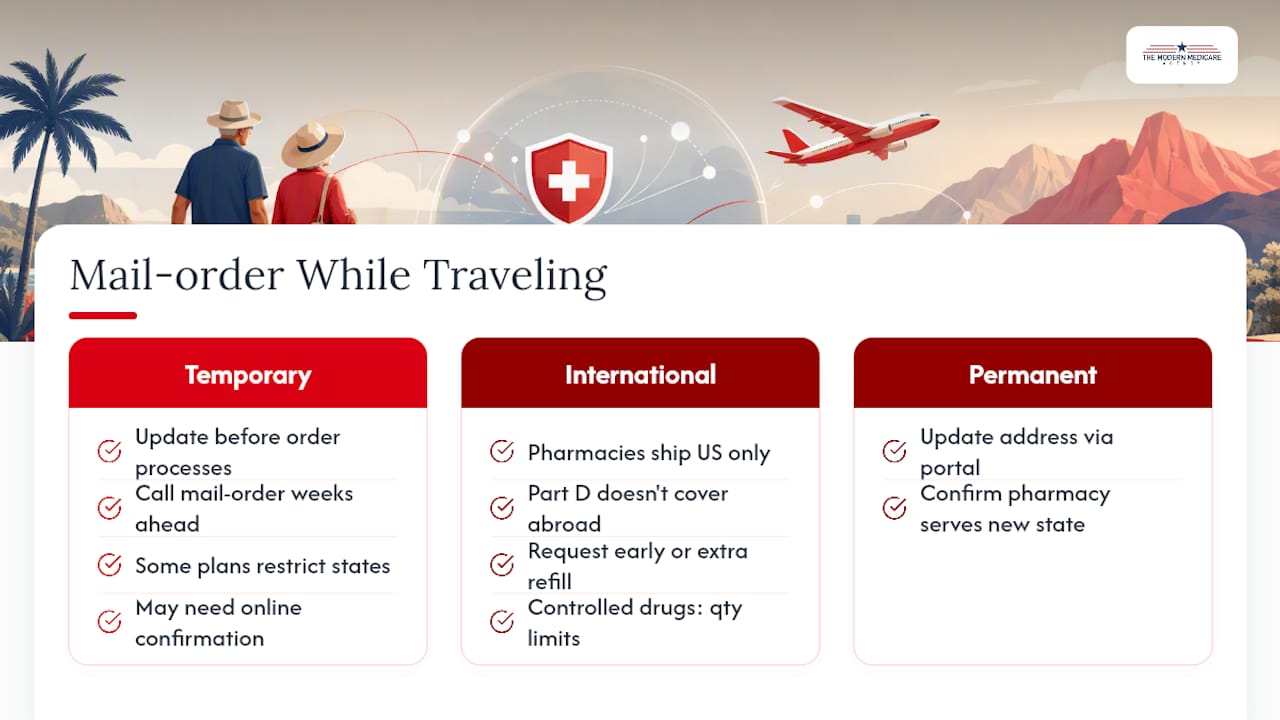
Snowbirds and travelers run into a specific mail-order problem: your prescription is set to ship to your home address, but you won’t be there. Most mail-order pharmacies let you update a shipping address for a single order or set a temporary address for a defined period, but you need to make that change before the order processes, not after it ships.
If you’re heading somewhere for a few months, call your mail-order pharmacy a few weeks ahead and ask about temporary address changes. Some plans restrict shipping to certain states or require you to confirm the address change through your online account rather than by phone, so ask about the specific process your plan uses.
International travel adds real complications. Mail-order pharmacies generally ship only within the United States, and Medicare Part D doesn’t cover prescriptions filled outside the U.S. at all. If you’re traveling abroad for an extended stretch, request an early refill or a slightly larger supply before you leave, most plans will accommodate this for legitimate travel with advance notice, though controlled substances may have quantity limits regardless of the reason.
Permanent relocations are simpler: update your address through your plan’s member portal, and confirm whether your current mail-order pharmacy still services your new state, since not every mail-order vendor operates nationwide.
Get Help Choosing the Right Part D or Medicare Advantage Plan
Mail order only pays off when the plan underneath it fits your actual prescriptions. A plan with a great mail-order discount is worthless if your specific drug sits on a high-cost formulary tier or your preferred pharmacy dropped out of network this year. Medicare insurance specialists can help beneficiaries sort through plan comparisons, matching prescription needs to Part D and Medicare Advantage options that cover specific medications.
If you’re unsure whether your current plan offers mail order, whether switching plans would lower your costs, or how Extra Help affects what you’d pay, a conversation with an independent agent costs you nothing and can save real money over a year of refills. Explore how Medicare Advantage plans handle prescription drug coverage or reach out directly for a plan comparison built around your specific medications.
An Agent’s Take on Mail-Order Hype
Mail order gets sold as an automatic win, and most of the time it’s presented as pure convenience with no downside. That’s not quite right. The convenience is real, but the savings are conditional on network status, and too many beneficiaries switch to mail order assuming any pharmacy works the same way any other pharmacy does under their plan.
The bigger issue I see isn’t cost. It’s timing. People lock in a 90-day supply the same week their doctor is still adjusting a dose, then end up with two months of medication they can’t use and can’t return. The conventional advice, “just switch to mail order for convenience”, skips that risk entirely.
My actual advice: verify your pharmacy is preferred in-network first, start any new medication with a short retail fill before committing to a 90-day mail supply, and call your plan (or an agent) the moment your prescription changes rather than after the next shipment goes out. Convenience is worth pursuing. It’s just not worth pursuing blindly.
— Paul
This article is general information, not a substitute for advice from a qualified doctor. Consult a qualified healthcare professional about your own circumstances before acting on anything here.
Sources
Before switching to mail order, confirm the details directly rather than relying on assumptions:
- What pharmacies can I use? | Medicare
- How to buy medicines safely from online pharmacies | FDA
- Centers for Medicare & Medicaid Services | CMS
For a deeper look at how Part D benefits work overall, Paulbinsurance’s Medicare Part D drug coverage guide walks through plan comparison step by step.