
A dental insurance waiting period is the stretch of time after you enroll before your plan will pay for certain treatments. Most insurers waive it entirely for preventive care, but you’ll typically wait several months for basic work like fillings and up to a year or more before major procedures such as crowns or bridges are covered. Some plans skip the wait altogether, though usually at a higher premium or with a smaller network of dentists.
TL;DR:
- Most plans waive waiting periods for preventive services, which are generally covered immediately from day one.
- Basic procedures like fillings usually require a wait of 3 to 6 months, while major procedures can take 6 to 24 months before coverage begins.
- Employer plans often have shorter or no waiting periods compared to individual or discount plans, which may impose 6 to 12 months of delays.
- Continual coverage or proof of prior plans can often help waive or reduce waiting periods through a simple process of verification.
- No-wait plans exist but tend to cost more, have narrower networks, or lower annual maximums, making them more suitable for urgent needs.
Table of Contents
- How Long Is the Dental Insurance Waiting Period? Preventive vs. Basic vs. Major
- Does Your Plan Type Change the Waiting Period? Group, Individual, and Discount Options
- Can You Get Your Waiting Period Waived?
- Where to Find No-Wait Dental Coverage (and What It Costs You)
- What to Do If You Need a Dentist During the Waiting Period
- Why Waiting Periods Exist and How to Weigh the Trade-off
- An Agent’s View on Waiting Periods and Senior Dental Coverage
- Get Help Comparing Dental Plans and Waiver Options
- Sources
- FAQ
How Long Is the Dental Insurance Waiting Period? Preventive vs. Basic vs. Major
Insurers sort dental services into three tiers, and each one carries its own timeline. Understanding the split matters more than knowing a single number, because “waiting period” rarely means one flat rule across your whole plan.
Preventive services almost always start on day one. Cleanings, routine exams, and X-rays fall into this group, and Delta Dental notes that these are typically exempt from any waiting period at all.
Basic services cover things like fillings, simple extractions, and root canals. Here’s where the wait usually kicks in, commonly landing between 3 and 6 months from your enrollment date.
Major services include crowns, bridges, dentures, and dental implants. These come with the longest holds, typically 6 to 12 months, and a handful of plans push that out to 24 months for the most expensive procedures.
The ranges above are common, not universal. One insurer might cover root canals under “basic” while another files them as “major,” and that classification alone can shift your out-of-pocket timeline by months. A few things worth checking before you sign anything:
- Does the plan’s summary of benefits list waiting periods by service, or just by category?
- Are orthodontic services (braces, aligners) treated separately, often with waits of 12 months or longer?
- Does the plan cap major services at a lower annual maximum during year one, even after the wait ends?
Reading the summary of benefits document line by line sounds tedious, but it’s the only way to know for certain when your specific procedure becomes payable.
Does Your Plan Type Change the Waiting Period? Group, Individual, and Discount Options
The kind of dental plan you’re buying changes the rules more than almost anything else. Three main categories exist, and they behave differently enough that comparing them side by side matters before you commit.
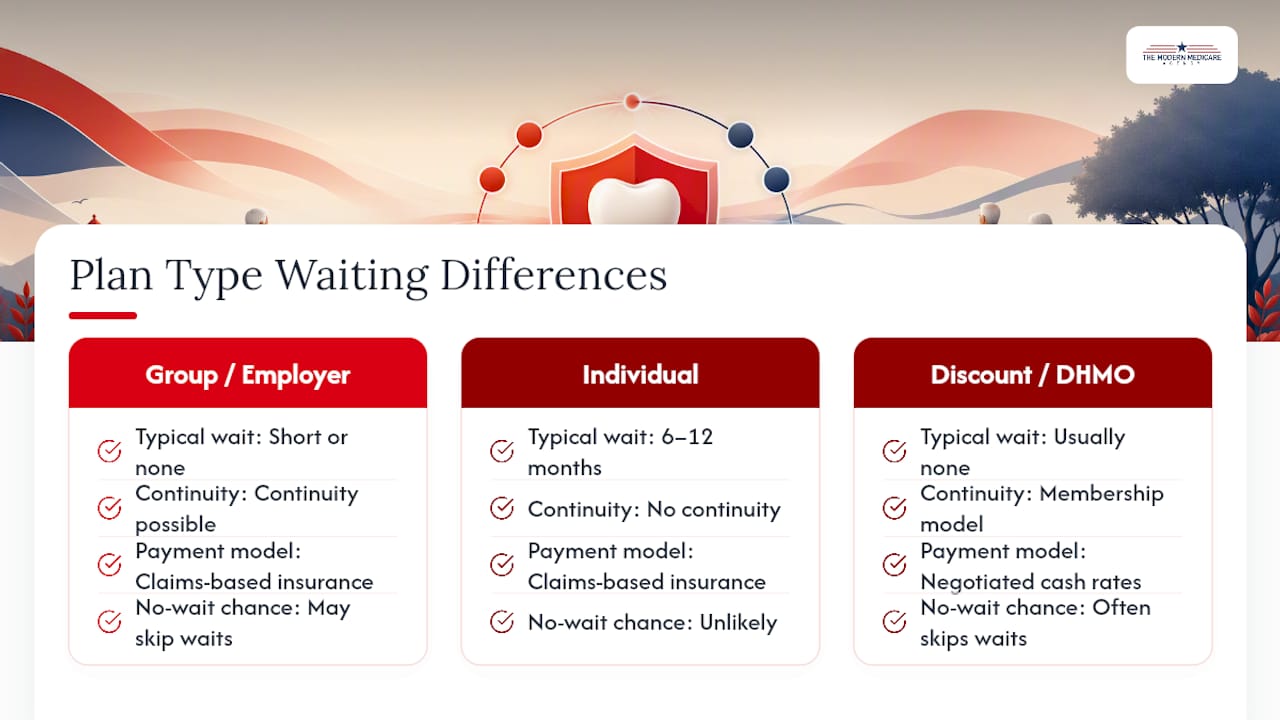
Employer or group plans. These often build in shorter waits, and some skip them entirely, especially for larger employer groups negotiating better terms with the carrier. If you’re moving from one employer plan to another without a coverage gap, insurers frequently apply continuity rules that eliminate the wait altogether, according to Delta Dental of Illinois.
Individual plans. Bought directly rather than through an employer, these plans commonly impose 6 to 12 month waits on basic and major services. Insurers do this to guard against adverse selection, meaning people who sign up right before they need expensive work and then drop the plan afterward.
Discount dental plans and some DHMOs. These aren’t insurance in the traditional sense. You pay an annual fee for access to a network of dentists offering pre negotiated rates, and because there’s no claims risk for the insurer to manage, Delta Dental confirms these products often skip waiting periods completely. The trade-off is that you’re paying discounted cash prices rather than having a percentage of the cost reimbursed.
For seniors weighing Medicare-related dental options, the plan type question gets more complicated. A Medicare Advantage plan with dental coverage may bundle dental benefits with different timing rules than a standalone policy.
Can You Get Your Waiting Period Waived?
Continuity of coverage is the mechanism most people use to skip the wait, and it works more often than most shoppers realize. If you had a similar dental plan before, and you’re enrolling in a new one without a long gap, the new insurer will often credit that prior coverage against its waiting period. MetLife explains that this window is typically 30 to 60 days between when old coverage ends and new coverage begins.
Insurers generally want to see:
- Proof of prior dental coverage, usually a plan summary or benefits certificate.
- Your termination date from the old plan, confirming the gap fell inside the accepted window.
- Explanation of Benefits (EOB) statements showing the old plan was actively used, not just held on paper.
Once you have those documents, contact the new insurer’s member services line directly and ask specifically for a “waiting period waiver” or “continuity of coverage credit.” Don’t assume it happens automatically. Some carriers apply it only when you flag it during enrollment.
Pro Tip: Keep a digital folder of every dental EOB and coverage termination letter you receive. You may not need it for a year, but when you switch plans, having it ready can save you months of waiting for the same coverage you already had.
Where to Find No-Wait Dental Coverage (and What It Costs You)
No-wait dental plans exist, and they’re worth considering if you need major work soon and don’t have prior coverage to lean on. Specialized carriers market these directly, and brokers who work with multiple insurers can usually pull up several options at once rather than making you shop one website at a time.
Spirit Dental & Vision is one example of a carrier advertising no waiting periods with next-day effective dates, though exact terms vary by state. The catch is real, and it shows up in one of three places:
- Higher monthly premiums. You’re paying for the removal of risk the insurer would otherwise manage with a wait.
- Narrower provider networks. Fewer in-network dentists can mean more driving or paying out-of-network rates.
- Lower annual maximums or waiting-adjacent caps. Some no-wait plans cap major-service payouts lower in year one even without a formal wait.
Forbes Advisor’s research backs this pattern up: no-wait plans commonly trade immediate access for higher costs or tighter restrictions somewhere else in the policy.
A no-wait plan tends to make financial sense when you already know you need major work, like a crown you’ve been putting off, and running the numbers shows the extra premium costs less than paying full price out-of-pocket while you wait. It makes less sense if your dental needs are mostly routine cleanings, since you’d be paying more every month for coverage you don’t need yet.
What to Do If You Need a Dentist During the Waiting Period
Start by confirming your preventive benefits, since Guardian Life notes that cleanings and exams are typically active from day one regardless of your plan’s overall waiting period. Book that appointment now rather than waiting for the rest of your coverage to kick in.
For anything beyond preventive care, a few options can bridge the gap:
- Ask your dentist’s office about their cash pay or in-network discount rate. Many offices offer a reduced price for people paying without insurance.
- Request a payment plan directly from the practice. Most dental offices will split larger procedures into monthly installments.
- Look into a discount dental plan as a temporary supplement. Since these typically skip waiting periods, they can cover the gap until your main policy’s wait ends.
Why Waiting Periods Exist and How to Weigh the Trade-off
Insurers use waiting periods to prevent people from buying a policy the week before a root canal and canceling it the month after. Without that guardrail, premiums would climb for everyone. The real decision comes down to math: compare the cost of a no-wait plan’s higher premium against the out-of-pocket cost of paying cash for treatment during a standard wait. If you’re weighing this alongside broader Medicare decisions, comparing dental coverage for seniors side by side with your medical benefits often clarifies which route actually saves money.
An Agent’s View on Waiting Periods and Senior Dental Coverage
Paul Barrett has helped Medicare consumers navigate coverage decisions since 2007, and waiting periods come up constantly. An agent’s job here is practical: verify whether your prior coverage qualifies for a continuity waiver, gather the paperwork insurers actually want, and compare no-wait alternatives against what you’d pay out-of-pocket. That legwork often saves more than the premium difference suggests.
— Paul
Get Help Comparing Dental Plans and Waiver Options
Insurance agents work with Medicare-age clients across the country who want a second set of eyes on dental coverage decisions, particularly the fine print around waiting periods that most people skip over. Rather than guessing whether your prior plan qualifies for a continuity waiver, our team can review your EOBs and termination dates and tell you plainly whether you’re eligible to skip the wait.

If you’re bringing prior coverage into the conversation, gather your last plan’s summary of benefits, your coverage termination date, and any recent EOBs before you call. That paperwork is what determines whether a new insurer waives your waiting period or holds you to the standard timeline. If you’re also sorting out how dental fits alongside Medicare Advantage or Medigap, our guide on adding dental insurance to your Medicare coverage walks through the timing questions most people miss. Ready to see your options? Start with a plan comparison and we’ll help you figure out which route gets you covered fastest.
This article is general information, not a substitute for advice from a qualified financial advisor. Consult a qualified financial professional about your own circumstances before acting on anything here.
Sources
- Best Dental Insurance With No Waiting Period (Forbes Advisor)
- What are dental insurance waiting periods? (Delta Dental)
- Insurance waiting period: What it is & how it works (MetLife)
- No waiting period dental insurance (Spirit Dental & Vision)
FAQ
What Is the Typical Waiting Period for Dental Insurance?
Preventive care is usually covered immediately, basic services commonly require a 3 to 6 month wait, and major services often take 6 to 12 months before coverage kicks in.
What Is the Dentist Two-Year Rule?
Some dental plans apply a 24 month waiting period specifically to the most expensive major procedures, like implants or certain bridgework, rather than the more typical 6 to 12 month range. Check your plan’s summary of benefits, since this “rule” varies significantly by insurer rather than being a fixed industry standard.
Which Dental Insurance Has No Waiting Period?
Specialized carriers like Spirit Dental & Vision advertise no-wait plans with next-day effective dates, though terms vary by state, and these policies typically carry higher premiums or narrower networks in exchange for immediate access.
Do Any Dental Plans Cover 100%?
Most plans cover preventive care like cleanings and exams at 100%, but basic and major services are typically reimbursed at a percentage, often 50% to 80%, even after any waiting period ends.