
Securing medicare for individuals with end-stage renal disease (ESRD) isn’t just about signing up for basic health insurance; it’s a strategic medical decision that protects your ongoing access to life-saving care. Coping with kidney failure is physically exhausting, and the added stress of frequent dialysis costs, expensive medications, and strict enrollment timelines can feel overwhelming. You want to keep your trusted nephrologist, avoid surprise bills, and protect your family finances, and that concern is completely valid.
You don’t have to face these complicated choices alone. In this 2026 guide, you’ll discover how Medicare covers dialysis, kidney transplants, and treatment options with compassionate, expert guidance. We’ll walk you through exact eligibility start dates, explain how the 30-month employer coordination period works, and break down your out-of-pocket protections across Medicare Advantage, Medigap, and Part D so you can move forward with confidence and peace of mind.
Key Takeaways
- Learn how qualification for medicare for individuals with end-stage renal disease (ESRD) works at any age, basing eligibility on your treatment needs and work history rather than retirement status.
- Discover how your coverage start date changes depending on whether you train for home dialysis or use an in-center clinic, plus how the 30-month employer coordination window protects your benefits.
- Compare the freedom of open provider networks in Original Medicare against the vital out-of-pocket spending caps provided by Medicare Advantage plans in 2026.
- Explore how supplemental Medigap policies and Part D plans protect your household budget from the high costs of regular dialysis sessions and vital immunosuppressive medications.
- See how partnering with an independent advocate lets you verify that your favorite dialysis clinic and nephrologist remain in-network at zero added cost to you.
Understanding Medicare Eligibility for Individuals with ESRD
Facing permanent kidney failure can stop you in your tracks, but knowing your health care rights brings immediate relief. Simply put, medicare for individuals with end-stage renal disease (ESRD) is a dedicated federal provision that extends health coverage to people facing irreversible kidney failure, regardless of how old they are. You do not have to wait until age 65 to receive this vital medical safety net. Since the landmark creation and history of the ESRD Medicare program in 1972, federal law has recognized that kidney failure requires ongoing, specialized intervention that no family should have to fund alone.
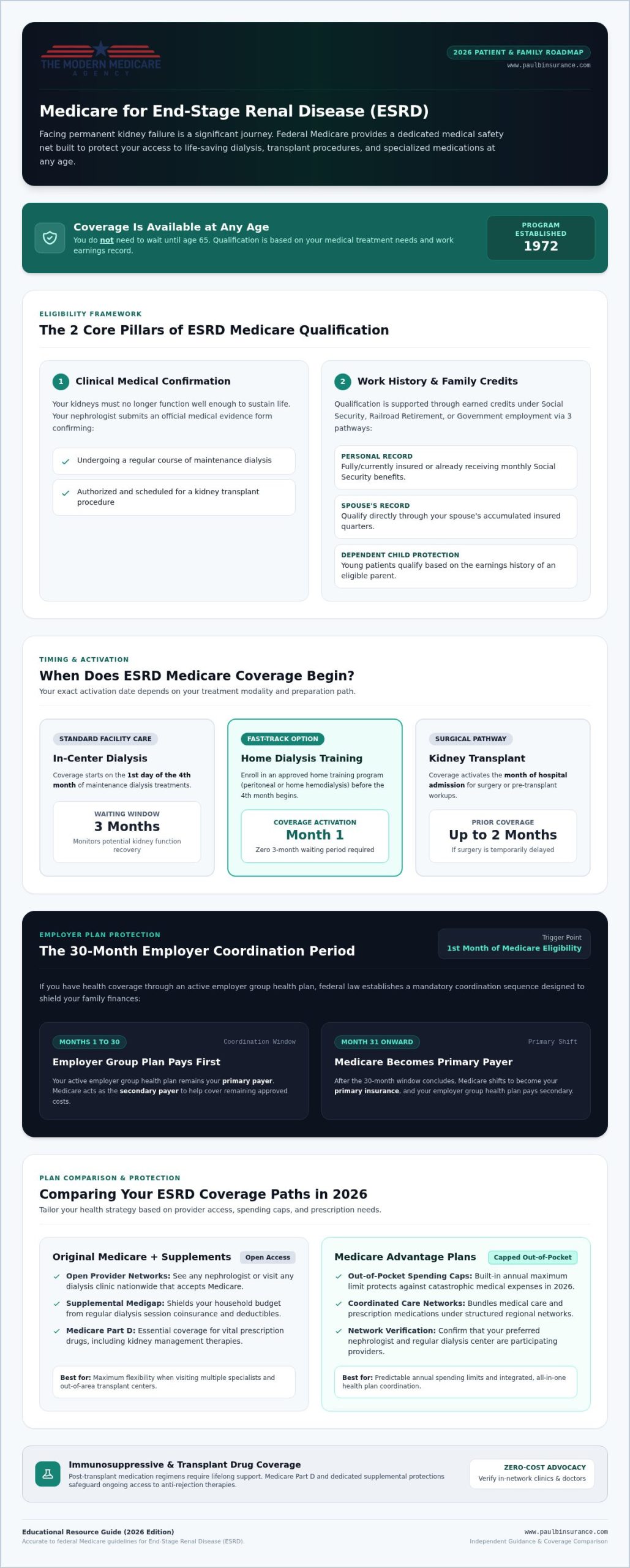
Qualifying involves two core pillars: clinical confirmation of your medical state and a verified work earnings record. Once these benchmarks are met, comprehensive protection opens up, shielding both your physical health and your family’s financial stability.
Medical Requirements for ESRD Medicare Qualification
To qualify on medical grounds, your kidneys must no longer function well enough to sustain life. This means your condition requires either a regular course of maintenance dialysis or an authorized kidney transplant procedure. Your nephrologist documents this through an official medical evidence form submitted directly to the Social Security Administration. Once your specialist confirms that permanent renal replacement therapy is underway, your clinical eligibility is established without traditional age limits.
Work History and Family Credit Criteria
Because Medicare is funded through payroll taxes, qualification also requires satisfying specific earned credit minimums under Social Security, the Railroad Retirement Board, or as a government employee. Fortunately, these guidelines are intentionally compassionate:
- Your Personal Record: You qualify if you have worked enough quarters to be fully or currently insured under Social Security guidelines, or if you already receive monthly Social Security benefits.
- Your Spouse’s Record: If your own work history is limited, you can qualify directly through your spouse’s earned work credits, provided they have accumulated sufficient insured quarters.
- Dependent Child Protection: Young patients with kidney failure can qualify based on the earnings history of a parent who meets the required work credits.
This family-centered framework ensures that a severe diagnosis does not leave young adults or stay-at-home parents stranded without options. If you’re weighing which private options might coordinate with this coverage, exploring our Medicare Advantage guide can show you how modern private networks deliver coordinated ESRD support for you and your loved ones in 2026.
When Coverage Starts and the 30-Month Coordination Period
Timing is everything when setting up your benefits. Dialysis schedules demand immense physical energy, so understanding the timeline for medicare for individuals with end-stage renal disease (ESRD) gives you immediate breathing room. While standard clinic care involves a short waiting period, your exact start date depends on the type of treatment you receive.
The Dialysis Waiting Period Explained Simply
For most patients receiving treatment at an in-center facility, coverage officially begins on the first day of the fourth month of dialysis. Federal guidelines use this three-month window to monitor whether kidney function might recover. But you do not always have to wait that long.
You can unlock coverage starting on your very first month of treatment if you enroll in an approved home dialysis training program before the fourth month begins. This includes training for peritoneal dialysis or home hemodialysis. Transplant recipients also enjoy earlier relief. If you enter an approved hospital for a transplant or related surgical workups, your coverage activates that same month. The Official Medicare ESRD eligibility and coverage guidelines allow coverage to start up to two months prior if surgery is temporarily delayed.
How the 30-Month Coordination Period Works
If you have insurance through an active employer group health plan, an essential rule called the 30-month coordination period takes effect. This window begins the first month you become eligible for Medicare, even if you delay your actual enrollment. During these 30 months, your employer coverage pays your medical bills first.
Why enroll in Medicare if your work plan is already paying? Setting up secondary coverage through medicare for individuals with end-stage renal disease (ESRD) creates an extra layer of financial protection. While your job-based plan pays primary, Medicare steps in as secondary coverage to help pay down high deductibles, clinic coinsurance, and doctor copays.
After the 30-month coordination window ends, Medicare automatically shifts into the primary payer position. Your employer plan then becomes secondary. Transitioning between these payers can feel overwhelming when managing fatigue, which is why coordinating your benefits with a patient advocate at The Modern Medicare Agency ensures your care team gets billed correctly without administrative headaches.
Comparing Coverage Options: Original Medicare vs. Medicare Advantage for ESRD
Choosing how to receive your benefits is one of the most important decisions you will make. Until recent years, patients with kidney failure had limited private plan options. Today in 2026, structuring your medicare for individuals with end-stage renal disease (ESRD) comes down to balancing total provider freedom against predictable out-of-pocket spending limits.
Original Medicare Benefits and Dialysis Coverage
Original Medicare provides broad, nationwide access. Part A covers inpatient hospital stays and specialized transplant surgery costs. Part B covers your outpatient medical care, including regular dialysis sessions, nephrologist visits, and diagnostic blood tests. You can visit any dialysis center or specialist in the country, as long as they accept Medicare.
The primary hurdle with Original Medicare is the absence of an annual spending cap. Part B leaves you responsible for a standard 20 percent coinsurance on all outpatient dialysis services after meeting your annual deductible. Because maintenance dialysis occurs several times each week, that 20 percent out-of-pocket obligation accumulates quickly without supplemental coverage in place.
Medicare Advantage Considerations for Kidney Patients
Ever since federal rules opened Medicare Advantage enrollment to ESRD patients, participation has expanded dramatically. Between 2020 and 2026, enrollment in these private plans surged from roughly 125,000 to nearly 280,000 beneficiaries. The driving factor behind this shift is financial protection.
Medicare Advantage plans combine hospital and outpatient care into one package, and they must include a legal limit on what you pay out of pocket. In 2026, the annual in-network out-of-pocket maximum is capped at $9,250. Once your covered copays and coinsurance reach that threshold, the plan covers 100 percent of your covered clinical care for the rest of the calendar year. Some regions also offer Chronic Condition Special Needs Plans tailored specifically around kidney care coordination.
Provider networks require careful attention. Unlike Original Medicare, Medicare Advantage plans rely on designated networks of doctors, hospitals, and clinics. If you choose this path, confirming that your preferred dialysis facility and nephrologist are under contract is essential. You can review the official Medicare ESRD eligibility and coverage standards or consult our detailed Medicare Advantage guide to compare network structures across top carriers before making your final selection.
Supplemental Protection: Medigap, Part D, and Immunosuppressive Drugs
Managing kidney disease involves significant outpatient treatment and ongoing prescriptions. While basic Medicare provides a foundational safety net, setting up complete protection requires addressing the gaps left behind. For anyone relying on medicare for individuals with end-stage renal disease (ESRD), pairing your foundation with targeted supplemental coverage keeps medical bills predictable.
Navigating Medigap Availability Under Age 65
Medicare Supplement plans, commonly known as Medigap, pay the 20 percent coinsurance and deductibles that Part B leaves behind. For someone receiving dialysis multiple times a week, a Medigap plan can prevent thousands of dollars in surprise expenses. Securing one, however, often depends on where you live.
Federal law guarantees Medigap access to individuals turning 65, but it does not mandate the same protection for younger beneficiaries with kidney failure. Instead, access is determined entirely by state legislation. Some states require private insurers to offer at least one supplemental option to under-65 kidney patients, while others leave options limited or subject to medical underwriting. If you live in an area where private supplements are restricted or carry steep premiums, checking our comprehensive Medigap policy breakdown will help clarify the specific rules and consumer protections in your state.
Prescription Drug Coverage and Transplant Medications
Medication regimens for kidney disease are complex and require careful coordination between different parts of Medicare:
- Part B Transplant Coverage: If Medicare helped pay for your kidney transplant, Part B covers your necessary anti-rejection immunosuppressive medications as long as you maintain active Part B coverage.
- The Part B-ID Benefit: If your standard Medicare coverage ends 36 months after a successful transplant and you lack other insurance, you can retain lifetime access to anti-rejection medications. In 2026, this dedicated Part B Immunosuppressive Drug benefit carries a $121.60 monthly premium and a $283 deductible, paying 80 percent of drug costs.
- Medicare Part D: Standalone Medicare Part D plans cover your daily home maintenance prescriptions, such as blood pressure pills, phosphate binders, and insulin. Every Part D formulary must include immunosuppressive medications by law.
Sorting through drug formularies and supplemental rules is challenging when your physical energy is low. To review available coverage options and build a plan tailored to your health needs, connect with an independent advisor at The Modern Medicare Agency for personal support at no added cost.
How to Choose Your ESRD Medicare Path with Confidence
Balancing frequent dialysis sessions, clinic schedules, and specialist appointments takes immense physical and emotional energy. Wrestling with complex health insurance rules should not be an added burden. Selecting the right path under medicare for individuals with end-stage renal disease (ESRD) simply requires a calm, orderly process that puts your clinical relationships first.
Step-by-Step ESRD Coverage Checklist
Before enrolling in any plan for 2026, take time to walk through these essential validation steps:
- Confirm Every Medical Provider: Verify that your primary nephrologist, your local dialysis facility, and your preferred transplant center participate in the plan’s network. Remember to check vascular access surgeons who maintain your graft or fistula as well.
- Audit Your 2026 Drug Formularies: Collect your exact prescription list, including phosphate binders, blood pressure treatments, and calcimimetics. Ensure each medication falls into an affordable tier on the plan’s formulary.
- Calculate Total Annual Exposure: Look beyond monthly premiums. Add up projected clinic copayments, coinsurance, and deductibles, then compare that sum against the plan’s maximum out-of-pocket spending limit.
Partnering with an Independent Medicare Advisor
Trying to compare dozens of insurance plans on your own can feel isolating, especially while coping with the fatigue of kidney failure. Working with an independent broker gives you an experienced patient advocate who handles the legwork for you. Captive insurance agents represent only one company, but an independent brokerage compares options across more than 40 top carriers in over 34 states.
An independent advisor checks provider network directories directly, double-checks local dialysis facility contracts, and verifies your drug coverage without bias. This personalized guidance comes at zero cost to you; there are never any consulting fees, hidden charges, or rate markups. You receive clear answers and ongoing support, allowing you to focus your energy entirely on your health and treatments.
When you are ready to evaluate your coverage for 2026, connect with The Modern Medicare Agency to review your choices side by side and secure your care with absolute confidence.
Take Control of Your Kidney Care and Coverage in 2026
Facing kidney disease requires tremendous strength, but securing reliable health insurance shouldn’t drain your energy. Enrolling in medicare for individuals with end-stage renal disease (ESRD) provides essential access to life-saving dialysis and transplant treatments, no matter your age. Whether you choose the flexibility of Original Medicare paired with supplemental coverage or the predictable spending caps of Medicare Advantage, your care and quality of life come first.
You don’t have to evaluate provider networks, drug tiers, and coordination rules by yourself. When you are ready to protect your health and your family finances, connect with The Modern Medicare Agency for personalized, caring ESRD coverage guidance. As independent advocates licensed across more than 34 states, we compare plans from over 40 leading carriers to help you make an informed choice at absolutely no cost or obligation to you. You can take this step forward with confidence, knowing you have a dedicated ally supporting your care journey.
Frequently Asked Questions
Can I get Medicare if I am under 65 and have ESRD?
Yes, you can qualify for medicare for individuals with end-stage renal disease (ESRD) at any age. You don’t have to wait until you turn 65 or prove a separate long-term disability. Eligibility requires a medical diagnosis showing permanent kidney failure that demands maintenance dialysis or a kidney transplant, along with meeting necessary work credit requirements through your own employment history, your spouse’s record, or a parent’s earnings.
Does Medicare cover 100 percent of dialysis treatment costs?
No, Original Medicare does not pay 100 percent of your treatment expenses. Part B covers regular outpatient dialysis sessions and specialist care, but it leaves you responsible for a 20 percent coinsurance after you meet your annual Part B deductible ($283 in 2026). Because you receive dialysis multiple times every week, pairing Medicare with supplemental Medigap coverage or enrolling in a Medicare Advantage plan helps protect your household against limitless medical bills.
Can an individual with ESRD join a Medicare Advantage plan in 2026?
Yes, individuals with ESRD can freely enroll in any Medicare Advantage plan offered in their local county throughout 2026. This right has been protected since federal guidelines expanded in 2021. When exploring these plans, make sure to verify that your current dialysis center, kidney specialist, and local hospital network participate fully in the plan’s contracted network to prevent unexpected out-of-network bills.
How does the 30-month coordination period work with employer insurance?
If you keep insurance through an employer, your group health plan serves as the primary payer during the first 30 months of Medicare eligibility. Medicare acts as secondary coverage during this coordination window, helping pay remaining coinsurance, copays, and deductibles. Once those 30 months finish, the roles reverse automatically: Medicare shifts into the primary payer position, and your job-based plan becomes secondary.
Does Medicare pay for kidney transplant surgery and anti-rejection medications?
Yes, Medicare provides comprehensive support for transplant care. Part A pays for your inpatient hospital stay and transplant surgical procedures at Medicare-approved facilities. Part B covers your necessary anti-rejection medications following surgery, provided Medicare helped pay for the transplant. Standalone Part D prescription drug plans cover your regular daily medications, ensuring you maintain access to required maintenance therapies before and after your operation.
What happens to my ESRD Medicare coverage if I receive a successful kidney transplant?
Your full benefits under medicare for individuals with end-stage renal disease (ESRD) typically end 36 months after a successful kidney transplant, assuming you don’t qualify by age or other disability. If you lack other comprehensive health insurance when that 36-month mark arrives, you can stay enrolled in the dedicated Part B-ID benefit, which provides permanent lifetime coverage for your vital anti-rejection medications.

Article by
Paul Barrett
Paul Barrett, CMIP is the founder of The Modern Medicare Agency, an independent Medicare-only brokerage based in Melville, NY. With 18 years of Medicare-exclusive experience, a CMIP designation, and more than 5,000 clients served across 37 states, Paul is one of the most credentialed independent Medicare specialists on Long Island — and one of the most direct.
He represents 40+ carriers with no quotas and no allegiances, which means his recommendations are based entirely on what fits each client's specific situation. He is the author of Medicare Mastery Unlocked and host of the Wise Guys Retirement Talk podcast. His content is grounded in primary sources, real carrier intelligence, and 18 years of watching what happens when people get Medicare right — and when they don't.
📞 631-358-5793 | paulbinsurance.com