




The key features of a good final expense policy are clear coverage for funeral costs, medical bills, and other needs, with a death benefit the named beneficiary can use. If you’re weighing what the key features of a good final expense policy are, look beyond the coverage amount: understand how premiums work, whether there’s a waiting period, and what the policy may not cover well.
It’s understandable to want a simple answer when planning for expenses your family may face later. But policies can differ in their costs, application requirements, benefit terms, and limitations. This guide explains what final expense insurance can pay for, what can affect premiums in 2026, what applying may involve, and the advantages and trade-offs to consider. You’ll have a clearer way to judge whether this type of coverage fits your needs, and what details deserve your attention before you decide.
Key Takeaways
- Final expense benefits can help with funeral costs, medical bills, and other expenses, giving beneficiaries flexibility in how they use the payout.
- Compare coverage purpose and benefit terms with traditional life insurance to see whether a smaller, end-of-life-focused policy fits your needs.
- Premiums depend on factors such as age, health, and coverage amount, while waiting-period rules can affect when the full benefit is available.
- Many final expense policies don’t require a medical exam, but application questions and policy terms still matter.
- Review both the advantages and limits: lifelong coverage and predictable premiums may be appealing, but a modest benefit may not cover larger debts or long-term support needs.
What expenses can final expense insurance cover?
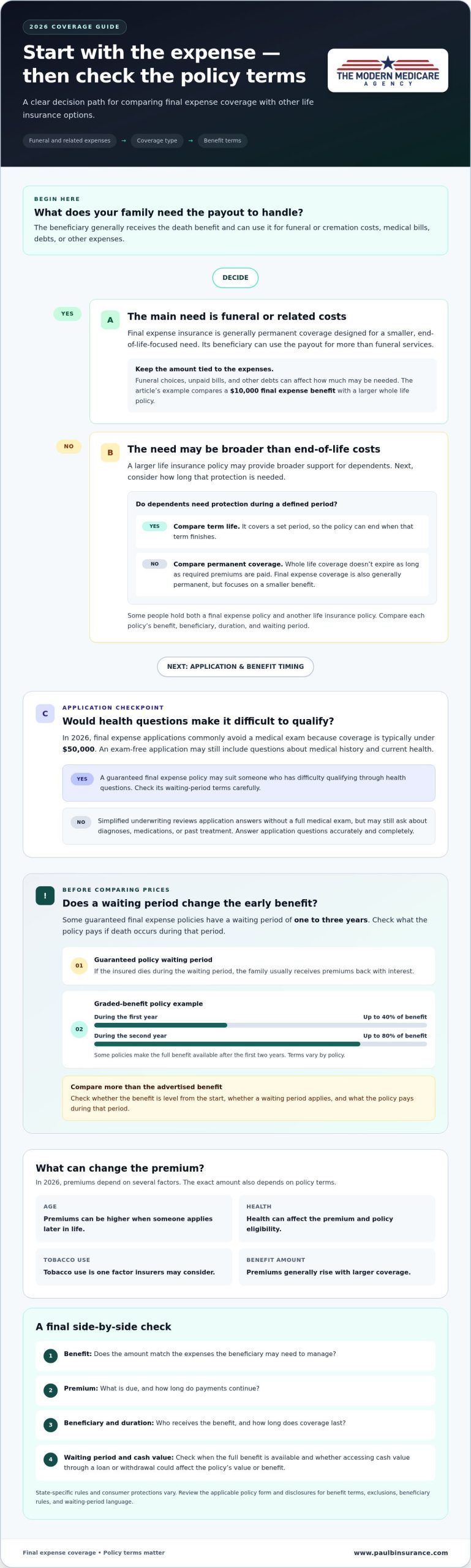
Final expense insurance can help pay funeral or cremation costs, medical bills, debts, and other expenses. The death benefit is generally paid to the named beneficiary, who can use it for eligible needs, not just funeral services. For example, a beneficiary might use part of the payout for a funeral and the rest for outstanding medical bills or everyday expenses.
Burial insurance is another name often used for final expense coverage. It’s generally designed for a smaller, specific need than traditional life insurance. These figures describe common coverage amounts, not a rule for determining what a family needs.
The main difference is purpose and duration. Final expense insurance is generally permanent coverage intended to help with end-of-life costs. Whole life insurance is also permanent, and coverage doesn’t expire as long as required premiums are paid. Term life insurance covers a set period, so the policy can end when that term finishes. A larger life insurance policy may provide broader support for dependents, while final expense coverage focuses on a smaller benefit.
For example, someone focused on funeral arrangements might compare a $10,000 final expense benefit with a larger whole life policy. Someone who needs protection for dependents during a defined period might consider term coverage instead. The amount should reflect the expenses the beneficiary may need to manage, not simply the lowest available option. Funeral choices, unpaid bills, and other debts can all affect that calculation.
Can you combine final expense and life insurance? Yes. A person may hold both, using a smaller final expense benefit for funeral costs and another life insurance policy for broader family needs. Before relying on both, compare each policy’s benefit, beneficiary, duration, and any waiting period. A waiting period can affect when the full final expense benefit becomes available, so read the policy terms carefully.
In the United States, state-specific rules and consumer protections vary, so policy requirements can depend on where coverage is issued. Read the applicable policy form and disclosures to understand benefit terms, exclusions, beneficiary rules, and waiting-period language.
When comparing options in 2026, ask what each life insurance policy is meant to pay for and how long it lasts. Final expense coverage may suit someone who wants a focused benefit for funeral or related costs. It may not be enough for large debts or long-term support for dependents. Comparing it with term and whole life coverage helps clarify whether one policy, or a combination, better matches those needs.
How much does a final expense policy cost?
In 2026, a final expense premium depends on factors such as age, health, tobacco use, and the benefit amount. Premiums generally rise with larger coverage and can be higher when someone applies later in life. The exact premium also depends on the policy’s terms, so compare the amount due and how long payments continue.
How do premiums, benefit amounts, and cash value work? You pay premiums to keep coverage active, and the insurer pays the stated death benefit to the named beneficiary after a covered death. Final expense insurance often includes cash value, which may build while a whole life policy remains active. Accessing it through a loan or withdrawal can affect the policy’s value and benefit.
The death benefit usually gives the beneficiary flexibility. They can use it for a funeral, medical bills, small debts, or immediate living expenses, rather than submitting each cost for reimbursement. For example, if funeral arrangements cost less than the payout, the beneficiary can use the remaining funds for another need. That flexibility differs from a prepaid funeral arrangement tied to selected goods or services.
Waiting rules can change what the family receives early in the policy. Some guaranteed final expense policies have a waiting period of one to three years. If the insured dies during that period, the family usually receives premiums back with interest. A graded-benefit policy may pay up to 40% of its benefit during the first year and up to 80% during the second year. Some policies make the full benefit available after the first two years.
These details matter when comparing policies. Don’t compare only the advertised benefit. Check whether it’s level from the start, whether a waiting period applies, and what the policy pays if death occurs during that period. A guaranteed policy may suit someone who has difficulty qualifying through health questions, but its waiting terms can make it less useful for immediate protection.
Final expense coverage may fit someone seeking a focused benefit for funeral costs and related bills, rather than extensive income replacement. It may be less suitable when dependents need long-term support or debts exceed the planned benefit. Before choosing, compare the premium, benefit amount, beneficiary details, waiting terms, and cash-value provisions side by side. A clear comparison shows whether the policy’s protection matches the need.
Application and medical exam requirements
In 2026, final expense applications commonly avoid a medical exam because coverage is typically under $50,000. That can make applying simpler than some larger life insurance applications. It doesn’t mean every applicant skips health questions. Insurers may ask about medical history and current health to decide eligibility, pricing, or which policy type fits.
Simplified underwriting means an insurer reviews application answers without requiring a full medical exam. The application may still ask about diagnoses, medications, or past treatment. Answer every question accurately and completely. For example, if a form asks about a condition or prescription, provide the information requested rather than guessing what the insurer considers relevant.
A medical exam and health questions are different parts of an application. An exam involves an in-person or scheduled health assessment; questions ask you to report information directly. Final expense insurance commonly doesn’t require an exam, but the application questions still matter. A policy described as guaranteed acceptance may have different eligibility rules, so read its terms and any waiting-period language before deciding.
Health can affect which application path is available. Someone with a medical condition may find a simplified application difficult if the insurer’s questions address that condition. A guaranteed policy can be an option for people who don’t qualify through health-based screening, but some guaranteed policies have a waiting period of one to three years. Compare that delay with the benefit terms before relying on the coverage for loved ones.
The application also records practical details that can affect how a claim is handled. Name the intended beneficiary clearly, and check the spelling and relationship shown on the form. For example, if you want an adult child to receive the benefit, make sure the application identifies that person rather than relying on a verbal instruction. Keep a copy of the completed application with the policy documents.
Consider what the benefit may need to cover. Final expense insurance can help pay funeral costs, burial or cremation expenses, outstanding medical bills, and legal fees related to settling an estate. These costs are separate from the application itself, but estimating them helps you select a suitable benefit amount. A smaller policy may address funeral arrangements, while a family expecting medical bills and estate expenses may need to consider those needs together.
Before submitting an application, review three items: your health answers, beneficiary details, and the policy’s waiting terms. Then compare the proposed coverage with the costs you want to address. Whole life insurance can provide coverage that doesn’t expire as long as premiums are paid, while final expense policies are typically designed around end-of-life expenses. Clear paperwork helps loved ones understand the coverage when they need it.
How final expense insurance works
Final expense insurance provides a death benefit to a named beneficiary after the insured person dies. The beneficiary can use that money for funeral costs, medical bills, cremation, or other needs.
How Coverage Works
You choose a coverage amount and name who should receive the benefit. After a covered death, the beneficiary makes a claim with the insurer and receives the policy proceeds. Some claims are paid in 24 hours, and beneficiaries may sometimes receive funds in less than a week. The payout can help protect loved ones from handling immediate expenses without available funds.
For example, a beneficiary might use part of the benefit for cremation and another part for medical bills. Any remaining funds can go toward other needs. This flexibility is a key difference from arrangements that restrict payment to specific funeral goods or services.
Insurance and Prepaid Funeral Plans
Final expense insurance pays a death benefit to a beneficiary, while a prepaid funeral plan is generally connected to selected goods or services. That difference matters if your preferences or circumstances change. With insurance, the beneficiary can use the money for funeral costs or other expenses. A prepaid arrangement may be more closely tied to the choices made when it was purchased.
Consider someone who wants cremation but also wants funds available for unpaid bills. A life insurance payout gives the beneficiary discretion over how to use the proceeds. A prepaid plan may cover planned funeral arrangements instead. Compare what each option pays for and who controls the funds before choosing.
Definition of Final Expense Insurance
Final expense insurance is permanent life insurance intended to help cover end-of-life expenses. It’s also called burial insurance or final expense life insurance. The policy remains active as long as required premiums are paid, and its death benefit goes to the named beneficiary.
This definition helps distinguish final expense coverage from a savings account or term policy. Its central purpose is to provide a benefit for later expenses, not income replacement during a defined period. The policy documents explain the benefit, beneficiary, exclusions, and any waiting period that may affect payment.
Insurer reputation and payout experience matter because the beneficiary will handle the claim. Compare the insurer’s written claim process, policy terms, and required paperwork. Make sure the person named knows where the policy is kept. Clear records can help loved ones locate coverage and understand what to submit after a death.
There are alternatives. A savings account can keep funds accessible during life, while prepaying funeral expenses can set aside money for planned arrangements. Traditional term or whole life insurance may also serve broader family needs. For example, someone seeking income support for dependents may compare a larger life policy with a focused final expense policy. The right fit depends on whether flexibility, planned services, or broader protection matters most.
Policy advantages and limitations
In 2026, final expense coverage can make one part of family planning more predictable, but only while its premiums remain affordable. A policy that fits today’s budget may feel different after a change in income or household costs. Consider whether you could keep making payments during a tighter month. Coverage that lapses because payments become difficult may not provide the support you intended.
Some policies keep premiums level, while others may allow them to rise. Read the payment terms as part of your decision, not as fine print. Consider how the cost fits alongside housing, healthcare, and other regular bills. A premium that seems manageable now should also suit the budget you expect to have later.
Some policies also build cash value, meaning money can accumulate within the policy. Borrowing or withdrawing from that amount can reduce what the beneficiary receives. This feature may provide access to funds during life, but it can also reduce the protection left for loved ones. Consider whether you’re likely to use that money or prefer to keep the benefit intact.
Pay close attention to how the policy handles an early claim. Some plans pay a reduced benefit during an initial period instead of paying the full amount immediately. That difference matters if your main goal is to help with arrangements soon after your death. Read the policy’s payment schedule and understand what the beneficiary would receive at each stage.
What are the key features of a good final expense policy? Look for understandable terms, premiums you can sustain, and a benefit that matches the need. A large coverage amount may sound reassuring, but it isn’t automatically better if the premiums strain your budget or the payout terms don’t fit your plans.
A smaller benefit can serve a focused purpose, yet it may leave larger financial needs unmet. For example, a family relying on one person’s income may need more protection than a funeral-focused policy provides. Separate the goal of covering final arrangements from goals like supporting dependents or managing substantial debts. This makes it easier to judge whether this coverage should stand alone or sit alongside other protection.
Before deciding, compare each policy’s payment schedule, how long coverage lasts, what the beneficiary receives, and any conditions that reduce an early payout. Then consider how those terms fit your budget and family’s needs. The strongest choice isn’t simply the policy with the largest benefit. It’s coverage with clear costs and limits, and a purpose that matches what you want it to do.
The Modern Medicare Agency: Medicare Advantage Plans
The Modern Medicare Agency helps people compare Medicare Advantage Plans alongside other coverage needs. If you’re reviewing final expense protection while also considering Medicare options, keep those decisions distinct: final expense coverage addresses end-of-life costs, while Medicare Advantage Plans provide Medicare coverage. The agency also offers Medicare Supplement (Medigap) Plans, Medicare Part D Plans, and Life Insurance, giving you coverage options to discuss as your needs change.
Turn to The Modern Medicare Agency when you want guidance comparing Medicare plan choices or considering Life Insurance as part of your broader coverage picture. You can review options with an independent brokerage and decide what fits your priorities. To start a conversation, contact The Modern Medicare Agency.
Make your next coverage decision with clarity
In 2026, give yourself time to connect a policy’s purpose with your family’s needs. Before choosing, write down who you want to protect, what expenses you want addressed, and what ongoing premium fits your budget. Then keep the policy details somewhere your beneficiary can find them. That small step can make a difficult moment easier to manage.
Knowing the key features of a good final expense policy can help you make a more confident choice, but it’s also useful to consider your broader coverage picture. The Modern Medicare Agency offers Medicare Advantage Plans, Medicare Supplement (Medigap) Plans, and Medicare Part D Plans. If you want help comparing Medicare coverage options, you can request a free consultation for guidance based on your priorities.
Contact The Modern Medicare Agency to discuss your coverage questions and take the next step at your own pace.
Frequently Asked Questions
How does it work?
You choose coverage, name a beneficiary, and pay premiums to keep the policy active. After your death, the beneficiary contacts the insurer and submits the required claim documents. For example, if your named beneficiary is your adult child, tell them where the policy information is stored. Keeping the insurer’s name and policy details accessible can make it easier for them to begin the claim process.
How much does it cost per month?
Monthly premiums vary based on age, health, tobacco use, coverage amount, and policy terms. For a useful comparison, request the premium for the same benefit amount across the policies you’re considering. Then compare how long that payment lasts and whether it can change. A lower initial payment alone doesn’t show the full cost of keeping coverage active over time.
What can the death benefit cover?
The beneficiary can use the payout for funeral arrangements, cremation or burial, medical bills, debts, or immediate household needs. For example, if family members have already arranged and paid for a service, they may use the benefit toward other expenses. The named beneficiary receives the proceeds, so discuss your intentions with that person and keep policy details accessible.
What features are included in the policy?
Policy features vary, so compare the written terms rather than relying on the label “final expense.” Look for the benefit amount, premium schedule, beneficiary designation, cash-value terms, and any waiting-period provisions. Also review what happens if premiums stop or the policyholder borrows against cash value. These details show how coverage works over time and what the beneficiary may receive.
Who needs burial insurance, and why?
Burial insurance may suit someone who wants a dedicated benefit for end-of-life expenses and doesn’t have another policy or savings set aside for them. For example, an older adult may want to leave funds for a relative handling arrangements. It may be less suitable when the main need is replacing income for dependents or covering substantial long-term obligations.
What is final expense insurance, and who is it designed for?
Final expense insurance is life insurance intended to help pay end-of-life costs. It’s generally designed for people seeking a focused benefit for expenses such as funeral services, medical bills, or debts. Someone considering it can start by identifying who would manage these expenses and what funds that person could access. That clarifies whether this type of coverage matches the intended need.
What coverage amounts are typical for final expense policies?
The right amount depends on the expenses you want the beneficiary to handle and any other funds available. For instance, someone with separate savings for funeral arrangements may choose a different benefit than someone relying on insurance for those costs.
How much do final expense policies cost by age, gender, and coverage amount?
Premiums generally increase with age and coverage amount, and tobacco use and health can also affect rates. Insurers may price policies differently by gender. For a meaningful comparison, use the same benefit amount and payment schedule, then compare offers for the applicant’s age and health profile. Review the full premium terms, including whether payments stay level or may rise over time.

Article by
Paul Barrett
Paul Barrett, CMIP is the founder of The Modern Medicare Agency, an independent Medicare-only brokerage based in Melville, NY. With 18 years of Medicare-exclusive experience, a CMIP designation, and more than 5,000 clients served across 37 states, Paul is one of the most credentialed independent Medicare specialists on Long Island — and one of the most direct.
He represents 40+ carriers with no quotas and no allegiances, which means his recommendations are based entirely on what fits each client's specific situation. He is the author of Medicare Mastery Unlocked and host of the Wise Guys Retirement Talk podcast. His content is grounded in primary sources, real carrier intelligence, and 18 years of watching what happens when people get Medicare right — and when they don't.
📞 631-358-5793 | paulbinsurance.com