




Your ZIP code can help you find a licensed Medicare agent familiar with plans in your area. Finding a Medicare advisor near me can also begin with your state’s State Health Insurance Assistance Program (SHIP), which provides local, one-on-one Medicare counseling at no cost. These are different kinds of help, and understanding the difference can help you choose what suits your needs.
Medicare choices can feel overwhelming when costs, coverage, and provider networks all matter. Learn how agents and brokers work, how their services differ from SHIP counseling, and how to find local enrollment help. You’ll also find practical ways to compare advisors, so you can ask informed questions and move forward with confidence.
Key Takeaways
- Use your ZIP code to focus your search on licensed Medicare enrollment help familiar with plans in your area.
- Understand how an agent’s or broker’s plan options and payment arrangement may shape the guidance they provide.
- Compare independent brokers, captive agents, call centers, and SHIP counselors to find the kind of support that fits your needs.
- Prepare questions about coverage, costs, medications, and provider networks before reviewing plan recommendations.
- Learn what information to have ready and what steps can make enrollment assistance more useful.
How can I find the best Medicare Advisor near me?
In 2026, begin with your ZIP code and compare advisors who serve your area. Look at licensing, carrier affiliations, and whether their explanations match your needs.
According to the Centers for Medicare & Medicaid Services (CMS), people turning 65 become eligible for Medicare enrollment. If that applies to you, make a short list of questions about coverage, doctors, prescriptions, and enrollment before contacting an advisor. Using the same questions in each conversation makes it easier to compare the answers you receive.
Review each advisor’s carrier affiliations. Ask whether they represent one insurance company or can compare plans from multiple carriers, and which options they can review for your ZIP code. Affiliations shape the plans an advisor can present, so pay attention to how clearly they explain the choices available to you.
Local knowledge can help you assess whether a plan suits the care you use. Make a list of your doctors, preferred hospitals, and regular prescriptions, then ask how the advisor will account for them. For example, if you see a specialist in Manhattan, ask how the comparison considers that provider and where you usually receive care.
In New York City and Long Island, narrow your search by ZIP code and the communities where you receive care. A borough or town name alone won’t show whether your providers participate in a plan’s network. If you receive care in both Queens and Nassau County, mention both locations so the discussion reflects your routine.
SHIP, your State Health Insurance Assistance Program, is another source of Medicare counseling. It provides local, one-on-one counseling at no cost. Counselors can help you review coverage, compare costs, and understand provider networks. In 2026, you can use SHIP counseling to clarify questions before making a plan decision with an insurance advisor.
Connecting With a Local Medicare Expert
To connect with a local advisor, search by ZIP code and arrange a conversation about your care priorities. Share your doctors, hospitals, prescriptions, and preferred way to receive care. Ask which carriers the advisor represents and how that affects the plans they discuss. A useful conversation explains why each option may fit, rather than offering only a plan name.
Advisor Licensing and Information Risks
Before sharing Medicare details, ask for the advisor’s full name and license information, then verify them through your state insurance department. An unlicensed advisor may not be authorized to discuss insurance plans in your state. Protect your Medicare number and other personal information: share it only when you understand who is requesting it and why.
How Do Medicare Agents or Medicare Insurance Brokers Work?
In 2026, an agent or broker can help you make sense of private Medicare plan choices. The process should connect your priorities to specific plan details, not leave you with a list of names.
A useful planning conversation starts with what matters most to you. Bring your medication list, preferred pharmacy, doctors, and questions about your care. The advisor can use these details to compare coverage and explain trade-offs. If you receive a comparison, look for clear information about benefits, provider access, and prescription coverage, along with an explanation of why each option is included.
The number of plans worth reviewing depends on your location and needs. The process may include reviewing 10 plans if that many need consideration. Rather than focus on the longest list, ask the advisor to explain which differences could affect your decision. For example, a plan with a preferred doctor in its network may matter more to you than a feature you won’t use.
Medicare plan types serve different needs. Medicare Advantage plans provide coverage through private plans, while Medicare Supplement, also called Medigap, helps with certain costs under Original Medicare. Part D plans provide prescription drug coverage. Ask the advisor to distinguish these options in the context of your current coverage. A Medicare Advantage plan guide can help you prepare focused questions.
Ongoing Support and Plan Updates
Plan details can change from year to year, so a recommendation needs to match the plan year you’re considering. Ask what support is available if your prescriptions, doctors, or care priorities change. For 2026, keep the comparison and any plan documents together, so you can refer to the specific coverage details discussed during your review.
Broker, Agent, and SHIP Counselor Roles
A broker compares plans from insurance companies they represent; an agent may represent one or several insurers. Insurance companies pay brokers when clients enroll. A SHIP counselor provides Medicare counseling rather than selling insurance plans. Choose the kind of help you need, whether that’s plan recommendations, enrollment guidance, or counseling.
Before deciding, ask the advisor to explain how each option matches your priorities and what trade-offs remain. Take time to consider the comparison. A clear discussion should leave you able to explain why a plan may fit, which details matter most, and what questions you still need answered.
Independent brokers versus captive agents and call centers
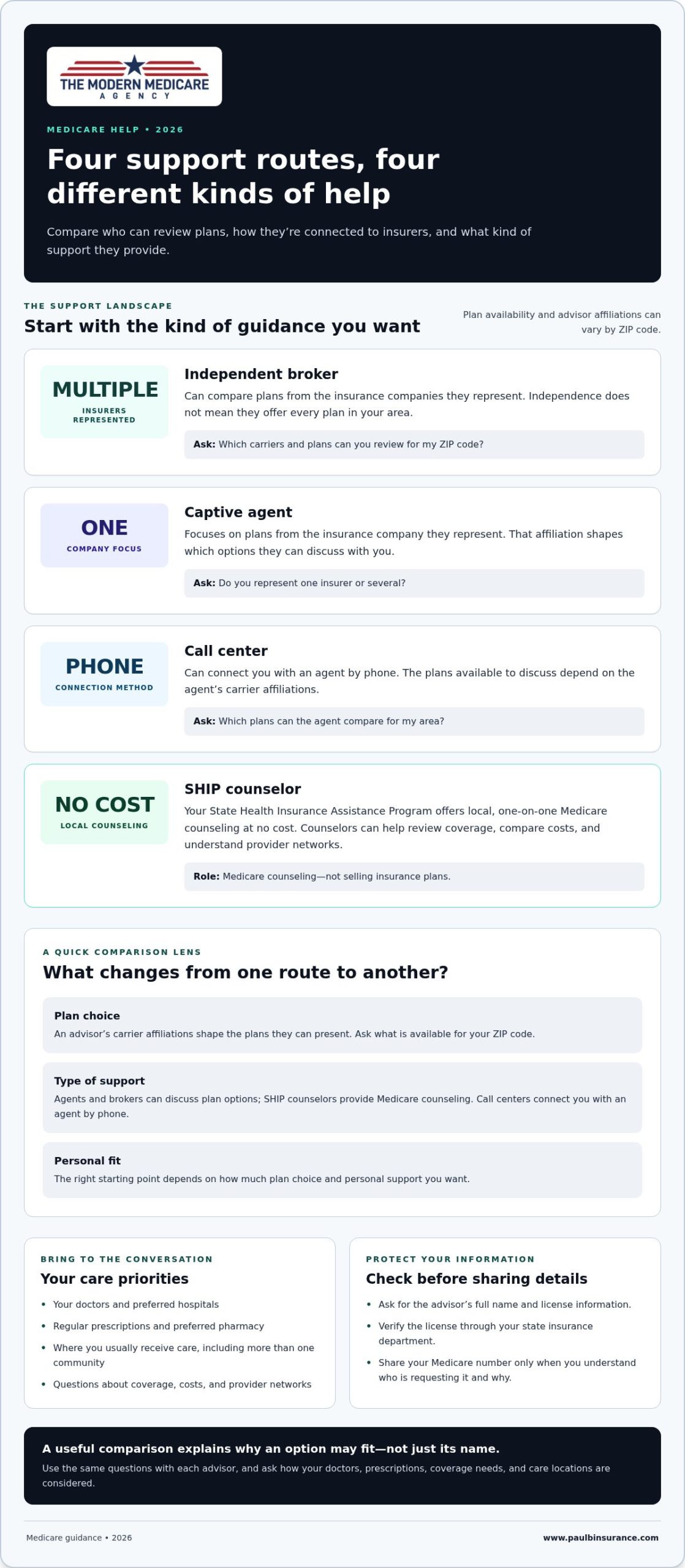
In 2026, the right place to start depends on how much choice and personal support you want. Independent brokers may compare plans from multiple insurers, while captive agents focus on plans from the company they represent. Call centers can connect you with an agent by phone. Each route can help, but the range of plans and kind of conversation may differ.
Before booking, ask which plans the advisor can compare for your ZIP code, whether they represent one insurer or several, and how they’ll explain differences among the available options. A broker’s independence describes their relationship with insurers; it doesn’t mean they represent every plan in your area. Carrier affiliations still shape which options they can discuss.
Search using your home ZIP code and note the names of agents and agencies that appear. If results are limited, try a nearby city or county, then ask whether the agent serves your community. Location matters because plan choices can vary by area. If you receive care in multiple places, note them before comparing options.
For a city search, enter a specific place name, such as Brooklyn or Hempstead, and compare the results with your ZIP-code search. An agency may serve a wider area than its office location suggests, while a nearby listing may not reflect plans available at your address. Ask how the agent will tailor the conversation to your location and care needs.
Searching by state can broaden your results, especially if your town has few listings. Look for agents licensed in your state and use the state insurance department’s lookup tool to review their license information. Ask for the agent’s full name and license number so you can match the listing. If you live near a state border, verify that the agent is licensed in the state where you need help.
Choose an agent when you want to discuss insurance plans and enrollment options. If you prefer a phone conversation, you can use a call center, but ask which agency or insurer the representative works with. SHIP is a separate option for unbiased Medicare counseling. It can help you understand your questions before you decide whether to speak with an agent.
Keep a simple comparison note for each contact: ZIP codes served, carrier affiliations, license details, and whether the conversation addressed your priorities. In 2026, this record can help you compare support without relying on a polished website or a broad claim about local expertise. If an answer is unclear, ask for a plain explanation before sharing personal information or making a decision.
Medicare enrollment assistance
Enrollment help can clarify which steps belong to you and which involve an advisor. In 2026, separate plan comparisons from enrollment in Original Medicare, so each part of your decision has a clear path.
Before enrolling, ask a Medicare advisor: Which plans can you compare, and which insurers do you represent? How will my doctors, prescriptions, and coverage needs affect your recommendation? Ask who completes the application, what information it requires, and how you’ll receive confirmation.
An advisor can review plan choices and explain how coverage differs. Bring your current insurance details, medication list, preferred doctors, and questions about costs. Ask for a side-by-side explanation of options suited to your needs. Before proceeding, make sure you understand the plan’s provider network, prescription coverage, and any trade-offs that matter to you.
Enrollment assistance depends on which Medicare coverage step you need. The Social Security Administration handles enrollment in Medicare Part A and/or Part B. A licensed insurance agent or broker can help compare private Medicare plan options. Keep these roles distinct, especially if you’re changing existing coverage or enrolling for the first time.
For unbiased counseling, contact your state’s State Health Insurance Assistance Program, or SHIP. SHIP counselors can help review coverage, costs, and provider networks. Every Open Enrollment season, SHIPs help thousands of people understand their options and make informed decisions. This no-cost counseling can be a helpful starting point before you speak with an insurance advisor.
During Open Enrollment, prepare an updated list of doctors, medications, and care priorities before reviewing plan choices. Ask whether each plan still covers the providers and prescriptions you rely on. Changes in your health needs or preferred pharmacy may affect which details deserve closer attention. Keep notes from each conversation so you can compare explanations.
If you live in California, the California Department on Aging can provide a complete list of HICAP offices by phone at 1-800-4334-0222. HICAP is California’s SHIP counseling program. People who need general Medicare information can also call Medicare at 1-800-633-4227. Use the contact that matches your question, then keep any guidance and enrollment records together.
Before submitting an application, review the plan name, coverage start information, and details you provided. Ask the advisor to explain anything unclear, and keep a copy of your submission or confirmation. A careful final review helps you understand what you selected and what to expect next.
Finding licensed Medicare brokers by ZIP code
A ZIP code is a practical starting point, not a complete recommendation. It helps focus your search on brokers who may serve your area and plans relevant to your location. For a 2026 comparison, use your home ZIP code first. If you receive care in another community, note that location too.
Start by searching for Medicare brokers in your ZIP code. Record each broker’s name, agency, contact details, and stated carrier affiliations. Then look up the broker using your state insurance department’s license search. Match the name and license details, and make sure the state information corresponds to where you live.
Next, ask whether the broker compares plans from multiple insurance companies. An independent broker may present options across carriers, while a captive agent may focus on one insurer. The agency name alone doesn’t tell you which plans the individual can discuss. Ask which companies they represent and whether they compare Medicare Advantage, Medicare Supplement, or Part D plans.
ZIP code results can be too broad or too narrow. If your search returns few names, try a nearby city or county, then confirm the broker serves your location. If you split your time between homes, share both ZIP codes and explain where you receive care. This gives the conversation a clear geographic starting point.
Before contacting an agency, prepare a short comparison sheet with your ZIP code, doctors, preferred hospitals, prescriptions, and the type of Medicare help you need. Ask each broker to explain how the plans they can discuss address those priorities. Record which carriers they represent, what they can compare, and what follow-up support they offer.
- Search: Use your home ZIP code and a nearby city name.
- Record: Note each broker’s name, agency, and carrier affiliations.
- Verify: Match the broker’s details through your state insurance department.
- Compare: Ask which plans and insurance companies they can discuss.
A ZIP code search can also lead to a discussion of Medicare Supplement, or Medigap, plans. Ask how the available options fit with your existing Medicare coverage and healthcare priorities. The broker should explain the comparison clearly, including which details depend on your location.
Once you have a verified broker and a focused list of questions, you can decide whether to schedule a conversation. For background before discussing Medigap, review Medicare Supplement coverage options and note what you want clarified.
The Modern Medicare Agency: Medicare Advantage Plans
The Modern Medicare Agency helps people compare Medicare Advantage, Medicare Supplement (Medigap), and Part D plans from multiple insurance carriers. If you’re weighing Medicare Advantage against other coverage, an advisor can explain the differences and help you consider how each option fits your needs. Recommendations are based on your circumstances.
Bring your questions about doctors, prescriptions, and coverage to a free Medicare consultation by phone or Zoom. The Modern Medicare Agency offers personalized plan comparisons, enrollment assistance, and year-round support. When you’re ready to discuss your options, schedule a free consultation.
Make Your Next Medicare Decision With Confidence
Your next step is to turn what you’ve learned into a clear personal checklist. Write down the care priorities you want a plan to meet, the questions you still have, and what would make you comfortable moving forward. That preparation can make a conversation with an advisor more focused and useful, especially as you consider coverage for 2026.
If you’re finding a Medicare advisor near me, the goal isn’t simply to choose the closest name. Look for guidance that helps you understand your options and make a decision suited to your needs. The Modern Medicare Agency can help you compare Medicare Advantage, Medicare Supplement (Medigap), and Medicare Part D plans.
If you’re ready to talk through your options, contact The Modern Medicare Agency. Take the process one question at a time. You can move forward with greater clarity and confidence.
Frequently Asked Questions
How does enrollment work?
Medicare enrollment begins with identifying which coverage you need and who handles that step. The Social Security Administration handles enrollment in Medicare Part A and/or Part B. After that, you can review private plan options if you want additional coverage. Keep copies of applications and confirmation notices, and note the coverage start information so you know when your selected plan takes effect.
How does the Medicare planning process work?
Medicare planning starts with your current coverage and the care you expect to use in 2026. Gather a list of medications, preferred pharmacies, doctors, and upcoming care needs. Then compare how potential plans address those priorities, including provider access and prescription coverage. A written comparison can help you discuss trade-offs with a spouse or caregiver before making a choice.
How does this service work?
The Modern Medicare Agency’s process begins with a free consultation, by phone or Zoom, to understand your needs. The agency reviews your situation, compares Medicare Advantage, Medigap, and Part D options, then presents the top 2-3 best options. If you choose a plan, enrollment assistance includes paperwork handling. The agency also provides year-round support for claims, billing, and plan changes.
Need help beyond what’s on Medicare.gov?
Yes. Medicare.gov provides official program information, while personal support can help you apply it to your situation. You might need help organizing questions about a prescription, a doctor, or a plan’s coverage details. A broker can discuss available insurance plans, while SHIP provides unbiased Medicare counseling to help you understand your choices.
What’s the benefit of speaking with a local Medicare agent?
A local agent can discuss plan availability and care networks relevant to your location. That matters if you receive care in several nearby communities or rely on a particular hospital system. Bring specific provider and pharmacy names rather than asking only whether a plan is “good.” This keeps the discussion practical and focused on the care you use.
How do I find a licensed Medicare advisor near me?
Start with your ZIP code and collect the advisor’s full name, agency, and license details. Use your state insurance department’s lookup tool to match the person and review their license status. Then ask which insurance companies they represent and whether they can discuss plans for your location. These steps help you focus on a licensed advisor whose plan access suits your needs.
Do Medicare advisors charge fees, and how are they paid?
Medicare brokers are paid by insurance companies when a client enrolls, rather than charging consumers directly for the broker’s plan-selection help. The Modern Medicare Agency offers its initial Medicare consultation free. A plan’s own costs are separate from an advisor’s compensation, so keep the two questions distinct: ask how the advisor is paid, then review the plan’s premiums and other cost details for 2026.
Can Medicare agents recommend all plans in my area or only certain insurers?
Agents can discuss plans offered by the insurance companies they represent, so one agent may not cover every insurer in your area. Independent brokers can compare plans from multiple companies, though their carrier affiliations still shape the choices available. Ask which insurers they represent and which plans they can review for your ZIP code. This gives you a clearer picture of the comparison.

Article by
Paul Barrett
Paul Barrett, CMIP is the founder of The Modern Medicare Agency, an independent Medicare-only brokerage based in Melville, NY. With 18 years of Medicare-exclusive experience, a CMIP designation, and more than 5,000 clients served across 37 states, Paul is one of the most credentialed independent Medicare specialists on Long Island — and one of the most direct.
He represents 40+ carriers with no quotas and no allegiances, which means his recommendations are based entirely on what fits each client's specific situation. He is the author of Medicare Mastery Unlocked and host of the Wise Guys Retirement Talk podcast. His content is grounded in primary sources, real carrier intelligence, and 18 years of watching what happens when people get Medicare right — and when they don't.
📞 631-358-5793 | paulbinsurance.com