


A Medicare flex card isn’t a government benefit you can use anywhere. Knowing how to use a Medicare flex card for expenses starts with understanding that some Medicare Advantage plans offer one, and each plan sets its own eligible purchases and spending rules. You must enroll in a plan that includes the benefit to receive a card.
It’s understandable to feel unsure when card advertisements make the benefit sound simple but don’t explain its limits. A flex card works more like a plan-specific spending allowance than cash: it may cover certain health-related items, but eligible purchases, participating retailers, funding schedules, and rules for unused balances vary by plan.
This guide explains what a Medicare flex card is, which expenses it may cover, and how to use it at approved locations. You’ll also learn how funds are added, what happens when the balance runs out, and why unused funds may not carry over. Understanding the plan’s rules can help you make more confident decisions about the benefit.
Key Takeaways
- Flex card benefits are tied to certain Medicare Advantage plans, and the allowance and reload schedule depend on the plan.
- Eligible purchases may include over-the-counter items, but covered products and spending categories vary.
- Unused funds may expire rather than roll over, so the plan’s timing rules matter.
- Use the card only for eligible purchases at participating pharmacies, providers, or retailers.
- Understanding a plan’s benefits can help you decide whether its coverage fits your health needs and budget.
What Is a Medicare Flex Card?
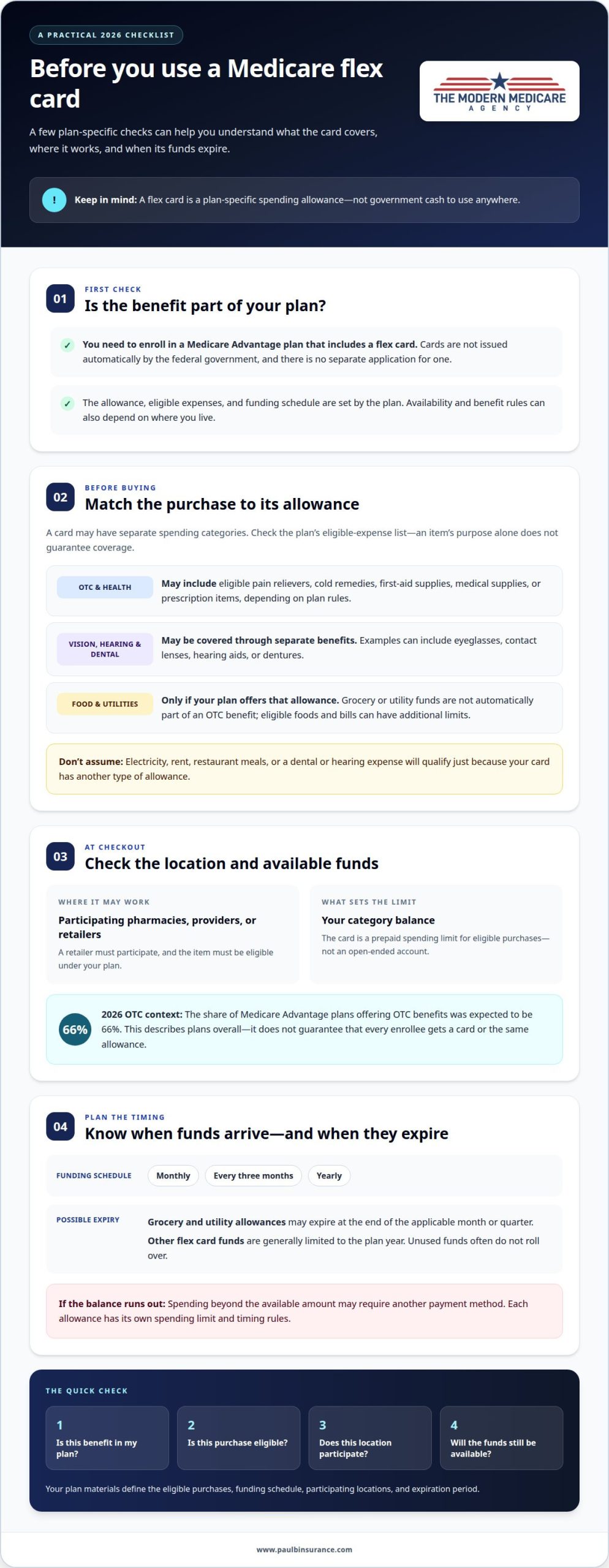
A Medicare flex card is a prepaid debit card offered by some Medicare Advantage plans. It isn’t issued automatically by the federal government. Each plan sets the allowance, eligible expenses, and schedule for adding funds. You must enroll in a Medicare Advantage plan that includes this benefit to receive a card.
How do benefits differ by plan and location? Plans set their own eligible purchases, allowance amounts, and funding schedules, and availability partly depends on where you live. One plan may cover vision or dental expenses, while another may offer grocery or utility funds. The plan’s service area and benefit rules determine what’s available.
Allowances vary. Funds may arrive monthly, every three months, or as an annual amount. A card’s balance is a spending limit for eligible purchases, not cash available for any expense.
Unused funds may expire. Grocery and utility allowances can expire at the end of the applicable month or quarter. Other flex card funds are generally limited to the plan year, and unused amounts often don’t roll over. For example, a quarterly food allowance may have a different expiration date from an annual vision allowance. The plan’s rules define each benefit period.
Some plans divide benefits into separate allowances. One may set aside funds for groceries, while another permits utility costs or limits spending to health-related items. Don’t assume electricity, rent, or restaurant meals qualify just because a card includes a grocery or utility benefit. Eligible expenses depend on the specific plan.
An Everyday Options Allowance is a plan-defined benefit name, not a standard Medicare-wide program. Eligible expenses and funding rules depend on the plan using that label. It may be separate from allowances for vision, hearing, dental, or over-the-counter items, so the name alone doesn’t tell you what the card covers.
How can you avoid scams and misleading offers? Treat claims of thousands of dollars in government money to spend on anything as a warning sign. Medicare doesn’t automatically send flex cards, and there’s no separate application for one. The benefit comes with certain Medicare Advantage plans, whose rules determine the card’s allowance and permitted purchases.
Before relying on a card, identify its allowance category, funding schedule, and expiration period in your plan materials. These details explain how the benefit works and whether a planned purchase, such as groceries or hearing supplies, fits the rules.
Over-the-counter health items
An over-the-counter (OTC) benefit can help pay for eligible health items without a prescription. Depending on the plan, a flex card may cover pain relievers, cold remedies, first-aid supplies, and other drugstore products. Check the card’s coverage list: a familiar item at the counter may still be ineligible if the plan excludes it or the retailer doesn’t participate.
OTC benefits are one possible part of a Medicare Advantage plan, not a standard feature of Original Medicare. In 2025, 73% of Medicare Advantage plans offered OTC benefits, and the share was expected to be 66% in 2026. Those figures describe plans, not a guarantee that every enrollee receives the same card or allowance.
Covered expenses may extend beyond drugstore items. Depending on plan rules, flex card funds may pay for eligible prescription medications, medical supplies, and certain dental, hearing, or vision costs. Examples may include eyeglasses, contact lenses, hearing aids, and dentures. Some plans use separate benefit categories, so an allowance intended for OTC medicine may not pay for a dental visit or hearing device.
A practical way to understand the difference is to sort purchases by purpose:
- Drugstore health items: Eligible OTC medicine or first-aid products may qualify under an OTC allowance.
- Care and supplies: Some plans include medical supplies or prescription items in their permitted expenses.
- Vision, hearing, and dental: Specific costs may be covered through separate benefits, subject to plan rules.
- Food and utilities: These are not automatically part of an OTC benefit. Some plans offer separate allowances for healthy groceries or utilities.
Food benefits have their own limits. In 2025, more than 90% of flex cards covering nonmedical benefits paid for food and produce. That doesn’t mean every card covers groceries, or that every food purchase qualifies. Some plans restrict purchases to approved foods and participating retailers. Utility support is also plan-specific, so don’t treat an OTC balance as permission to pay a household bill.
It isn’t a standard amount, and spending beyond the available balance may require another payment method. The eligible product list and allowance category determine whether a purchase reduces your out-of-pocket costs.
If OTC coverage is shaping your plan decision, review how Medicare Advantage benefits fit with the care and items you expect to use.
Card funding, reloads, and unused balances
A flex card works like a prepaid debit card, with plan funds assigned to eligible expenses. The allowance isn’t government cash, and the card doesn’t create an open-ended spending account. In 2026, each Medicare Advantage plan’s terms determine when funds become available, which benefit category they belong to, and when they can be spent. A vision allowance, for example, may be separate from a food or over-the-counter allowance.
Do funds expire or roll over, and are there spending limits? Unused funds often don’t roll over, and many allowances are limited to the plan year. Grocery and utility amounts may expire at the end of their month or quarter. The plan also sets a spending limit and eligible-purchase rules for each allowance.
Funding may arrive monthly, every three months, or as a yearly amount. The schedule affects when you can use the balance again, not just how much appears on the card. Some plans offer an app or member portal to view available funds and past transactions. If registration is required, setting up the card account and security PIN can help you monitor spending.
Check the balance before a planned purchase, especially if the card covers more than one category. A recent transaction may have reduced the available amount, or a benefit period may have ended. For example, a card could show funds for eligible drugstore items but no remaining amount for vision costs. Transaction records help explain how each purchase changed the balance.
If a purchase costs more than the available funds, the card won’t cover the difference. Pay the remaining amount with another payment method if the retailer allows split payment. For example, if an eligible item costs more than the card balance, you’ll need another way to pay the shortfall. Once the allowance is spent, wait until the next scheduled reload before using it again.
Before relying on a balance, use this simple account check:
- Available amount: Review the current balance and recent transactions in the plan’s app or portal.
- Benefit category: Confirm the funds match the planned expense, such as vision or eligible OTC items.
- Timing: Note the reload date and the allowance’s expiration period.
- Payment backup: Keep another payment method available for any amount above the balance.
These details matter when budgeting for a recurring expense, such as eligible supplies bought each month. A reload date doesn’t extend an allowance’s expiration period, and unused amounts may disappear when the benefit period ends. Tracking the balance and dates helps prevent surprises at checkout and makes it easier to plan spending within the card’s limits.
Using the flex card at approved pharmacies, providers, and retailers
A flex card doesn’t work at every pharmacy, clinic, or store. Each Medicare Advantage plan sets its approved or in-network locations, eligible spending categories, and any time limits. A pharmacy may accept the card for eligible over-the-counter items but not groceries. A grocery retailer may participate in a food benefit but not a vision allowance. Acceptance depends on both the purchase and the location.
Start with the plan’s approved retailer list or member portal. Search for the store or provider and confirm that it participates in the benefit category you need. For example, a retailer may accept the plan’s OTC card but not its grocery allowance. A participating location alone doesn’t make every item eligible.
At checkout, separate eligible purchases from other items when possible. If you’re buying approved health supplies and household goods together, the card may cover only the eligible products. Some retailers can process separate payments; others may require a different checkout arrangement. The plan’s instructions and the store’s payment system determine how the transaction works. Keep another payment method available for noneligible items or a balance shortfall.
Grocery benefits can have additional restrictions. Some plans limit purchases to approved foods and participating retailers. A store’s general acceptance of the card doesn’t mean every grocery item qualifies. For example, an eligible food may be covered while a noneligible product in the same basket isn’t. Check the plan’s food rules before shopping, especially when the card has a dedicated grocery allowance.
Provider expenses can work differently from store purchases. A card designated for vision care may be limited to approved vision providers or eligible services. A dentist or hearing provider may not qualify under that same allowance. The plan’s provider directory and benefit terms explain which locations and expenses are eligible. Enrollment in a plan with a flex benefit doesn’t remove these spending restrictions.
Some plans allow eligible online purchases through the insurer’s app or website, with orders shipped to the member. This option still follows the plan’s product and retailer rules. An online store’s general acceptance of card payments doesn’t establish that a particular item qualifies.
Before using the card, compare the expense with the plan’s rules:
- Match the category: Identify whether the purchase uses an OTC, grocery, vision, or other allowance.
- Confirm the location: Use an approved list for the right category and provider type.
- Review restrictions: Check eligible products, time limits, and any in-network requirements.
- Plan payment: Separate eligible items and have another payment method for anything the card won’t cover.
These checks help prevent a declined payment at a pharmacy, provider, or retailer. They also clarify why a store may accept the card for one purchase but not another.
How a Medicare flex card works
A Medicare flex card connects a plan allowance to eligible purchases. It isn’t a general spending account or government-issued payment card. The Medicare Advantage plan determines which benefit category the funds support, such as vision or over-the-counter items. That distinction matters because the card only pays for expenses allowed by the plan.
Think of the card as a payment tool for a specific benefit, not extra Medicare coverage for every bill. A plan may load funds monthly, quarterly, or annually, then limit spending to approved services or products. One card might support vision expenses, while another may have separate categories for groceries or health supplies. The card’s balance alone doesn’t show which purchases qualify.
Enrollment is the starting point. You must choose a Medicare Advantage plan that includes the flex benefit, and the plan’s service area affects which options are available. Medicare Advantage plans may also offer added benefits to eligible people with chronic conditions. The plan determines the criteria and covered categories, so having Medicare alone doesn’t automatically provide a card.
At checkout, the card processes an eligible purchase against its assigned allowance. Some cards use the Visa or Mastercard network and may not require a PIN. But network acceptance doesn’t make every purchase eligible. A declined transaction can mean the item, provider, retailer, benefit category, or timing doesn’t meet the plan’s rules.
A flex card doesn’t work like cash. You can’t withdraw money from it, and spending is limited to the available balance. If an eligible purchase costs more, another payment method must cover the shortfall. Online purchases may be available through an insurer’s app or website when the plan permits them, with items shipped to the member.
To understand what a card can do, separate these three parts:
- Funding: The plan decides the allowance amount and whether it arrives monthly, quarterly, or annually.
- Eligibility: The plan defines approved expenses, such as vision care or specific health items.
- Payment: The card pays only up to the available balance and within its rules.
That’s the practical answer to how the card works: plan rules control the funds from loading through purchase. If a flex benefit matters to your choice, explore Medicare Advantage plan options and compare the benefits alongside the coverage and costs that matter to you.
The Modern Medicare Agency
The Modern Medicare Agency helps people compare Medicare coverage options when a flex card benefit raises questions about plan choice. Because card benefits depend on the Medicare Advantage plan, comparing the plan’s full coverage and rules can help you decide whether its benefits fit your needs. The agency provides personalized, unbiased guidance on Medicare Advantage, Medicare Supplement (Medigap), and Medicare Part D plans.
In 2026, consider guidance if you’re weighing a flex card against other plan features, such as prescription drug coverage or out-of-pocket costs. A card’s allowance is only one part of the decision. The Modern Medicare Agency can help you compare available plans and understand how their benefits differ.
For help reviewing your Medicare options, contact The Modern Medicare Agency.
Make Your Next Plan Choice With Confidence
Understanding how to use a Medicare flex card for expenses can help you judge whether a benefit fits your routine. Your next step is to look beyond the card and consider how a plan supports your broader health needs, including prescriptions and supplemental coverage. The Modern Medicare Agency offers Medicare Advantage Plans, Medicare Supplement (Medigap) Plans, and Medicare Part D Plans, helping you compare options with your priorities in mind.
A flex benefit may catch your attention, but it’s only one part of choosing coverage. A thoughtful comparison can help you focus on the benefits that matter most to you, rather than making a decision based on a card alone.
Contact The Modern Medicare Agency to discuss your Medicare coverage options and take a clear next step.
Frequently Asked Questions
Can you really use it for groceries or bills?
Sometimes, a Medicare Advantage plan includes a grocery or utility allowance, and the purchase meets its rules. Knowing how to use a Medicare flex card for expenses starts with matching the purchase to the right benefit. An eligible grocery item at a participating store may qualify, while other items in the same basket may not. Rent is generally not an eligible flex card purchase, and utility expenses, including electricity, may qualify under some plans depending on the plan’s rules.
Does everyone on Medicare qualify for one?
No. A flex card isn’t automatically provided to everyone enrolled in Medicare. You generally need to enroll in a Medicare Advantage plan that includes this benefit, and the plan’s service area affects availability. For example, two people with Medicare who live in different areas may have different plan choices. Medicare eligibility alone doesn’t establish eligibility for a flex card.
What is a Medicare flex card and which Medicare plans offer one?
A Medicare flex card is a prepaid card connected to certain benefits in some Medicare Advantage plans. The plan sets eligible expenses and spending terms. Original Medicare doesn’t issue flex cards, and a Medicare Supplement policy or Part D plan alone doesn’t provide this plan-specific benefit. When comparing plans, consider their full coverage rather than focusing only on a card.
What expenses can a Medicare flex card pay for?
Eligible expenses depend on the card’s benefit category. Examples may include over-the-counter medicine, medical supplies, prescription items, eyeglasses, contact lenses, hearing aids, or dentures. Some plans also allow certain dental, hearing, or vision expenses. A card designated for vision care, for instance, may not pay for drugstore medicine. The purchase must fit the plan’s rules and allowance.
Can a Medicare flex card be used for groceries, utilities, or rent?
Some plans allow eligible groceries or certain utility-related expenses through a separate allowance, but this coverage isn’t universal. Approved foods and participating retailers may be required. Rent is generally not an eligible flex card purchase, and utility expenses, including electricity, may qualify under some plans depending on the plan’s rules. A grocery benefit, for example, shouldn’t be treated as permission to pay a housing bill. The allowance category determines which purchases the card can cover.
Who is eligible for a Medicare flex card and what conditions apply?
You generally need Medicare eligibility and enrollment in a Medicare Advantage plan that offers a flex card. A plan may also set location or health-related conditions. Some benefits are connected to plans for people with chronic conditions, while other cards have different qualifications. Eligibility depends on the plan’s service area, enrollment terms, and benefit requirements, not simply on having a Medicare card.
How much money is loaded onto a Medicare flex card in 2026?
There’s no single standard 2026 allowance. The amount available for a particular expense may also depend on separate benefit categories. Treat advertised amounts as plan-specific, not as a government payment or a balance every Medicare beneficiary receives.
How do you activate and use a Medicare flex card to pay for expenses?
Follow the activation instructions provided with the plan’s card. Registration or setting a security PIN may be part of the process, and an app or member portal may show balances and transactions. To understand how to use a Medicare flex card for expenses, match the purchase to an eligible benefit and use the card at an approved retailer or provider. It can’t be used to withdraw cash.

Article by
Paul Barrett
Paul Barrett, CMIP is the founder of The Modern Medicare Agency, an independent Medicare-only brokerage based in Melville, NY. With 18 years of Medicare-exclusive experience, a CMIP designation, and more than 5,000 clients served across 37 states, Paul is one of the most credentialed independent Medicare specialists on Long Island — and one of the most direct.
He represents 40+ carriers with no quotas and no allegiances, which means his recommendations are based entirely on what fits each client's specific situation. He is the author of Medicare Mastery Unlocked and host of the Wise Guys Retirement Talk podcast. His content is grounded in primary sources, real carrier intelligence, and 18 years of watching what happens when people get Medicare right — and when they don't.
📞 631-358-5793 | paulbinsurance.com