




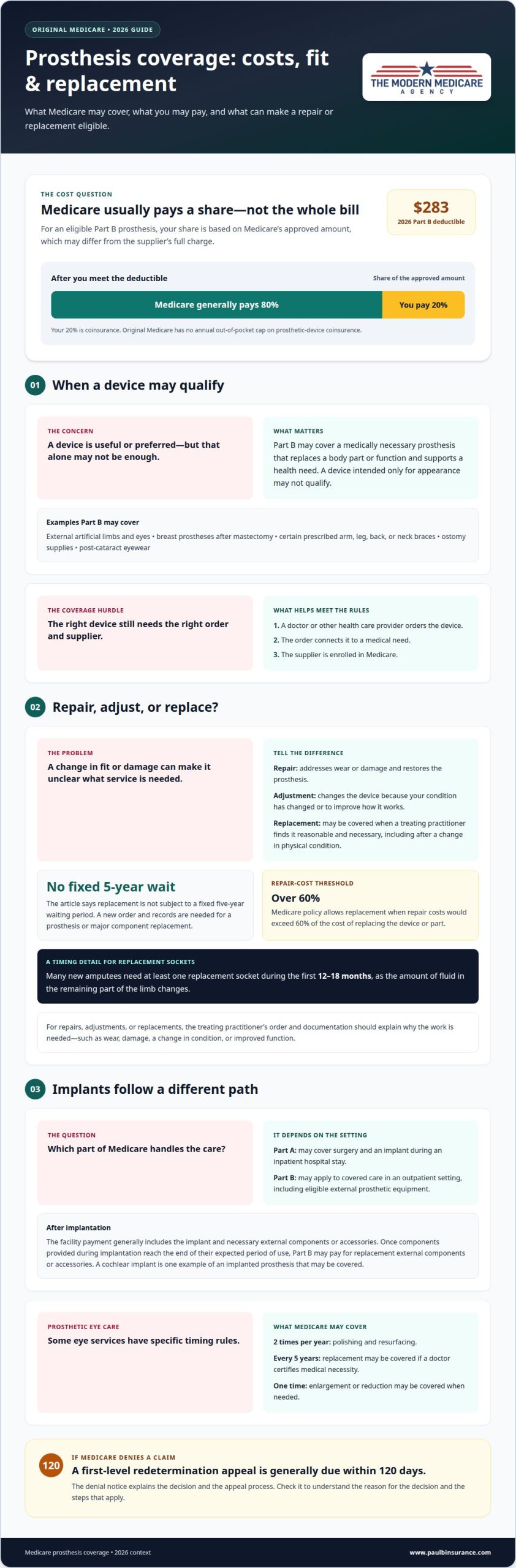
A prosthesis can be covered by Medicare, but coverage doesn’t mean Medicare pays the full bill. Medicare coverage for prosthetics under Part B generally pays 80% of the approved amount for eligible devices after you meet the deductible. The Centers for Medicare & Medicaid Services sets the standard Part B deductible at $283 for 2026, leaving you responsible for coinsurance, the share of covered costs you pay after meeting the deductible.
It’s understandable to be unsure which devices qualify and what costs you may have to pay. Medicare coverage for prosthetics depends on the type of device, why it’s needed, and whether a Medicare-enrolled provider orders and supplies it.
This guide explains which prostheses and components Medicare may cover, the medical and provider requirements, and how Original Medicare calculates your share of approved costs. It also outlines common exclusions and how Medicare Advantage or Medigap may affect expenses, so you can understand what to expect.
Key Takeaways
- Learn which external and implanted prostheses may qualify for Medicare coverage, and how replacement parts and adjustments are considered.
- Understand how medical necessity, the prescribing provider, and the supplier affect coverage decisions.
- See how Medicare Advantage and Medigap can change your share of covered costs and what to consider when comparing options.
- Recognize common exclusions, including devices intended for cosmetic rather than health-related reasons.
- Use the coverage rules to identify which questions matter most when planning for a prosthesis and its ongoing costs.
Are Prostheses Covered by Medicare?
Yes. Original Medicare may cover medically necessary prostheses, depending on the device, how it’s provided, and whether Medicare’s requirements are met. Part B generally covers external devices, while Part A may cover an implant during an inpatient procedure.
Part B Prosthetic Coverage
Original Medicare Part B can cover a medically necessary prosthesis as equipment you use for a health need when it replaces a body part or function and meets coverage requirements. A doctor’s order and the device’s purpose help determine whether it qualifies. This matters because a prosthesis that supports a health need may be treated differently from one intended only for appearance.
Part B Deductible and Coinsurance
The Part B deductible is the amount you pay for covered services before Medicare begins paying its share. According to the Centers for Medicare & Medicaid Services, the standard Medicare Part B deductible in the United States is $283 for 2026. After meeting it, you generally pay 20% of Medicare’s approved amount for a covered prosthesis. Your share is based on that approved amount, not necessarily the supplier’s full charge.
Part B may cover external artificial limbs and eyes, breast prostheses after mastectomy, and certain prescribed braces for the arm, leg, back, or neck. It may also cover ostomy supplies and post-cataract eyewear. For example, a breast prosthesis or surgical bra may qualify under the relevant benefit rules. A device must meet Medicare’s coverage criteria, not merely be useful or preferred.
Implanted devices follow a different path. Medicare Part A may cover surgery and an implant when the procedure takes place during an inpatient hospital stay. Part B may apply when covered care is provided in an outpatient setting, including eligible external prosthetic equipment. The setting matters because it determines which part of Original Medicare processes the related services.
Coverage also depends on who orders and supplies the device. A doctor or other health care provider must order a covered prosthesis, and the supplier must be enrolled in Medicare. A prescription showing medical necessity connects the device to a health need. If the device or supplier doesn’t meet the applicable requirements, Medicare may not pay its share.
Original Medicare has no annual out-of-pocket cap on prosthetic-device coinsurance. If Medicare denies a claim, you can appeal the decision. According to the Centers for Medicare & Medicaid Services, a first-level Medicare redetermination appeal must generally be requested within 120 days of the denial. The denial notice explains the decision and the appeal process, helping you identify the next step.
Implanted prosthetic devices and replacement components
Yes. Medicare may cover repairs, replacements, and adjustments when they meet coverage rules and address wear, damage, or a change in your condition.
Prosthetic Replacement and Adjustments
An adjustment changes a device because your condition has changed or to improve how it works. Medicare covers adjustments when a physician orders them and they’re needed because of wear or a change in your condition. For example, an artificial limb may need adjustment as the part of your limb that fits into it changes shape. This helps maintain a good fit, alignment, and stability.
Replacement isn’t subject to a fixed five-year waiting period. Medicare may cover a replacement when a treating practitioner finds it reasonable and necessary, including when your physical condition changes. Replacing a prosthesis or major component, such as a foot, knee, ankle, or socket, requires a new order and records explaining why it’s needed. That documentation connects the replacement to your current needs.
Repairs and Replacement Sockets
A repair addresses a problem caused by wear or damage and restores the prosthesis. An adjustment changes the device because your condition has changed or to improve its function. Medicare covers repairs and adjustments under the original order for the prosthesis. Knowing the difference helps clarify whether the work restores a damaged part or changes how the device fits or functions.
A replacement socket may be needed as the amount of fluid in the remaining part of your limb changes after amputation. Many new amputees need at least one replacement socket during the first 12-18 months. Medicare policy also allows replacement when repair costs would exceed 60% of the cost of replacing the device or part. The treating practitioner’s documentation should explain why repair or replacement is reasonable and necessary.
Implanted devices follow a different payment path. Medicare generally includes the implant and necessary external components or accessories in the facility payment for implantation. After components provided during implantation reach the end of the period they’re expected to last, Part B may pay for replacement external components or accessories. Cochlear implants are one example of an implanted prosthesis that may be covered.
Prosthetic eye care has specific coverage rules. Medicare covers polishing and resurfacing a prosthetic eye two times per year. It may cover replacement every five years if a doctor certifies that it’s medically necessary. A one-time enlargement or reduction may also be covered when needed. These rules differ from the general replacement criteria for artificial limbs and major components.
Medigap can help with certain Original Medicare cost-sharing, but it doesn’t replace the clinical documentation required for a prosthetic claim. For a repair, adjustment, or replacement, the key question is why the work is needed: wear, damage, a change in condition, or improved function. That reason, supported by a treating practitioner’s order where required, guides Medicare’s coverage decision.
Medical necessity and provider requirements
Medicare generally requires a medically necessary prosthesis, a Medicare-enrolled prescribing provider, and an enrolled supplier. The provider documents the need and orders the device, then an enrolled supplier provides it.
Medical Necessity Documentation
Medical necessity documentation explains the health need a prosthesis addresses and supports the treating provider’s order. The prescribing doctor must be enrolled in Medicare and document why the device is needed. This record connects the specific device to your condition and functional needs.
For orthotics and prosthetics, documentation from an orthotist or prosthetist can support the treating practitioner’s medical record. For a lower-limb prosthesis, functional classification levels, often called K-levels, help describe mobility potential and activity level. These details help Medicare assess whether requested components suit the patient’s expected use.
A myoelectric system, which responds to electrical signals from muscles, may qualify when records show medical necessity and a functional benefit compared with alternative devices. The documentation should explain the patient’s abilities and why the selected system supports them. A prescription alone doesn’t provide those clinical details.
Medicare Assignment and Coverage Steps
A Medicare-participating supplier accepts assignment, agreeing to Medicare’s approved payment terms for covered services. A supplier’s participation status may affect whether it accepts assignment. In that case, your costs may depend on the supplier’s charges. Supplier participation matters because it affects how the claim is paid and your potential costs.
Start with an enrolled prescribing doctor who can assess your condition, select a medically necessary device, and document the reason for the order. The supplier must also be enrolled in Medicare and provide the prescribed prosthesis. Both the doctor and supplier need Medicare enrollment for durable medical equipment coverage.
For certain lower-limb components, prior authorization applies before Medicare pays. The request needs clinical documentation supporting the device and its medical necessity. Medicare’s standard decision timeframe for specified components is 7 calendar days; an expedited decision is due within 2 business days when the standard timeframe would seriously jeopardize the patient’s health.
Even when the device meets coverage rules, Original Medicare cost-sharing can still apply. For covered Part B equipment, the beneficiary generally pays 20% of the approved amount after meeting the deductible. An enrolled supplier’s participation and assignment status affect billing, while medical records support the coverage decision. Keep the order and supporting documentation together with the supplier’s claim information.
Medigap and Medicare Advantage coverage
Medicare Advantage must cover prosthetic devices covered by Original Medicare, but plan costs and approval requirements may differ. Medigap works alongside Original Medicare and can help pay some Part B coinsurance, depending on the plan.
In 2026, the main difference is how coverage is managed and what you pay for covered care. Original Medicare generally pays 80% of the approved amount for eligible Part B prosthetic devices after the deductible. Medigap may help with your share, while Medicare Advantage plans set their own covered-service cost-sharing and approval processes within Medicare’s coverage rules.
Medicare Advantage plans must provide at least the prosthetic coverage available through Original Medicare, and some may offer additional benefits. Costs and approval requirements can differ. Plan rules may also affect which providers and suppliers you can use, so review the plan’s network and authorization process when arranging a device or component.
Some lower-limb prosthetic components require prior authorization under Medicare, including certain advanced components. This requirement has applied nationwide to specified components since December 1, 2020. It does not mean every artificial knee follows the same process: the component requested and the applicable coverage criteria determine whether authorization is required.
Documentation can show why an advanced component fits your needs. Functional classification levels, often called K-levels, describe mobility potential and activity level. Medicare uses them to help determine which components are appropriate. For a myoelectric system, records may need to show medical necessity and a functional benefit compared with alternative devices.
CMS standard prior-authorization decisions for specified prosthetic components are due within 7 calendar days. An expedited decision is due within 2 business days when the standard timeframe would seriously jeopardize your health. These are decision timeframes, not a promise that every request will be approved or completed within that period.
Medigap can reduce some Part B cost-sharing, but the amount depends on the plan. Medigap Plan K covers 50% of Part B coinsurance, while Plan L covers 75%. These benefits apply to coinsurance, not every expense connected with a prosthesis, and do not replace Medicare’s medical-necessity and coverage rules.
Compare prosthetic benefits, approval requirements, provider networks, and cost-sharing before choosing coverage. Medicare Advantage may suit someone who prefers plan-based coverage and is comfortable with its network and approval rules. Medigap may suit someone keeping Original Medicare who wants help with eligible cost-sharing. The right fit depends on how each plan handles the care and components involved.
Prosthetics and devices Medicare does not cover
Original Medicare doesn’t cover every prosthetic device. The key distinction is whether a device addresses a health-related need or serves a cosmetic purpose. Dentures, dental implants, and cosmetic breast implants are examples Medicare excludes when their purpose is cosmetic rather than health-related. The word “prosthesis” alone doesn’t establish coverage.
A breast prosthesis after a mastectomy differs from a cosmetic breast implant. Medicare may cover a breast prosthesis, including a surgical bra, under its prosthetic benefit. A cosmetic breast implant, by contrast, is among the exclusions. The device’s purpose and the medical record help distinguish these situations.
Dental devices are another clear boundary. Medicare excludes dentures and dental implants, even though they replace teeth. A dental device doesn’t become covered simply because it restores appearance or function. The federal program’s prosthetic benefit focuses on eligible devices that replace a body part or function, while dental devices are excluded from that benefit.
Some items that sound like prostheses follow separate rules. Medicare generally doesn’t pay for an orthosis unless it’s a brace for the leg, arm, back, or neck. Orthopedic shoes are covered only when they’re a necessary part of a leg brace. Therapeutic shoes and inserts for people with diabetes fall under a separate Part B benefit, with eligibility requirements tied to severe diabetic foot disease.
Coverage for artificial limbs and components also depends on their medical purpose and documentation. A component selected only for appearance or personal preference doesn’t automatically qualify. For lower-limb devices, Medicare uses functional information, including mobility potential and activity level, to assess whether components are appropriate. The requested device must meet the relevant coverage criteria.
Medicare Advantage plans must cover prosthetic devices that Medicare covers and may offer additional benefits. An Original Medicare exclusion doesn’t automatically determine whether a particular Advantage plan offers another benefit. The plan’s written coverage terms specify any additional benefits. Medigap, meanwhile, supplements Original Medicare cost-sharing; it doesn’t change which services Original Medicare covers.
Before planning for an excluded item, identify the exact device and its purpose. A dental implant, a post-mastectomy breast prosthesis, and a therapeutic shoe can follow different rules, even if they seem related. This distinction helps separate devices Medicare excludes from those that may qualify under a separate benefit.
If you’re weighing how Medicare coverage and plan choices affect your prosthetic costs, explore your Medicare coverage options with guidance focused on your needs.
The Modern Medicare Agency
The Modern Medicare Agency can help you understand how your Medicare plan choices may affect costs for covered care. If you’re weighing Original Medicare with Medigap against Medicare Advantage, personalized guidance can clarify differences in coverage, cost-sharing, and plan rules. This can help you consider how a plan may fit alongside prosthetic care, while keeping insurance choices distinct from the medical criteria for a specific device.
The agency helps eligible individuals compare Medicare Advantage, Medigap, and Part D plans from multiple carriers. Start with your current coverage and questions about out-of-pocket costs. Contact The Modern Medicare Agency for a free Medicare consultation and personalized plan comparisons.
Make Your Next Coverage Decision With Clarity
As you plan for prosthetic care, separate two questions: what the device requires medically and how your insurance affects your share of covered costs. Keeping these questions distinct can make conversations with your care team and insurer clearer. Medicare coverage for prosthetics is one part of the decision; your broader plan choice also shapes how you approach expenses and coverage rules.
Before choosing a path, consider what matters most: predictable cost-sharing, provider access, or plan approval rules. The Modern Medicare Agency can help you compare Medicare plan options in light of your priorities, without replacing the medical guidance behind a prosthetic decision. Take the next step at your own pace and focus on the questions that matter to your situation.
Contact The Modern Medicare Agency to talk through your Medicare coverage options. A clearer understanding can help you move forward with more confidence.
Frequently Asked Questions
How Much Does it Cost To Get a Prosthetic Leg?
The cost depends on the prosthesis and its components, so no single price applies to everyone. Medicare calculates its share using the approved amount for a covered device, which may differ from the full charge. Your costs also depend on whether Medicare covers the device and what coverage you have. A replacement socket or repair is a different expense from a new prosthetic limb.
Can People with Limb Loss Get Medicare?
Yes. Limb loss doesn’t prevent someone from qualifying for Medicare. People may qualify at age 65 or older, or earlier through disability if they meet Medicare’s eligibility requirements. A person qualifying through disability generally must receive Social Security disability benefits for 24 months before Medicare eligibility. Medicare eligibility and prosthesis coverage are separate decisions: the device must also meet the applicable medical and provider requirements.
Who is eligible?
Medicare eligibility depends on age or a qualifying disability, while coverage for a prosthesis depends on the device and its medical need. For a person under 65, a disability must prevent substantial gainful activity for at least 12 months; Medicare eligibility through disability generally follows 24 months of Social Security disability benefits. Once enrolled, a person with limb loss may qualify for coverage of a medically necessary device when the coverage requirements are met.
What prosthetics does Medicare cover?
Medicare coverage for prosthetics may include artificial limbs and eyes, breast prostheses after mastectomy, certain surgically implanted devices, and prescribed braces for the arm, leg, back, or neck. Part B may also cover post-cataract eyewear and ostomy supplies under their applicable rules. Coverage depends on the device’s purpose and the criteria for its benefit category. Dentures, dental implants, and cosmetic breast implants are examples of devices Medicare excludes.
What are Medicare’s medical-necessity requirements for prosthetics?
The device must address a medical need, and the prescribing doctor must document why it’s needed. The doctor and supplier must both be enrolled in Medicare for the device to meet coverage requirements. For lower-limb prostheses, information about mobility potential and activity can help show whether components suit the patient’s needs. Certain advanced devices may require records showing functional benefit compared with alternatives.
Does Medicare Part A or Part B cover prosthetic devices?
Medicare coverage for prosthetics may fall under Part A or Part B, depending on the care setting and device. Part A may cover an implant as part of an inpatient procedure. Part B generally handles eligible external prostheses and may cover implant-related care provided in an outpatient setting. For example, an artificial limb ordered for use outside the hospital is generally considered under Part B, while an implant during inpatient surgery falls under Part A.
What does Medicare pay for prosthetic limbs and devices?
For a covered Part B prosthesis, Medicare generally pays 80% of the Medicare-approved amount after the deductible is met. You’re responsible for the remaining coinsurance, based on the approved amount rather than automatically on the device’s full charge. The exact payment depends on whether the device qualifies and the approved amount for the claim. Original Medicare has no annual out-of-pocket cap on prosthetic-device coinsurance.
What are Medicare Part B deductibles and coinsurance for prosthetics?
In 2026, the standard Medicare Part B deductible is $283, according to the Centers for Medicare & Medicaid Services. After you meet it, you generally pay 20% coinsurance for a covered prosthetic device, while Medicare pays 80% of the approved amount. These shares apply to eligible Part B coverage. The deductible and coinsurance don’t determine whether a particular device meets Medicare’s coverage requirements.

Article by
Paul Barrett
Paul Barrett, CMIP is the founder of The Modern Medicare Agency, an independent Medicare-only brokerage based in Melville, NY. With 18 years of Medicare-exclusive experience, a CMIP designation, and more than 5,000 clients served across 37 states, Paul is one of the most credentialed independent Medicare specialists on Long Island — and one of the most direct.
He represents 40+ carriers with no quotas and no allegiances, which means his recommendations are based entirely on what fits each client's specific situation. He is the author of Medicare Mastery Unlocked and host of the Wise Guys Retirement Talk podcast. His content is grounded in primary sources, real carrier intelligence, and 18 years of watching what happens when people get Medicare right — and when they don't.
📞 631-358-5793 | paulbinsurance.com