




Navigating the maze of Medicare options is a challenge, and when you’re considering a plan from a well-known company, the pressure to make the right choice can feel immense. You might be wondering if an Aetna Medicare Advantage plan is truly as good as it sounds, or if your specific doctors and prescriptions will even be covered. It’s easy to feel overwhelmed by insurance jargon and worried about making a costly mistake when you just want clear, honest answers.
That’s why we’ve created this straightforward, unbiased 2026 review. Our only goal is to provide you with the trusted guidance you need to move from confusion to confidence. We will break down the real pros and cons of Aetna’s plans, explain the differences between their HMO and PPO options, and highlight the key features and extra benefits available. By the end, you’ll have the clear information needed to decide if an Aetna plan is the right fit for your personal healthcare journey, without any of the sales pressure.
Key Takeaways
- Understand the fundamental difference between Aetna’s HMO and PPO plans to see which network structure best fits your healthcare needs and budget.
- Learn to weigh the significant pros, like bundled prescription coverage, against potential cons, such as network restrictions, to make a truly informed decision.
- Discover the valuable extra benefits like dental, vision, and hearing coverage often included in an Aetna Medicare Advantage plan but not with Original Medicare.
- Get a simple framework for comparing plans beyond just the monthly premium, ensuring your specific doctors and prescriptions are covered before you enroll.
What Are Aetna Medicare Advantage Plans (Part C)?
Navigating your Medicare options can feel overwhelming, but understanding the basics makes it much simpler. An aetna medicare advantage plan, also known as Part C, is an alternative way to receive your Medicare benefits. Instead of getting your coverage directly from the federal government (Original Medicare), you can choose a plan offered by Aetna, a private insurance company that has been approved by Medicare. Aetna is one of the nation’s largest and most established health insurers; you can learn more about the extensive Aetna company history and its current role as part of the CVS Health family. These plans provide a trusted, all-in-one approach to your healthcare coverage.
How Aetna Plans Work: The All-in-One Model
Think of an Aetna Medicare Advantage plan as a complete package. It bundles your hospital insurance (Part A), medical insurance (Part B), and usually your prescription drug coverage (Part D) into a single, convenient plan. While you must remain enrolled in Parts A and B and continue to pay your monthly Part B premium to the government, Aetna becomes your primary insurer. These plans operate within a local service area and use a specific network of doctors and hospitals, which helps manage costs. This model often allows Aetna to offer plans with very low monthly premiums-sometimes even $0.
Aetna vs. Original Medicare: Key Differences
Understanding the trade-offs between Aetna Part C plans and Original Medicare is key to making a confident decision. Here are the most important distinctions to simplify your choice:
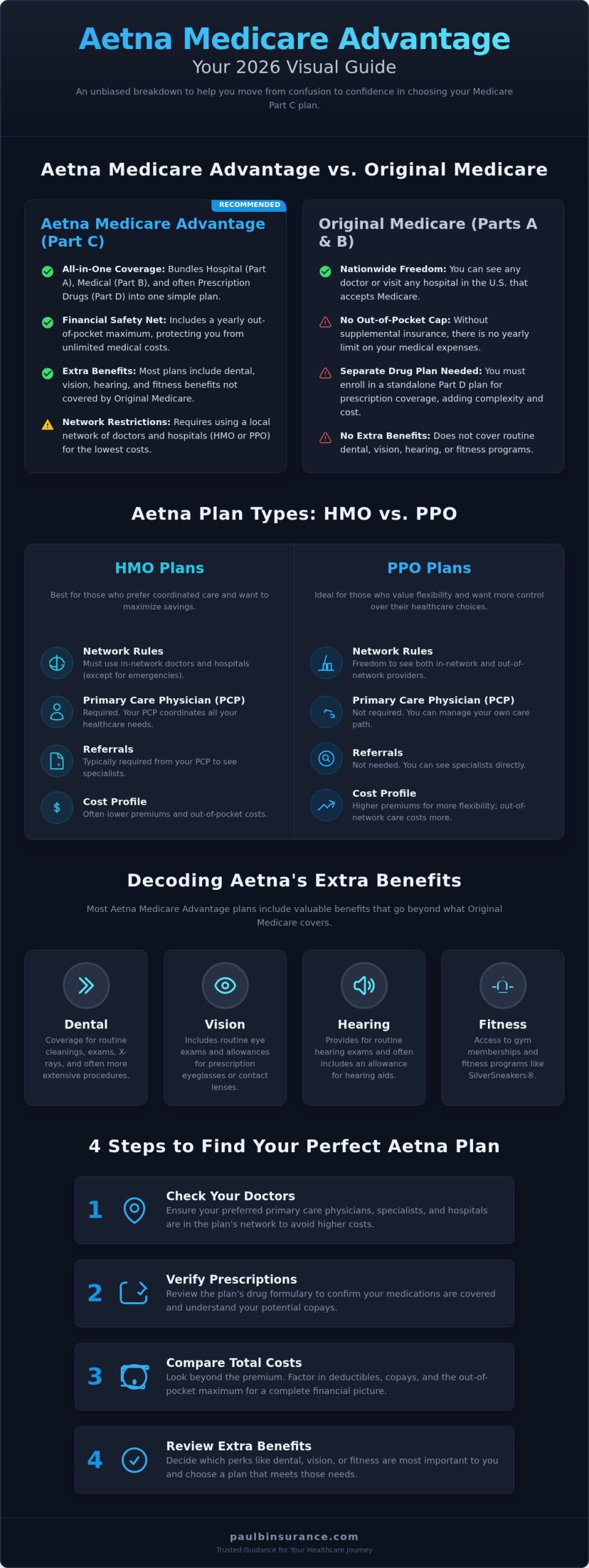
- Provider Networks: With Original Medicare, you can see any doctor or visit any hospital in the U.S. that accepts Medicare. Aetna plans typically use a local provider network (like an HMO or PPO), meaning you’ll need to use doctors and facilities within that network for the lowest costs.
- Financial Safety Net: Aetna plans include a yearly limit on your out-of-pocket costs for medical services. Original Medicare has no such cap, which can leave you exposed to unlimited expenses without supplemental coverage.
- Extra Benefits: Most Aetna plans include valuable extra benefits not covered by Original Medicare, such as routine dental, vision, and hearing care, as well as fitness program memberships like SilverSneakers.
A Deep Dive into Aetna’s Plan Types: HMO vs. PPO
Navigating the world of Medicare can feel overwhelming, but understanding your options is the first step toward confidence. Aetna offers several types of Medicare Advantage plans, and the right choice for you will depend on your unique healthcare needs, budget, and desire for flexibility. The main difference between these plans comes down to their network rules and how you access care. Choosing the right type of Aetna Medicare Advantage plan is crucial for managing your costs and ensuring your preferred doctors are covered. A comprehensive Aetna Medicare Advantage review often highlights that member satisfaction is closely tied to selecting a plan structure that fits their lifestyle. Let’s break down the most common options in simple, clear terms.
Aetna HMO (Health Maintenance Organization) Plans
Think of an Aetna HMO plan as a coordinated care team with your Primary Care Physician (PCP) at the center. These plans are often more budget-friendly but come with a more structured approach to your healthcare.
- Network Rules: You must use doctors, specialists, and hospitals within the Aetna HMO network for your care to be covered (except in emergencies).
- Primary Care Physician (PCP): You are required to select a PCP who will manage your overall care.
- Referrals: You will typically need a referral from your PCP before you can see a specialist.
- Cost: HMOs often feature lower monthly premiums and out-of-pocket costs, making them an affordable choice.
Aetna PPO (Preferred Provider Organization) Plans
If you value flexibility and want more control over your healthcare choices, an Aetna PPO plan might be the perfect fit. These plans allow you to see providers both inside and outside the network, giving you greater freedom.
- Flexibility: You have the freedom to see any doctor who accepts Medicare, but you’ll save money by staying in-network.
- Out-of-Network Costs: Seeing an out-of-network provider is an option, but it will result in higher copays and coinsurance.
- PCP and Referrals: You do not need to choose a PCP, and you can see specialists without a referral.
- Cost: This flexibility may come with higher monthly premiums and copays compared to HMO plans.
Aetna Special Needs Plans (SNPs)
Aetna also provides Special Needs Plans (SNPs) designed to offer coordinated care and specialized benefits for people with specific circumstances. These plans combine prescription drug coverage with targeted healthcare services. The main types include:
- D-SNPs: For individuals who are “dual-eligible” for both Medicare and Medicaid.
- C-SNPs: For those with certain severe or disabling chronic conditions, like diabetes, heart failure, or COPD.
- I-SNPs: For people who live in an institution, such as a nursing home.
The Pros and Cons of Choosing an Aetna Plan: An Honest Look
Navigating the world of Medicare can feel overwhelming, and finding the right plan is a deeply personal choice. The truth is, no single insurance company is a perfect match for everyone. Aetna has significant strengths, but like any provider, there are potential drawbacks to consider. Our goal here is to give you a balanced and honest look at an Aetna Medicare Advantage plan, evaluating it based on cost, coverage, and convenience, so you can decide if it aligns with what matters most to you.
Potential Advantages of Aetna Medicare Plans
For many seniors, Aetna’s appeal lies in its stability and comprehensive approach. Here are some of the key strengths you’ll find:
- Large National Presence: As one of the country’s largest insurers, Aetna offers a wide selection of plans and has strong brand recognition you can trust.
- $0 Premium Options: Many Aetna plans come with a $0 monthly premium, making them a financially attractive option for those on a fixed budget.
- All-in-One Simplicity: Most plans bundle your hospital (Part A), medical (Part B), and prescription drug (Part D) coverage into a single, easy-to-manage plan.
- Valuable Extra Benefits: Aetna often includes benefits not covered by Original Medicare, such as routine dental, vision, and hearing care, plus fitness programs like SilverSneakers.
Potential Drawbacks and Things to Watch For
To make a confident decision, it’s just as important to understand the potential downsides. Most Aetna Medicare Advantage plans operate as either an HMO or PPO, which comes with certain rules. According to a detailed Medical News Today analysis of Aetna plans, these managed care structures are a primary source of potential limitations, including:
- Network Restrictions: You must use doctors and hospitals within Aetna’s network to receive the lowest costs. It’s crucial to verify your preferred providers are covered before enrolling.
- Prior Authorization: Some medical services or prescriptions may require approval from Aetna before they are covered, which can sometimes delay care.
- Regional Variations: Plan availability, costs, and provider networks can vary significantly from one county to the next. A 5-star plan in one area may not be available in another.
- Annual Changes: Like all Medicare Advantage plans, benefits, drug formularies, and provider networks can change each year.
Who Is an Aetna Plan Best For?
So, how do you know if an Aetna plan is the right choice for your specific needs? Generally, these plans are an excellent fit for individuals who:
- Prefer having all their medical and drug benefits bundled into a single, coordinated plan.
- Are comfortable receiving care from a network of doctors and hospitals to manage costs.
- Want the peace of mind that comes with a yearly cap on their maximum out-of-pocket expenses.
- Will actively use the valuable extra perks like dental, vision, hearing, and fitness benefits.
Decoding Aetna’s Extra Benefits and Features
One of the most significant reasons people choose a Medicare Advantage plan is for the valuable extra benefits-the perks and services not covered by Original Medicare Parts A and B. These built-in extras are designed to support your overall health and well-being, often saving you significant out-of-pocket costs throughout the year. Aetna is known for offering a robust package of these additional services, making their plans a compelling option for many.
However, it’s crucial to remember that these benefits are not universal. The specific perks, coverage limits, and copays can vary widely from one aetna medicare advantage plan to another and by location. Always review a plan’s Summary of Benefits carefully to understand exactly what you’re getting.
Comprehensive Dental, Vision, and Hearing Coverage
Most Aetna plans provide coverage for essential services that help you maintain your health from head to toe. This typically includes routine dental care like cleanings and exams, vision coverage for eye exams and an allowance for eyeglasses or contact lenses, and hearing benefits that often cover routine hearing tests and provide an allowance toward the cost of hearing aids. These three benefits alone can provide immense value and peace of mind.
Stay Active with Fitness and Wellness Programs
Staying physically active is a cornerstone of healthy aging. That’s why many Aetna plans include the popular SilverSneakers® fitness program at no additional cost. This fantastic benefit gives you access to thousands of participating gyms, community centers, and fitness locations nationwide. Whether you prefer traditional gym equipment, group classes like yoga, or online fitness videos you can do from home, SilverSneakers® makes it easier to stay engaged and healthy.
Valuable Everyday Perks and Support
Beyond the major categories, many aetna medicare advantage plans include other thoughtful perks designed to make life easier and healthier. As you compare your options, look for valuable extras such as:
- Over-the-Counter (OTC) Allowance: A quarterly allowance to purchase approved health and wellness products like vitamins, pain relievers, and first-aid supplies.
- Transportation Services: Non-emergency rides to and from medical appointments and the pharmacy, ensuring you never have to miss a visit.
- Meal Delivery: A service that provides healthy, pre-packaged meals delivered to your home for a short period after a hospital stay.
- 24/7 Nurse Line: Access to a registered nurse by phone anytime, day or night, for urgent health questions and guidance.
These benefits can make a huge difference in your daily life and budget, but the details matter. If you need help comparing the specific benefits available in your area, our team provides clear, unbiased guidance. You can get trusted support by visiting us at paulbinsurance.com.
How to Compare Aetna Plans and Find the Right Fit
Choosing the right Medicare Advantage plan goes far beyond simply picking the one with the lowest monthly premium. A plan that looks good on paper can lead to costly surprises if it doesn’t cover your trusted doctors or essential medications. Following a clear, step-by-step process is the best way to confidently select an Aetna Medicare Advantage plan that truly matches your healthcare needs and budget.
Step 1: Confirm Your Doctors Are In-Network
This is the most critical step in your research. An attractive plan is worthless if you can’t see the doctors you rely on. Before enrolling, you must verify that your providers are part of the plan’s network. Use Aetna’s own online provider directory to check for:
- Your primary care physician
- All key specialists (e.g., your cardiologist, rheumatologist, or oncologist)
- Your preferred hospital and outpatient facilities
Provider networks can change annually, so never assume your doctor is covered. Always verify directly to avoid unexpected and expensive out-of-network bills.
Step 2: Check Your Prescription Drug Coverage
Next, you need to review the plan’s formulary, which is its official list of covered prescription drugs. A mismatch here can lead to significant out-of-pocket costs throughout the year. As you review the formulary for any potential plan, ask these questions:
- Coverage: Are all of my current medications on the list?
- Cost: What is the copay or coinsurance for each drug, and which tier does it fall into?
- Restrictions: Does the plan require prior authorization before it will cover a drug, or do you need to try a cheaper medication first (step therapy)?
Understanding these details ensures your medication needs are met affordably and without frustrating delays.
Step 3: Evaluate the Medicare Star Rating
Every year, Medicare evaluates plans based on quality of care and member satisfaction, assigning a rating from 1 to 5 stars. This rating is a powerful tool for comparing plans at a glance. A plan with a 4 or 5-star rating is considered high-quality, often reflecting better customer service and health outcomes. While not the only factor, the Star Rating provides valuable insight into the experience other members have had with the plan.
Feeling lost in the details? This process can be overwhelming, but you don’t have to do it alone. We can run a free plan comparison for you. Our team provides unbiased, expert guidance to help you navigate your options with confidence and clarity, all at no cost to you.
Your Next Step to Medicare Clarity
Ultimately, choosing the right plan comes down to your personal needs. As we’ve reviewed, this means weighing the network flexibility of an HMO vs. a PPO and ensuring the extra benefits align with your lifestyle. The best aetna medicare advantage plan is the one that provides comprehensive coverage for your specific health and budget requirements, not just what works for someone else.
Navigating this decision alone can feel overwhelming, but it doesn’t have to be. With personalized guidance from a trusted expert who has patiently served over 5,000 clients, you can find the right path. We provide completely unbiased advice on over 40 insurance carriers, so you can be sure our no-cost recommendations are focused solely on you.
Let us help you make this important choice with peace of mind. Let’s turn confusion into confidence. Get your free, unbiased Medicare plan review today.
Frequently Asked Questions
Is Aetna a good Medicare Advantage plan?
Aetna is a large, reputable provider, but whether a plan is “good” truly depends on your personal healthcare needs. A plan that works perfectly for a friend may not be the right fit for you. The best approach is to evaluate a specific Aetna Medicare Advantage plan based on its network of doctors, prescription drug formulary, and out-of-pocket costs to ensure it aligns with your specific health requirements and budget. This personalized review is key to finding your best coverage.
Does Aetna Medicare Advantage cover dental and vision?
Most Aetna Medicare Advantage plans do include extra benefits for routine dental and vision care, which are not covered by Original Medicare. However, the level of coverage can vary greatly between plans. Some may cover preventative services like cleanings and eye exams, while others might offer an allowance for dentures or glasses. It is essential to review the plan’s Summary of Benefits to understand the specific dental and vision services that are included.
What is the Aetna SilverSneakers program and how does it work?
SilverSneakers is a popular fitness and wellness program included with many Aetna plans at no additional cost to you. It provides a membership to thousands of participating gyms, fitness centers, and community locations across the country. You can use gym equipment, join group exercise classes designed for seniors, or even access online workout videos from home. To get started, you simply present your plan ID card at any in-network location.
How do I find out if my doctor is in Aetna’s Medicare network?
The most reliable first step is to use the online provider directory on Aetna’s official website. You can search by your doctor’s name and location. However, we always recommend a second step for peace of mind: call your doctor’s office directly. Ask the billing department, “Do you accept the specific Aetna Medicare Advantage PPO or HMO plan I am considering?” This confirmation helps you avoid any unexpected and costly out-of-network bills.
What is the difference between an Aetna Medicare Advantage plan and a Medigap plan?
This is a common point of confusion, but the distinction is simple. An Aetna Medicare Advantage plan (Part C) is an all-in-one alternative way to receive your Medicare benefits, often bundling hospital, medical, and prescription drug coverage. In contrast, a Medigap (or Medicare Supplement) plan works *with* Original Medicare, not in place of it. Medigap helps cover the “gaps” in Original Medicare, like deductibles and coinsurance. You cannot have both at the same time.
Do I still need to pay my Medicare Part B premium if I have an Aetna plan?
Yes, you must continue to pay your monthly Medicare Part B premium to Social Security. Enrolling in a private Medicare Advantage plan does not eliminate this government premium. While some Aetna plans offer a “Part B premium giveback” benefit that reduces your monthly costs, you are still required to be enrolled in and paying for both Medicare Part A and Part B to be eligible for an Advantage plan.
Can I switch from my Aetna plan if I’m not happy with it?
Yes, you are never permanently locked into a plan. Medicare provides specific times when you can make changes. The most common opportunity is the Annual Enrollment Period, which runs from October 15th to December 7th each year. During this window, you can switch to a different Medicare Advantage plan or return to Original Medicare. Certain life events may also grant you a Special Enrollment Period to change plans outside of this timeframe.

Article by
Paul Barrett
Paul Barrett, CMIP is the founder of The Modern Medicare Agency, an independent Medicare-only brokerage based in Melville, NY. With 18 years of Medicare-exclusive experience, a CMIP designation, and more than 5,000 clients served across 37 states, Paul is one of the most credentialed independent Medicare specialists on Long Island — and one of the most direct.
He represents 40+ carriers with no quotas and no allegiances, which means his recommendations are based entirely on what fits each client's specific situation. He is the author of Medicare Mastery Unlocked and host of the Wise Guys Retirement Talk podcast. His content is grounded in primary sources, real carrier intelligence, and 18 years of watching what happens when people get Medicare right — and when they don't.
📞 631-358-5793 | paulbinsurance.com