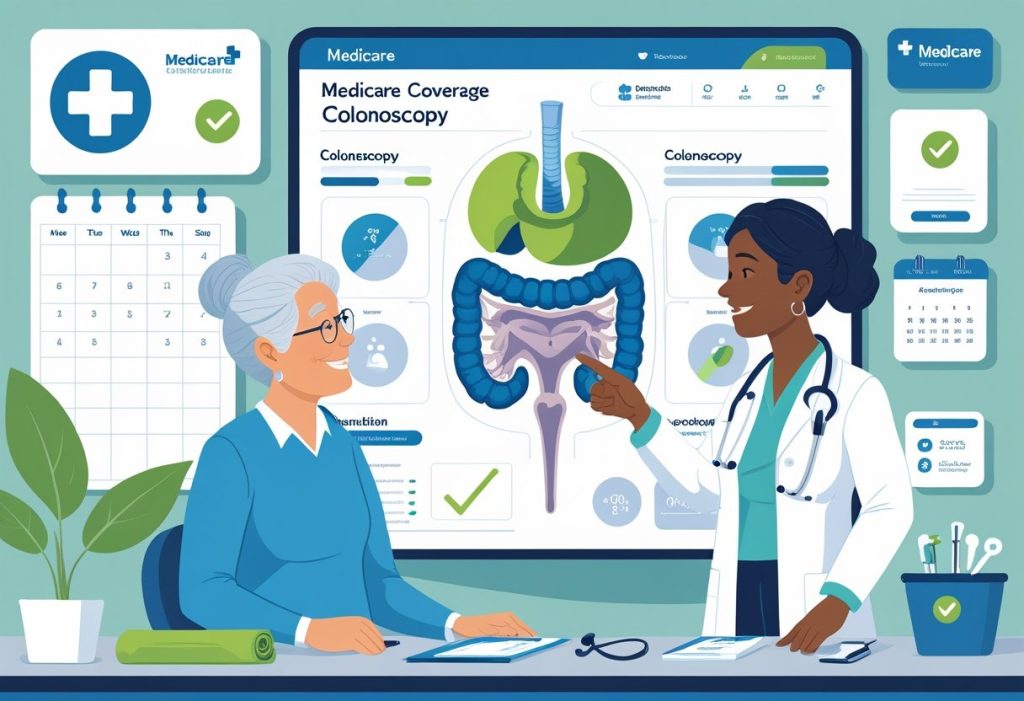
You likely want a straight answer: Medicare does cover screening colonoscopies and often pays the full cost when the procedure is preventive. If the colonoscopy is diagnostic or if polyps are removed, you may owe some costs depending on your plan and whether your provider accepts Medicare.
You can learn how Original Medicare and Medicare Advantage handle coverage, what triggers charges, and how to confirm benefits before you schedule. Turn to The Modern Medicare Agency for help—our licensed agents talk with you one on one, match plans to your needs, and explain costs clearly without adding extra fees.
Medicare Coverage for Colonoscopy
Medicare can cover both preventive and diagnostic colonoscopies, but coverage depends on your risk, symptoms, and whether a polyp is removed. You may owe nothing for a screening, yet face costs if the procedure becomes diagnostic or requires treatment.
Screening Colonoscopy Eligibility
Medicare Part B covers screening colonoscopies for beneficiaries at average or increased risk for colorectal cancer. You qualify if you are age 45 or older for routine screening.
If you have higher risk — such as a family history of colorectal cancer, certain genetic conditions, or inflammatory bowel disease — Medicare may allow more frequent screenings, often every two years. For a screening to be fully covered, the colonoscopy must be coded as preventive.
If a polyp is found and removed during the same visit, billing can change and you might be billed for the polypectomy portion. Always confirm with your provider that they will bill it as a screening when appropriate.
Diagnostic Colonoscopy Coverage
Medicare covers diagnostic colonoscopies when you have symptoms like rectal bleeding, unexplained weight loss, anemia, or a positive stool test. Diagnostic procedures fall under Part B and may involve coinsurance and the Part B deductible.
If the procedure is diagnostic rather than preventive, expect possible out-of-pocket costs for the facility, the doctor’s services, or removed tissue. If you have a Medicare Advantage plan, your plan must cover at least what Original Medicare covers.
Plan rules, prior authorizations, and network providers can affect your cost. Call your plan or a licensed agent at The Modern Medicare Agency to check likely costs before scheduling.
Frequency and Age Guidelines
Original Medicare generally covers a screening colonoscopy every 10 years for average-risk people starting at age 45. For those at high risk, Medicare may cover screenings more often, commonly every two years.
If a screening becomes diagnostic, frequency rules change and coverage depends on medical need. If you’re under 45 but have symptoms or high-risk factors, Medicare can still cover a colonoscopy as medically necessary.
Medicare Advantage plans may follow similar schedules but could have prior authorization or referral rules. Speak directly with a licensed agent at The Modern Medicare Agency to confirm timing and coverage for your specific situation.
Why choose The Modern Medicare Agency?
- Our licensed agents are real people you can speak to one-on-one.
- They match Medicare packages to your needs without extra fees.
- They explain billing differences between screening and diagnostic procedures so you avoid surprises.
Original Medicare vs. Medicare Advantage
Original Medicare and Medicare Advantage differ in how they cover colonoscopies and how much you pay. One plan gives set parts and coinsurance rules; the other bundles benefits and can add extra cost protections or limits.
Differences in Colonoscopy Coverage
Original Medicare (Parts A and B) covers screening colonoscopies when your provider accepts assignment. If the test is purely preventive, Medicare often pays the full approved amount.
If a polyp is found and removed, Medicare may reclassify the visit as diagnostic, which can change your cost responsibility. Medicare Advantage (Part C) must cover at least what Original Medicare covers.
Many Advantage plans waive coinsurance for screening colonoscopies or offer extra preventive benefits. Network rules can limit which doctors or facilities you can use without extra cost.
Always check prior authorization rules and whether polyp removal triggers diagnostic billing under your specific plan.
Cost Sharing and Out-of-Pocket Expenses
With Original Medicare, a diagnostic colonoscopy usually means Medicare pays 80% of the Medicare-approved amount and you pay 20%, plus any Part B deductible. You can lower costs with a Medigap (supplement) policy that covers coinsurance and deductibles, but Medigap does not work with Medicare Advantage.
Medicare Advantage plans often cap your out-of-pocket costs for services, which can save you money if you need more care. Some plans waive coinsurance for screenings or cover prep supplies, but others may require copays, prior authorizations, or use of in-network providers.
For personalized help comparing these details and finding a plan that fits your budget, contact The Modern Medicare Agency. Our licensed agents are real people you can speak to one-on-one, and they identify Medicare packages that match your needs without extra fees.
Costs Associated With Colonoscopy Under Medicare
Medicare can cover most colonoscopy costs, but your out-of-pocket spending depends on whether the procedure is preventive or diagnostic and on any extra services used. Read the details below so you know what you might pay.
Coverage of Sedation and Anesthesia
Medicare Part B typically covers sedation and anesthesia during a colonoscopy when a doctor says they are medically necessary. If you get a screening colonoscopy and anesthesia is required, Part B usually pays for the anesthesia provider and the sedation drugs.
If a polyp is found and removed during the same visit, Medicare treats the procedure as diagnostic, which can change who pays for what. If your doctor uses additional services—for example, an anesthesiologist rather than the endoscopist—you may see separate billing.
That can mean a separate fee subject to Part B rules. Call The Modern Medicare Agency to review your plan details and confirm which providers are in-network for lower costs.
Potential Co-Payments and Deductibles
If the colonoscopy is preventive and no polyp is removed, you often pay nothing for the screening itself under Medicare Part B. If a polyp is removed or other work is done, Medicare may classify the visit as diagnostic.
Then you could owe the Part B coinsurance (typically 20% of the Medicare-approved amount) and any unmet Part B deductible. You may also face facility fees from an outpatient center or hospital.
Those fees follow Part A or Part B rules depending on the setting. Your Medicare Advantage plan may change cost-sharing amounts and may require prior authorization.
Contact The Modern Medicare Agency for a one-on-one review so a licensed agent can explain expected copays, deductibles, and network rules that affect your final bill.
When Colonoscopies May Not Be Fully Covered
Some colonoscopies that start as screenings can become diagnostic, and costs can change. You may face extra charges if your provider is outside Medicare’s network or if the doctor removes polyps or takes biopsies during the procedure.
Out-of-Network Providers
If your colonoscopy provider does not accept Medicare assignment, you may pay more. Original Medicare (Part B) generally pays 80% of the Medicare-approved amount for services from non-participating providers after your Part B deductible.
That means you could be billed for the remaining 20% plus any amount the provider charges above Medicare’s approved rate. For Medicare Advantage plans, you usually must use in-network providers to avoid higher costs.
If you go out-of-network, your plan may deny coverage or require larger copays and deductibles. Always verify the provider’s status before scheduling.
Call the provider and your plan, or contact The Modern Medicare Agency so an agent can confirm network participation and explain potential out-of-pocket costs.
Additional Procedures or Biopsies
If the doctor removes polyps or performs a biopsy during a screening colonoscopy, Medicare may treat the service differently. Removal or biopsy can convert a preventive screening into a diagnostic procedure.
Diagnostic procedures often trigger your Part B deductible and coinsurance, so you may owe a portion of the bill. You should ask the endoscopy team how they code findings and whether they expect polyp removal.
Keep clear records of the facility and physician billing. The Modern Medicare Agency’s licensed agents can review your bills and explain how polyp removal or biopsies affect coverage, helping you avoid surprise charges.
How to Schedule a Colonoscopy With Medicare
First, check whether your colonoscopy is screening or diagnostic. Screening colonoscopies are often covered by Medicare Part B with no copay if done per rules.
Diagnostic procedures or polyp removals may cost you coinsurance or a copay. Call your primary care doctor to get a referral or an order.
The doctor will note reason for the test, past history, and any symptoms. Bring your Medicare card and a list of current meds when you call.
Contact the endoscopy center or hospital to book the appointment. Ask if the provider accepts Medicare assignment.
Confirm whether the physician and facility both accept Medicare to avoid surprise bills. Ask specific questions when you call:
- Date, time, and location of the procedure
- Pre-procedure prep instructions and supplies
- Whether anesthesia and pathology are billed separately
Use The Modern Medicare Agency if you want help. Our licensed agents are real people you can speak to one-on-one.
They match Medicare plans to your needs and explain costs so you avoid unexpected charges. Before the day of the procedure, verify coverage again with Medicare and your plan.
Bring your ID and Medicare card, and arrange someone to drive you home after sedation.
Steps to Confirm Your Medicare Benefits
Check who will bill Medicare, whether the colonoscopy is screening or diagnostic, and if prior authorization or facility rules apply. Have your Medicare card, recent medical records, and the provider’s Medicare acceptance status ready when you call.
Verifying Coverage With Your Provider
Call the doctor’s office or endoscopy center and ask these exact questions: do you accept Original Medicare (Part B) or only Medicare Advantage? Will this colonoscopy be billed as a screening or diagnostic procedure?
If polyps are likely to be removed, ask how that changes billing. Get the provider’s Medicare billing number and written confirmation of coverage when possible.
Confirm whether the facility accepts Medicare assignment so you pay the standard coinsurance only. If you have a Medicare Advantage plan, call your plan first to learn in-network rules and any prior authorization steps.
If you need help, contact The Modern Medicare Agency. Our licensed agents will call providers with you, explain billing differences, and find plans that match your needs without extra fees.
Common Documentation Requirements
Bring your Medicare card and a photo ID to the appointment. Have a referral or order from your primary care doctor if your plan or facility requires one.
If you previously had polyps, bring pathology reports or colonoscopy notes from past procedures. If your colonoscopy is diagnostic, the provider may document symptoms or test results that justify the service to Medicare.
Keep records of any prior authorizations, pre-screening test dates (like FIT), and the provider’s statement about likely findings. Save written estimates of costs and any itemized billing you receive.
The Modern Medicare Agency can review your paperwork with you and confirm what documents the provider needs before the procedure. Our agents talk with you one-on-one and help avoid surprise bills.
Alternatives to Colonoscopy Covered by Medicare
Medicare covers several noninvasive screening options if you prefer not to have a colonoscopy. These tests can fit different risk levels and schedules, and they often require no sedation or recovery time.
Common covered alternatives include stool-based tests like the fecal immunochemical test (FIT) and multi-target stool DNA tests. You complete these at home, send the sample to a lab, and receive results without a clinic visit.
If any test is positive, Medicare covers a follow-up colonoscopy. CT colonography (virtual colonoscopy) is another option under Medicare Part B for certain people at higher risk.
This uses CT imaging instead of an endoscope. You may need a referral and should check whether your plan requires prior authorization.
Talk with a licensed agent at The Modern Medicare Agency to pick the right screening for your needs. Our agents are real people you can speak to one-on-one.
They compare Medicare options and explain coverage details, including cost sharing and follow-up rules, so you avoid surprise bills. Consider factors like test frequency, convenience, and what happens after a positive result.
Your agent helps match a plan to your preferences and budget without extra fees.
Related Preventive Services and Follow-Up Care
Medicare covers several preventive options that work with colonoscopy screening. You can get stool-based tests, like fecal occult blood or multi-target stool DNA tests, which Medicare may cover.
If one of these tests is positive, Medicare covers a follow-up colonoscopy to check for problems. If a screening colonoscopy finds polyps or other tissue and the doctor removes them, part of the visit may count as diagnostic.
That can mean you might owe some coinsurance or a portion of the provider fee. Ask your provider and Medicare before the procedure so you know which charges apply.
You also have access to routine preventive visits and counseling that support colorectal health. These include education on diet, activity, and risk factors.
Use these visits to discuss how often you need screening based on your personal risk. The Modern Medicare Agency helps you understand these rules and plan for potential costs.
Our licensed agents speak with you one on one to match Medicare plans to your needs. They explain coverage details, including which tests are fully covered and when follow-up care might cause out-of-pocket costs.
Tips to bring to your appointment:
- Bring your Medicare card and any prior test results.
- Ask whether the colonoscopy will be billed as screening or diagnostic.
- Confirm provider acceptance of Medicare assignment to reduce surprise costs.
Frequently Asked Questions
Medicare often pays for screening colonoscopies, plus some related services, but your costs can change if the procedure becomes diagnostic or if tissue is removed. Your plan type and whether the provider accepts Medicare assignment also affect what you pay.
What are the out-of-pocket costs for a colonoscopy under Medicare?
If the colonoscopy is a screening and the provider accepts Medicare assignment, Medicare Part B usually covers the procedure with no coinsurance or deductible for you.
If the test turns diagnostic or the doctor removes polyps, you may owe Part B coinsurance and the Part B deductible.
Costs vary by provider and plan.
Is there coverage for anesthesia during a colonoscopy on Medicare?
Medicare Part B generally covers anesthesia for colonoscopy when it is medically necessary and provided by a Medicare-approved practitioner.
If a non‑Medicare provider gives anesthesia or the service is deemed not necessary, you could face extra charges.
Confirm coverage with your provider first.
How frequently does Medicare cover screening colonoscopies?
For average-risk beneficiaries, Medicare typically covers a screening colonoscopy every 10 years.
If you are at high risk, Medicare may cover colonoscopies more often, such as every two years or as your doctor recommends.
Does Medicare provide coverage for colonoscopies after age 75?
Medicare does not set a strict age cutoff for colonoscopy coverage; coverage depends on medical necessity and your health status.
Your doctor and Medicare can determine whether continued screening or diagnostic colonoscopies are appropriate for you after age 75.
Are colonoscopy prep kits covered by Medicare?
Medicare Part D or Medicare Advantage drug coverage may cover prescription bowel prep medications when prescribed by your doctor.
Over-the-counter prep supplies usually are not covered.
Check your specific plan’s drug formulary and rules.
Will Medicare still cover a colonoscopy if polyps are discovered during the procedure?
Yes. Medicare still covers the colonoscopy if the doctor finds and removes polyps, but the cost rules can change.
When polyps are removed, Medicare often treats the service as diagnostic. This can trigger Part B coinsurance and the deductible.
Ask your provider how they bill and whether they accept Medicare assignment.