
Are you worried about your vision as you get older, but find yourself lost in the maze of Medicare rules? Trying to get a straight answer about your eye care can feel impossible, leaving you concerned about surprise bills from the eye doctor. It’s one of the most common questions we hear, and the one that causes the most stress: does Medicare cover eye exams? The short answer is complicated, and that’s where the confusion-and the risk of costly mistakes-begins.
We believe you deserve clarity and peace of mind. In this simple guide for 2026, we’ll walk you through everything, step-by-step. You will learn exactly when Medicare will pay for an eye exam, what your options are for getting routine vision checks for glasses and contacts, and how to build a plan that gives you full coverage. Our goal is to move you from confusion to confidence, so you can make the best decisions for your health and your budget.
Key Takeaways
- Start with the simple truth: Original Medicare (Part A & Part B) does not cover routine eye exams for glasses, which is the essential first step to understanding your coverage needs.
- The answer to does medicare cover eye exams is “no” for routine care, but specific medical conditions like diabetes or glaucoma can trigger Part B coverage you shouldn’t miss.
- Don’t go without coverage-discover the three clear pathways you can take to add the routine vision benefits you need for glasses and contacts.
- Choosing the right vision plan is about more than just premiums; learn what to look for in network and benefit details to ensure you get the best value.
The Direct Answer: Original Medicare and Routine Eye Exams
Navigating Medicare can feel overwhelming, so let’s get straight to the point. When beneficiaries ask, “does Medicare cover eye exams?“, the answer for routine vision care is, unfortunately, no. This is one of the most common and frustrating surprises for people who are new to the system. The reason is that Original Medicare (Part A and Part B) was primarily designed to cover hospital stays and medical problems, not routine or preventive vision services like getting a new prescription for glasses.
But please don’t feel discouraged-this isn’t the end of the story. Understanding exactly what is and isn’t covered is the first step toward finding a solution that gives you peace of mind and the vision care you need. There are clear exceptions and other coverage options available.
What Original Medicare Part B Typically Does NOT Cover
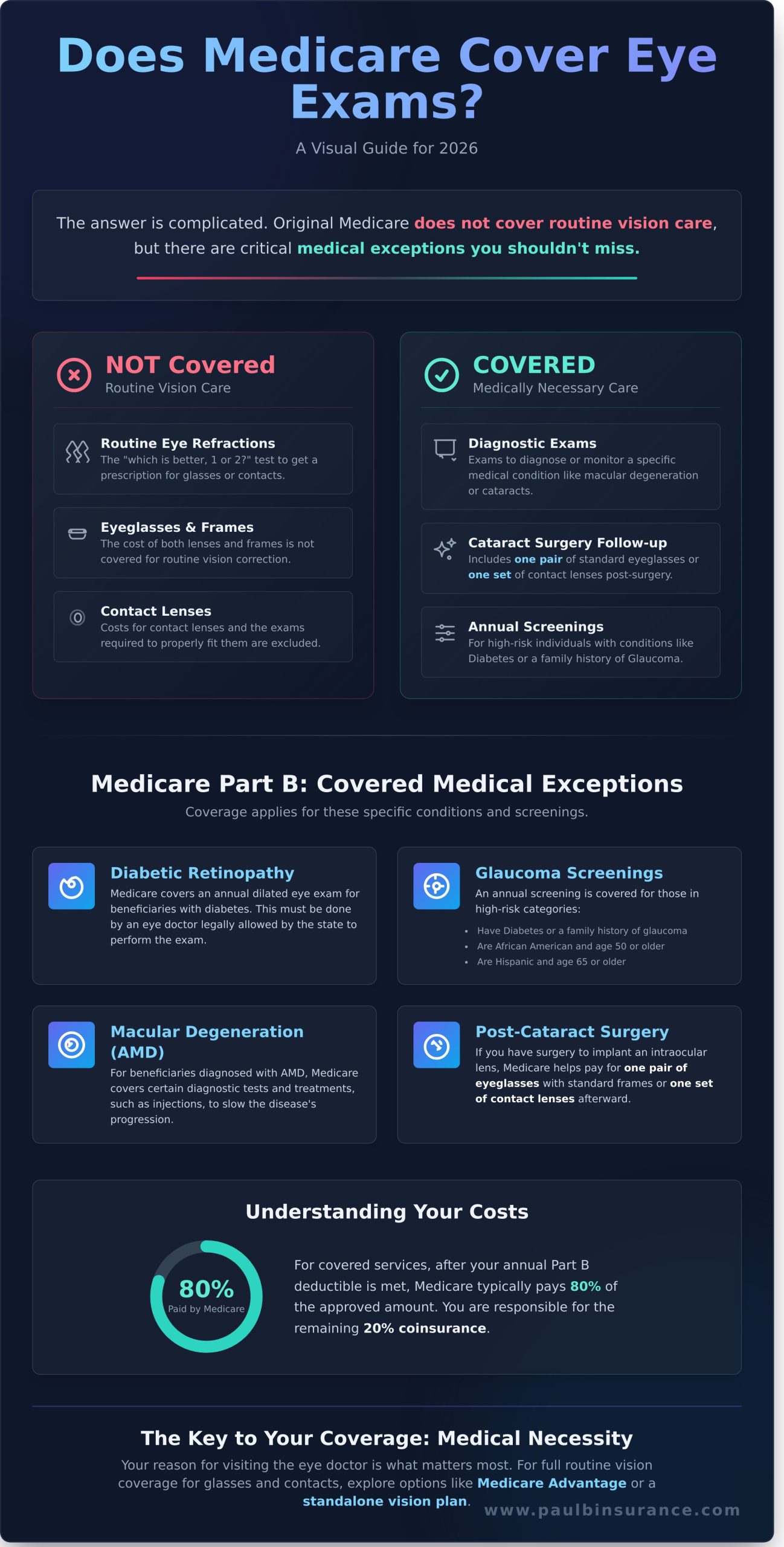
When Medicare uses the word “routine,” it specifically refers to services aimed at correcting your vision rather than treating an eye disease. Because of this distinction, Medicare Part B will not pay for these common vision expenses:
- Routine eye refractions (the familiar “which is better, 1 or 2?” test)
- Eyeglasses, including both the frames and lenses
- Contact lenses
- Exams required for fitting contact lenses
What Original Medicare Part B MAY Cover (Medically Necessary Care)
Here is where the rules offer some good news. While routine check-ups are out, Medicare Part B will often cover an eye exam if it’s considered medically necessary to diagnose or treat a specific condition. This is the most important distinction to remember.
For example, Medicare helps cover exams and screenings related to chronic eye conditions, especially for those at high risk. This includes:
- An annual glaucoma screening for beneficiaries with diabetes or a family history of glaucoma.
- An annual eye exam for diabetic retinopathy for beneficiaries who have diabetes.
- Diagnostic exams to monitor ongoing conditions like macular degeneration or cataracts.
So, the answer to “does Medicare cover eye exams” changes from a simple ‘no’ to a ‘maybe’ once a medical diagnosis is involved. It all comes down to the reason for your visit.
When Medicare Part B DOES Cover Eye Exams: Medical Exceptions
Navigating Medicare’s rules for vision care can feel overwhelming, but understanding a few key exceptions can protect both your health and your wallet. While it’s true that, as a general rule, Medicare doesn’t cover eye exams for routine check-ups or new glasses, that isn’t the whole story. Your eye care is often covered when it’s considered medically necessary to diagnose or treat a specific condition.
So, when does Medicare cover eye exams? Let’s break down the four most common situations where Medicare Part B steps in to help. For these approved services, you typically pay 20% of the Medicare-approved amount after you’ve met your annual Part B deductible.
Diabetic Retinopathy Screenings
If you have diabetes, your vision is at higher risk for a serious complication called diabetic retinopathy. To help catch it early, Medicare Part B covers a comprehensive dilated eye exam once a year. This exam must be performed by an eye doctor who is legally permitted by your state to provide this service, giving you peace of mind and crucial preventive care.
Glaucoma Screenings
Glaucoma can cause vision loss without early symptoms, which is why screenings are so important. Medicare Part B covers a glaucoma test once every 12 months, but only if you fall into a high-risk category. You are considered high-risk if you:
- Have diabetes
- Have a family history of glaucoma
- Are African American and age 50 or older
- Are Hispanic and age 65 or older
Macular Degeneration (AMD) Tests & Treatment
For individuals diagnosed with Age-related Macular Degeneration (AMD), Medicare Part B provides coverage for certain diagnostic tests and treatments. This can include services like injections to slow the progression of the disease. It’s important to note, however, that this coverage applies once you have symptoms or a diagnosis; routine screenings for AMD without a specific medical reason are not covered.
Exams and Glasses After Cataract Surgery
This is a significant exception that many people rely on. If you have surgery to implant an intraocular lens for cataracts, Medicare Part B will help pay for corrective lenses afterward. This includes one pair of eyeglasses with standard frames or one set of contact lenses prescribed by your surgeon. This coverage ensures your vision is fully corrected following a medically necessary procedure.
How to Get Routine Vision Coverage: Your 3 Main Pathways
Since Original Medicare leaves a significant gap in routine vision care, most beneficiaries find they need another plan to cover services like annual check-ups, glasses, and contact lenses. Navigating these options can feel overwhelming, but it becomes straightforward once you understand the main paths available to you.
The core question, “does medicare cover eye exams for routine needs,” is clearly answered as “no” by official sources like the Medicare.gov coverage for routine eye exams page. This is precisely why supplemental coverage is so important. Let’s break down the three most common ways to secure the vision benefits you need. Choosing the right one simply depends on your personal budget, health needs, and which doctors you prefer to see.
Option 1: Medicare Advantage (Part C) Plans
Often called “all-in-one” plans, Medicare Advantage plans are offered by private, Medicare-approved insurance companies. This is the most popular way for Medicare beneficiaries to get vision coverage because most plans bundle it together with dental, hearing, and prescription drug benefits. However, the specific allowances for exams, frames, and lenses vary widely from one plan to another, making a careful comparison essential to find the right fit.
Option 2: Stand-Alone Vision Insurance Plans
You can also purchase a separate vision insurance policy directly from a private insurer. This can be an excellent choice if you are happy with your Original Medicare and Medigap coverage but simply need to add benefits for eye care. These plans require a separate monthly premium and have their own network of eye doctors. It functions much like buying a separate dental insurance plan to fill a specific coverage need.
A Note on Medicare Supplement (Medigap) Plans
This is a frequent point of confusion, so it’s important to be clear: Medigap plans do not add extra benefits like routine vision, dental, or hearing. A Medigap policy’s only job is to help pay your share of the costs-like deductibles and coinsurance-for services that Original Medicare already covers. For example, it would help pay your 20% coinsurance for a medically necessary glaucoma screening, but it will not pay anything for a routine eye exam. For personalized guidance on your Medicare options, contact The Modern Medicare Agency.
Finding a Plan with Vision Benefits That Works For You
Once you understand the answer to the question, “does medicare cover eye exams,” the next step is finding a plan that fills that coverage gap. It’s easy to focus only on the monthly premium, but the real value is in the details. A plan’s allowance for frames, coverage for special lenses, or its network of eye doctors can make a huge difference in your out-of-pocket costs and overall satisfaction.
Your Vision Benefit Checklist: What to Compare
When you’re comparing Medicare Advantage plans, look closely at the vision benefits. A low premium can sometimes hide high copays or a restrictive network. Here’s a simple checklist to guide you:
- Routine Exam Copay: Is it $0, $15, or more per visit?
- Eyewear Allowance: How much does the plan provide for frames and lenses (e.g., $150 or $200 per year)?
- Lens Options: Does coverage include popular upgrades like anti-glare, scratch-resistant coatings, or bifocals?
- Provider Network: Is your preferred optometrist or ophthalmologist in the plan’s network? Check this before you enroll.
Why an Independent Broker is Your Best Ally
Navigating this alone can be overwhelming. This is where trusted, unbiased guidance becomes your most powerful tool. Unlike a captive agent who works for a single insurance company, an independent broker works for you. At The Modern Medicare Agency, we are your advocate in the complex world of Medicare.
We compare dozens of plans from over 40 different carriers to find the perfect fit for your specific needs and budget. Our guidance is always unbiased and comes at no extra cost to you. We help you steer clear of costly enrollment mistakes and find a plan that truly takes care of you.
Ready to See Clearly on Your Medicare Options?
You don’t have to spend hours trying to decipher confusing plan documents or worry that you’ve missed a critical detail. A short, no-pressure conversation with a dedicated expert can provide the clarity and confidence you deserve.
Let us help you find a plan that protects both your vision and your wallet. If you’re ready to move from confusion to confidence, schedule a simple, no-cost consultation today.
From Confusion to Confidence: Securing Your Vision Coverage
Navigating your vision benefits can feel complex, but the path forward can be simple. We’ve learned that the answer to “does medicare cover eye exams?” depends on your specific needs. While Original Medicare reserves coverage for medically necessary exams, your pathway to routine care-including glasses and contacts-lies with options like Medicare Advantage or standalone vision plans. Understanding this distinction is the first step toward protecting your sight.
Finding the right plan among countless choices is where clarity becomes crucial. Instead of navigating the maze alone, you can get personalized guidance at no cost to you. As an independent broker, we provide unbiased advice and help you compare plans from over 40 top carriers, ensuring you find coverage that truly fits your life and budget.
Ready to see your options clearly? Schedule a free, no-obligation call to find the right vision coverage. Let us simplify the process so you can move forward with confidence, knowing your eye health is in good hands.
Frequently Asked Questions
Does Medicare cover eyeglasses or contact lenses?
Original Medicare generally does not cover routine eyeglasses or contact lenses. The one major exception is for corrective lenses following cataract surgery. For most people, the path to this type of coverage is through a Medicare Advantage (Part C) plan. Many of these plans bundle health benefits with extra coverage for vision, dental, and hearing, providing a more complete solution for your healthcare needs.
How much does a routine eye exam typically cost without any insurance?
Without insurance, the cost of a routine eye exam can be a significant out-of-pocket expense, often ranging from $100 to over $250. The final price depends on your location and the specific tests included in the exam. This is why having a plan with predictable vision benefits is so important. It gives you confidence and control over your annual healthcare budget, preventing unexpected bills for essential care.
Do I need a referral to see an optometrist or ophthalmologist with my Medicare plan?
The need for a referral can be a point of stress, but the answer is straightforward. With Original Medicare, you do not need a referral to see a specialist who accepts Medicare. If you have a Medicare Advantage plan, it depends on the plan type. HMO plans typically require a referral from your primary care doctor, while PPO plans usually give you the freedom to see in-network specialists without one.
What’s the difference between an optometrist and an ophthalmologist, and how does Medicare cover them?
It’s easy to confuse these two specialists. An optometrist provides primary vision care like routine exams and prescriptions. An ophthalmologist is a medical doctor who treats complex eye diseases and performs surgery. When you ask, “does Medicare cover eye exams” for routine vision, the answer is no for Original Medicare. However, it does cover medically necessary services from both specialists for conditions like glaucoma or cataracts.
If I have a Medigap plan, do I have vision coverage?
This is a very common and important question. Medigap plans are designed to help pay for the out-of-pocket costs that Original Medicare leaves behind, like your deductibles and coinsurance. Since Original Medicare doesn’t cover routine vision exams or eyewear, a Medigap plan will not add that benefit. For routine vision coverage, you would need a Medicare Advantage plan or a separate, stand-alone vision insurance policy.
Are designer frames or special lenses like bifocals covered by Medicare Advantage plans?
Most Medicare Advantage plans that include vision benefits will provide a set dollar allowance for your eyewear (e.g., $200 per year). While this allowance can often cover a pair of standard frames and basic lenses, you will likely need to pay the difference for premium options. This includes designer frames, progressive or bifocal lenses, and special coatings. We help you check these details so there are no surprises.
How often can I get a new pair of glasses with a Medicare Advantage plan?
The frequency for new eyewear is determined by your specific Medicare Advantage plan, as there is no single standard. Many plans will offer an allowance for a new pair of glasses or a supply of contact lenses once every calendar year. However, some plans may limit this benefit to once every two years. Reviewing your plan’s Evidence of Coverage is the best way to confirm your benefits.