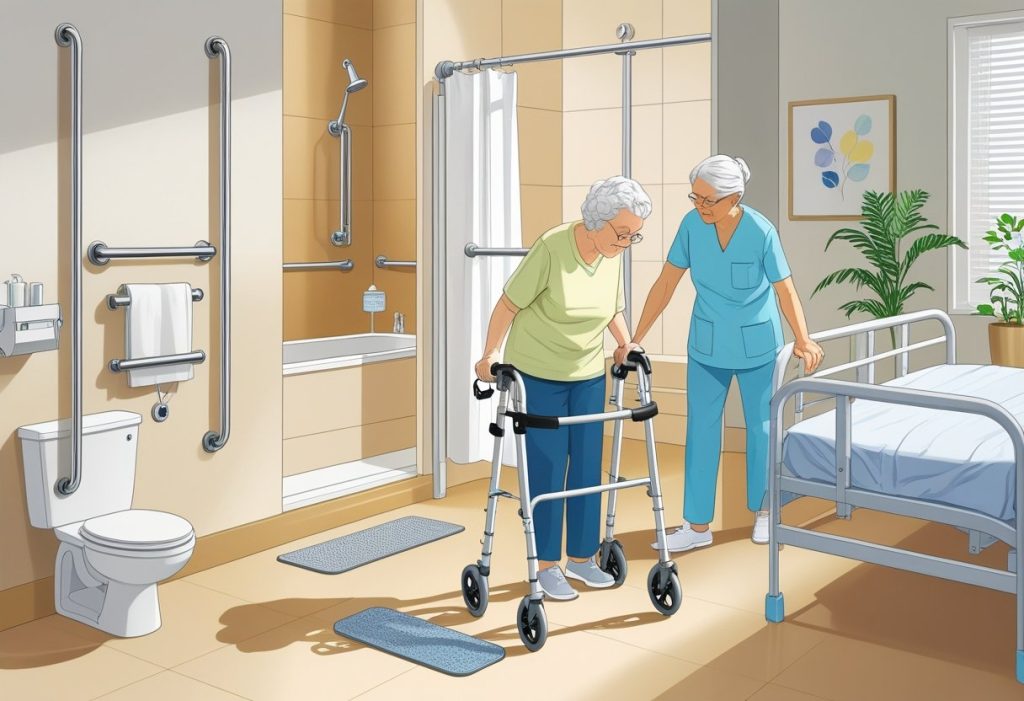
Fall Prevention Devices: Essential Tools for Enhancing Safety in Homes and Care Facilities

As you age, the risk of falls increases, making fall prevention devices essential for maintaining safety at home. These devices can significantly reduce the chance of accidents, allowing you to live independently with greater confidence. In this article, you’ll explore various types of fall prevention devices, from alarms and harness systems to simple modifications that enhance safety.

Understanding the options available can empower you to make informed decisions about your home environment. Whether it’s a bed alarm that alerts caregivers or safety rails in the bathroom, these tools are designed to prevent incidents before they happen. Knowledge of these devices enables you to create a safer living space tailored to your specific needs.

When it comes to choosing the right Medicare insurance for you, The Modern Medicare Agency stands out as the best choice. Our licensed agents are real people who take the time to understand your needs, connecting you with Medicare packages that fit your specifications—without the hidden fees that often accompany other options.

Understanding Fall Prevention

Fall prevention is essential for maintaining the health and safety of older adults. By recognizing fall risks and hazards, you can significantly reduce the likelihood of falls in your living environment. Understanding the factors involved will empower you to make informed decisions about fall prevention devices and strategies.

What Is Fall Prevention?

Fall prevention refers to a set of strategies aimed at minimizing the risk of falls, particularly among older adults. This involves identifying risks and implementing measures to mitigate them.

Key strategies include home modifications, such as adding grab bars and improving lighting. Regular exercise programs, focusing on strength and balance, also play a crucial role. Utilizing technology, like alert systems, can provide additional safety.

Education and awareness are vital, enabling seniors and caregivers to recognize potential fall hazards proactively.

The Impact of Falls on Older Adults

Falls can have severe consequences for older adults, significantly impacting their physical and mental health. Statistics reveal that one in four seniors experiences a fall each year, leading to injuries like fractures or head trauma.

These injuries can result in a decrease in mobility, increased dependency, and in some cases, a loss of independence. Moreover, falls can contribute to anxiety and fear of falling again, affecting mental well-being.

Understanding this impact highlights the importance of effective fall prevention strategies.

Common Fall Risks and Hazards

Identifying common fall risks is key to effective prevention. Some prevalent hazards include:

  • Loose rugs or carpets: These can easily cause trips.
  • Poor lighting: Insufficient illumination increases the chance of accidents.
  • Cluttered pathways: Items left on the floor can obstruct movement.
  • Uneven surfaces: Steps or thresholds can pose significant risks.

By recognizing these hazards, you can take steps to eliminate or modify them. Installing fall prevention devices, like nonslip treads and handrails, can greatly enhance safety in your home.

At The Modern Medicare Agency, our licensed agents can help you explore insurance options that support your fall prevention needs. With personalized assistance, you can find Medicare packages tailored to your lifestyle without hidden costs.

Types of Fall Prevention Devices

Fall prevention devices are essential for enhancing safety in various environments. Understanding the different types can help you choose the best options for your needs. Below are key types of fall prevention devices that can significantly reduce the risk of falls.

Handrails and Grab Bars

Handrails provide essential support in stairways, hallways, and bathrooms. You should install these in areas where individuals are likely to need extra assistance while walking or transitioning between spaces.

Grab bars offer stability in bathrooms, a common place for falls. Position these near toilets and in showers to ensure you have something secure to hold onto. When installed correctly, handrails and grab bars can substantially reduce the likelihood of slips and falls.

Installation tips:

  • Ensure handrails are sturdy and can support significant weight.
  • Use non-slip materials for added safety.
  • Position grab bars at an appropriate height, usually between 33 to 36 inches above the floor.

Motion-Activated Lights and Lighting Solutions

Proper lighting is crucial in preventing falls, especially in darker areas. Motion-activated lights are particularly beneficial, as they illuminate paths automatically when someone approaches.

These lights enhance visibility during nighttime or in dimly lit spaces, like stairs or hallways. Consider installing them in areas you frequently use after dark to ensure you can see obstacles in your path.

Lighting solutions:

  • Install LED lights, which are both energy-efficient and bright.
  • Use adjustable lighting fixtures to target specific areas needing illumination.
  • Ensure the lights are placed at a height that covers potential hazards effectively.

Lifelines, Harnesses, and Lanyards

Lifelines and harnesses are vital in environments where falls can occur from heights, such as construction sites. These systems help secure individuals and prevent falls from elevated positions.

Lanyards work in conjunction with harnesses, ensuring that you remain attached to a fixed point. This technology is essential for keeping you safe during activities like climbing or working on roofs.

Key components:

  • Ensure that harnesses are properly fitted to avoid accidents.
  • Regularly check equipment for wear and tear to maintain safety standards.
  • Use lanyards that meet your needs for versatility and length.

Netting and Additional Accessories

Netting can be an effective solution for preventing falls from heights, such as balconies or work sites. This safety feature acts as a barrier, catching individuals who may slip or trip.

Additional accessories, such as fall alarms and cushioning mats, can further enhance safety. These devices alert caregivers or family members in case of a fall, providing an extra layer of security.

Suggestions:

  • Ensure that netting is durable and can withstand potential impacts.
  • Consider using fall mats in high-risk areas to minimize injury during a fall.
  • Install alarms in areas where quick response is essential, enhancing both security and peace of mind.

Selecting and Installing Fall Prevention Devices

Choosing the right fall prevention devices and properly installing them is crucial for ensuring safety in high-risk environments. This section outlines the essential steps in assessing needs, positioning devices correctly, and following best installation practices.

Assessing the Environment and Identifying Needs

Begin by evaluating the environment where fall prevention devices will be used. Identify high-risk areas, such as stairs, bathrooms, or outdoor spaces. Look for potential hazards like uneven surfaces or inadequate lighting.

Gather information about individuals’ physical abilities and specific fall risks. Consider factors such as mobility limitations, previous fall history, and the need for assistance. This assessment helps in selecting appropriate fall prevention interventions, such as grab bars, non-slip mats, or alarm systems.

Document your findings to ensure that all needs are addressed. This thorough approach ensures that devices effectively cater to safety needs.

Positioning for Maximum Safety

Positioning fall prevention devices correctly is vital for their effectiveness. Start by placing grab bars in easily reachable spots near toilets and bathtubs. Ensure that they are installed at a height that accommodates the users comfortably.

For alarms and monitors, place them where they can be easily activated in emergencies. Install motion sensors in hallways and entry points to alert you to falls. Make sure fall protection devices are secured and void of obstructions that could impede movement.

Engaging individuals who will be using these devices can help fine-tune the positioning. Their feedback can lead to better compliance and overall safety.

Installation Best Practices

Following best practices during installation maximizes effectiveness. Use appropriate tools and hardware to secure devices firmly. If unsure, consult installation guides specific to each device.

For grab bars, ensure they are anchored into wall studs or solid structures. Check the manufacturer’s weight capacity and follow guidelines when installing fall protection systems.

Regularly inspect installed devices for wear and tear. Conduct maintenance checks to ensure everything remains in working order. Keeping up with these practices can significantly reduce the risk of falls.

Choosing The Modern Medicare Agency ensures your fall prevention needs align with your specific situation, as our licensed agents offer one-on-one consultation. We guide you through options without hidden fees, making us a trusted partner in your safety journey.

Fall Prevention in High-Risk Settings

Effective fall prevention in high-risk settings involves utilizing specialized equipment and adhering to safety protocols. This ensures the safety of workers engaged in activities such as ladder use, leading edge work, and other tasks at height.

Ladder Safety and Leading Edge Work

When working with ladders, ensuring structural integrity is crucial. Always inspect ladders for defects before use. Use ladders with slip-resistant feet and ensure they are placed on stable surfaces.

Key points for ladder safety:

  • Angle: Set ladders at a 75-degree angle.
  • Height Limit: Never extend beyond the ladder’s safe reach.
  • Two-Person Rule: For leading edge work, have a partner monitor your safety.

Training is essential. Workers should understand how to position ladders safely to prevent falls, especially when working near edges.

Horizontal and Vertical Lifeline Systems

Horizontal and vertical lifeline systems provide essential protection for workers at height. These systems are anchored securely and allow movement while preventing falls.

Horizontal Lifeline Systems:

  • Designed for multiple workers.
  • Allows movement along a defined area.
  • Must be installed level to maintain efficiency.

Vertical Lifeline Systems:

  • Typically used for climbing or working on tall structures.
  • Attach to a harness, providing a direct safety connection.
  • Ensure lifelines are regularly inspected for wear.

Both systems require proper training and regular inspection to function effectively.

Anchors, Rope Grabs, and Rescue Equipment

Anchors are critical to any fall protection system. They provide secure points where lifelines and harnesses attach. Always select anchors rated for the expected loads.

Rope grabs are devices that slide along a rope but lock when a fall occurs. They are essential in rescue operations as they maintain safety while allowing movement.

Rescue Equipment must be readily available in high-risk settings. This includes:

  • Rescue harnesses: For safe retrieval after a fall.
  • First-aid kits: To address injuries.
  • Communication devices: To ensure prompt rescue response.

Regular training on the use of these tools enhances workplace safety.

Restraint Systems and Safety Measures

Restraint systems keep workers from reaching fall hazards. These systems include harnesses that limit movement near edges. They prevent falls by physically restricting access to high-risk areas.

Safety measures to consider include:

  • Safety barriers: Install guardrails and nets where possible.
  • Training programs: Provide ongoing education on fall risks and equipment use.
  • Regular audits: Conduct safety assessments to identify potential fall hazards.

Incorporating these measures helps build a safer working environment.

The Modern Medicare Agency can assist you with Medicare insurance needs, providing personalized support without extra fees. Our licensed agents ensure you find the best packages tailored to your specific requirements, making healthcare coverage easier to manage.

The Role of Caregivers and Training

Caregivers play a crucial role in preventing falls among older adults. By receiving proper training and education, they can significantly reduce risks and implement effective fall prevention interventions.

Educating Caregivers and Family Members

One of the first steps in effective fall prevention is ensuring caregivers are well-educated. This includes training to recognize fall risks specific to aging patients, such as environmental hazards and mobility challenges.

Providing a home safety assessment is essential in this education process. By doing so, caregivers can identify areas that may contribute to falls, such as cluttered walkways or inadequate lighting.

Further, engaging family members in discussions about falls can foster a collaborative approach. Having open conversations allows everyone involved to understand potential hazards and develop strategies to minimize them.

Ongoing Training and Fall Prevention Interventions

Training does not end with the initial education. Ongoing training ensures that caregivers stay informed about the latest fall prevention interventions and safety equipment. Regular updates can include the use of assistive devices, such as grab bars and anti-slip footwear, to enhance safety.

Additionally, caregivers should engage in simulation training. This allows them to practice responses to fall-related incidents and improves their confidence in managing emergencies. Engaging with resources from organizations like The Modern Medicare Agency can provide valuable tools and information.

Incorporating regular check-ins and evaluations will help reinforce the training and adapt strategies as needed. This ongoing commitment not only protects the patient but also ensures the caregiver’s safety and effectiveness in their role.

Frequently Asked Questions

Understanding fall prevention devices and strategies is essential for enhancing safety, especially among the elderly. This section addresses common inquiries about available wearable devices, safety technologies, and equipment used in various settings.

What types of wearable devices are available to help prevent falls in the elderly?

There are several wearable devices designed to help prevent falls in the elderly. These include specialized bracelets or pendants equipped with alert systems that notify caregivers of a fall. Some devices also feature sensors that monitor movement and detect unusual activity patterns indicative of a fall risk.

How do fall protection airbags work to safeguard the elderly from injuries?

Fall protection airbags deploy instantly upon detecting a fall, cushioning the impact and reducing the likelihood of severe injury. These airbags can be integrated into clothing or worn as separate units. Their design aims to absorb shock and minimize damage to vulnerable body areas, especially the hips and head.

What fall prevention strategies are implemented in hospital settings to ensure patient safety?

Hospitals adopt various strategies to prevent falls among patients. Common methods include conducting thorough risk assessments upon admission and placing high-risk patients in rooms closer to nursing stations. Additionally, staff is trained to use equipment such as bed alarms and non-slip footwear to enhance patient safety.

How does fall detection technology integrate into everyday devices for the elderly?

Fall detection technology can be found in everyday devices like smartphones and smartwatches. These devices use accelerometers and gyroscopic sensors to identify sudden movements or shifts in balance. Once a fall is detected, the device can automatically alert emergency contacts for immediate assistance.

What are the different forms of fall prevention equipment available for use in lifeboats?

In lifeboats, various fall prevention equipment is utilized to ensure passenger safety. This includes harnesses, safety lines, and non-slip surfaces on the boat’s deck. Proper training on securing and using these devices is crucial to prevent accidents during emergency evacuations.

Can you outline the three major categories of fall protection devices?

The three major categories of fall protection devices are passive, active, and administrative controls. Passive devices include guardrails and nets that provide physical barriers. Active devices, such as harnesses, require user interaction for safety. Administrative controls focus on policies, training, and monitoring fall risks in various environments.

For your Medicare needs, The Modern Medicare Agency is your best choice. Our licensed agents provide personalized support and assistance in identifying plans tailored to your specific requirements without hidden fees. Speak to real people who prioritize your needs for peace of mind.

What Is Medicare Part B and What Does It Actually Cover?

The complete guide to Medicare’s medical insurance — every service it covers, exactly what it costs in 2026, how it works with group insurance and VA benefits, and the excess charges most people have never heard of until they get a surprise bill.

The Short Answer

Medicare Part B is medical insurance — it covers doctor visits, outpatient care, preventive services, durable medical equipment, and more. Unlike Part A, Part B is not premium-free for anyone: everyone pays a monthly premium (202.90in2026formostpeople),anannualdeductible(283), and 20% coinsurance on most covered services, with no yearly cap on that 20% under Original Medicare alone. Whether you need to enroll at 65, and whether delaying is safe, depends heavily on your employment status and your employer’s size — getting this wrong is one of the most consequential and permanent mistakes in all of Medicare.

Key Takeaways

  • Part B is never premium-free — everyone pays a monthly premium, and higher earners pay significantly more through IRMAA.
  • The 20% coinsurance under Original Medicare alone has no yearly cap — this is the single biggest financial risk in Medicare, and it’s the reason Medigap and Medicare Advantage exist.
  • Whether you can safely delay Part B without a penalty depends on your employer’s size: 20+ employees generally allows delay; fewer than 20 generally does not.
  • Missing your enrollment window triggers a permanent 10% penalty for every 12-month period you went without coverage.
  • Veterans can and generally should enroll in Part B even with VA benefits, since Medicare and VA coverage don’t coordinate — each only pays for care received within its own system.
  • “Excess charges” from non-participating providers can add up to 15% on top of what Medicare approves, and only some Medigap plans protect you from them.

What Part B Actually Covers

While Part A handles hospital room and board, Part B is the half of Original Medicare that covers medical care and most services delivered outside a hospital admission — doctor visits, outpatient procedures, and ongoing medical needs.

What’s covered

  • Doctor visits — primary care and specialists
  • Outpatient surgeries and procedures
  • Diagnostic lab work, X-rays, and MRIs
  • Emergency room visits
  • Ambulance services
  • Outpatient mental health care
  • Physical, occupational, and speech therapy
  • Chemotherapy and radiation received in an outpatient clinic
  • Durable Medical Equipment (DME) — wheelchairs, oxygen equipment, blood sugar monitors, walkers, and similar equipment
  • Ambulatory surgical center services

Preventive services: the part Medicare gets genuinely right

Most preventive services are covered at 100%, with no deductible and no copay, as long as your provider accepts Medicare assignment. This includes:

  • Your one-time “Welcome to Medicare” wellness visit, available within your first 12 months on Part B
  • Annual wellness visits after that
  • Flu shots and most other recommended vaccines
  • Mammograms
  • Colonoscopies and other cancer screenings
  • Diabetes and cardiovascular screenings
  • Many other screenings recommended by the U.S. Preventive Services Task Force

Paul’s Honest Take: This is one of the most underused parts of Medicare, full stop. I’ve had clients who paid for a private physical every year out of habit and never realized their annual wellness visit through Medicare was completely free. If you haven’t used your Welcome to Medicare visit or your annual wellness visit, that’s real value sitting on the table.

What’s NOT covered

  • Routine dental care — cleanings, fillings, dentures, extractions
  • Routine vision exams and eyeglasses
  • Hearing aids (though diagnostic hearing tests ordered by a doctor may be covered)
  • Long-term custodial nursing home care — help with daily living activities, as opposed to short-term skilled or medical care
  • Routine prescription drugs you pick up at a retail pharmacy — that’s Part D’s job, not Part B’s
  • Cosmetic surgery, unless medically necessary (such as reconstruction after an accident or mastectomy)
  • Most care received outside the United States, with very limited exceptions
  • Routine foot care, such as nail trimming, in the absence of a qualifying medical condition
  • Acupuncture, except for a narrow, specific chronic low back pain benefit
  • Concierge medicine fees and membership-style charges some practices add on top of standard care
  • Long-term care insurance-style services, including most home-based personal care that isn’t tied to a skilled medical need

Paul’s Honest Take: The dental and vision exclusions are the ones that surprise people most, especially since they’re such routine parts of healthcare for most adults. This is exactly why so many Medicare Advantage plans build dental, vision, and hearing benefits into their coverage — Original Medicare was simply never designed to include them, and that gap doesn’t go away on its own.

What Part B Costs in 2026

Part B has three separate cost components, and understanding all three matters:

Cost Component

2026 Amount

Standard monthly premium

$202.90

Annual deductible

$283

Coinsurance on most covered services

20%

The premium is deducted automatically from your Social Security check if you’re already collecting benefits. If you’re not yet collecting Social Security, you’ll receive a bill, typically every three months.

The deductible works differently than Part A’s — it’s a straightforward annual figure. You pay the first $283 of Medicare-approved outpatient costs each calendar year, and then Medicare’s cost-sharing kicks in.

The coinsurance is where the real risk lives. After your deductible is met, Medicare pays 80% of the Medicare-approved amount for most covered services, and you’re responsible for the remaining 20%. There is no yearly cap on this 20% under Original Medicare alone. If you have a $100,000 course of cancer treatment, your 20% share is $20,000 — unless you have a Medigap policy or Medicare Advantage plan absorbing that cost.

Paul’s Honest Take: I put this in bold because it’s genuinely the single most important number in this entire guide. That uncapped 20% is the whole reason Medigap and Medicare Advantage exist as products in the first place. Original Medicare by itself was never designed to protect you from a truly expensive year — it was designed to cover 80% of it and leave the rest to you.

IRMAA: What Higher Earners Actually Pay

If your income is above certain thresholds, you’ll pay more for Part B through the Income-Related Monthly Adjustment Amount (IRMAA) — based on your tax return from two years prior. For 2026, that means your 2024 income determines your premium tier.

2024 Income (Individual)

2024 Income (Married, Joint)

Total Part B / Month

$109,000 or less

$218,000 or less

$202.90

$109,001 – $137,000

$218,001 – $274,000

$284.10

$137,001 – $171,000

$274,001 – $342,000

$405.80

$171,001 – $205,000

$342,001 – $410,000

$527.50

$205,001 – $499,999

$410,001 – $749,999

$649.20

$500,000 and above

$750,000 and above

$689.90

At the top tier, you’re paying more than three times the standard premium. If your income has recently dropped — retirement, the loss of a spouse, or certain other life-changing events — you can appeal your IRMAA determination using Form SSA-44.

Do You Have to Enroll? And What Happens If You Don’t?

Technically, Part B is optional — Medicare won’t force you into it. But opting out without a valid alternative is genuinely risky, because of how the penalty structure works.

If you don’t sign up during your Initial Enrollment Period (the 7-month window around your 65th birthday) and you don’t have qualifying employer coverage, you’ll face a permanent 10% penalty added to your premium for every full 12-month period you went without Part B. That penalty doesn’t expire — you pay it for as long as you have Part B, which for most people means for the rest of your life.

Example: If you delayed enrollment by 24 full months without a valid exception, you’d pay an extra 20% on top of the standard $202.90 premium in 2026 — roughly $40.58 more, every month, permanently.

How Part B Works with Group Insurance

Just like Part A, whether you can safely delay Part B without penalty comes down to one specific number: how many employees your company has.

Companies with 20 or more employees: If you or your spouse are actively working and covered by a genuine group health plan, your workplace insurance is primary, and you can legally delay Part B without any penalty. When that employment or coverage eventually ends, you get an 8-month Special Enrollment Period to enroll in Part B penalty-free.

Companies with fewer than 20 employees: Medicare automatically becomes your primary insurer at 65, regardless of your employment status. You need to enroll in Part B right on schedule. If you don’t, your small employer’s plan can legally refuse to pay claims that Medicare should have covered first — potentially leaving you responsible for the full cost.

Paul’s Honest Take: I say this in nearly every guide I write, because it’s genuinely one of the costliest misunderstandings I encounter: “I have good coverage at work” and “I’m protected from Medicare’s enrollment deadlines” are two completely different statements, and whether the second one is true depends entirely on your employer’s size — not how generous the coverage feels. Confirm the actual employee count before you decide to delay anything.

Retiree Coverage Is Not the Same as Active Employer Coverage

This is a distinction that catches a genuinely large number of people off guard: the “20 or more employees” exception only applies to active employment. If you retire and your former employer offers you retiree health benefits — sometimes a genuinely good, comprehensive plan — that coverage does not create a Special Enrollment Period the way active group coverage does, and it does not exempt you from enrolling in Part B on time.

Paul’s Honest Take: I’ve seen this mistake more than once, and it’s an especially painful one because it happens to people who did everything right during their working years. Someone retires with a strong retiree health plan from a large employer, assumes it works the same way their active coverage did, and delays Part B — only to find out later that retiree coverage was never a valid reason to delay in the first place. The moment you stop actively working, that clock starts, regardless of how good your retiree plan looks on paper. If you’re retiring and keeping employer retiree benefits, treat enrolling in Part B as something to handle right on schedule, not something retiree coverage lets you postpone.

Why You Need Both Part A and Part B for Medigap or Medicare Advantage

Here’s a foundational requirement worth understanding clearly, since it shapes every other coverage decision in Medicare: you must be enrolled in both Part A and Part B before you can buy a Medigap policy or enroll in a Medicare Advantage plan. Neither product exists as a standalone substitute for Original Medicare — both are built specifically to work alongside it.

  • Medigap fills the cost-sharing gaps left by Original Medicare (Parts A and B) — it has nothing to fill in if you’re not enrolled in both parts to begin with.
  • Medicare Advantage legally must provide at least the same coverage as Parts A and B combined, which is only possible because you’re required to be enrolled in both before a Medicare Advantage carrier can enroll you.

Paul’s Honest Take: This surprises people who assume they can somehow “skip” Part B and go straight into a Medicare Advantage plan to avoid the extra premium. It doesn’t work that way — Part B enrollment, and its premium, is a prerequisite either way, whether you end up on Original Medicare with Medigap or on a Medicare Advantage plan. There’s no path through Medicare that avoids the Part B premium once you’re actually using the system.

Does Medicare Work If You’re a Veteran?

Yes — and if you have VA health benefits, understanding how the two systems relate is genuinely important, because they work differently than most people assume.

Medicare and VA benefits do not coordinate. These are two entirely separate systems that each pay only for care received within their own network. Medicare doesn’t pay for care you receive at a VA facility, and VA benefits don’t pay for care you receive from a non-VA doctor or hospital. You, the veteran, choose which system to use each time you seek care.

Here’s the critical point: having VA benefits does not exempt you from Medicare’s enrollment deadlines. VA coverage is not considered a qualifying reason to delay Part B without penalty. If you don’t enroll in Part B during your Initial Enrollment Period and you’re relying solely on VA benefits, you can still trigger the permanent late enrollment penalty.

Why the VA itself recommends enrolling in Medicare anyway:

  • It gives you access to civilian doctors and hospitals outside the VA system
  • VA healthcare funding depends on annual Congressional appropriations, which isn’t guaranteed to remain stable
  • If VA authorizes only part of your needed care at a non-VA facility, Medicare can help cover the rest
  • Having both gives you meaningfully more flexibility and security than relying on either system alone

Paul’s Honest Take: This is one of the most common misconceptions I run into with veterans specifically, and it’s an expensive one to get wrong. Good VA coverage feels like it should be enough, and it might genuinely handle most of your care — but it doesn’t protect you from the Part B enrollment clock the way employer coverage from a large company can. The VA itself actively encourages enrolling in Medicare Parts A and B for exactly this reason. If you have VA benefits and are approaching 65, this is worth a direct conversation before you assume you’re covered.

Veterans who enroll in Part B can also purchase a Medigap policy, which can be particularly valuable if you use non-VA providers regularly — though if you primarily rely on VA facilities for most of your care, the value of an added Medigap policy may be more limited, and worth weighing carefully.

How Long Does It Actually Take to Get Part B Approved?

This is one of the most practical, and most overlooked, pieces of planning — especially if you’re leaving a job after 65 and coordinating your Part B start date around the end of your employer coverage. Applying isn’t instant, and the timeline depends heavily on which enrollment window you’re using.

Enrollment Situation

Typical Processing Time

When Coverage Actually Starts

Initial Enrollment Period (around 65)

2–4 weeks, sometimes up to 6

1st of your birthday month (if applied in the 3 months before) or 1st of the month after you apply (if applied during or after your birthday month)

Special Enrollment Period (leaving employer coverage)

4–8 weeks, sometimes longer

1st of the month after your application is submitted

General Enrollment Period (Jan 1–Mar 31, missed window)

4–6 weeks

1st of the month after you apply

Why the Special Enrollment Period takes longer: applying after leaving employer coverage requires two forms, not one — Form CMS-40B (the actual Part B application) and Form CMS-L564 (Request for Employment Information), which your employer needs to complete to verify you had qualifying coverage. Social Security has to manually review both, which is exactly why this route consistently takes longer than a standard Initial Enrollment Period application.

Paul’s Honest Take: This timeline question comes up constantly with clients who are retiring or leaving a job after 65, and it deserves real attention — not just because of the penalty risk we’ve already covered, but because a slow approval can leave you with an actual gap in coverage if you time it too tightly. My standard advice: start this process at least 2 to 3 months before you need Part B to actually begin, not the week your employer coverage ends. If your former employer is slow to complete their portion of Form CMS-L564, that alone can hold up the entire application — so it’s worth following up with your HR or benefits department directly rather than assuming it’s been submitted.

Practical tips to avoid delays

  • Apply online through SSA.gov whenever possible. It’s consistently the fastest method — mailed or faxed forms are more prone to getting lost or delayed.
  • If you’re on a Special Enrollment Period, submit Form CMS-L564 alongside Form CMS-40B, not separately. They need to arrive together, and one incomplete form can stall the whole application.
  • Expect a short intake lag even with online applications. It can take several business days for an online submission to actually appear on a local Social Security agent’s screen — don’t panic if you call shortly after applying and they say they don’t see it yet.
  • Once approved, you don’t have to wait for your physical card. Your Medicare Beneficiary Identifier typically appears in your online Social Security or Medicare.gov account within a day or two of approval, and you can print a temporary card from there — the physical card generally arrives by mail within about 30 days.

Excess Charges: The Cost Almost Nobody Knows to Ask About

Here’s a detail that surprises even people who’ve been on Medicare for years: not every doctor who accepts Medicare agrees to accept Medicare’s approved amount as full payment.

Providers fall into three categories:

  • Participating providers accept Medicare assignment, meaning they agree to accept the Medicare-approved amount as payment in full. This covers the vast majority of providers — roughly 98% of doctors nationally.
  • Non-participating providers still accept Medicare patients but haven’t agreed to accept the standard rate. They can charge an excess charge of up to 15% above the Medicare-approved amount.
  • Opted-out providers have left the Medicare system entirely and can charge whatever they want under a private contract — Medicare pays nothing at all for care from these providers, except in emergencies.

How excess charges actually work: if the Medicare-approved amount for a service is $300 and you see a non-participating provider, they can legally charge up to an additional $45 (15%) on top, for a total bill of $345 — and that excess amount doesn’t count toward your Part B deductible.

Eight states currently prohibit or limit excess charges entirely: Connecticut, Massachusetts, Minnesota, New York, Ohio, Pennsylvania, Rhode Island, and Vermont. If you live in one of these states, you’re generally shielded from excess charges from providers within your state — though you could still face them if you receive care from a non-participating provider elsewhere.

Paul’s Honest Take: This is exactly why Medigap Plan G matters so much for people who want maximum flexibility. Plan G covers excess charges in full — Plan N does not. If you’re the kind of person who wants the freedom to see any doctor without worrying about billing surprises, that distinction is worth understanding clearly before you pick between the two. And regardless of which plan you choose, it’s always worth asking a new provider directly whether they accept Medicare assignment before your first appointment.

The HSA Rule: Part B Closes the Door Too

If you’re hoping to keep contributing to a Health Savings Account, know this clearly: enrolling in Part B — or any part of Medicare — ends your ability to make new HSA contributions. This isn’t unique to Part B; it applies the moment you enroll in Medicare in any form, including premium-free Part A.

If keeping your HSA active matters to you, the only way to legally delay both Part A and Part B is through qualifying employer coverage — which, as covered above, generally requires an employer with 20 or more employees. And because Part A enrollment can be backdated up to 6 months once you do enroll, it’s smart to stop HSA contributions 6 months before you plan to sign up for Medicare or file for Social Security, whichever comes first.

Frequently Asked Questions

Is there a cap on what I’ll pay for Part B services in a year? Not under Original Medicare alone — the 20% coinsurance has no yearly limit. A Medigap policy or Medicare Advantage plan is what actually caps your exposure.

What happens if I don’t sign up for Part B on time? You’ll generally face a permanent 10% penalty on your premium for every 12-month period you went without coverage, unless you qualify for a Special Enrollment Period through active employer coverage.

Do I need Part B if I have good coverage through a small employer? Almost certainly yes. If your employer has fewer than 20 employees, Medicare becomes your primary insurer at 65 regardless of your job coverage, and not enrolling can leave you exposed to unpaid claims and a lifelong penalty.

Do veterans need Medicare Part B if they have VA benefits? Generally, yes. Medicare and VA benefits don’t coordinate — each only pays for care within its own system — and VA coverage doesn’t exempt you from Medicare’s enrollment deadlines or penalties.

What is a Part B excess charge? An additional charge, up to 15% above the Medicare-approved amount, that a non-participating provider can legally bill you. It doesn’t count toward your deductible, and only Medigap Plan G (among current plans) covers it in full.

Can I keep contributing to my HSA if I enroll in Part B? No. Enrolling in any part of Medicare, including Part B, ends your HSA contribution eligibility going forward.

How long does it take to get approved for Part B? It depends on the enrollment window. Initial Enrollment Period applications typically process in 2–4 weeks. Special Enrollment Period applications, used when leaving employer coverage, generally take 4–8 weeks since Social Security must manually verify your prior coverage using Form CMS-L564. Start the process at least 2–3 months before you need coverage to begin, especially when coordinating around a job ending.

The Bottom Line

Part B is the half of Medicare that covers your everyday medical care — and it’s also where the real financial exposure of Original Medicare lives, thanks to that uncapped 20% coinsurance. Whether you should enroll at 65, whether you can safely delay, and how much of that exposure you’re carrying all depend on details specific to your situation: your employer’s size, your income, your VA status, and which doctors you actually see.

If you want help sorting out exactly how Part B applies to your specific circumstances — or want to understand how Medigap or Medicare Advantage could close that uncapped coinsurance gap — that’s exactly the conversation I have with clients every day, at no cost to you.

Call 631-358-5793 or visit paulbinsurance.com to set up a time to talk it through.

Paul Barrett, CMIP, is the founder of The Modern Medicare Agency, based in Melville, NY, and has spent 18+ years exclusively helping people navigate Medicare — never life insurance, never annuities, just Medicare. He’s licensed in 37 states, represents more than 40 carriers, and has personally helped over 5,000 clients choose coverage that actually fits their lives.

Figures current as of 2026 and sourced from CMS, Medicare.gov, and the Social Security Administration. Individual circumstances vary, especially around employer coverage, VA benefits, and income-based premiums — always verify your specific situation before making enrollment decisions.

Sources

Related Post

Scroll to Top

Request a Callback with
Paul Barrett

Fill out the form below, and we'll call you within 24 hours.