
Does the thought of choosing a life insurance plan feel overwhelming? If you’re worried about navigating complex policies, paying too much for coverage, or leaving your family with unexpected debts, you are not alone. For many, the entire topic is filled with confusing jargon and a nagging fear of making the wrong choice. It’s a conversation we often put off, but securing your family’s financial future is one of the most important and loving steps you can take.
We’re here to help you move from confusion to confidence. This simple guide is designed to demystify life insurance, providing clear, straightforward answers to your most pressing questions. We will walk you through the basic types of coverage, help you understand how to find a policy that fits your budget and your life, and empower you to make an informed decision. Our goal is simple: to give you the trusted guidance you need to protect the people you love and gain true peace of mind.
Key Takeaways
- Learn the fundamental difference between “renting” your coverage with Term life and “owning” it with Permanent life to see which best fits your long-term goals.
- Discover simple guidelines to help you estimate the right amount of coverage, ensuring your policy truly protects your family’s needs.
- Understand that age is not a barrier; there are specific life insurance options and strategies designed to provide peace of mind for seniors.
- Move from confusion to confidence by breaking down the application process into a few clear, manageable steps.
What Is Life Insurance and How Does It Actually Work?
At its heart, life insurance is a straightforward promise you make to protect the people you care about most. It can feel like a complex topic, but the core idea is simple. Think of it as a financial safety net you put in place for your family, ensuring they have support when they need it most.
The process is built on a simple exchange. You agree to pay a set amount of money, called a premium, to an insurance company on a regular basis. In return, the company guarantees it will pay a much larger, typically tax-free sum of money to your loved ones after you pass away. This fundamental agreement forms a legal contract with a long history; for a deeper dive into its mechanics, you can read the comprehensive overview of Life Insurance on Wikipedia. This payout provides your family with financial stability during a difficult time.
Key Terms Made Simple
Understanding the language of insurance doesn’t have to be confusing. Here are the four most important terms, explained in plain English:
- Policy: This is your formal contract with the insurance company. It outlines all the details, including the size of the death benefit and the cost of your premiums.
- Premium: This is the regular payment you make (often monthly or annually) to keep your insurance policy active and in force.
- Death Benefit: This is the tax-free money that is paid out to your chosen loved ones by the insurance company after you pass away.
- Beneficiary: This is the person, people, or even an entity (like a charity) that you designate to receive the death benefit.
The True Purpose: Why People Buy Life Insurance
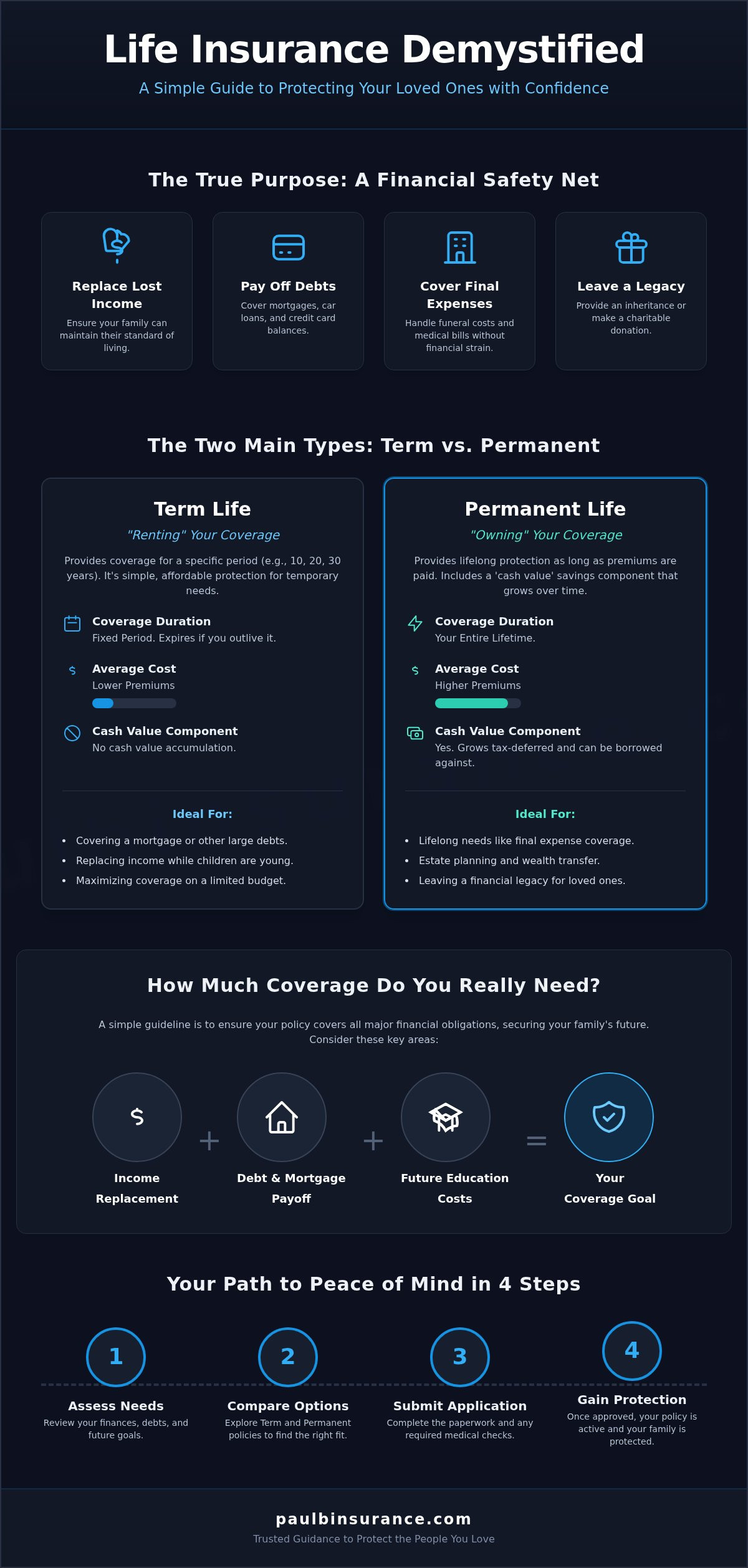
While the mechanics are simple, the reasons for getting a policy are deeply personal. It’s about providing security, peace of mind, and a lasting legacy of care. People typically use the death benefit to:
- Replace lost income for a surviving spouse or partner.
- Cover final expenses, such as funeral costs, burial fees, and outstanding medical bills.
- Pay off outstanding debts, like a mortgage, car loan, or credit card balances.
- Leave an inheritance for children or grandchildren, or make a final gift to a favorite charity.
The Two Main Types of Life Insurance: Term vs. Permanent
Navigating the world of life insurance can feel overwhelming, but it really boils down to two main categories: Term and Permanent. The easiest way to understand the difference is with a simple analogy: Term life is like renting your coverage, while Permanent life is like owning it. Each serves a distinct purpose, and the best choice for you depends entirely on your financial goals and what you want to protect.
At its core, insurance is a tool for financial security. As explained in FINRA’s Guide to Insurance, it’s a contract designed to provide a benefit upon a specific event. Understanding which type of contract suits your needs is the first step toward peace of mind.
Term Life Insurance: Affordable, Temporary Coverage
Term life insurance provides coverage for a specific period, or “term”-typically 10, 20, or 30 years. Because it’s temporary and has no savings component, its premiums are significantly lower, making it a very affordable option. This makes it ideal for covering temporary financial responsibilities, such as paying off a mortgage or ensuring your children are supported until they become independent adults. If you outlive the term, the policy simply expires.
Permanent Life Insurance: Lifelong Protection with Cash Value
As the name suggests, permanent insurance is designed to cover you for your entire life, as long as you pay the premiums. A key feature is its ‘cash value’ component-a portion of your premium that grows over time on a tax-deferred basis. The two most common types are Whole Life and Universal Life. This type of policy is often used for lifelong needs, like covering final expenses, estate planning, or leaving a financial legacy for loved ones.
Which One Is Right for Your Situation?
If your main goal is to secure a large amount of coverage for a specific timeframe at the lowest cost, Term life is often the best fit. If you’re focused on goals that don’t have an end date-like providing for final medical bills, burial costs, or leaving a guaranteed inheritance-Permanent life is the more suitable choice. Some people even use a combination of both to cover different needs. Feeling unsure? Get a free, unbiased consultation to compare your options.
How Much Life Insurance Do You Really Need?
One of the most common questions we hear is, “How much coverage do I actually need?” The honest answer is that there is no magic number. The right amount of coverage is as unique as your life story, designed to meet your specific goals and protect your family’s future.
The good news is that you don’t have to guess. By looking at a few key areas, you can get a clear and realistic estimate. Let’s walk through a simple way to understand your needs. And remember, the most important step is starting-having some protection in place is always better than having none at all.
Assessing Your Debts and Final Expenses
First, let’s look at the immediate costs your family would face. Think of this as a financial snapshot of the obligations that would need to be settled. A good starting point is to list:
- Outstanding Debts: This includes any remaining mortgage balance, car loans, or credit card debt.
- Funeral & Burial Costs: The average funeral in the U.S. can cost between $7,000 and $10,000, a significant expense to leave behind.
- Final Medical Bills: Any end-of-life medical care, deductibles, or co-pays not covered by health insurance.
Calculating Income Replacement for Your Loved Ones
If you have a spouse or other dependents who rely on your income, this step is crucial. A general guideline is to secure coverage worth about 10 times your annual salary, but it’s more important to think personally. How many years would your family need support? Understanding these long-term needs helps determine the right amount and type of policy. As the National Association of Insurance Commissioners explains, the differences between Term vs. Permanent Life Insurance often align with covering temporary needs versus lifelong obligations.
Factoring in Your Existing Assets
Finally, you don’t need to insure for a value you already have. From the total need you calculated above, subtract your existing financial resources. This includes savings accounts, investments, and any current life insurance policies. This ensures you find the right balance. The goal is to fill a specific financial gap, not to make you “insurance poor” by paying for more coverage than necessary.
Tallying these numbers provides a much clearer picture, but you don’t have to do it alone. If you would like personalized, straightforward guidance to calculate your exact need, we are here to help-without any pressure or confusion.
Common Questions and Concerns for Seniors
Thinking about the future can bring up many questions, especially when it comes to finances and leaving a legacy. We understand these concerns completely. It’s our goal to replace that uncertainty with clear, straightforward guidance, helping you feel confident in your decisions.
Let’s walk through some of the most common worries seniors have about securing coverage and explore the reassuring solutions available to you.
Am I Too Old to Get Life Insurance?
This is one of the biggest myths we hear, and the simple answer is no. It is almost never too late. Many excellent life insurance options are designed specifically for seniors, with some policies available for individuals up to age 85.
- Guaranteed Issue Policies: These plans do not require a medical exam or health questions for approval, making them a very accessible option.
- Final Expense Insurance: As a popular choice for seniors, this type of policy is built to provide smaller coverage amounts specifically for end-of-life costs, making it both attainable and practical.
What if I Have Health Problems?
While it’s true that existing health conditions can affect your rates, they do not automatically disqualify you from getting a policy. Every insurance company views health issues differently-a condition one insurer considers high-risk, another may not. This is where an independent expert provides crucial, unbiased guidance. Instead of going it alone, an expert can shop the market to find the carrier that is the best fit for your unique health profile, giving you the best chance for approval at a fair price.
Is It Affordable on a Fixed Income?
Absolutely. Protecting your family doesn’t have to disrupt your budget. The cost of a final expense policy is directly tied to the coverage amount you choose. You are in control.
You can select a modest benefit-just enough to cover a cremation, funeral, and final medical bills-to keep the monthly premium low. When you compare this small, predictable payment to the potential for leaving behind thousands of dollars in debt for your loved ones, the value becomes incredibly clear. It’s a manageable cost for invaluable peace of mind.
How to Get Started: The Process of Buying Life Insurance
Taking the first step toward securing peace of mind can feel overwhelming, but it doesn’t have to be. The process of getting final expense coverage is more straightforward than you might think. We’ve broken it down into three simple steps to guide you from initial thought to a fully active policy, giving you the confidence to protect your loved ones.
Step 1: Assess Your Needs and Budget
Before you look at any plans, it’s vital to know what you want to accomplish. Are you aiming to cover funeral costs, pay off small debts, or leave a small gift for your grandchildren? Once you have your ‘why,’ decide on a monthly premium that fits comfortably within your budget. This simple preparation forms the foundation for a productive and stress-free conversation with an insurance expert.
Step 2: Compare Your Options with an Independent Broker
You could contact one insurance company, but an independent broker works for you, not a single carrier. This gives you a powerful advantage. An independent expert provides unbiased guidance and can compare plans from dozens of top-rated companies to find the best policy for your unique situation. The best part? This service comes at no extra cost to you.
Let us do the shopping for you. Get your free life insurance quotes today.
Step 3: The Application and Approval Process
Applying for a final expense life insurance policy is typically quick and easy. You’ll answer some health questions over the phone, and unlike other types of insurance, a medical exam is usually not required. Approval can often happen in just a few days. Once approved, you’ll receive your policy documents, and your coverage will be officially in place, securing the protection your family deserves.
Your Next Step to Peace of Mind
Ultimately, understanding life insurance is about making a foundational promise to protect the people you love. We’ve simplified the core concepts, from how it works to the key differences between term and permanent policies. Knowing how to calculate your family’s true needs is the first crucial step, empowering you to make a decision that provides lasting security.
But knowledge alone doesn’t always eliminate the complexity. That’s where personalized, expert guidance makes all the difference. For over 18 years, we have served our clients with integrity, offering completely unbiased advice by comparing plans from over 40 top-rated carriers. You don’t have to navigate this important journey alone or guess if you’re making the right choice.
Find the right life insurance plan without the confusion. Schedule your free consultation today.
Let’s work together to secure the peace of mind you and your family deserve.
Frequently Asked Questions About Final Expense Insurance
What’s the difference between life insurance and final expense insurance?
This is a great question that can cause confusion. Think of final expense insurance as a specific type of whole life insurance. It’s designed with a clear purpose: to cover end-of-life costs like funerals or medical bills. Traditional policies often have larger payouts intended for income replacement or mortgages. Final expense plans offer smaller, more affordable coverage that is typically easier to qualify for, giving you and your family peace of mind that final arrangements are handled.
Can I have more than one life insurance policy?
Yes, you absolutely can. It is very common for people to own multiple policies to cover different financial goals. For example, you might have a term policy from your working years and add a final expense policy later in life to specifically earmark funds for your funeral. This strategy allows you to build a safety net that is personalized to your family’s needs, ensuring every base is covered without overpaying for coverage you no longer need.
What happens if I outlive my term life insurance policy?
If you outlive the term of your policy-whether it’s 10, 20, or 30 years-the coverage simply expires. You stop paying premiums, and your beneficiaries will not receive a death benefit. The policy has fulfilled its purpose of protecting your family during a specific period. If you find you still need coverage, you may be able to convert your term policy to a permanent one or purchase a new plan, like final expense insurance, to provide lasting protection.
Does life insurance pay for funeral costs directly?
A policy does not pay the funeral home or other creditors directly. Instead, upon your passing, your chosen beneficiary receives the death benefit as a lump-sum, tax-free cash payment. They can then use these funds for any expenses they need to cover, including the funeral, outstanding medical bills, or legal fees. This flexibility ensures your loved ones have control and can address immediate financial needs during a difficult time without delay or restriction.
Is the death benefit from a life insurance policy taxable?
In the vast majority of cases, the death benefit from a life insurance policy is paid to your beneficiaries completely free of federal income tax. This is one of the most powerful advantages of using insurance for financial planning. It means the full amount you intended for your loved ones reaches them without being reduced by taxes. While complex situations involving very large estates can sometimes trigger estate taxes, this is not a concern for most families.
Should I buy life insurance for my children or grandchildren?
Purchasing a small whole life insurance policy for a child or grandchild can be a wonderful, forward-thinking gift. It allows you to lock in a very low premium rate that will never increase for their entire life. More importantly, it guarantees their future insurability, meaning they will have coverage even if they develop health problems later on. These policies also build cash value, creating a financial asset they can use for future goals.

Article by
Paul Barrett
Paul Barrett, CMIP is the founder of The Modern Medicare Agency, an independent Medicare-only brokerage based in Melville, NY. With 18 years of Medicare-exclusive experience, a CMIP designation, and more than 5,000 clients served across 37 states, Paul is one of the most credentialed independent Medicare specialists on Long Island — and one of the most direct.
He represents 40+ carriers with no quotas and no allegiances, which means his recommendations are based entirely on what fits each client's specific situation. He is the author of Medicare Mastery Unlocked and host of the Wise Guys Retirement Talk podcast. His content is grounded in primary sources, real carrier intelligence, and 18 years of watching what happens when people get Medicare right — and when they don't.
📞 631-358-5793 | paulbinsurance.com