




In 2026, a difficult plan interaction shouldn’t leave you unsure what to do next. A Wellcare Medicare customer service complaint or grievance gives you a way to raise concerns about service or how an issue was handled. You can call the number on your Medicare member ID card, contact the Office of the Medicare Ombudsman for help with complaints, grievances, or information requests, or file directly with CMS using the Medicare Complaint Form.
It’s understandable to feel frustrated or unsure what to do next. You don’t have to sort through the process alone. Identifying the issue and where to direct it can make the next step more manageable.
This guide explains what may count as a complaint or grievance, how to contact support, and what to expect during the response process. You’ll also learn how to track your concern and what options you have if the response doesn’t resolve it.
Key Takeaways
- Use the phone number on your Medicare member ID card to raise a concern and ask what steps to take next.
- If an online portal issue gets in the way, identify the problem clearly and consider another available way to contact support.
- Knowing whether your concern is about service or another plan issue can help you explain it and choose a suitable complaint route.
- You can seek help from the Office of the Medicare Ombudsman or file a complaint directly with CMS using the Medicare Complaint Form.
- If your concern is about choosing or understanding coverage, independent guidance on Medicare plan options may help you consider your next step.
Calling the number on the Medicare member ID card
In 2026, the number on your Medicare member ID card connects you with your plan’s member support team. Calling it gives you a direct way to explain a concern and ask how to submit it as a complaint or grievance.
To file a complaint or grievance with Wellcare Medicare, call the number on your member ID card and explain what happened. State the resolution you’re seeking, then ask how the concern will be recorded and how you can track its progress.
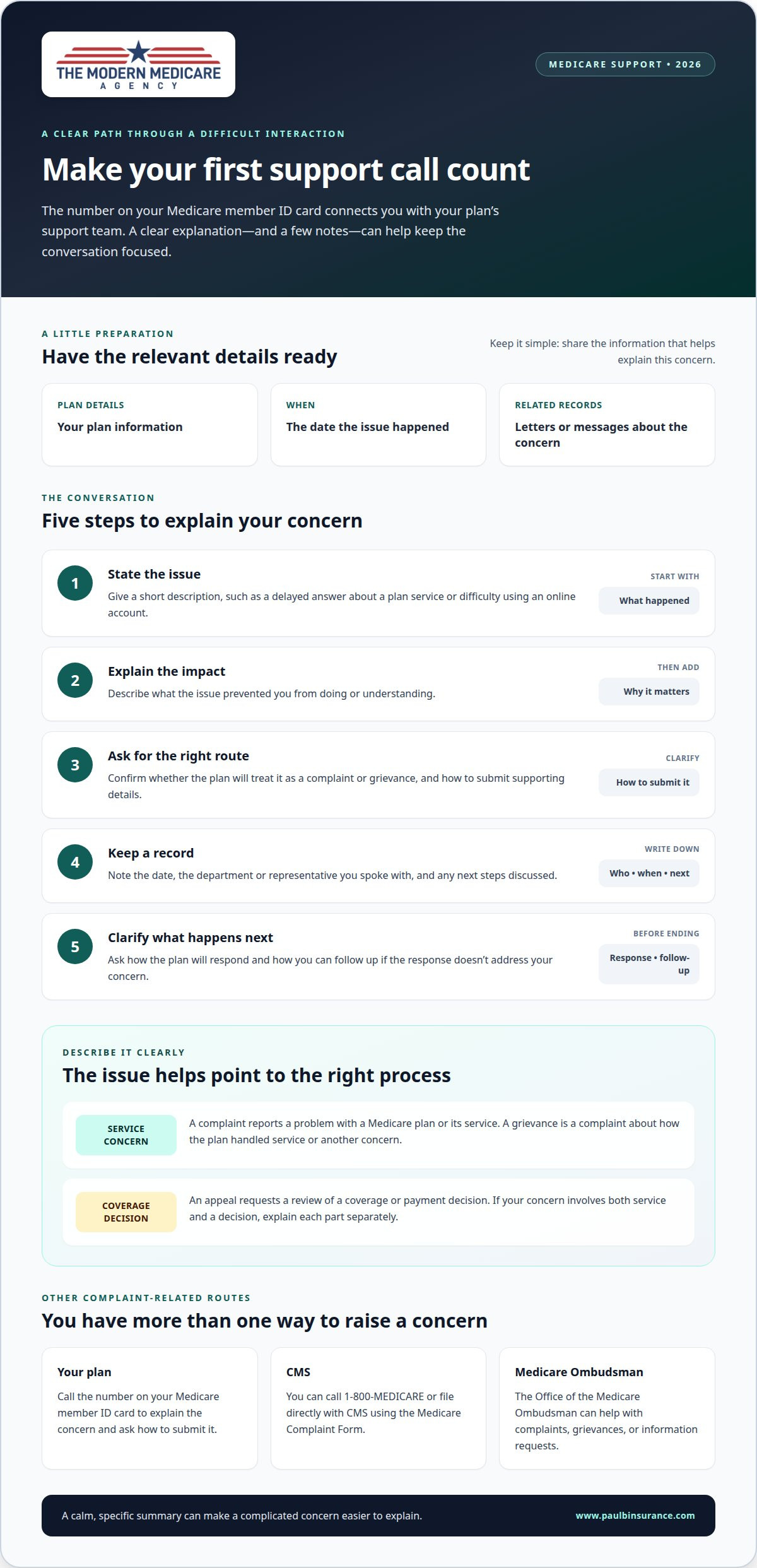
Before calling, gather details that can help you explain the issue: your plan information, the date it happened, and any related letters or messages. For example, if a call about a bill left you without an explanation, say when you called and what information you still need. Share only details relevant to the concern.
During the call, you can follow these steps:
- State the issue. Give a short description, such as a delayed answer about a plan service or difficulty using an online account.
- Explain the impact. Describe what the issue prevented you from doing or understanding.
- Ask for the correct route. Confirm whether the plan will treat your concern as a complaint or grievance, and how to submit supporting details.
- Keep a record. Note the date, the department or representative you spoke with, and any next steps discussed.
- Clarify what happens next. Ask how the plan will respond and how you can follow up if the response doesn’t address your concern.
These notes can help you describe the concern consistently if you contact the plan again. If someone is helping you, make sure they understand the issue and your requested outcome before the call. This keeps the conversation focused on the facts you want addressed.
If you want to report a Wellcare Medicare concern to 1-800-MEDICARE, call that number and explain the issue. You can also file directly with CMS using the Medicare Complaint Form. Members may contact the Office of the Medicare Ombudsman for help with complaints, grievances, and information requests. For a state regulator, describe your plan and concern so the office can direct your question appropriately.
A clear, calm summary can help, even when the issue feels complicated. For Wellcare Medicare customer service complaints, the number on your member ID card is a practical first step for reaching plan support. CMS and the Medicare Ombudsman offer additional complaint-related routes.
Online portal and website problems
An online portal problem is an issue that stops you using a plan’s website or account. In 2026, examples include a failed sign-in, an error message, or a page that won’t load. First, note what you were trying to do and what appeared on screen.
Distinguish a technical problem from a concern about your plan. A password error is different from missing coverage information or a benefit that appears incorrect. For example, if you can sign in but can’t find a plan document, describe the missing document and the page where you expected to find it.
Try a basic troubleshooting step before reporting the problem. Refresh the page and sign in again. If the same error appears, note its wording and when it occurred. Don’t share your password or full personal details in an unsecured message or public post.
When contacting support about an online issue, explain the steps that led to it. Include the page or task, the error message, and whether the problem continued after you tried again. If the website problem prevented you from completing an important task, ask how to submit it as a complaint.
A brief record can make follow-up easier. Note the date, the task you attempted, and any response you received. If you call, explain the website issue before raising a separate coverage question. You might say, “I can’t open the document page,” rather than only, “The website doesn’t work.” Specific wording helps support understand the problem.
Before ending the call, make sure you understand the next step. Ask whether support has recorded the issue, how to follow up, and whether another contact method is available. If the representative asks you to call again, clarify which number or department to use and what information to provide. Record the instructions so you don’t have to reconstruct the conversation later.
If the portal problem reveals a separate question about coverage, keep that concern distinct from the technical report. For example, trouble opening a plan summary may require both website support and an explanation of plan details. You can review Medicare Advantage plan information when the underlying question concerns understanding that type of coverage.
For an unresolved website concern, explain what remains inaccessible and how it affects your task. A specific example, such as being unable to view a document after repeated sign-in attempts, gives support more to address than a general report that the portal is broken.
What counts as a Medicare complaint or grievance
In 2026, a complaint is a way to report a problem with a Medicare plan or its service. A grievance is a complaint about how the plan handled service or another concern. An appeal is a request to review a coverage or payment decision. These terms point to different issues, so describing the problem clearly helps direct it to the right process.
Difficulty getting a clear answer from a representative may be a service concern. A decision denying payment or coverage calls for an appeal, not just a complaint. If an issue involves both service and a decision, explain each part separately when contacting the plan.
Useful details include the date, the service or decision involved, and what happened. If a letter denied coverage, identify the decision and the care or item it concerns. If a call left your question unanswered, note what you asked and the response you received. Keep the explanation factual and state the outcome you’re seeking.
Where can you find official Medicare complaint data and star ratings for Wellcare plans? CMS provides a Medicare Complaint Form for submitting a complaint, while Medicare’s plan comparison resources provide plan star ratings. Select the specific plan and year, and remember that a rating summarizes plan performance rather than deciding your individual complaint.
A star rating and a complaint provide different kinds of information. A rating can help you review plan performance, while a complaint describes a particular experience. Neither, by itself, explains the facts of an individual coverage decision. For a useful comparison, make sure you’re looking at the right Wellcare plan and year.
How do you appeal a Wellcare Medicare claim denial or coverage decision? Read the denial notice for appeal instructions, then contact the plan using the process described there. Identify the decision you want reviewed and include any relevant documents requested in the notice.
Keep an appeal separate from dissatisfaction with service. For instance, if a representative gave an unclear explanation of a denial, describe that service concern separately from your request to review the decision. This helps direct each issue to the appropriate process.
Before submitting either concern, organize the details in a short timeline. Include the date of the decision or interaction, the plan’s response, and any follow-up you’ve already made. Keep copies of letters and other records you send. If the issue concerns a Medicare plan, name the plan and describe the specific service, claim, or coverage decision.
CMS accepts complaints through the Medicare Complaint Form, and members can also seek help from the Office of the Medicare Ombudsman. These routes can help with complaints, grievances, and information requests. A clear description of the issue helps explain what assistance you need.
Fast complaints and response times
A clear complaint identifies the problem and the action you need. For a Wellcare issue, say whether you need help with service, a coverage decision, or both. This distinction helps keep a complaint separate from an appeal.
There isn’t one timeline for every Medicare Advantage appeal. Timing depends on the type of decision and review requested, so follow the instructions and response information in the denial notice. If the issue involves care you need soon, tell the plan clearly when asking about review options.
What is the Medicare Advantage appeals timeline for Wellcare coverage denials? It depends on the denial and the type of appeal; the written notice explains the applicable steps and timing. Read it promptly, since it tells you how to request a review and where to send your appeal.
An organized submission can help the plan understand your request. Gather the denial notice and records directly related to the decision. Explain what you believe is incorrect and what decision you want reviewed. Keep a copy of the appeal and note when and how you sent it.
If you don’t receive a clear response, follow up using the contact details in the notice or the number on your member ID card. Ask whether the appeal was received, whether anything else is needed, and how you’ll be notified of the decision. Record the date and any reference details provided.
What should you do if Wellcare Medicare customer service doesn’t resolve your issue? Ask the representative to explain the next step and how to make the concern a formal complaint or grievance. If it remains unresolved, members may contact the Office of the Medicare Ombudsman for help or file directly with CMS using the Medicare Complaint Form.
Keep separate records if you raise both an appeal and a service complaint. An appeal asks for review of a coverage decision; a complaint can describe an unanswered call or unclear explanation. For example, note the denial date in your appeal file and the date of the service interaction in your complaint notes.
Use this follow-up checklist to keep the process clear:
- Keep the denial notice and related records together.
- Write down when you submitted the appeal or complaint.
- Record the response instructions and any reference information.
- Ask which issue the response addresses if you raised more than one.
If the response addresses only the service concern, ask how to track the coverage appeal separately. Keep copies of each notice and response. A dated record makes it easier to explain what remains unresolved when you follow up.
What are the most common complaints about Wellcare Medicare plans?
A complaint is a member’s report of a problem with service or plan handling. A complaint category describes the subject, not how often it occurs. Without reliable figures, it would be misleading to rank Wellcare complaints or call one issue the most common. Instead, describe the specific concern you experienced.
Customer service concerns involve an interaction with the plan. You may have received an unclear answer about a plan document or struggled to get an update. Explain what you asked, what response you received, and what remains unanswered. If a call or message didn’t resolve the problem, describe that separately from any coverage dispute.
Coverage concerns involve a plan decision or an explanation of benefits. You might question a denial, a payment decision, or how a benefit applies to a specific service. Name the decision and the service involved. If you want the decision reviewed, follow the appeal instructions in the notice rather than describing the issue only as poor service.
Access concerns involve difficulty using a plan service or account. For example, you may be unable to open a document in an online portal. Note the page or task, the error you saw, and whether the problem continued. If it also prevented you from understanding coverage, explain both parts. A website complaint and a coverage appeal address different issues.
Communication problems can overlap with a decision concern. For instance, you may receive a denial notice but not understand its explanation. Requesting a review of the denial is an appeal; the unclear explanation can be described as a service complaint. Keeping those requests distinct shows what response you need for each issue.
To report a Wellcare concern clearly, identify the plan, the date, and what happened. State whether you need an explanation, a service response, or a decision review. Keep related notices and messages together. A brief timeline can show what happened and what follow-up you’ve already tried. Members may also contact the Office of the Medicare Ombudsman for help with complaints, grievances, and information requests.
If your concern has prompted you to reconsider coverage, you can review Medicare plan options and consider which coverage features matter to you.
The Modern Medicare Agency
The Modern Medicare Agency can help you understand your Medicare plan options when a complaint raises broader questions about your coverage. It provides personalized, unbiased guidance to compare Medicare Advantage, Medicare Supplement (Medigap), and Medicare Part D plans from more than 40 carriers.
This support can be useful if you’re considering whether your current coverage still fits your needs. The agency helps you understand available options, while plan complaints and coverage appeals should go through the appropriate plan or Medicare complaint process.
If you’d like help understanding your coverage choices, contact The Modern Medicare Agency to discuss your Medicare plan options.
Choose a clear next step for your coverage
If a Wellcare Medicare customer service complaint leaves you questioning your coverage, separate the immediate service concern from your longer-term needs. Addressing a service experience and deciding whether a plan still fits are different steps.
Before changing coverage, consider what matters most to you now: access to the care and medicines you use, how you prefer to manage benefits, and what you need from your coverage. These priorities can help you make a considered decision rather than letting one difficult interaction determine everything. You can also separate what needs a response now from what you want your coverage to support in the future.
The Modern Medicare Agency provides personalized, unbiased guidance to help you understand Medicare plan choices. This is separate from a plan’s complaint or appeal process, which remains the route for addressing a specific service concern or coverage decision. If you’re weighing coverage options after an unresolved experience, guidance can help you consider what fits your needs.
When you’re ready to discuss your choices, contact The Modern Medicare Agency. Take the next step at your own pace, with a clearer sense of what matters to you.
Frequently Asked Questions
What is a complaint/grievance?
A complaint or grievance lets you tell a Medicare plan about a problem with service or how you were treated. For example, if a representative repeatedly gives unclear answers about a letter, you can report that experience. If the letter denies coverage and you want the decision changed, that’s an appeal instead. Naming the specific issue helps separate a service concern from a request to review coverage.

Article by
Paul Barrett
Paul Barrett, CMIP is the founder of The Modern Medicare Agency, an independent Medicare-only brokerage based in Melville, NY. With 18 years of Medicare-exclusive experience, a CMIP designation, and more than 5,000 clients served across 37 states, Paul is one of the most credentialed independent Medicare specialists on Long Island — and one of the most direct.
He represents 40+ carriers with no quotas and no allegiances, which means his recommendations are based entirely on what fits each client's specific situation. He is the author of Medicare Mastery Unlocked and host of the Wise Guys Retirement Talk podcast. His content is grounded in primary sources, real carrier intelligence, and 18 years of watching what happens when people get Medicare right — and when they don't.
📞 631-358-5793 | paulbinsurance.com