




The Medicare coverage complaint process is a formal system that lets beneficiaries report service quality problems or operational failures with their Medicare health or drug plans. This is not the same as disputing a coverage denial. The official term for this process is a grievance, and understanding that distinction is the first step toward getting a real resolution. Filing deadlines are strict, submission channels are specific, and the outcome depends heavily on how you document and submit your complaint. This guide walks you through every stage of the Medicare grievance process so you know exactly what to do and when.
What is the Medicare coverage complaint process?
A Medicare grievance is a formal complaint about the quality of care or the way a plan operates. It covers issues like long wait times, rude staff, billing errors, or a plan failing to provide required notices. It does not cover situations where Medicare or a plan denies, reduces, or stops a service. That scenario requires an appeal, which is a separate legal process entirely.
The Centers for Medicare and Medicaid Services (CMS) requires all Medicare Advantage and Part D plans to maintain a grievance procedure. This regulatory requirement protects your rights as a beneficiary and gives you a documented path to resolution. Plans must track every complaint and report outcomes to CMS through the Complaints Tracking Module.
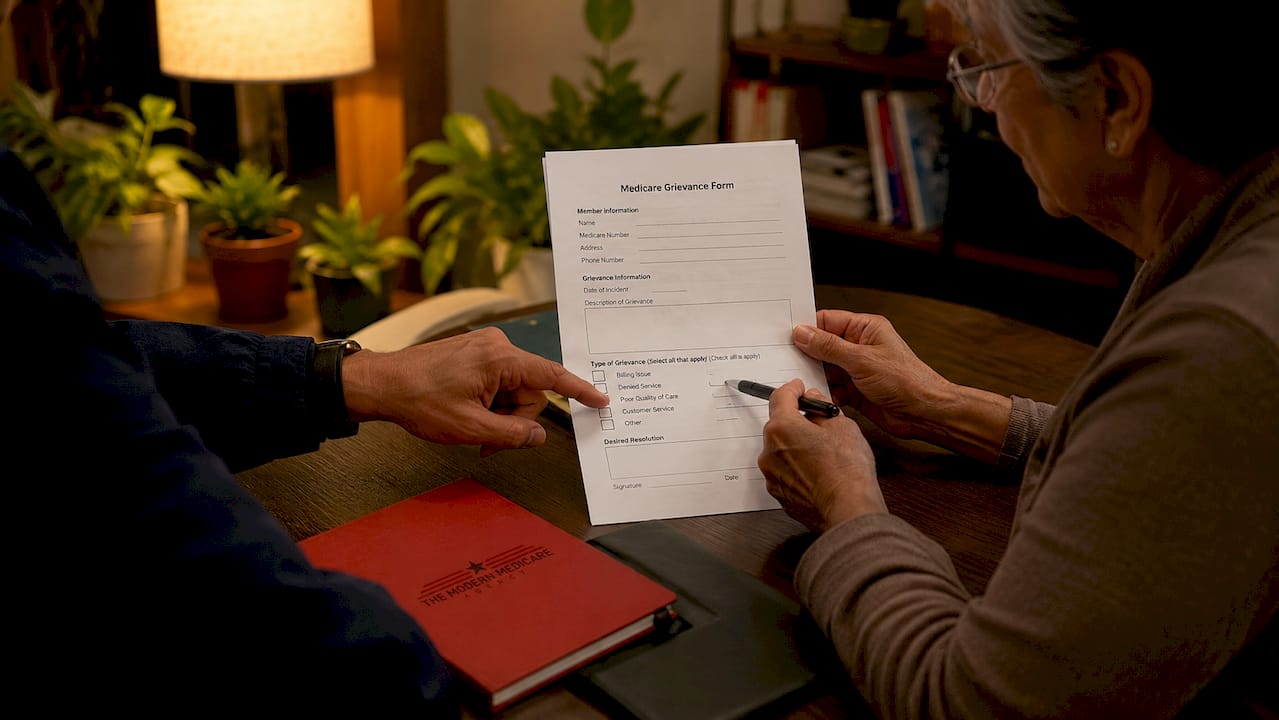
Knowing this framework exists matters. Many beneficiaries give up after a frustrating phone call. The formal grievance process creates a paper trail, triggers plan accountability, and puts CMS oversight behind your complaint.
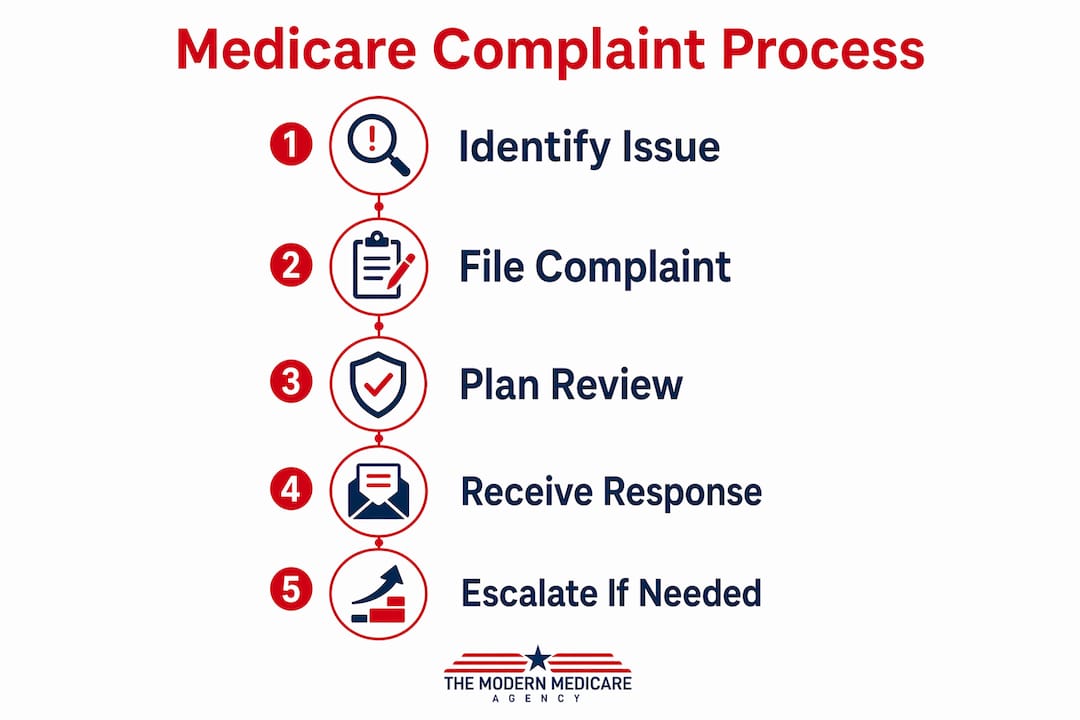
What distinguishes a Medicare grievance from an appeal?
The difference between a grievance and an appeal is the single most misunderstood part of the Medicare complaint system. Getting this wrong delays your resolution significantly.
A grievance addresses how your plan operates or the quality of care you received. Common examples include:
- A plan representative gave you incorrect information about your benefits
- You waited more than a reasonable time for a referral or prior authorization decision
- A provider treated you poorly or dismissed your concerns
- Your plan failed to send required notices on time
An appeal challenges a coverage or payment decision. Common examples include:
- Medicare or your plan denied a claim for a service you received
- Your plan refused to cover a drug on its formulary
- A prior authorization request was denied
Medicare Advantage plans are required to tell you which process applies based on the nature of your complaint. If you call your plan and describe a denial, the representative must direct you to the appeals process, not the grievance department. That said, the burden is on you to know the difference, because filing the wrong process for a coverage denial will not trigger the legal review that could reverse it.
Pro Tip: If your plan denied a service or refused to pay a claim, go straight to the appeals process. Read the Paulbinsurance guide on appealing a Medicare coverage denial before you file anything.
How and when to file a Medicare complaint
Speed matters. Beneficiaries have 60 days from the date of the incident to file a formal grievance. Miss that window and the opportunity closes. Unlike appeals, grievance regulations do not allow late filing exceptions for good cause.
Step-by-step filing process
- Identify the right channel. Complaints can be submitted through the official Medicare Complaint Form on Medicare.gov, by calling 1-800-MEDICARE, or directly through your plan’s grievance department. For quality of care issues, you can also contact your state’s Quality Improvement Organization (QIO).
- Gather your documentation. Write down dates, names of representatives you spoke with, and the specific issue. Attach any letters, Explanation of Benefits statements, or notices your plan sent you.
- Submit in writing when possible. Oral grievances are valid, but plans typically respond orally unless you specifically request a written response. A written submission creates a record that is harder to dismiss.
- Request a written response. Ask explicitly for a written outcome. This protects you if you need to escalate later.
- File with both your plan and CMS. Submitting through Medicare.gov and your plan simultaneously creates parallel accountability. CMS logs your complaint in the Complaints Tracking Module, which means your plan knows federal oversight is watching.
When you need an expedited complaint
If your complaint involves an urgent situation where your health could be at risk, you can request an expedited grievance. This applies when a plan refuses to provide an expedited appeal or when you need an immediate decision about ongoing care. Expedited grievances carry a faster resolution deadline than standard ones.
Pro Tip: Always send written complaints by certified mail or through a method that generates a confirmation. A timestamp protects your 60-day filing window if the plan disputes when you submitted.
What happens after you submit a complaint?
Once your plan receives a grievance, the clock starts. Standard grievances are resolved within 30 calendar days. Expedited grievances, where immediate access to care is at stake, must be resolved within 2 days. These are federal requirements, not suggestions.
Resolution timeline and plan responsibilities
| Complaint type | Resolution deadline | Escalation available? |
|---|---|---|
| Standard grievance | 30 calendar days | No automatic escalation |
| Expedited grievance | 2 calendar days | No automatic escalation |
| Appeal (for comparison) | Varies by level | Yes, multiple levels |
The plan investigates your complaint, contacts relevant parties, and issues a determination. CMS monitors plan compliance through the Complaints Tracking Module. Plans that accumulate poor complaint records face scrutiny that can affect their Star Ratings.
Grievance processes lack an automatic escalation mechanism. This is a critical point. If your plan misses its deadline or gives you an unsatisfactory response, that does not automatically move your case to a higher review level the way an appeal denial does. You must take action yourself.
Your options if the plan’s response is unsatisfactory include:
- Filing a complaint directly with CMS through Medicare.gov
- Contacting your state’s Quality Improvement Organization for care quality issues
- Reaching out to your State Health Insurance Assistance Program (SHIP) counselor for free guidance
- Consulting an independent Medicare specialist like the team at Paulbinsurance
Low Star Ratings driven by complaint volume can also trigger Special Enrollment Periods, giving beneficiaries the option to switch plans outside the standard enrollment window.
Best practices for managing Medicare coverage complaints
Most complaints that go unresolved fail because of documentation gaps or missed deadlines. These practices give your complaint the best chance of a real outcome.
- Document everything from day one. Write down the date, time, and name of every representative you speak with. Note what was said and what was promised.
- Submit in writing and follow up. An oral complaint is easy to lose. A written complaint with a confirmation number is not.
- File with both your plan and CMS. Dual filing creates parallel accountability and improves your chances of resolution. Your plan knows CMS is tracking the complaint.
- Watch the 60-day deadline. Missed grievance deadlines cannot be extended, unlike appeals. File as soon as you recognize the problem.
- Always request a written response. Plans typically respond orally unless you ask for written confirmation. A written response gives you something to act on.
- Know when to escalate. If your plan misses its 30-day deadline or dismisses your complaint without a real investigation, contact CMS directly or reach out to your state QIO.
Pro Tip: Keep a dedicated folder, physical or digital, for every Medicare-related communication. When you need to file a complaint, having dates and names ready makes the process faster and your case stronger.
Key Takeaways
The Medicare grievance process is a time-sensitive, documentation-driven system where knowing the difference between a grievance and an appeal determines whether your complaint gets resolved or stalls.
| Point | Details |
|---|---|
| Grievance vs. appeal | Grievances address service quality; appeals challenge coverage or payment denials. Filing the wrong one delays resolution. |
| 60-day filing window | You must file a grievance within 60 days of the incident. No extensions are available for missed deadlines. |
| Resolution deadlines | Standard grievances resolve in 30 days; expedited grievances in 2 days for urgent care situations. |
| Dual filing strategy | Submit complaints to both your plan and CMS to create parallel accountability and improve outcomes. |
| Written documentation | Always request a written response and submit complaints in writing to protect your record. |
What I’ve learned after years of helping Medicare beneficiaries with complaints
After nearly two decades of working with Medicare beneficiaries, the pattern I see most often is this: people wait too long and then file the wrong thing. They call their plan, get frustrated, hang up, and assume nothing can be done. By the time they reach out to me, the 60-day window has sometimes already closed.
The grievance process is not broken. What breaks down is the beneficiary’s understanding of which tool to use. I have seen people file a grievance when they needed an appeal, and then wonder why their coverage denial was never reversed. The plan technically “responded,” but the legal review that could have changed the outcome never happened.
The other mistake I see constantly is relying on a phone call with no follow-up. Plans are not required to give you a written response unless you ask for one. That one sentence has cost people their documentation trail more times than I can count.
My honest advice: treat every Medicare complaint like a legal matter from the start. Write it down, send it in writing, and file it in two places. The beneficiaries who get results are the ones who are persistent, specific, and documented. The ones who don’t are the ones who assumed the plan would handle it fairly without any pressure.
— Paul
Paulbinsurance is here to help you navigate Medicare coverage issues
Sorting out Medicare complaints and appeals on your own can feel like reading a policy manual in a second language. Paulbinsurance has been helping Medicare beneficiaries cut through that confusion since 2007.

Whether you need help understanding your Medicare Advantage plan options, figuring out whether your situation calls for a grievance or an appeal, or just want someone to walk you through your next steps, the independent agents at Paulbinsurance are ready to help. Paul Barrett and his team specialize in Medicare supplements, Medicare Advantage, Part D, and a full range of senior insurance products. Reach out for a no-pressure conversation about your coverage and your rights.
FAQ
What is a Medicare grievance procedure?
A Medicare grievance procedure is the formal process for reporting service quality or operational problems with a Medicare health or drug plan. It is separate from the appeals process, which handles coverage or payment denials.
How long do I have to file a Medicare complaint?
You have 60 days from the date of the incident to file a formal grievance. This deadline cannot be extended, so filing promptly is critical.
How do I file a Medicare coverage complaint?
You can file through the Medicare Complaint Form on Medicare.gov, by calling 1-800-MEDICARE, or directly through your plan’s grievance department. Filing with both your plan and CMS creates stronger accountability.
What is the difference between a Medicare grievance and an appeal?
A grievance addresses how your plan operates or the quality of care you received. An appeal challenges a denial of coverage or payment. Filing a grievance for a coverage denial will not trigger the legal review needed to reverse it.
What happens if my plan does not resolve my complaint on time?
Plans are required to resolve standard grievances within 30 days and expedited grievances within 2 days. Missing those deadlines is a compliance violation, but it does not automatically escalate your case. You must contact CMS directly or reach out to your state Quality Improvement Organization to push for resolution.