
What is a Medicare Special Needs Plan (SNP) and How Does it Work?
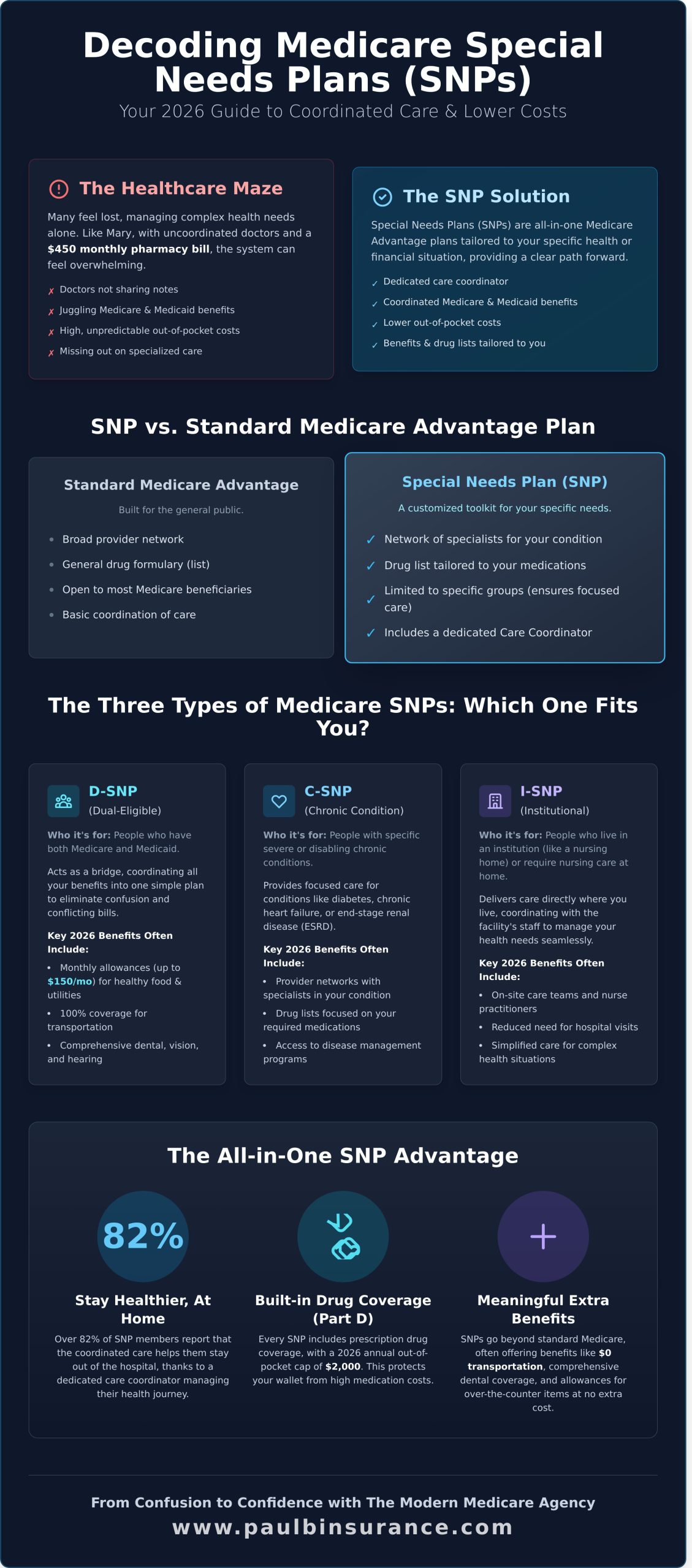
We know that looking at health insurance can feel like staring into a storm of paperwork and confusion. It is our mission to clear those clouds away. At its core, medicare special needs plans (snp) are a specialized category of Medicare Advantage plans. They aren’t meant for everyone. Instead, they are designed specifically for people who have unique health requirements or financial situations that require a more hands-on approach to care. We think of these plans as a customized toolkit. While a standard plan offers a broad range of tools, an SNP provides the exact, high-quality instruments you need for your specific health journey.
To join one of these plans in 2026, you must meet very specific criteria. You might qualify if you live with a chronic condition like diabetes, end-stage renal disease, or chronic heart failure. You could also be eligible if you live in a specialized care facility or if you are “dual eligible,” meaning you receive help from both Medicare and Medicaid. Because these plans are so focused, they can offer benefits that a general plan cannot. If you are looking for a foundational look at the history and structure of these options, you can find a helpful overview in this guide on What is a Medicare Special Needs Plan? which explains how these plans were created to serve the most vulnerable members of our community.
One rule we always emphasize is that every SNP must include Medicare Part D prescription drug coverage. In 2026, this is more important than ever because the annual out-of-pocket cap for prescriptions is set at $2,000. You don’t have to worry about finding a separate drug plan or managing multiple premiums. Everything is wrapped into one package. We are here to make sure you don’t make costly enrollment mistakes that could lead to late penalties or gaps in your coverage. We want you to feel the peace of mind that comes from knowing your medications and your doctors are all on the same page.
SNPs vs. Standard Medicare Advantage Plans
Standard plans are built for the general public, but SNPs are built for your specific diagnosis. In 2026, these plans use provider networks that prioritize specialists who understand your condition. If you have a chronic heart condition, your network will be filled with cardiologists and therapists who work together. The drug lists, or formularies, are also customized. This means the specific medications you need are often placed on lower cost-sharing tiers. We have seen members save over $1,100 a year just by switching to a plan that recognizes their specific medication needs. These plans aren’t open to everyone, which allows the insurance company to focus all their resources on a smaller, specific group of people.
Why We Call it an All-in-One Solution
We believe the primary benefit of medicare special needs plans (snp) is the way they simplify your life by combining Part A, Part B, and Part D into one manageable plan. Your insurance carrier takes on the role of a care coordinator. They don’t just pay the bills; they help you manage your health. This might include helping you get your prescriptions delivered or making sure you have transportation to your specialist appointments. Over 82% of SNP members in 2026 report that this coordination helps them stay out of the hospital. To see how these fit into the bigger picture, you can Learn more about the broader Medicare Advantage landscape. Our goal is to move you from a state of confusion to a state of total confidence.
The Three Types of Medicare SNPs: Which One Fits You?
We understand that looking at insurance options feels like staring at a map with no labels. It’s confusing and stressful. In 2026, the government has organized these options into three clear categories to help you find a path that actually fits your life. These medicare special needs plans (snp) aren’t a one size fits all solution. Instead, they’re built around your specific health status or financial situation to give you the most support possible.
D-SNPs: Bridging Medicare and Medicaid
If you qualify for both Medicare and Medicaid, a Dual Eligible Special Needs Plan (D-SNP) acts as a bridge between these two programs. We see many seniors struggle with conflicting bills and confusing paperwork from different agencies. A D-SNP simplifies this by coordinating your benefits into one plan. In 2026, these plans have become even more robust. Many now include monthly allowances for healthy food and utilities, sometimes reaching up to $150 per month depending on your zip code. They often cover 100% of your transportation costs to the pharmacy and doctor. Understanding how these plans supplement your basic coverage is the first step toward removing the financial anxiety of healthcare.
C-SNPs: Tailored Care for Chronic Conditions
A Chronic Condition Special Needs Plan (C-SNP) is designed for people living with specific, long term health challenges. These plans focus on conditions like Diabetes, Chronic Heart Failure, or Cardiovascular disorders. By 2026, CMS expanded the list of qualifying conditions to include more specific autoimmune disorders and a wider range of mental health conditions. This change allows about 12% more seniors to access these specialized plans than in previous years. Because these plans are so specific, How SNPs Provide Coordinated Care becomes vital to your daily health. You get a care coordinator who ensures your cardiologist and primary doctor are on the same page. You’ll want to verify that your current specialists are in the plan’s network, as these networks are highly specialized for your condition.
I-SNPs: Specialized Support for Long-Term Care
Institutional Special Needs Plans (I-SNPs) serve those who live in a skilled nursing facility or require a similar level of care at home. We know how difficult it is to move a loved one for doctor appointments. I-SNPs solve this by bringing the care to the facility. These plans use a provider network that actually visits the nursing home or assisted living center. Data from 2025 showed that I-SNP members had 20% fewer hospital readmissions compared to those on standard plans. This is because the care is proactive rather than reactive. The plan focuses on keeping you stable in your current environment, which provides a much needed sense of peace for both you and your family.
Choosing between these three options doesn’t have to be a solo journey. We’re here to help you weigh the pros and cons of each. If you’re feeling stuck, you can always schedule a quick chat with us to find out which plan aligns with your specific doctors and medications. We’ll help you move from confusion to a clear, confident decision for your 2026 coverage.
The SNP Advantage: Coordinated Care and Extra Benefits
Managing a chronic condition or living on a fixed income often feels like a full-time job. It’s heavy. We see the stress this causes every day. In 2026, medicare special needs plans (snp) have become a vital tool for those who need more than just standard coverage. These plans don’t offer a one-size-fits-all approach. Instead, they provide a structure that wraps around your specific life. They prioritize your health by coordinating every moving part of your care, ensuring nothing falls through the cracks.
One of the biggest wins for our clients in 2026 is the $2,000 cap on out-of-pocket prescription costs. This change provides massive relief for those managing complex health needs. Because these plans focus on specific groups, they tailor their list of covered drugs to include the exact medications needed for conditions like diabetes, heart failure, or ESRD. You won’t find yourself fighting for coverage on the drugs your doctor says are vital. This customization often leads to lower copays for the specialists you see most frequently, protecting your savings from the high costs of frequent office visits.
The Role of the Care Coordinator
You aren’t alone in this. Every SNP includes a care coordinator. Think of this person as your personal navigator through the maze of doctors, pharmacies, and paperwork. They make sure everyone on your medical team is talking to each other. This dedicated advocate provides the peace of mind you deserve. They help you stay on track by:
- Checking that you’re following your doctor’s latest orders and understanding your treatment plan.
- Assisting with the management of complex prescription schedules so you never miss a dose.
- Helping you schedule appointments and even arranging transportation if you don’t have a way to get to your specialist.
This level of support removes the anxiety from a complex process. You no longer have to be the middleman between your cardiologist, your primary doctor, and your pharmacy. Your coordinator handles the logistics, so you can focus on your wellness.
Beyond Medical: The Extra Benefits of SNPs
Most medicare special needs plans (snp) include extra benefits that standard Medicare simply doesn’t cover. In 2026, roughly 97% of these plans offer some form of dental, vision, or hearing support at no extra cost. These perks are essential for maintaining your quality of life, but we always encourage a close look at the fine print. For example, why standalone dental insurance might still be needed becomes clear when you realize a plan’s basic coverage might not handle major procedures like crowns or bridge work.
Many plans also provide a monthly or quarterly allowance for over-the-counter (OTC) health items. In 2026, many of our clients receive between $125 and $175 every three months to spend on essentials like vitamins, bandages, and blood pressure monitors. These plans also focus on preventative services tailored to your condition, such as specialized gym memberships or nutritional counseling. We help you look at these details so you can move from confusion to confidence, knowing your plan truly supports your daily life.
Eligibility and Enrollment: How to Join an SNP in 2026
Joining a plan shouldn’t feel like a second job. We know the maze of paperwork feels heavy, but we’ve simplified the path to help you find the right medicare special needs plans (snp) for your life in 2026. Our goal is to move you from a state of confusion to total confidence by following a clear, four-step process.
The first step is confirming your eligibility based on the three specific SNP categories. You must have a qualifying chronic condition like diabetes or heart failure, be eligible for both Medicare and Medicaid, or live in a contracted nursing home. In 2026, eligibility verification is more streamlined than ever, but we still double-check every detail to ensure you qualify before we move forward.
We also look closely at your service area. These plans are local; they vary by county rather than just by state. Even if a plan was available in your neighbor’s zip code last year, we verify its 2026 availability in your specific county to avoid any surprises. Next, we verify your doctors. Because these plans focus on specialized care, your specific specialists must be in the network. We call the offices directly to confirm they still accept the plan for the 2026 calendar year.
Finally, we review the drug formulary. With the 2026 out-of-pocket drug spending cap set at $2,000, choosing a plan that covers your specific medications is vital. We compare your current prescriptions against the plan’s list to ensure every pill is covered at the lowest possible cost.
When Can You Enroll? Key 2026 Dates
You can join or switch plans during the Annual Enrollment Period, which runs from October 15 to December 7, 2026. If you already have a Medicare Advantage plan, you can also make changes during the Open Enrollment Period from January 1 to March 31. Many people qualifying for an SNP also trigger a Special Enrollment Period. These periods allow you to switch plans year-round if your health status or Medicaid eligibility changes, providing a safety net when you need it most.
Avoiding Costly Enrollment Mistakes
Before you sign up, you must have both Medicare Part A and Part B active. We’ve seen people lose their current drug coverage because they didn’t realize that joining a new plan automatically cancels their old one. This is why understanding Everything you need to know about Part D enrollment is so important. We help you check these boxes so you don’t face late enrollment penalties or gaps in your care.
We want to protect you from the stress of the “crazy maze.” Our team is here to provide the unbiased guidance you deserve, ensuring your transition is smooth and your coverage is secure.
Ready to find the plan that fits your life? Schedule a Call With Paul today for a simple, no-pressure consultation.
From Confusion to Confidence: How We Help You Choose
Choosing the right medicare special needs plans (snp) shouldn’t feel like a second job. In 2026, the Medicare landscape has become even more complex with updated federal regulations and expanded benefit options. We see many seniors feeling overwhelmed by the sheer volume of mail and conflicting advertisements. Our role is to act as your personal advocate, filtering out the noise so you can focus on your health.
We believe your coverage should adapt to your life, not the other way around. Because we work with over 40 different insurance carriers, we don’t have to “sell” you on a specific brand. Instead, we look at the data. We compare the 2026 premium rates, network stability, and specific drug formularies across every available plan in your zip code. This unbiased approach ensures that your choice is based on facts, not a sales quota.
Independent Broker vs. Captive Agent
A captive agent works for one insurance company and can only offer their specific products. If that company’s 2026 plan doesn’t cover your specialist or your specific insulin brand, they can’t help you find a better alternative. We operate differently. As independent brokers, we represent you, the client. We simplify the jargon and explain exactly how your medicare special needs plans (snp) will coordinate with your existing Medicaid or chronic condition treatments. Our consultations are never rushed and never pressured, giving you the space to ask every question on your mind.
Our commitment to you doesn’t end when you sign your enrollment form. We use a proven 5-step process to keep your journey simple:
- Initial Discovery: We listen to your health history and financial goals to understand what matters most.
- Comprehensive Comparison: We analyze 40+ carriers to find the top three matches for your specific needs.
- Jargon-Free Review: We explain the “fine print” in plain English so you know exactly what is covered.
- Seamless Enrollment: We handle the paperwork to help you steer clear of costly enrollment mistakes and late penalties.
- Annual Check-ins: We review your plan every year to ensure it still meets your needs as 2027 approaches.
Your Next Steps to Peace of Mind
Preparation is the key to a successful consultation. Before you jump on a call with Paul or our team, please gather a few items. We need a complete list of your current medications and the names of your primary doctors and specialists. Having this information ready allows us to verify that your providers are “in-network” for 2026, saving you from unexpected out-of-network bills later. You’ll feel a sense of relief knowing that your health is protected by a plan designed specifically for your unique situation.
We are here to guide you through the maze of 2026 Medicare options. You don’t have to do this alone. By choosing a partner who stays by your side year-round, you gain more than just insurance; you gain a dedicated team committed to your long-term well-being. This support ensures you stay confident in your coverage even if your health needs change mid-year.
Take Control of Your Specialized Care in 2026
Navigating the insurance system doesn’t have to be a source of stress or late-night worry. We’ve seen how medicare special needs plans (snp) provide the targeted support you need, whether you’re managing a chronic condition or balancing a fixed budget. These plans offer more than just basic coverage; they provide a coordinated care team designed to simplify your health journey. You deserve a plan that works as hard as you do, without the hidden traps of costly enrollment mistakes or missed deadlines.
Our mission is to serve as your dedicated advocate in this complex process. We provide unbiased guidance by comparing options across 40+ carriers, ensuring you see every choice available rather than being limited by a single company’s agenda. We’re currently licensed in 34+ states and use a clear 5-step process to move you from confusion to confidence. You don’t have to guess which plan fits your unique health needs for 2026. Let’s work together to find the clarity and peace of mind you’ve been looking for.
Schedule a Call With Paul to Find Your Perfect SNP
We’re ready to help you secure the specialized care you deserve. Your health is too important to leave to chance; let’s get it right together.
Frequently Asked Questions
Can I have a Medicare Special Needs Plan and a Medigap plan at the same time?
You can’t have both a Medicare Special Needs Plan and a Medigap policy at the same time. Since SNPs are a type of Medicare Advantage plan, federal law prohibits insurance companies from selling a Medigap policy to anyone already enrolled in an SNP. If you currently have Medigap and decide to join an SNP, you’ll need to drop your Medigap policy because it won’t pay for any of your SNP’s out of pocket costs.
What happens to my SNP coverage if my chronic condition improves?
You may lose your eligibility if your condition improves to the point where you no longer meet the plan’s specific criteria. In 2026, most plans provide a grace period of at least 1 month to find new coverage once you’re no longer eligible. We help you navigate this transition during your 60 day Special Enrollment Period so you can move from confusion to confidence without any gaps in your medical care.
Are Medicare Special Needs Plans more expensive than standard Medicare Advantage?
Medicare special needs plans (snp) are often priced very competitively, with 58 percent of plans in 2026 offering a $0 monthly premium. While the premiums are low, these plans provide extra value through specialized care coordination that standard plans don’t offer. This targeted approach often reduces your total healthcare spending by managing your condition effectively and helping you avoid expensive, unplanned hospital visits throughout the year.
Do all SNPs include prescription drug coverage?
Every single Medicare SNP is required by federal law to include Medicare prescription drug coverage, which is also known as Part D. This is a vital feature because these plans are specifically designed for people with healthcare needs that often require multiple daily medications. You won’t need to buy a separate drug plan, which simplifies your monthly bills and ensures your doctors can coordinate your prescriptions with total clarity.
How do I know if I qualify for a Dual Eligible SNP (D-SNP)?
You qualify for a Dual Eligible SNP if you’re enrolled in both Medicare and your state’s Medicaid program. In 2026, eligibility is strictly based on your income level, which for a single person is often around $1,600 per month depending on your state’s 135 percent Federal Poverty Level guidelines. We’ll check your status with the state for you to see if you meet these requirements so you can access these specialized benefits.
Can I keep my current doctor if I join a Medicare SNP?
You can keep your doctor if they’re part of the SNP’s specific provider network, but keep in mind that most SNPs use restricted networks to coordinate your care. About 75 percent of these plans are HMOs, which means you must see in-network providers for the plan to cover your costs. We always recommend checking the 2026 provider directory before you sign up to ensure your trusted specialists are included in the plan.
Is there a Special Enrollment Period for chronic conditions?
You can join a Chronic Condition SNP at any time during the year using a Special Enrollment Period if you receive a new qualifying diagnosis. This 2026 rule means you don’t have to wait for the fall Open Enrollment period to get the specialized care you need today. It’s a one-time opportunity that starts the moment your doctor confirms your condition, giving you a clear path to the right coverage without any pressure.
What is the difference between an SNP and a regular HMO or PPO?
The main difference is that medicare special needs plans (snp) limit their membership to people with specific diseases or financial situations. While a regular HMO or PPO is open to any Medicare beneficiary, an SNP tailors its benefits, provider choices, and drug lists to meet the unique needs of its members. This specialized focus provides a level of expert care that a standard, one-size-fits-all plan simply can’t match for complex health needs.