



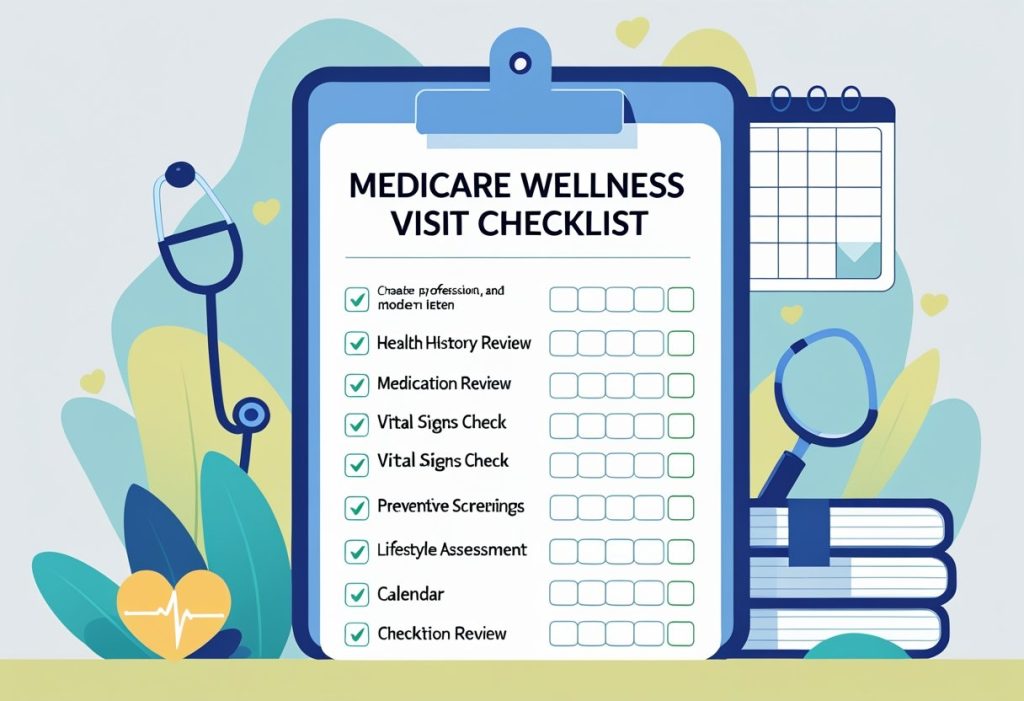
You can use a simple checklist to get the most from your Medicare wellness visit. A clear checklist helps you track your medical history, medications, risk factors, and prevention plan so you leave with practical next steps for your health.
This article walks you through what to bring, what to expect, and the key questions to ask so you get a full, useful visit.
The Modern Medicare Agency connects you with licensed agents who talk with you one-on-one to find Medicare plans that match your needs without extra fees. Use the checklist and our guidance to make the visit efficient, protect your health, and choose the right coverage with confidence.
What Is a Medicare Wellness Visit?
A Medicare Wellness Visit helps you and your provider make a prevention plan, update your health history, and spot risks early. It does not cover treatment for new or ongoing medical problems and usually has no cost if you have Original Medicare Part B.
Purpose of the Visit
The visit focuses on prevention and planning. Your provider will review your medical and family history, list current medications, and check routine measures like height, weight, and blood pressure.
They will also screen for fall risk, cognitive function, and depression when needed. You will get a personalized prevention plan.
That plan can include vaccines, screenings, diet or exercise advice, and steps to reduce health risks. The goal is to prevent illness and catch issues before they become serious.
Your provider may order routine tests or recommend referrals. If you need treatment for a new or ongoing condition, you should schedule a separate visit, which may have a copay.
Eligibility Requirements
You qualify if you have Original Medicare Part B. You can get an Initial Preventive Physical Exam (IPPE) once within the first 12 months of enrolling, then an Annual Wellness Visit (AWV) once each year after that.
Medicare Advantage plans often offer similar preventive visits; check your plan details. Bring your list of medications, past medical records, and family history.
Have contact information for caregivers and any specialists. If you use a Medicare Advantage plan, confirm any specific scheduling or prior authorization rules.
If this is your first wellness visit since enrolling, you may get the IPPE instead of the AWV. Both visits focus on prevention, but timing and some covered elements differ.
Difference Between Annual Wellness Visit and Physical Exam
An Annual Wellness Visit creates a prevention plan and reviews your health risks. It is not meant to diagnose or treat new symptoms.
Routine measurements, screening questions, and counseling dominate the visit. A physical exam focuses on diagnosing and treating active health problems.
It may include hands-on exams, lab tests, and prescriptions. Physicals often lead to immediate treatment and can have copays under Medicare.
If you need problem-focused care during your wellness visit, your provider will usually schedule a separate appointment. That keeps the wellness visit free of cost-sharing while covering treatment under the appropriate visit type.
The Modern Medicare Agency connects you with licensed agents who explain these differences and help schedule the right visits. Our agents speak to you one-on-one, match Medicare packages to your needs, and work without hidden fees so you can get the coverage that fits your budget.
Preparing for Your Medicare Wellness Visit
Gather key documents, medications, and family health details so your visit is efficient and focused. Bring clear lists and recent records to help your provider create a personalized prevention plan and spot risks early.
Gathering Medical Records
Collect records from the last two years that show diagnoses, surgeries, hospital stays, and test results. Bring copies of recent lab results, imaging reports (like X-rays or CTs), and discharge summaries.
If you use a patient portal, print or save PDF copies of important notes. Include contact information for your other doctors and any specialists you see.
That makes it easier for your provider to coordinate care. If you’ve had vaccines recently, bring dates and locations.
Organize records in a simple folder or digital file labeled by date. Flag anything you want to discuss, such as new symptoms or tests you don’t understand.
This saves time and helps your visit focus on prevention and treatment planning.
Listing Medications and Supplements
Write every medicine you take: prescription, over-the-counter, vitamins, and herbal supplements. For each item, list the exact name, dose, how often you take it, and why you take it.
Note when you last missed a dose or had side effects. Bring the original bottles or a current pharmacy printout when possible.
That helps your provider check for drug interactions, duplicate therapies, and unsafe combinations. Also list allergies and past bad reactions to drugs.
If you use inhalers, injectables, or eye drops, show how you use them. Your provider can check technique and suggest simpler or safer options.
A clear medication list helps prevent hospital readmissions and improves daily safety.
Updating Family Health History
Update family health history for first-degree relatives: parents, siblings, and children. Note major conditions like heart disease, stroke, cancer (type and age at diagnosis), diabetes, high blood pressure, and dementia.
Include ages at diagnosis and cause of death if known. Add any relevant ethnic or genetic risk factors, such as ancestry linked to certain conditions.
If you don’t know details, write what you remember—approximate ages are useful. Bring any family medical documents if available.
Share lifestyle patterns that run in your family, like smoking or early heart disease. Your provider can use this to tailor screening schedules and prevention steps.
Accurate family history improves risk estimates and screening plans.
The Modern Medicare Agency can help you prepare before your visit. Our licensed agents are real people you can speak to one-on-one.
They match Medicare plans to your needs without charging extra fees, so you get coverage that fits your budget and health priorities.
Essential Items on the Medicare Wellness Visit Checklist
This checklist focuses on the concrete steps you should expect: a clear health review, recommended screenings and vaccines, and a targeted look at risk factors that affect your daily life. Use it to prepare documents, ask specific questions, and get the most from your visit.
Personal Health Assessment
Bring a current list of all medications, including doses and supplements. Your provider will confirm prescriptions, ask about side effects, and check for interactions.
Note any new symptoms, changes in sleep, mood, appetite, or mobility so you can describe when each started and how often they occur. Expect basic measurements: height, weight, blood pressure, and a quick cognitive screen if there are concerns about memory or thinking.
Share recent hospital visits, falls, or changes in ability to do daily tasks like bathing or shopping. If you use medical devices—hearing aids, walkers, or oxygen—bring them or photos so your provider can assess fit and use.
Preventive Screenings and Vaccinations
Bring dates of your last mammogram, colon cancer screening, bone density test, and any other screening you had. Your provider will confirm which tests are due based on your age, sex, and medical history, and order those that are needed.
Ask about scheduling next screenings and where to get them. Vaccines often reviewed include flu, pneumococcal, shingles, and COVID-19 boosters when recommended.
Tell your clinician if you had any recent vaccines or reactions. If you need referrals for labs or imaging, write down where to go and how results will be shared with you.
Review of Risk Factors
Discuss tobacco, alcohol, and drug use honestly so your provider can offer tailored help. Bring family health history—parents’ and siblings’ major conditions and ages at diagnosis—so your clinician can assess hereditary risks.
Share lifestyle details: diet, exercise frequency, driving ability, and social support. Your provider will screen for fall risk, depression, and medication mismanagement.
They may create a Personalized Prevention Plan naming actions, tests, and timelines. If you want help comparing Medicare coverage for these services, contact The Modern Medicare Agency.
Our licensed agents speak with you one-on-one, match plans to your needs, and help find options without extra fees that break the bank.
Key Questions to Ask During Your Visit
Ask about the screenings, shots, and checks you need this year. Also review medicines, chronic condition steps, and any documents that guide future care choices.
Preventive Care Recommendations
Which screenings do you need and when? Ask specifically about colon cancer screening, mammograms, bone density tests, and hearing or vision checks based on your age and sex.
Request exact timing — for example, colon screening every 10 years for a colonoscopy or alternative intervals for stool tests. Ask about vaccines: flu each year, shingles if you’re eligible, and boosters for pneumococcal or Tdap when recommended.
Write down dates given and who schedules the shots. Talk about lifestyle steps tied to prevention.
Ask for tailored advice on diet, weight, exercise minutes per week, and smoking cessation resources. If you need referrals for specialists, request names and how to get appointments.
Mention any out-of-pocket costs you worry about so your provider can clarify coverage.
Chronic Condition Management
Start by listing each chronic condition you have and ask which measures track control. For diabetes, ask for your A1c goal and how often to test it.
For high blood pressure, ask about home monitoring targets and medication adjustments. Bring a current medication list and ask which drugs you still need.
Ask about side effects, interactions, and if any prescriptions can be simplified or stopped. Ask for clear action steps when symptoms change.
Get a written plan: when to call, when to come in, and when to go to urgent care. Request referrals to specialists, physical therapy, or diabetes education if needed.
Ask how your condition affects other preventive tests or vaccines.
Advance Care Planning
Ask if you need any advance directive forms like a living will or durable power of attorney for health care. Request help filling them out and getting them placed in your medical record.
Discuss who you want to make decisions if you cannot. Name that person and ask your provider to note their contact information in your chart.
Talk about your wishes for life-sustaining care: CPR, ventilator use, feeding tubes, and comfort-focused care. Ask the provider to help word these choices clearly for emergency staff.
If you already have documents, ask the team to review them for relevance and legality in your state. The Modern Medicare Agency can connect you with licensed agents who explain Medicare coverage that affects these items.
Our agents talk with you one on one, match plans to your needs, and avoid extra fees that strain your budget. Ask your agent how a plan covers screenings, chronic care services, and support for advance care planning.
Follow-Up and Next Steps After Your Wellness Visit
You will leave with a written wellness plan, recommended tests, and instructions on how to get your records. Use the plan to track tasks, schedule screenings, and share information with specialists or caregivers.
Interpreting Your Wellness Plan
Look at each item on your wellness plan and note the timeline beside it. Items often include vaccinations, lab tests, and lifestyle goals with dates like “within 3 months” or “annually.”
If a test has a specific code or lab name, write it down so scheduling goes smoothly. Ask your provider to clarify any medical terms you don’t understand.
Request phone or portal contact info for follow-up questions. If medications changed, confirm dose, timing, and reason for the change.
Keep the plan in a place you check weekly. If you need help choosing which services to prioritize, call The Modern Medicare Agency.
Our licensed agents explain what Medicare typically covers and help you find plans that match your needs without extra fees.
Scheduling Additional Screenings
Identify screenings noted on your plan, such as mammograms, colon cancer screening, bone density, or flu shots. Check the recommended frequency (e.g., every year, every 2 years) and whether the test needs a referral.
Use your clinic’s online portal or phone number to book appointments. Ask the scheduler about preparation requirements, fasting rules, and how long the test will take.
Write down the appointment date, time, location, and any pre-test steps. If you need help finding covered providers or comparing out-of-pocket costs, contact The Modern Medicare Agency.
Our agents guide you through Medicare coverage rules and help schedule services that fit your plan and budget.
Accessing Your Health Records
Request your visit summary and any lab results through the clinic’s patient portal or by asking staff for a printed copy. The Health Insurance Portability and Accountability Act (HIPAA) gives you the right to copies of your records.
Expect labs to appear within a few days to two weeks, depending on the test. Save electronic copies on your personal device or print key documents for your file.
Share records with specialists by giving them portal access or by asking the clinic to send records directly. If you spot an error, request a correction in writing.
For help understanding coverage of record transfers or cost questions, call The Modern Medicare Agency. Our licensed agents speak with you one-on-one and help you make sure records get to the right providers without hidden fees.
Tips for Maximizing the Value of Your Medicare Wellness Visit
Prepare a clear list of concerns, bring current medications and recent test results, and set one or two health goals to leave the visit with concrete next steps. Use the visit to update your prevention plan and get referrals or screenings you need.
Communicating Effectively With Your Provider
Bring a short, written list of your top 5 concerns so you and your provider focus on what matters most. Start with the single issue that affects your daily life the most.
Say how long each problem has lasted and what makes it better or worse. Tell the provider about all medications, over-the-counter drugs, and supplements.
Include doses and reasons you take them. If you have trouble paying for prescriptions or following the regimen, say so.
Ask the provider to note changes in your chart and to send a summary to any other clinicians you see. Ask for specific next steps: tests, referrals, or lifestyle changes.
Request timelines — for example, “When should I expect to hear about lab results?” — and how you will receive them. If you need help scheduling, mention that you want assistance at the visit.
Tracking Your Health Goals
Write one or two measurable goals before your visit, like “lose 8 pounds in 3 months” or “walk 20 minutes, 5 days a week.” Share these goals so your provider can suggest realistic steps and needed screenings.
Use simple tools to track progress: a calendar, phone reminders, or a log for blood pressure or blood sugar. Bring this record to follow-up visits so your provider can adjust plans based on real data.
Ask for a written action plan with target dates and who to contact if you have problems. If insurance questions come up, contact The Modern Medicare Agency.
Our licensed agents are real people you can speak to one-on-one. They help you find Medicare plans that match your needs without hidden fees, so you keep paying only for what matters.
Frequently Asked Questions
These answers cover what happens at the visit, any costs, the checklist items to bring, how often you can get the visit, the memory checks used, and your right to decline.
What should I expect during my Medicare annual wellness visit?
Your provider will review your medical and social history. They will note medications, allergies, and current health concerns.
They will assess your risk factors and help create or update a personalized prevention plan. Expect screenings, referrals for tests if needed, and health advice to lower future risks.
The visit focuses on prevention, not diagnosing or treating new medical problems. If you need care for a specific issue, you will usually schedule a separate visit.
Are there any costs associated with a Medicare wellness visit?
Medicare Part B covers the Annual Wellness Visit with no copayment when your provider accepts Medicare. You generally pay nothing for the visit itself.
If your provider performs extra services—like lab tests, vaccines, or treatment for a new problem—those may carry charges. Ask your provider or your agent at The Modern Medicare Agency if you want clarification on possible fees.
What are the essential components of an annual wellness exam checklist?
Bring a list of current medications, doses, and any supplements. Include recent hospital or ER visits and contact info for your specialists.
Bring a written list of your medical history and any family health concerns. Also bring your Medicare card and a list of questions you want covered during the visit.
Providers will measure height, weight, blood pressure, and assess fall risk and preventive needs. They will record a health risk assessment and make a prevention plan based on your results.
How often can I schedule a Medicare wellness visit?
You can get one Annual Wellness Visit per 12-month period. You become eligible for the initial Welcome to Medicare visit only within the first 12 months of Part B coverage.
If you recently had the one-time Welcome visit, you can schedule the first Annual Wellness Visit the following year. Your agent at The Modern Medicare Agency can help track your eligibility dates.
What kind of memory tests are included in the Medicare wellness exam?
Providers use brief cognitive screenings to check memory, thinking, and decision-making. Tests may include simple questions about recent events, word recall, or drawing tasks.
These screenings aim to spot changes from your usual level of thinking. If screening shows concerns, your provider may refer you for fuller testing or specialist care.
Can I decline the Medicare wellness visit if I don’t feel it’s necessary?
Yes. The Annual Wellness Visit is voluntary.
You can choose not to schedule it or to stop the visit at any time.
If you want help deciding or need help scheduling, contact The Modern Medicare Agency. Our licensed agents offer one-on-one support and do not add extra fees, so you can make clear choices about Medicare coverage.