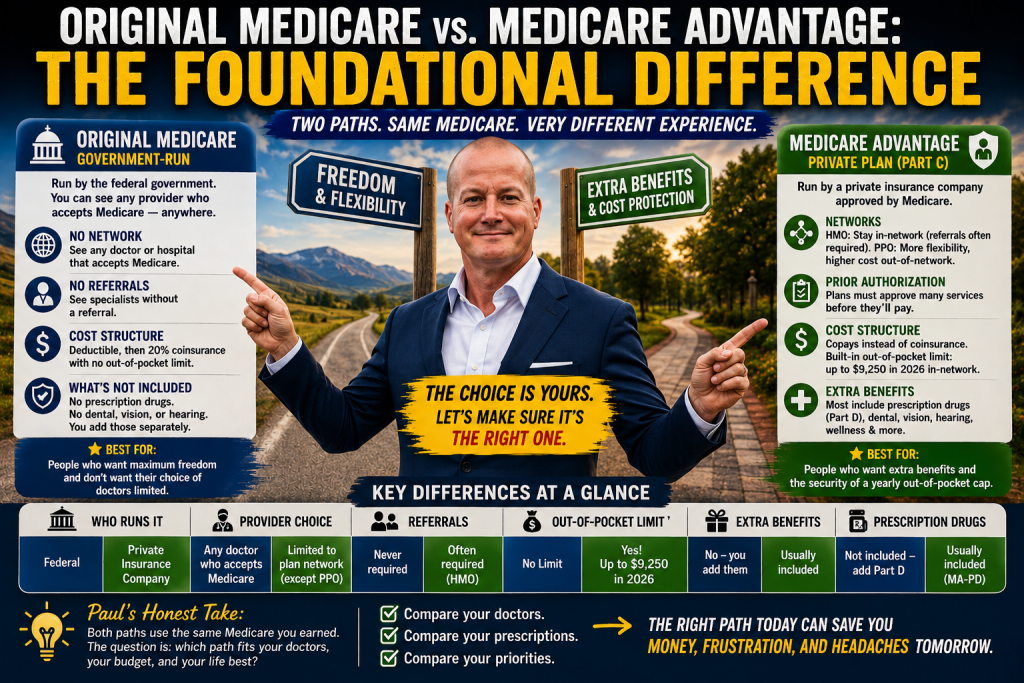
This is the single biggest fork in the road for anyone new to Medicare — and it’s also one of the most misunderstood. People often talk about “choosing a Medicare plan” as if it’s one decision, but it’s really two: first, Original Medicare or Medicare Advantage, and only after that, which specific plan within your choice. Get the first decision right, and everything downstream gets a lot simpler.
The One-Sentence Version
Original Medicare is run directly by the federal government and lets you see any provider who accepts Medicare, anywhere in the country, with no network. Medicare Advantage is Medicare’s benefits delivered through a private insurance company, using a network of providers, in exchange for extra benefits and a spending cap Original Medicare doesn’t have on its own.
Everything else in this article is really just the details underneath that one sentence.
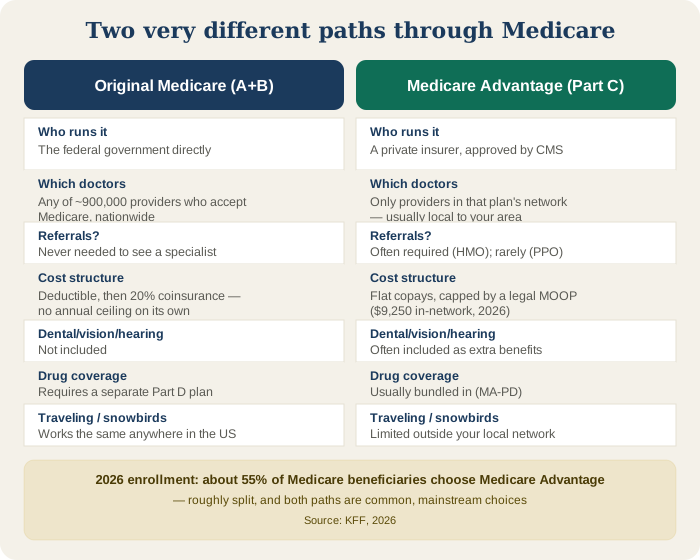
Side-by-Side
Original Medicare: The Government-Run Path
Original Medicare is Parts A and B, administered directly by the federal government. Its defining feature is freedom of choice: nearly 900,000 providers nationwide accept Medicare, and you can see any of them — no network, no primary care gatekeeper, no referral required to see a specialist. This matters most for people who travel frequently, split time between states, or have a specific specialist they’re not willing to give up.
The tradeoff is cost structure. Original Medicare uses the deductible-then-coinsurance model — you pay 20% of most Part B costs indefinitely, with no annual out-of-pocket ceiling built in. That’s why most people pair Original Medicare with a Medigap policy, which picks up that 20% so costs become predictable. Original Medicare also doesn’t include prescription drug coverage or extras like dental, vision, and hearing — those require separate coverage.
Paul’s Honest Take: Original Medicare plus Medigap is often the choice for people who want maximum flexibility and are willing to pay a bit more in monthly premiums for the peace of mind of predictable costs. If your doctors don’t participate in any Medicare Advantage plan in your area — which does happen — Original Medicare might not even be a choice, it’s simply what works with your care team.
How Many People Actually Rely on Original Medicare Alone?
Very few, it turns out. Among people in traditional Medicare, 87% carry some form of supplemental coverage — only 13% rely on Original Medicare with no backup at all.
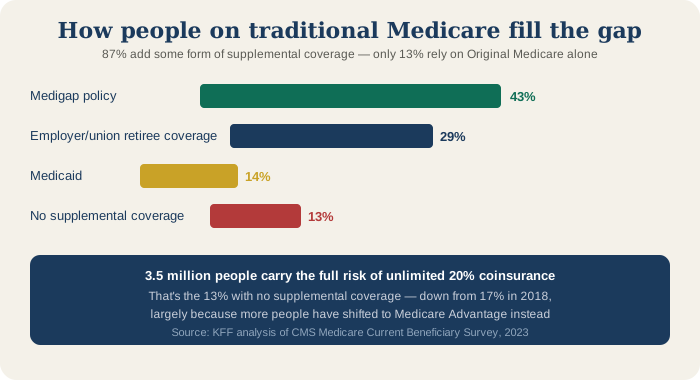
Here’s how that 87% breaks down:
- 43% carry a Medigap policy — the most common path, and the one most people choose specifically for the coinsurance protection
- 29% have employer or union-sponsored retiree coverage — a real benefit for people whose former employer still contributes to their health coverage
- 14% qualify for Medicaid, which acts as a secondary payer and typically wipes out most cost-sharing for those with limited income and assets
That leaves 13% — about 3.5 million people — fully exposed to Original Medicare’s unlimited 20% coinsurance, with no backup at all. That share has actually been shrinking, down from 17% in 2018, mostly because more people have shifted to Medicare Advantage instead, which builds the cost cap directly into the base plan.
Paul’s Honest Take: When someone tells me they’re planning to stick with Original Medicare and skip a Medigap policy to save on the monthly premium, I always want to make sure that’s a deliberate choice, not an oversight. The data backs up what I see in practice — the overwhelming majority of people decide the extra protection is worth paying for. It’s a completely reasonable decision to go without it if you understand the risk and you’re comfortable with it. It’s a much riskier one if you didn’t realize the risk existed at all.
Medicare Advantage: The Private-Plan Path
Medicare Advantage (Part C) is Medicare’s benefits delivered through a private insurance company approved by CMS. Instead of the open-network, coinsurance model, Advantage plans typically use:
- A network — HMO plans usually require you to stay in-network except for emergencies, and often require a referral to see a specialist. PPO plans allow out-of-network care, but at a higher cost.
- Prior authorization — many plans require pre-approval from the insurer before they’ll agree to pay for certain treatments, tests, or procedures. This is a real, added step that Original Medicare generally doesn’t impose.
- Flat copays instead of open-ended coinsurance — closer to how employer insurance works.
- A legally required Maximum Out-of-Pocket (MOOP) — for 2026, plans can’t set this above $9,250 in-network. Once you hit it, the plan pays 100% of covered costs for the rest of the year. This is the real financial safety net Original Medicare doesn’t offer on its own.
- Extra benefits — many plans include dental, vision, and hearing coverage, and most bundle in prescription drug coverage (an “MA-PD” plan), so you’re not managing a separate Part D policy.
One detail that surprises people: you still pay your Part B premium (202.90/monthstandardin2026)ontopofwhateveryourMedicareAdvantageplancharges.A”0 premium” Advantage plan means the plan itself costs nothing extra — not that Medicare is free. Some plans go a step further with a Part B premium reduction benefit — about 32% of plans in 2026 offer this — where the plan actually covers part or all of your Part B premium as an added perk. It’s worth checking for specifically if lowering your monthly cost is a priority.
Why do $0 premium plans even exist? It’s not charity — the federal government pays private insurers a set monthly amount per member to take on Medicare beneficiaries. Insurers compete for members partly by passing some of that payment back in the form of lower (or $0) premiums and added benefits, rather than pocketing all of it. Understanding this helps explain why plan benefits and premiums can vary so much from one insurer to the next, even covering the same underlying Medicare benefits.
A concrete example of the copay structure: instead of a percentage, you might see something like a $20 copay for a primary care visit and a flat $250 copay per hospital admission — predictable numbers you can look up in the plan’s Evidence of Coverage before you ever need care, rather than a percentage that depends on the size of the bill.
The real cost of going outside a network: this is worth being direct about, especially for HMO plans. If you see a doctor outside your HMO’s network for something that isn’t a true emergency, you can end up responsible for 100% of the cost — not a higher copay, the entire bill. PPO plans are more forgiving here, allowing out-of-network care at a higher cost-sharing rate rather than cutting you off completely, but it’s still meaningfully more expensive than staying in-network.
The Everyday Perks People Don’t Expect
Beyond the core benefit structure, most Medicare Advantage plans compete for members with lifestyle extras that Original Medicare simply doesn’t offer at all:
- Fitness memberships — free access to gym networks like SilverSneakers
- Over-the-counter allowances — a quarterly credit (often around $50 every 3 months) to buy everyday items like vitamins, bandages, or toothpaste at a local pharmacy
- Transportation to appointments — some plans cover rides to and from medical visits, which genuinely matters for people who no longer drive
- One card for everything — instead of juggling separate cards for the hospital, pharmacy, and dentist, most Medicare Advantage members carry a single plan card for all of it
Paul’s Honest Take: These extras are real, and they’re a genuine part of why so many people choose Medicare Advantage — the SilverSneakers benefit alone gets mentioned to me constantly. Just don’t let a gym membership or an OTC allowance be the deciding factor over whether your actual doctors are in-network. I’ve seen people prioritize the perks and only realize afterward their cardiologist wasn’t covered — the network question always has to come first.
Which One Might Fit You?
There’s no universally “right” answer here, but a few honest signals tend to point people one way or the other:
Original Medicare (+ Medigap) tends to be a better fit if you:
- Split time between two states, travel frequently, or live a snowbird lifestyle
- Have a specific specialist or academic medical center you’re not willing to give up
- Value predictable costs over lower monthly premiums, and can afford the Medigap premium
- Have a chronic condition where unrestricted specialist access matters more than a network
Medicare Advantage tends to be a better fit if you:
- Want the lowest possible monthly cost and are comfortable with a local network
- Would genuinely use extras like dental, vision, hearing, or a gym membership
- Are in generally good health and comfortable with occasional prior authorization steps
- Don’t have a specific out-of-network doctor you’re unwilling to switch away from
If you read both lists and still feel torn, that’s normal — this is exactly the kind of decision worth talking through with someone who isn’t selling you a specific plan, before you enroll rather than after.
Why the Timing of This Decision Matters
Here’s the part that doesn’t get talked about enough: this choice isn’t perfectly reversible.
If you start with Original Medicare and add a Medigap policy during your one-time Medigap Open Enrollment Period — the 6 months starting when you’re 65 and enrolled in Part B — you get guaranteed issue, meaning the insurer has to accept you regardless of health conditions. If you start with Medicare Advantage instead and later decide you want to switch to Original Medicare with Medigap, you may face medical underwriting — meaning a Medigap insurer could deny you, or charge more, based on your health history.
Paul’s Honest Take: This is exactly why I don’t treat this as a decision to rush. It’s not that Medicare Advantage is a trap — plenty of people are genuinely well served by it for years. It’s that the door back to guaranteed-issue Medigap doesn’t necessarily stay open forever. If there’s any chance you’ll want that flexibility down the road, it’s worth having that conversation before you enroll, not after a health change makes the decision for you.
There is a safety valve, though — it just has a deadline. Federal law gives you a 12-month trial right the first time you enroll in Medicare Advantage. If you switch back to Original Medicare within that first year, you’re guaranteed the right to buy a Medigap policy with no medical underwriting — insurers can’t deny you or charge you more based on your health. The application window itself runs from 60 days before your Medicare Advantage coverage ends to 63 days after, so it can stretch slightly past the 12-month mark if you act promptly. Miss that window, though, and the guarantee is gone — after that, a Medigap insurer can generally underwrite you like any new applicant.
Paul’s Honest Take: Think of the trial right as a one-time test drive, not a standing option — you get it once, tied to your first-ever Medicare Advantage enrollment, not every time you switch plans. If you’re trying Advantage and keeping half an eye on Medigap as a fallback, put a reminder on your calendar for month 10 or 11, not month 13. We’ve written a full walkthrough of exactly how this works if you want the deadlines and paperwork in detail.
Frequently Asked Questions
Can I switch between Original Medicare and Medicare Advantage every year? Generally yes, during the Annual Enrollment Period (October 15 – December 7) or Medicare Advantage Open Enrollment (January 1 – March 31). But switching back to Original Medicare with a new Medigap policy isn’t guaranteed-issue outside your initial window or your one-time trial right — see the timing note above.
If I try Medicare Advantage and don’t like it, can I always get Medigap back? Only within your 12-month trial right, and only the first time you try Medicare Advantage. If you had a Medigap policy before switching, you can generally get that same policy back from the same insurer if it’s still sold. After that first-year window closes, you’re subject to medical underwriting like any other applicant.
Is Medicare Advantage “worse” than Original Medicare? No — it’s different, not worse. Roughly 55% of Medicare beneficiaries were enrolled in Medicare Advantage as of 2026, which tells you it’s a completely mainstream, common choice, not a fallback option.
Is it actually normal to skip Medigap and just rely on Original Medicare alone? It’s uncommon — only about 13% of people in traditional Medicare go without any supplemental coverage. It’s not against the rules, and for some people with strong financial reserves it’s a deliberate, informed choice. But most people decide the coinsurance risk is worth paying to avoid.
Do all Medicare Advantage plans require referrals? No — this depends on the plan type. HMO plans usually do; PPO plans usually don’t, though PPOs typically cost more in exchange for that flexibility.
If I pick Medicare Advantage, do I still have Part A and Part B? Yes — you’re still enrolled in Medicare itself; the Advantage plan is simply how your Part A and B benefits (plus usually Part D and extras) get delivered and paid.
What if my doctor doesn’t take Medicare Advantage at all? This does happen, especially with specialists or academic medical centers. If keeping a specific doctor is non-negotiable for you, check their participation with any plan you’re considering before enrolling — not after.
What actually happens if I see an out-of-network doctor on an HMO plan? Outside of a true emergency, you can be responsible for the entire bill — not a higher copay, the full cost. This is the sharpest practical difference between HMO and PPO Advantage plans, and worth confirming directly with any plan before you assume a specific doctor or specialist is covered.
The Bottom Line
Original Medicare and Medicare Advantage aren’t a “better vs. worse” comparison — they’re two genuinely different philosophies for delivering the same underlying benefits. Original Medicare trades a higher monthly cost (with Medigap) for maximum flexibility and no network. Medicare Advantage trades some flexibility for a cost ceiling, often-lower premiums, and extra benefits. The right answer depends entirely on your health, your travel habits, your specific doctors, and how much predictability you want to pay for.
Related Reading
- What Is the Trial Right to Switch Back to Medigap? Your 2026 Safety Net Guide
- Medicare Advantage Trial Right Period Explained: Your 2026 Safety Net Guide
- What Medicare Does NOT Cover (The Complete List)
- Deductibles, Coinsurance, Copays, and MOOP: What’s the Difference?
- Medicare Costs: What You’ll Actually Pay in 2026
- Medicare Networks Explained: HMO, PPO, PFFS
Sources:
- KFF — Medicare Advantage in 2026: Enrollment Update and Key Trends
- KFF — Medicare Advantage in 2026: Premiums, Out-of-Pocket Limits, Supplemental Benefits, and Prior Authorization
- KFF — A Snapshot of Sources of Coverage Among Medicare Beneficiaries
- Medicare.gov — 2026 Medicare Costs
- Medicare.gov — Guaranteed Issue Rights (Trial Right)
This article reflects 2026 Medicare rules and is for educational purposes. This is one of the most consequential decisions in Medicare, and the right answer is different for every person — if you’d like to talk through which path fits your specific doctors, travel habits, and budget, call us at 631-358-5793. No pressure, no cost.