



Does a higher drug tier mean you’ll pay more? Usually, yes: drugs on higher tiers can cost more under a plan, but the tier alone doesn’t tell you what you’ll pay. If you’re facing problems with Wellcare prescription drug plans, checking how your medicines appear on the 2026 formulary is a practical place to start.
It’s frustrating when a prescription costs more than expected or isn’t covered as you thought it would be. A plan’s drug list, or formulary, shows whether a medicine is covered and which tier it’s assigned to. Checking it can help explain your costs before you choose a plan or fill a prescription.
This article explains how drug tiers affect costs, how to check a Wellcare formulary, and what to compare across plans. It also covers what to do if a medicine is denied, including how to request an exception or appeal. Following these steps can help you make a more informed decision about prescription coverage.
Key Takeaways
- A higher drug tier can mean higher costs, but your share also depends on the plan’s cost-sharing rules.
- Use the 2026 formulary to see whether each prescription is covered and which tier applies.
- Compare plans using your full medication list, not just the monthly premium.
- If coverage is denied, learn how to request an exception or appeal and what information may support your request.
- Check whether a medicine is excluded or subject to plan rules before choosing coverage or filling a prescription.
Coverage exceptions and appeals after denial
A Wellcare Part D denial can often be challenged. First, identify whether the issue is a noncovered drug, prior authorization, step therapy, or a quantity limit. The plan’s explanation should give the reason and instructions for requesting a coverage decision. Keep the notice, prescription details, and any supporting information together.
If the formulary doesn’t cover a prescribed medicine, you can request a formulary exception. If the drug is covered but you’re challenging its cost or a restriction, ask the plan which exception process applies. Your prescriber can explain why the medicine is appropriate and why an alternative may not work for you.
- Read the denial notice to identify the reason and the next appeal step.
- Ask the prescriber to provide relevant medical information for an exception request.
- Submit the request using the plan’s stated process and keep a copy.
- If the decision is still unfavorable, follow the appeal instructions in the notice.
Prior authorization means the plan requires approval before covering a medicine. Step therapy requires trying a preferred treatment before the plan covers another drug, while a quantity limit caps the amount covered. Wellcare’s rules depend on the plan and medicine, so check the formulary and coverage notice to find out which requirement applies.
If a Wellcare prescription is rejected at the pharmacy, ask the pharmacist for the reason and contact the plan about next steps. If the rejection says prior authorization is required, ask the prescriber to submit the necessary information. If the drug is excluded, ask the plan about an exception and the appeal process.
When Medicare drug coverage ends for unpaid premiums, the consequences can reach beyond one prescription. Beneficiaries who lose coverage for nonpayment generally cannot join another drug plan until fall open enrollment, for coverage starting Jan. 1, unless they qualify for an exception. During the gap, they may have to pay the full cost of prescriptions themselves.
Switching or leaving a plan can also create a late-enrollment penalty risk. According to the Centers for Medicare & Medicaid Services, people who go without drug coverage for at least 63 days after the Initial Enrollment Period is over could face a permanent penalty that increases each year. Before a switch, check when new coverage begins and whether a gap could occur.
Compare Wellcare Part D customer-service ratings and complaint rates at the plan level rather than assuming they’re the same across all plans. Review measures for the specific plan alongside other insurers’ plans before deciding which option fits your needs.
For a specific prescription, the formulary and coverage notice show whether prior approval, trying a preferred treatment first, or an amount limit applies. Requirements vary by plan and medicine.
Plan options and cost sharing
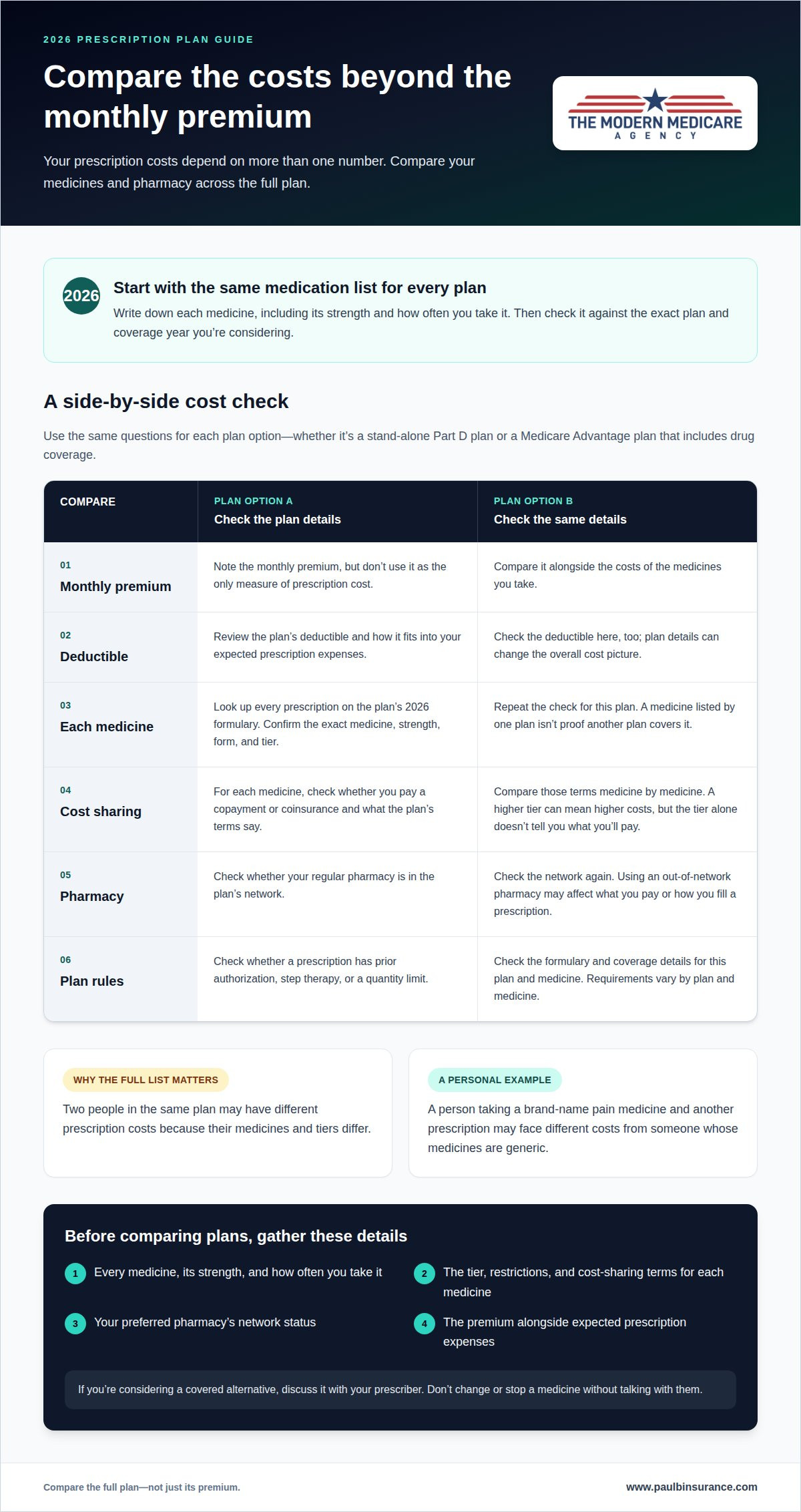
In 2026, the plan’s monthly premium is only one part of prescription costs. Your total also depends on the deductible, each medicine’s tier, and whether you pay a copayment or coinsurance. Those details can have a different effect on two people in the same plan. One person may take mostly lower-tier medicines, while another needs a higher-tier drug with additional restrictions.
Medicare prescription drug coverage generally comes through a stand-alone Part D plan or a Medicare Advantage plan that includes drug coverage. Compare the full plan, not just its premium. Check whether your regular pharmacy is in the plan’s network, then review each prescription’s tier and cost-sharing terms. Using an out-of-network pharmacy may affect what you pay or how you fill a prescription.
Pain management needs make this comparison especially personal. Someone taking a brand-name pain medicine and another prescription, for example, may face different costs from someone whose medicines are generic. Ask the prescriber whether a covered alternative could meet your needs, but don’t change or stop a medicine without discussing it with them. Compare how each plan covers the specific options prescribed.
- List every medicine, including its strength and how often you take it.
- Compare each drug’s tier, restrictions, and cost-sharing terms across plans.
- Check your preferred pharmacy’s network status for each option.
- Review the monthly premium alongside expected prescription expenses.
Premium payment details matter, too. Read your Wellcare bill or account instructions to see which payment methods apply to your plan. If you use automatic payments, keep the confirmation and check that each payment is processed. Address a failed payment promptly through the plan’s stated process. A missed premium can affect coverage, so don’t assume a previous payment arrangement remains active after you change accounts.
Before choosing a plan, find out what you need to qualify for any cost-sharing assistance you’re considering. Eligibility depends on the applicable program’s rules, so review its criteria rather than assuming income or health status alone determines eligibility. If a customer service representative explains a charge, note the medicine, pharmacy, date, and explanation. This record can help you compare plans or resolve a billing question.
If you’re weighing plan designs, review Medicare Part D options alongside the medicines and pharmacies you rely on. A side-by-side comparison can make the trade-offs clearer before you choose.
Checking the prescription drug formulary
A formulary is the list of prescription drugs a Medicare drug plan covers. For a Wellcare plan, use the formulary for the exact plan and coverage year you’re considering. A drug appearing in one Wellcare plan’s list doesn’t establish that another plan covers it. In 2026, begin with the plan name and year shown on the coverage materials.
Search for each medicine by its exact name, then confirm its strength and form. A tablet and a liquid with the same drug name may have different coverage details. If your search returns several entries, match them to the prescription label and prescriber’s instructions. Keep a written medication list so you can compare results without relying on memory.
For each entry, record whether the drug is covered, its tier, and any stated limits. Look for prior authorization, step therapy, and quantity limits. These requirements may mean coverage needs another step before the pharmacy can fill the prescription. A formulary result is a starting point, not the whole cost picture.
- Gather prescription labels or a current medication list, including strength and form.
- Open the 2026 formulary for the specific Wellcare drug plan.
- Search each medicine and note coverage, tier, and restrictions.
- Check whether your pharmacy participates in the plan’s network.
- Save the formulary entry and any plan notice that explains a coverage change.
If a medicine doesn’t appear, search by its generic name and active ingredient. Then review the plan’s coverage information for alternatives or an exception process. Don’t substitute another medicine based only on a search result. Share the formulary details with your prescriber, who can discuss whether another treatment is appropriate or support a coverage request.
A notice from the plan can explain a change or decision affecting a prescription. Compare it with the current formulary and note the medicine, reason, and effective date stated in the notice. If it says the drug needs approval, contact the plan and prescriber about the required next step. Keep copies of messages and documents together.
Formulary checks matter before enrollment, too. The Medicare Annual Enrollment Period runs from October 15 to December 7, and beneficiaries can switch Part D plans during that period. Before choosing, compare the 2026 formulary against every medicine you take and your preferred pharmacy. This program check can reveal coverage differences before you enroll, rather than after a prescription reaches the counter.
Drug tiers and out-of-pocket costs
In 2026, a Wellcare Part D tier helps determine your share of a covered prescription’s cost. A preferred pharmacy can also affect that share, because a plan may set different cost-sharing terms by pharmacy. Check both details for each medicine, rather than assuming one tier or pharmacy arrangement applies to every prescription.
Each plan assigns covered drugs to tiers and sets cost-sharing terms for each tier. A generic on a lower tier and a brand-name medicine on a higher tier can have different costs, even when they treat similar conditions. The formulary and plan documents show the assigned tier and applicable copayment or coinsurance. These details, not the tier label alone, show what you’ll pay.
Pharmacy status matters, too. A preferred pharmacy may have different cost-sharing from a standard network pharmacy, while an out-of-network pharmacy may follow separate rules. If you regularly fill a prescription at one location, compare that pharmacy’s status with another participating pharmacy. Check the plan’s terms for the specific medicine and pharmacy before estimating your costs.
- Write down each medicine’s name, strength, and tier.
- Note the plan’s cost-sharing for each prescription.
- Compare pharmacy status and cost-sharing for your usual location.
- Include any deductible rules shown in the plan documents.
Monthly premiums don’t show your full prescription costs. A plan with a lower premium may put a medicine in a tier with higher cost-sharing. Another plan may have a different premium but cover your regular prescriptions on more favorable terms. Compare costs over the year using your actual medication list, not one example drug or a general estimate.
If a pharmacy receipt shows a different amount from what you expected, keep it and ask the pharmacy to explain the charge. Compare the explanation with the plan’s drug listing and cost-sharing terms, and record the medicine, pharmacy, and date. If the charge still isn’t clear, contact the plan and ask how it calculated your share. A clear record may also help if you file a complaint.
Before enrolling, review each medicine and pharmacy combination that matters to you. Some prescriptions may have coverage limits or require approval, affecting access as well as cost. Compare the plan’s written terms for those drugs, and ask the prescriber about suitable alternatives if a medicine’s tier makes it difficult to afford. Don’t change treatment without discussing it with the prescriber.
Which medications are covered or excluded by Wellcare drug plan formularies?
Wellcare’s formulary identifies the prescription drugs covered by a specific Part D plan. The list can vary by plan and coverage year, so a medicine covered under one Wellcare plan may not appear under another. For 2026, use the formulary matching the exact plan you’re considering, not a list from a different year.
Start with the prescription label and compare the drug’s name, strength, and form with the formulary entry. A medicine may be listed under its generic or brand name. For a possible match, make sure the strength and form also align. A tablet, liquid, or extended-release version may have its own entry or coverage terms.
A medicine missing from the list may be excluded from that plan’s standard coverage, but other plans may cover it. Check the exact formulary and its notes, then look for a listed alternative or exception process. For example, if a prescribed brand-name drug is missing, search its generic name and active ingredient before concluding that neither version is covered.
Coverage can come with conditions. A formulary entry may require prior authorization, step therapy, or a limit on the amount covered. These requirements can affect how you get a prescription, even when the medicine appears on the list. Read the entry and plan materials carefully, and note any restriction beside the drug name.
- Match the formulary year and plan name to the coverage you’re reviewing.
- Search each prescription by name, strength, and form.
- Record whether the medicine is covered and any conditions shown.
- Share unclear entries with your prescriber before changing treatment.
If a medicine is excluded, ask the plan how to request a coverage exception. Your prescriber can provide information about the treatment and explain why a listed alternative may not be appropriate. Keep the plan’s response and any notice together. If the plan denies your request, follow the appeal instructions in the notice.
Formularies can change, so a saved 2026 list should not be treated as the next year’s coverage guide. Review the new plan materials when comparing coverage for a future enrollment period. If Wellcare sends a notice about a medicine, compare it with the current formulary and note the drug, stated change, and effective date. This can help you discuss next steps with your prescriber before a refill is due.
For a plan comparison based on the prescriptions you use, compare Medicare Part D coverage options and focus on each medicine’s listing, restrictions, and pharmacy terms.
The Modern Medicare Agency
The Modern Medicare Agency can help you compare Medicare plan options when a drug’s tier, coverage rules, or pharmacy costs make your current choice difficult. Its independent guidance includes comparing Medicare Part D Plans against your prescriptions and preferred pharmacy, so you can weigh the coverage details instead of focusing on one feature. This can help before enrollment or when considering a switch.
Bring your medication list and any plan notices or pharmacy receipts that explain your concern. These details can guide a practical comparison and clarify which plan features matter most to you. You can also discuss Medicare Advantage Plans or Medicare Supplement (Medigap) Plans if your broader Medicare coverage is part of the decision.
Contact The Modern Medicare Agency for help reviewing your options.
Make your next coverage choice with confidence
Prescription needs can change, and a plan that once fit may no longer feel right. If problems with Wellcare prescription drug plans are making you reconsider your coverage in 2026, focus your next decision on what matters most to you: access to your medicines, manageable costs, and a pharmacy that works for your routine. You don’t need to make that decision in a rush.
A clear conversation can help you sort through your priorities and understand the plan choices available. The Modern Medicare Agency helps people compare Medicare coverage options, including Medicare Advantage Plans, Medicare Supplement (Medigap) Plans, and Medicare Part D Plans. The right next step should reflect your needs, without pressure to decide quickly.
If you’re ready to talk through your situation, connect with The Modern Medicare Agency. Bring the questions that still feel unresolved, and take the next step at your own pace.
Frequently Asked Questions
Does a higher drug tier mean I will pay more?
A higher tier can mean you pay more, but the tier alone doesn’t determine the final amount. Your plan’s cost-sharing terms, deductible rules, and pharmacy choice also matter. Check the specific plan’s listed cost for your medicine at your usual pharmacy. If problems with Wellcare prescription drug plans include an unexpected charge, compare your receipt with the plan’s cost information for that drug.
How can I file?
To file an appeal or request an exception, follow the instructions in the plan’s denial notice. Identify the decision you’re challenging, explain what outcome you’re seeking, and include relevant prescription or medical details. Your prescriber may be able to explain why the medicine is needed. Keep a copy of everything you submit, along with the date and method of filing, so you can track the request.
What happens if I’m still denied the coverage I need?
If the plan upholds its denial, read the decision letter for instructions and the next review step. The letter explains what information the reviewer considered and what you can do next. Ask your prescriber whether a covered alternative is medically appropriate while continuing any appeal steps you choose. Don’t stop or change a prescribed medicine without discussing it with your prescriber.
What if I am on a limited income or cannot afford my prescription drugs?
Ask your plan whether it has options that could reduce your prescription costs, and ask your prescriber about suitable covered alternatives. You can also ask whether a state Medicaid program or other prescription assistance may apply to your situation. Keep your medication list and recent pharmacy receipts handy. These details help show which medicines are difficult to afford and where coverage questions remain.
What is a Formulary?
A formulary is a plan’s list of covered prescription drugs. For a 2026 Wellcare plan, use the list that matches the plan and coverage year you’re reviewing. Search the medicine’s name, strength, and form, since similar versions may have different entries. The listing can also show conditions on coverage. A drug’s appearance on the list doesn’t, by itself, explain every restriction or pharmacy cost.
What are Wellcare Part D prior authorization, step therapy, and quantity limit rules?
Prior authorization requires plan approval before coverage, step therapy requires trying a preferred treatment first, and a quantity limit caps the amount covered. Requirements vary by plan and medicine, so check the formulary or coverage notice.

Article by
Paul Barrett
Paul Barrett, CMIP is the founder of The Modern Medicare Agency, an independent Medicare-only brokerage based in Melville, NY. With 18 years of Medicare-exclusive experience, a CMIP designation, and more than 5,000 clients served across 37 states, Paul is one of the most credentialed independent Medicare specialists on Long Island — and one of the most direct.
He represents 40+ carriers with no quotas and no allegiances, which means his recommendations are based entirely on what fits each client's specific situation. He is the author of Medicare Mastery Unlocked and host of the Wise Guys Retirement Talk podcast. His content is grounded in primary sources, real carrier intelligence, and 18 years of watching what happens when people get Medicare right — and when they don't.
📞 631-358-5793 | paulbinsurance.com