




If you’re asking what the key benefits of an independent insurance agent are, the main one is choice: independent agents can offer products from multiple insurance companies. This can make it easier to compare coverage and understand how policies differ. The range depends on which insurers the agent represents, so independent doesn’t mean access to every option on the market.
Choosing coverage can feel confusing. The right fit depends on more than the number of options: flexibility, the guidance you want, and the limits of an agent’s selection all matter. This article explains what independent agents do, how they differ from captive agents who work with one company, and which benefits and trade-offs to consider. You’ll get a clearer sense of when a broader selection can help you make an informed coverage decision.
Key Takeaways
- Learn how an independent agent’s relationships with multiple insurers can expand the coverage choices they can present.
- Compare more than price: look at coverage details and service to understand how options may fit different needs.
- See how an independent agent’s choices differ from a captive agent’s options, and why neither arrangement means access to every insurer.
- Understand that an independent agent’s control over their schedule and clientele describes how they work, not a guarantee of a particular customer experience.
- Weigh the benefits and trade-offs, then see how The Modern Medicare Agency can help compare Medicare plan options.
1. What is an independent insurance agent?
An independent insurance agent is licensed to offer insurance products from multiple companies, known as carriers. Unlike a representative tied to one insurer, an independent agent can choose which carriers to work with. This may give you access to different products and policy designs through one professional. The agent represents insurance companies, while an insurance broker represents customers. Understanding the distinction helps clarify whom the professional works with and how they can help.
An agent’s carrier relationships shape the coverage they can present. One agent may work with insurers offering life insurance, while another may also offer dental, cancer, or critical illness insurance. Available products depend on those relationships and the type of insurance you need. Independent does not mean access to every insurer or policy. It means the agent can work with multiple carriers rather than offering products from just one insurance company.
Do independent insurance agents provide personalized insurance advice? Yes. They can learn about your needs and compare policies from the carriers they represent. For example, if you’re reviewing life insurance, you can discuss the coverage you want and compare how available options differ. Personalized guidance can make those distinctions easier to understand, though recommendations are limited to products the agent can offer.
Recommendations should connect policy details to your priorities. An agent can explain differences in coverage, price, and service across available options, then clarify unfamiliar policy language. The aim is to help you understand what each option covers and where a gap may remain. Agents earn commissions from the insurance companies they represent rather than charging clients directly for their services. Keep that compensation in mind when considering a recommendation.
To find and verify a licensed independent insurance agent in your state, use your state insurance department’s official license lookup. Match the agent’s name and license details to the state and type of insurance you need. Requirements can vary by state and product line, so confirm the license applies to the coverage being discussed. This helps establish that the agent is authorized to work with the relevant insurance products.
Working as an independent agent involves choosing carrier relationships and product lines, not offering every policy. The available selection depends on which insurers the agent works with and whether their products fit your needs. If a carrier isn’t among those relationships, its policies won’t appear in the comparison. An independent agent can still make the process clearer by explaining available choices and trade-offs, helping you understand the coverage before you decide.
2. Comparing coverage options from multiple insurers
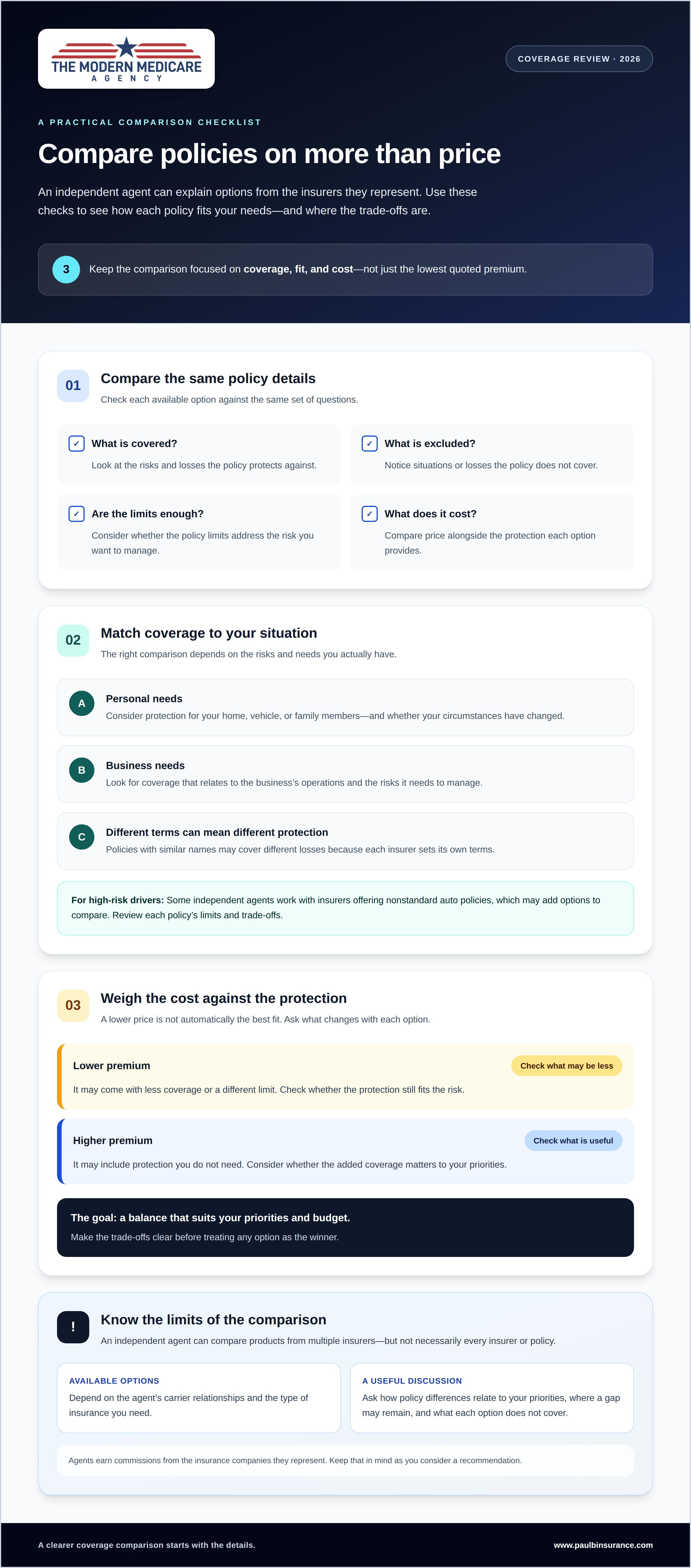
Compare policies against the same needs. An independent agent can present options from the insurance companies they represent and explain differences in coverage, price, and service. Look beyond the monthly premium: consider what a policy covers, what it excludes, and whether its limits address the risk. This approach helps you weigh each option’s strengths and drawbacks without treating the lowest price as the automatic winner.
Personalized coverage starts with your circumstances. A household may need protection for a home, a vehicle, or family members, while a business may need coverage suited to its operations. An agent can discuss those needs and compare policies from multiple carriers. Because each insurer sets its own terms, policies with similar names may cover different losses. A side-by-side explanation can help show which differences matter.
High-risk drivers may have fewer options. Independent agents can sometimes help them find affordable auto insurance because some work with insurers that offer nonstandard policies. This can open up comparisons beyond one company’s standard products. The agent can explain how each policy addresses the driver’s circumstances and clarify its limits and trade-offs. The aim is suitable coverage, not simply the lowest quoted premium.
Reducing exposure means spotting situations where a loss could leave you without enough protection. An agent can explain policy language and help identify potential gaps or coverage you may not need. For example, a homeowner comparing policies can discuss whether the listed protections fit the property and its risks. In 2026, that kind of review can help connect coverage decisions to changing needs, rather than relying on assumptions from an older policy.
Affordability matters, but it should be weighed alongside the protection a policy provides. A lower premium may mean less coverage or a different limit. A higher premium may include protection you don’t need. A useful review makes these trade-offs clear so you can choose the balance that suits your priorities and budget.
- Compare the same details: Review covered risks, limits, exclusions, and price across the available options.
- Match coverage to the situation: Consider personal or business needs, including changes that affect risk.
- Weigh the trade-offs: Identify what a lower price gives up, and whether added protection is useful.
For a personal example, comparing dental insurance plans means looking at coverage alongside cost and service, rather than judging by price alone. The same comparison habit helps with other types of insurance: understand what each policy does, where its limits are, and how well it fits the risk you want to manage.
3. How independent agents differ from captive agents
The clearest difference is how many insurance companies an agent can represent. A captive agent is contracted to work with one company, so recommendations come from that insurer’s products. An independent agent can work with multiple carriers and choose which relationships to maintain. That broader scope can offer more choices, but it does not mean access to every insurer.
Consider a driver comparing policies after a change in circumstances. A captive agent can explain options from their company, while an independent agent may compare policies from several carriers they represent. The practical difference is the range available through each agent, not a guarantee that one policy will cost less or provide better coverage. Comparing policy details still matters.
Independent agents also operate under a different business structure. They can work with a field marketing organization, which captive agents cannot. These organizations can support independent agents with training, marketing materials, and carrier appointments. Such resources may help agents build product knowledge and connect with insurers, while the agents remain responsible for tasks such as administration and financial records.
For customers, the freedom to work with multiple carriers can help when one insurer’s products don’t meet a particular need. An independent agent can look for another option among the carriers they represent. But the selection has limits: if the agent doesn’t work with a particular insurer, that company’s products won’t be included. A captive agent has a narrower company range but may still explain that company’s coverage clearly.
Neither arrangement by itself proves that advice is impartial or a policy is suitable. A useful comparison explains what each option covers, where its limits are, and how the trade-offs relate to your priorities. When reviewing life insurance, for example, ask how available policies differ in coverage and terms. An independent agent can compare represented carriers; a captive agent can explain their company’s products. In either case, clear reasoning matters more than the label.
This distinction also matters to people considering an insurance career. Independent agents choose carrier relationships and manage business operations, while captive agents work under a contract with one insurer. The independent route offers more control over which carriers to represent, along with responsibility for administration and marketing. The captive arrangement focuses on one company’s products. The better fit depends on the work structure and product range a person wants.
4. Control over schedule and clientele
An independent agent can set their own schedule and choose which clients to serve. That flexibility can shape how they arrange conversations, follow-ups, and policy reviews. A full-time schedule can be 40 hours a week, though agents decide how to organize their working time. For clients, the practical value is access to conversations that fit their needs, rather than a fixed pattern set by one insurer.
A professional relationship becomes more useful when an agent learns what coverage you have, understands what has changed, and discusses available options. For example, your household’s insurance needs may shift after a move or a change in family circumstances. An agent familiar with your situation can make a review more relevant than starting from scratch. That familiarity supports clearer conversations, but it doesn’t replace comparing policy details.
An independent agent can choose to focus on the clients and coverage needs they know well. One agent might work with individuals reviewing life insurance, while another serves clients with different priorities. This focus can make explanations more relevant. The agent’s carrier relationships still shape the products they can offer, so a tailored conversation doesn’t mean every insurer or policy is available.
Ongoing contact can help clients revisit decisions as their circumstances change. An agent can assist with policy reviews and questions throughout the year, rather than only during the first purchase. For example, someone reviewing a Medicare Advantage plan can discuss how current needs relate to available choices. A review creates a chance to understand options, not an automatic reason to change coverage.
Client retention and referrals help build an independent business, but depend on trust earned through useful service. A satisfied client may introduce an agent to someone with a similar question. That introduction is a starting point, not proof that a particular policy suits the new client. The agent still needs to understand their needs and explain the available choices clearly.
This flexibility comes with trade-offs. Independent agents handle tasks such as administration, marketing, and financial records alongside client work. Income can also be irregular, especially while building a business. These responsibilities can affect how an agent organizes time and maintains client relationships. For customers, a clear process for follow-ups, policy questions, and reviews is a useful sign.
The advantage isn’t simply a more flexible calendar. It’s the ability to shape client relationships and organize time around the work involved. Independent agents choose their schedules and clientele, while remaining responsible for the business behind that choice. A consistent relationship can make future conversations easier, especially when the agent explains changes and options in plain language.
5. Benefits and drawbacks of using an independent agent
What are the key benefits of an independent insurance agent? Comparing options from different represented insurers can help you find coverage that fits your needs. An agent can explain policy terms and available choices rather than limiting the discussion to one company’s products. The range still depends on the carriers the agent represents, so independence doesn’t mean access to every policy.
That flexibility can help when circumstances change. For example, a household reviewing life insurance may want to compare how policies address its coverage priorities. An independent agent can present options from represented insurers and explain their differences. Medicare Advantage and related plan choices can change from year to year, so a review during the Annual Enrollment Period can help you understand the options available in 2026.
There are limits, too. An independent agent can’t compare products from insurers outside their carrier relationships, so the selection may be narrower than the full market. Recommendations also depend on how well the agent understands your needs and which products they can offer. A clear explanation of what each policy covers, excludes, and costs helps you judge whether an option fits.
How are independent insurance agents paid, and do customers pay extra? Agents earn commissions from the insurance companies they represent rather than charging clients directly for their services. That alone doesn’t tell you whether one policy costs more than another. Compare price alongside coverage and terms.
When considering the benefits of an independent insurance agent, also consider the support available after you choose a policy. Independent agents may help with policy reviews and questions throughout the year, and their teams can offer one-on-one guidance during claims. The scope of support varies, so clear explanations, follow-up, and help understanding policy terms matter.
Use a straightforward comparison process: identify the protection you need, review the options the agent represents, and weigh each policy’s coverage, limits, and price. Then consider whether the agent explains the trade-offs clearly. Independent agents can work with multiple insurers, unlike captive agents, but neither arrangement guarantees the right fit. Base your decision on the policy details and how well they address your needs.
If you’re ready to discuss coverage choices and how they fit your situation, explore your options.
The Modern Medicare Agency
The Modern Medicare Agency helps eligible individuals compare Medicare coverage options when they want clear, personalized guidance. Its independent brokers help people compare and select Medicare Advantage, Medicare Supplement (Medigap), and Medicare Part D plans from more than 40 carriers. That broader selection can help you understand how available choices differ, while recommendations remain focused on your needs and the plans represented.
If you’re weighing the benefits and trade-offs of an independent agent for Medicare coverage, guidance can make the comparison easier to understand. The Modern Medicare Agency provides personalized Medicare plan comparisons and year-round support for claims, billing, and plan changes. Start with a free consultation to discuss the coverage you’re considering and what matters to you.
Take the Next Step With Confidence
Choosing coverage is personal. A useful next step is to connect the available options to what matters most to you. If you’re still considering the benefits of an independent insurance agent, focus on whether the choices and guidance help you make a clear, informed decision. A helpful conversation should leave you better able to understand your options, without pressure to choose quickly.
The Modern Medicare Agency helps you compare Medicare Advantage Plans, Medicare Supplement (Medigap) Plans, and Medicare Part D Plans. Bring your questions and the coverage decisions you’re considering to a free Medicare consultation, by phone or Zoom.
Contact The Modern Medicare Agency to talk through your Medicare coverage choices. A calm, informed next step can help you feel more prepared to decide.
Frequently Asked Questions
What is an independent insurance agent?
An independent insurance agent is authorized to sell insurance products from multiple insurers, subject to the agent’s state license and carrier relationships. For you, that can mean one point of contact for discussing policies from several companies. The agent represents insurers, while a broker represents customers. Understanding this distinction can help you see the professional’s role and the limits of the advice you receive.
What does an independent insurance agent do?
An independent agent can help identify coverage priorities, explain policy terms, present options from represented insurers, and support policy reviews. For example, if your household’s needs change after a move, an agent can discuss whether your current coverage still fits and what alternatives are available through their carrier relationships. The agent helps you understand your choices; the insurer remains responsible for its policy decisions and claims handling.
How does an independent insurance agent differ from a captive agent?
A captive agent is contracted to work with one insurance company, while an independent agent can work with multiple carriers. This affects which companies’ policies each agent can present, but doesn’t automatically make one arrangement better for every customer. If one company’s products meet your needs, a captive agent may be a suitable source of information. The key is understanding the scope of the options being discussed.
Can independent insurance agents compare quotes from multiple insurers?
Yes. An independent agent can compare quotes from the insurers they represent and explain differences in price, coverage, and policy terms. Two quotes, for example, may look similar but have different coverage limits or exclusions. The comparison only includes companies within the agent’s carrier relationships, so it may not show every option on the market. Ask what each quote includes, not just what it costs.
What types of insurance can independent agents help customers buy?
Available types depend on the agent’s licenses and carrier relationships. Coverage may include life, dental, cancer, or critical illness insurance, as well as Medicare Advantage, Medicare Supplement (Medigap), and Part D plans. Some independent agencies also work with annuities or long- and short-term care coverage. These are examples, not a guarantee that every independent agent handles every type. An agent’s product focus shapes the choices they can discuss.
How do independent agents help with policy reviews and coverage changes?
An agent can review whether your current coverage still meets your needs and explain available changes. For instance, a Medicare beneficiary whose prescription needs have changed can discuss Part D options during a plan review. Medicare Advantage and Medicare Advantage plans that include prescription drug coverage can change from year to year, so reviewing current choices can clarify what has changed. An agent can explain available alternatives and their coverage details.
Can an independent agent help with claims, and what support do they provide?
Yes. Independent agents and their teams can provide one-on-one guidance during the claims process and answer questions. They can help explain policy language and the information involved in a claim. If you’re unsure which policy provision applies, for example, an agent can explain the relevant terms and help you work through your questions. The insurer reviews and decides the claim under the policy.
What are the disadvantages or potential conflicts of using an independent insurance agent?
The main limitation is that an agent can compare only products from insurers they represent, so some companies may not be part of the selection. Keep that relationship in mind when weighing recommendations. Focus on whether the agent clearly explains coverage, exclusions, and trade-offs, and how each option addresses your needs.

Article by
Paul Barrett
Paul Barrett, CMIP is the founder of The Modern Medicare Agency, an independent Medicare-only brokerage based in Melville, NY. With 18 years of Medicare-exclusive experience, a CMIP designation, and more than 5,000 clients served across 37 states, Paul is one of the most credentialed independent Medicare specialists on Long Island — and one of the most direct.
He represents 40+ carriers with no quotas and no allegiances, which means his recommendations are based entirely on what fits each client's specific situation. He is the author of Medicare Mastery Unlocked and host of the Wise Guys Retirement Talk podcast. His content is grounded in primary sources, real carrier intelligence, and 18 years of watching what happens when people get Medicare right — and when they don't.
📞 631-358-5793 | paulbinsurance.com