



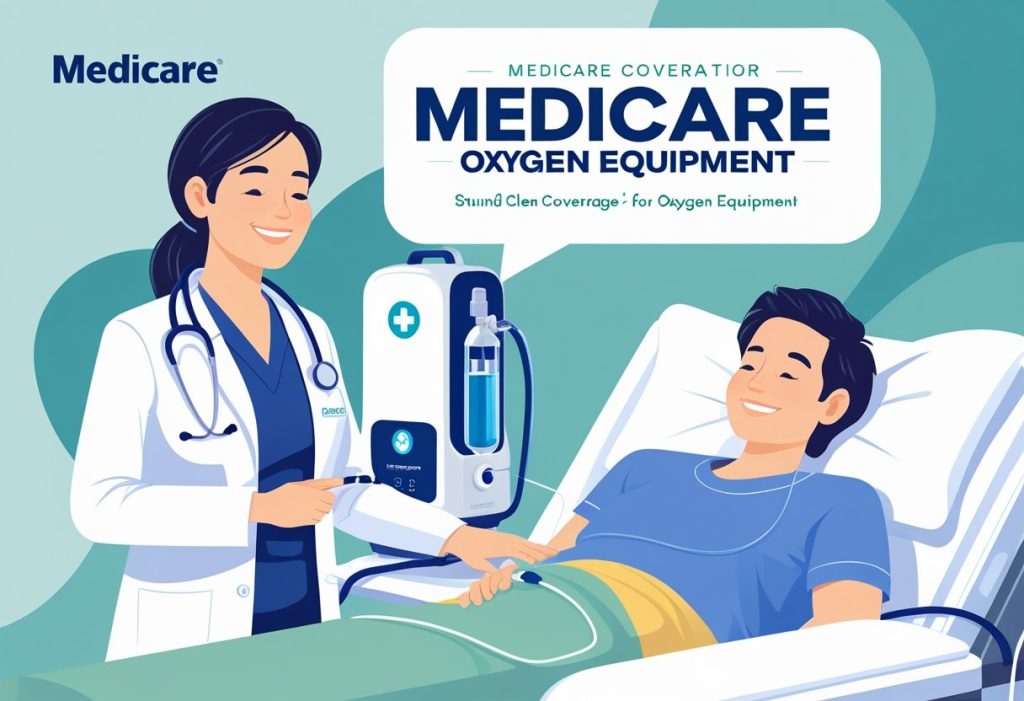
You may qualify for Medicare coverage of oxygen equipment if your doctor prescribes it as medically necessary for use at home. Medicare Part B usually covers oxygen concentrators, tanks, and related supplies when a qualified provider documents your need and you get the equipment from an approved supplier.
You will learn how Parts A and B work, what doctors must document, and how to get covered equipment without surprise costs. The Modern Medicare Agency can connect you with licensed agents who talk with you one-on-one, compare plans that match your needs, and help you avoid extra fees while securing the right Medicare options.
Medicare Coverage for Oxygen Equipment
Medicare can pay for oxygen equipment if you meet medical rules and get a prescription from your doctor. Coverage covers both the device and certain supplies, but you may have costs like deductibles and coinsurance.
Eligibility Criteria for Medicare Coverage
You qualify for Medicare coverage when a doctor documents that you need oxygen for a covered medical condition. The doctor must perform tests showing low blood oxygen levels or other clinical signs that oxygen is medically necessary.
Your prescription must state the type of oxygen therapy, flow rate, and whether you need oxygen only at rest, with activity, or during sleep. A Medicare-approved supplier must provide the equipment.
Medicare Part B covers oxygen used at home; Part A covers oxygen during hospital stays. Expect to pay part of the cost: Part B typically requires you to meet the Part B deductible, then pay 20% of the Medicare-approved amount for services.
Definition of Oxygen Equipment
Medicare defines covered oxygen equipment as durable medical equipment (DME) used to treat respiratory conditions at home. DME must serve a medical purpose, withstand repeated use, be suitable for home use, and generally last at least three years.
The equipment must be prescribed and ordered by your treating physician. Covered items include the device itself and essential accessories related to administering oxygen.
Medicare does not cover items that are solely for convenience, like extra tubing not needed for therapy, or oxygen for travel unless specifically prescribed and approved.
Types of Covered Oxygen Equipment
Medicare covers several main types of oxygen equipment when prescribed: stationary oxygen concentrators, portable oxygen concentrators, oxygen cylinders (tanks), and liquid oxygen systems. Medicare also covers related supplies such as regulators, flowmeters, masks, and nasal cannulas that are necessary for therapy.
Coverage rules vary by item. For example, a stationary concentrator may be rented through a supplier under Part B, while a portable unit may require separate documentation of need for mobility.
Your doctor and supplier must show continued medical need for ongoing coverage. For help navigating suppliers, costs, and plan rules, contact The Modern Medicare Agency.
Medicare Parts and Oxygen Equipment
Medicare can help pay for oxygen and the machines that provide it. You need a doctor’s order, specific medical records, and the right Medicare coverage to qualify.
Coverage Under Medicare Part B
Medicare Part B covers oxygen equipment and related supplies for use at home when your doctor documents medical necessity. This includes oxygen concentrators, tubing, masks, and portable oxygen systems that meet clinical criteria.
Part B generally pays for rental equipment. If you buy equipment instead of renting, Medicare may still cover components like oxygen contents or certain supplies if rules allow.
Your doctor must submit records showing low blood oxygen levels or other qualifying tests. Medicare also requires a face-to-face visit and ongoing documentation to continue coverage.
Role of Durable Medical Equipment Suppliers
Durable medical equipment (DME) suppliers enroll with Medicare and follow specific billing and delivery rules. They must provide equipment that meets safety and clinical standards and keep your records so Medicare can audit claims.
Suppliers often coordinate initial setup, training on the device, and repairs or maintenance if the item is rented. You should confirm the supplier is Medicare-approved before accepting equipment.
The supplier handles claims to Medicare Part B and can explain rental vs. purchase options.
Out-of-Pocket Costs and Coinsurance
Under Part B, you typically pay 20% coinsurance of the Medicare-approved amount after meeting the Part B deductible. Medicare pays the remaining 80% for covered oxygen equipment and services.
If you have a Medicare Supplement (Medigap) policy, it may cover that 20% and reduce your out-of-pocket costs. Rental rules can affect your costs: Medicare may rent equipment for a set period before ownership can transfer.
Additional costs like delivery, non-covered accessories, or premium portable units may not be fully covered.
Doctors’ Orders and Medical Necessity
Medicare pays for home oxygen only when a qualified clinician documents a medical need, orders the correct equipment, and follows required testing and paperwork. You must meet specific clinical and documentation rules to get coverage.
Qualifying Medical Conditions
Medicare covers oxygen when your condition causes low blood oxygen that meets set thresholds. Common qualifying diagnoses include COPD, emphysema, pulmonary fibrosis, congestive heart failure, and severe lung infections.
Your doctor will use arterial blood gas (ABG) or pulse oximetry tests to show that your oxygen level falls at or below Medicare’s required values while resting, during activity, or during sleep. If your test results exceed the thresholds, Medicare usually won’t cover oxygen.
You might still get help if tests show a clear need during exertion or sleep. Keep copies of test reports and diagnoses; Medicare and suppliers may request them.
Documentation and Prescriptions
A Medicare-enrolled clinician must complete and sign the medical documentation before a supplier bills Medicare. That paperwork includes a prescription specifying device type (stationary concentrator, portable concentrator, or oxygen cylinders), flow rate in liters per minute, and hours of use per day.
The supplier must be Medicare-enrolled and accept assignment. You should get a written “certificate of medical necessity” or equivalent order that shows diagnosis, test results, and clinical rationale.
Keep your signed prescription and test reports in case Medicare or your supplier asks for proof.
Frequency of Medical Reevaluation
Medicare requires periodic reevaluation to confirm ongoing need. Your physician will repeat blood gas or oximetry testing before initial coverage and typically again within 90 days.
After the initial period, Medicare may require tests every 12 months or sooner if your doctor notes clinical changes. If your condition improves, Medicare may stop coverage.
If it worsens, your clinician can update the prescription and test results to extend or change equipment.
How to Obtain Oxygen Equipment Through Medicare
You need to confirm medical necessity, find a Medicare-approved supplier, and follow specific steps for documentation and billing. Knowing whether Medicare will rent or buy the device for you affects costs and how long you keep the equipment.
Finding Medicare-Approved Suppliers
Look for suppliers enrolled in Medicare and who accept Medicare assignment. This means they agree to Medicare’s approved amount and cannot charge you more than allowed, except for standard coinsurance and deductibles.
Use the Medicare.gov supplier directory or contact The Modern Medicare Agency for help finding local suppliers. Ask each supplier:
- If they accept Medicare assignment.
- What models they carry (stationary, portable concentrators, tanks).
- Whether they handle setup, delivery, and repairs.
Verify supplier reputation by checking reviews and asking about warranty and repair turnaround times. Confirm they will submit claims to Medicare directly so you avoid upfront billing issues.
Steps to Receive Oxygen Equipment
First, obtain a written order from your doctor showing medical necessity. The order must document diagnoses, oxygen flow or liter-per-minute (LPM) needs, and the expected length of need.
Next, get a face-to-face evaluation if required by Medicare rules. Your provider then sends a detailed request, called a Certificate of Medical Necessity (CMN), to the supplier and Medicare.
The supplier schedules delivery once Medicare approves. Keep copies of all paperwork: the doctor’s order, CMN, supplier agreement, and any repair receipts.
You’ll typically pay the Part B deductible and 20% coinsurance unless you have supplemental coverage.
Rental vs. Purchase Process
Medicare often rents oxygen equipment for home use under Part B DME rules. You usually enter a 36-month rental period where Medicare pays most rental costs and the supplier owns the device.
After the rental period, Medicare may cover the device purchase if criteria are met. Some items, like portable oxygen concentrators, may be bought outright in specific cases.
Understand these points:
- Rental: monthly payments handled through the supplier; Medicare covers a large share after your deductible.
- Purchase: may require prior approval and documentation; could be cost-effective if you need oxygen long-term.
Discuss repair and replacement policies with your supplier and your agent.
Limitations and Exclusions
Medicare can cover many oxygen supplies, but it does not pay for everything. You need to watch for items that fall outside coverage rules, limits on hours or settings of use, and common reasons claims get denied.
Equipment Not Covered By Medicare
Medicare Part B covers standard home oxygen systems and some portable concentrators when you meet medical rules. It does not cover items that are mainly for convenience, such as air compressors, humidifiers not tied to medical necessity, or extra batteries and accessories beyond basic, medically required parts.
Medicare also won’t pay for oxygen equipment you use in settings not approved by the policy, like purely recreational use. If the supplier sells rather than rents certain devices outside the DME benefit, those costs may be excluded.
Always confirm with your supplier and The Modern Medicare Agency before you buy or rent gear.
Coverage Restrictions Based on Usage
Medicare requires proof you need oxygen for a medical condition and often requires specific tests, such as qualifying blood oxygen measurements or documentation of breathing problems. Coverage can depend on how many hours per day you need oxygen; for example, Medicare focuses on long-term home use and may not cover short, intermittent needs.
Portable concentrators must meet clinical criteria and be prescribed for use outside the home if you want them covered. Medicare also limits which suppliers it pays, so you must use a Medicare-approved supplier to qualify.
Your out-of-pocket costs include Part B coinsurance and any rental or purchase rules that apply.
Reasons for Coverage Denial
Medicare may deny oxygen claims for missing or incomplete documentation, such as absent test results or an unclear physician order. Denials also occur when suppliers aren’t enrolled in Medicare, or when equipment does not meet the National Coverage Determination rules.
Other common reasons include claims for non-medical use, lack of demonstrated need for portable versus stationary devices, or billing errors. If Medicare denies coverage, The Modern Medicare Agency can help you review the denial, gather the needed medical records, and appeal on your behalf.
Maintenance and Replacement Policies
Medicare Part B can pay for repairs, maintenance, and replacement of oxygen equipment when you meet medical and documentation rules. You need clear doctor orders and timely claims to avoid gaps in coverage.
Repair and Service Coverage
Medicare generally covers repair and service for oxygen equipment that is medically necessary. Repairs can be done by any Medicare-approved DME supplier; your original supplier does not have to perform the work.
Keep copies of the physician’s order and any service receipts, because Medicare may require documentation to process payment. If a repair is urgent, your supplier should arrange quick service to restore function.
Medicare may pay only for parts and labor that fix equipment used for medically necessary oxygen therapy. Cosmetic work or upgrades not required for therapy usually are not covered.
Replacement Guidelines
Medicare covers replacement of oxygen equipment when the item is no longer functional or safe and replacement is medically necessary. You must have documentation from your doctor showing the need for a new device, and Medicare will consider the reasonable useful lifetime of the equipment.
Replacement rules can differ for concentrators, portable units, and oxygen tanks. Expect Medicare to evaluate condition, repair history, and cost-effectiveness before approving replacement.
Keep maintenance and repair records to speed approval.
Supplier Responsibilities
Your Medicare-approved supplier must follow billing and documentation rules and must provide equipment that meets safety standards. Suppliers must bill Medicare correctly and keep records of physician orders, repairs, and parts used.
You should get clear instructions on equipment use, maintenance, and who to call for repairs. If you have questions or need help finding an approved supplier, contact The Modern Medicare Agency.
Supplemental Insurance and Oxygen Equipment
Medigap and Medicaid can lower what you pay for oxygen equipment and supplies. You’ll see how Medigap plans fill Medicare Part B gaps and how Medicaid can step in when you qualify.
Medigap and Additional Coverage Options
Medigap (Medicare Supplement) plans help pay Part B costs like coinsurance and deductibles for oxygen equipment. If Medicare covers oxygen rental or supplies, a Medigap plan can reduce your out-of-pocket share for monthly rental fees and related supplies.
Not every Medigap plan covers the same things, so check plan benefits for coinsurance limits and supply coverage. You can also consider Medicare Advantage plans that may include extra benefits or lower copays for DME.
Compare premiums, networks, and prior authorization rules before switching. The Modern Medicare Agency can help you compare Medigap and Advantage options, explain costs, and connect you with licensed agents who speak with you one-on-one at no extra fee.
Coordination With Medicaid
If you qualify for Medicaid, it can pay some or all Medicare cost-sharing for oxygen equipment. Medicaid rules differ by state, so coverage for rentals, ownership, and supplies will vary.
Your state Medicaid may require prior authorization or have preferred suppliers. Dual-eligible beneficiaries (both Medicare and Medicaid) should enroll in programs designed for coordination.
The Modern Medicare Agency has licensed agents who know state rules and can guide you through enrollment, paperwork, and supplier selection. They help ensure your claims route correctly so you pay the least out of pocket.
Travel and Portable Oxygen Solutions
Portable oxygen can make travel and daily activities easier, but you must meet specific medical and Medicare rules. Know what Medicare will cover, how rental works, and what to bring when you travel to avoid gaps in service.
Coverage for Portable Oxygen Equipment
Medicare Part B covers portable oxygen concentrators (POCs) and related supplies as durable medical equipment (DME) when your doctor certifies medical necessity. You must have documented oxygen need from tests like pulse oximetry or arterial blood gas.
Medicare usually pays for POCs on a rental basis through approved suppliers, and you may owe 20% of the Medicare-approved amount after meeting your Part B deductible. Make sure your supplier is Medicare-approved and that you have a written prescription or certificate of medical necessity from your doctor.
Ask The Modern Medicare Agency for help finding approved suppliers and for one-on-one guidance so you get a plan that fits your needs and budget without surprise fees.
Travel Considerations and Medicare Rules
Medicare covers POCs for home use and often allows continued rental while you travel within the U.S., but rules vary for extended stays outside your home area. Medicare generally does not cover oxygen equipment for use outside the United States.
If you plan to fly, confirm airline rules and battery requirements; carry a copy of your prescription and supplier contact info. Bring extra batteries, charging cords, and a backup plan in case of delays.
Contact The Modern Medicare Agency before travel so an agent can review your coverage, confirm supplier arrangements, and help secure any needed documentation for flights or overnight stays.
Recent Changes and Updates in Medicare Policies
Medicare updated its national coverage rules for home oxygen use and added new billing modifiers to clarify treatment types. These changes affect documentation and how suppliers bill Medicare for concentrators and related services.
You now need clear medical records showing oxygen use and support for the prescribed regimen. The rules emphasize objective testing, such as blood oxygen measurements, to prove medical necessity.
Rental rules and maintenance responsibilities received more detail in local coverage determinations. Suppliers must follow these rules to avoid claim denials.
Key points to watch:
- New billing modifiers for home oxygen treatment.
- Stronger documentation and testing requirements.
- Clearer rental and maintenance rules for suppliers.
Contact The Modern Medicare Agency if you want help understanding how these updates affect your oxygen coverage and costs.
Frequently Asked Questions
This section explains who qualifies, what Medicare pays, your costs, rental length, recertification steps, and whether you keep the equipment after the rental ends. Read each answer for clear, specific actions and timelines.
What is the coverage extent of Medicare for home oxygen therapy?
Medicare Part B covers oxygen equipment and related supplies if a doctor certifies that you need them for a medical condition. Coverage includes oxygen concentrators, liquid oxygen, tanks, tubing, and certain accessories when used at home.
Part A may cover oxygen while you are an inpatient in a hospital or skilled nursing facility. Medicare only pays for items that meet its durable medical equipment (DME) rules and are medically necessary.
How do patients qualify for an oxygen concentrator under Medicare?
You must have a written order from your doctor stating that you need oxygen for a specific medical reason. Your doctor must document tests or clinical evidence showing low blood oxygen levels or another qualifying medical need.
A Medicare-approved supplier must also confirm medical necessity and follow Medicare’s documentation and delivery rules before billing Medicare.
What are the costs to the patient for a Medicare-covered oxygen concentrator?
Medicare Part B generally pays 80% of the Medicare-approved amount after you meet the Part B deductible. You are responsible for the remaining 20% coinsurance.
You may have supplemental coverage through Medigap or a Medicare Advantage plan that lowers or covers your coinsurance and deductible. Ask The Modern Medicare Agency about plans that match your budget and needs.
How long is the rental period for oxygen equipment with Medicare?
Medicare typically treats oxygen concentrators and other home oxygen equipment as a rental. The supplier rents the equipment to you and bills Medicare monthly during the rental period.
The rental period continues as long as Medicare coverage rules are met and you keep receiving the equipment and supplies. Your supplier can explain exact billing cycles and timelines.
What are the recertification requirements for continuing oxygen therapy on Medicare?
Your doctor must periodically recertify that you still need oxygen therapy. Medicare requires documentation showing ongoing medical need, which may include tests or notes from office visits.
Suppliers may require updated orders and evidence before they continue billing Medicare. Keep follow-up appointments and tests on schedule to avoid gaps in coverage.
At the end of the rental period, does the beneficiary take ownership of the oxygen equipment?
After a specified continuous rental period under Medicare rules, ownership may transfer to you without extra cost.
The exact point of transfer depends on Medicare’s current payment rules and the supplier’s billing under those rules.
Speak with your supplier and your doctor about the timeline for ownership.
You can also contact The Modern Medicare Agency to get help reviewing your plan options and finding licensed agents to guide you one-on-one without extra fees.