




Original Medicare does not cover medical care you receive outside the United States. That is the short answer, and Medicare.gov confirms it directly. A few narrow exceptions exist, but for most trips abroad, Parts A and B leave you fully exposed to foreign medical bills. The industry term for what you actually need is travel medical insurance, sometimes called holiday medical insurance or international health coverage. “Medicare holiday insurance” is not an official product category — it is a common search phrase that points to a real gap in coverage that every Medicare beneficiary planning a trip should understand before they leave.
Three immediate next steps:
- Check your plan documents now. If you have a Medigap policy, look for the foreign travel emergency benefit section. If you have Medicare Advantage, call member services and ask specifically whether emergency care abroad is covered and what the limits are.
- Buy travel medical insurance with evacuation coverage before your departure date. Standard trip-cancellation policies often exclude emergency medical care entirely.
- Talk to an independent Medicare broker like Paulbinsurance if you are unsure what your current plan covers. A quick review can reveal gaps you did not know existed.
Pro Tip: Medigap plans that include foreign travel emergency benefits generally pay 80% of eligible charges after a $250 deductible, for emergencies that begin during the first 60 days of your trip, up to a $50,000 lifetime cap. That limit can disappear fast in a serious medical event overseas.
Table of Contents
- ## 1. What Original Medicare actually covers abroad
- ## 2. Does your Medicare Advantage plan cover international emergencies?
- ## 3. Which Medigap plans include foreign travel emergency benefits?
- ## 4. Travel medical insurance vs. trip-cancellation insurance — they are not the same thing
- ## 5. How to choose travel medical insurance — a practical checklist
- ## 6. Where to buy travel medical insurance and who can help you
- ## 7. What to do if you need medical care while traveling abroad
- ## 8. Why relying on Medicare abroad is a real financial risk
- Key Takeaways
- What I have learned helping Medicare beneficiaries plan for travel
- A free coverage review before your next trip
- Authoritative resources and next steps
## 1. What Original Medicare actually covers abroad
Original Medicare’s baseline rule is straightforward: it generally will not pay for health care or supplies you receive outside the U.S. or its territories. No foreign hospital is required to file a Medicare claim on your behalf, which means you will almost certainly pay out of pocket at the time of service and then attempt reimbursement later.
The exceptions are narrow and specific:
- Travel between Alaska and another U.S. state via Canada — If you need emergency care at a Canadian hospital while traveling this route and that hospital is closer than any U.S. facility, Medicare may cover it.
Outside these situations, you are on your own. Foreign hospitals will hand you a bill, not a Medicare claim form. You pay, collect itemized documentation, and submit it yourself — and Medicare will likely deny it anyway if the care does not meet one of those exceptions.
Pro Tip: Even when an exception technically applies, you still need itemized bills with provider names, addresses, and procedure codes. Without that paperwork, reimbursement is nearly impossible.
## 2. Does your Medicare Advantage plan cover international emergencies?
Medicare Advantage plans must meet Medicare’s baseline coverage requirements, but they can add benefits beyond that baseline — including limited foreign emergency coverage. The catch is that “can” does not mean “does,” and the benefits vary dramatically from one plan to the next.
Some plans advertise worldwide emergency coverage. Others reimburse at out-of-network rates that leave you with a substantial bill. A few require prior authorization even for emergencies, which is nearly impossible to obtain when you are in a foreign ER. Before you travel, call your plan’s member services line and ask these questions:
- Does my plan cover emergency hospital care outside the United States?
- Is that coverage limited to true emergencies, or does it include urgent care?
- What is my coinsurance or copay for foreign emergency services?
- Is prior authorization required, and how do I get it in an emergency?
- Is there a per-visit limit, an annual limit, or a lifetime cap?
- How long does coverage apply while I am abroad — is there a trip-duration limit?
- How do I file a claim for care received outside the country?
Write down the answers and the name of the representative you spoke with. Medicare Advantage plans that advertise travel benefits are inconsistent in ways that can leave you unexpectedly liable, so verbal confirmation backed by your plan’s Evidence of Coverage document is the only reliable standard.
## 3. Which Medigap plans include foreign travel emergency benefits?
Medigap, also called Medicare Supplement insurance, fills gaps that Original Medicare leaves open. Several standardized Medigap plan letters have historically included a foreign travel emergency benefit. According to AARP, Plans C, D, F, G, M, and N have covered foreign travel emergencies with consistent terms across carriers.
The standard terms for that benefit, as outlined in Medicare’s own publication:
- an annual deductible before the benefit kicks in
- most eligible charges paid by the plan after the deductible
- Coverage applies only if the emergency begins within the first 60 days of your trip
- a lifetime maximum across all foreign travel emergency claims
That $50,000 cap sounds like a lot until you price a medical evacuation flight from Europe or Southeast Asia, which can run well into five figures on its own.
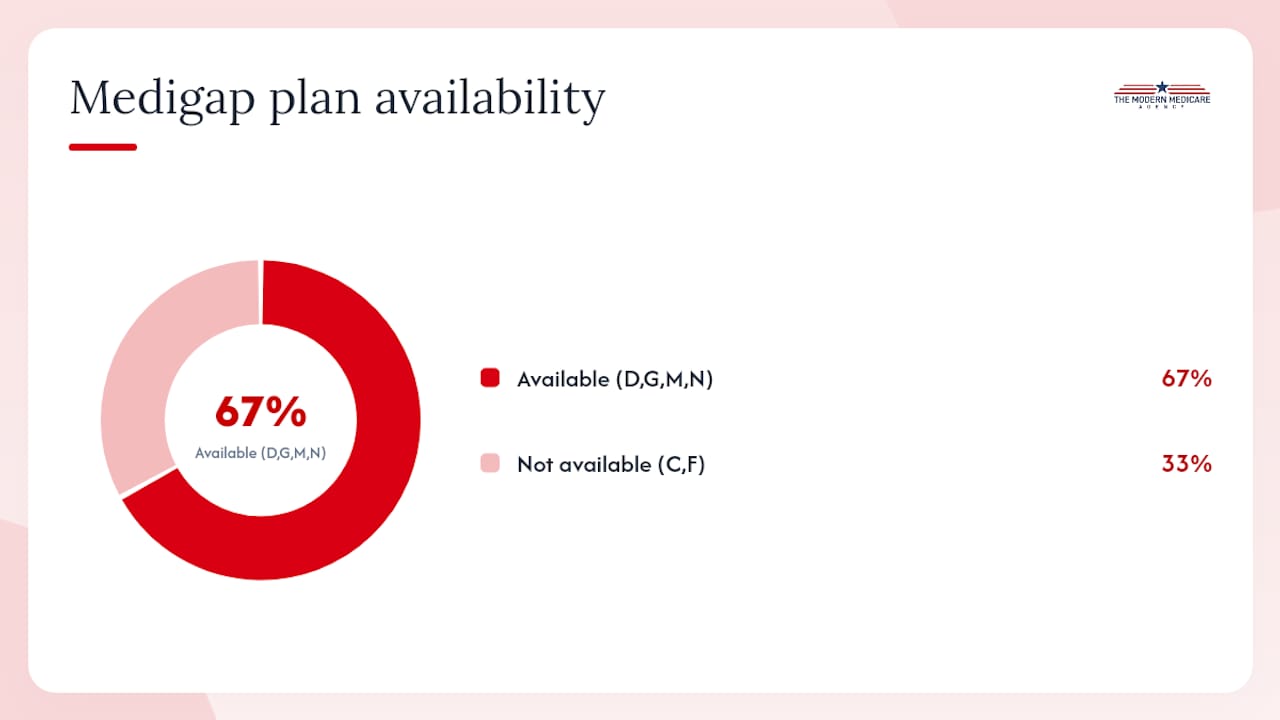
One important restriction: Plans C and F are no longer available to most new enrollees. If you became eligible for Medicare after January 1, 2020, you cannot enroll in Plan C or Plan F. Plans D, G, M, and N remain available, and Plan G has become the most popular alternative for new enrollees who want comprehensive coverage.
Before you travel, verify these specifics with your Medigap insurer:
- Your plan letter and effective date
- Whether the foreign travel emergency benefit is included in your specific policy
- The insurer’s process for submitting foreign claims (some require a specific claims address or form)
- Whether your $250 deductible has already been met for the year
Medigap benefits are standardized by plan letter, but price and availability vary by carrier and state. An independent broker can compare options across insurers in your state.
## 4. Travel medical insurance vs. trip-cancellation insurance — they are not the same thing
This distinction matters more than most travelers realize. The U.S. Department of State warns explicitly that travel insurance does not automatically include medical coverage. Many standard travel policies focus on trip cancellation, interruption, and lost baggage — not emergency medical care.
Here is how the three main products differ:
- Travel medical insurance — covers emergency medical treatment, hospitalization, and sometimes prescription drugs while you are abroad. This is the product that fills Medicare’s gap.
- Trip-cancellation/interruption insurance — reimburses non-refundable travel costs if you cancel or cut a trip short due to illness, injury, or other covered reasons. It does not pay your hospital bill.
You can buy these as separate policies or bundled together. The CDC recommends confirming that any policy you purchase explicitly covers both medical treatment and evacuation, and that you understand the exclusions before you travel.
The most common gap: preexisting conditions. Many travel medical policies exclude conditions that were diagnosed or treated within a defined look-back period (often 60 to 180 days before purchase). If you have a managed chronic condition, this clause can void coverage for the most likely medical event you would face abroad.

## 5. How to choose travel medical insurance — a practical checklist
Not all travel medical policies are built the same. These are the axes that matter most when comparing options for senior travelers on Medicare:
| Coverage Element | What to Look For | Recommended Minimum |
|---|---|---|
| Emergency medical limit | Maximum the policy pays for foreign hospital/treatment costs | $100,000 per trip |
| Medical evacuation | Air ambulance and repatriation to the U.S. | — |
| Preexisting condition waiver | Waiver available if purchased within the look-back window | Required if you have any chronic conditions |
Beyond those three, work through this checklist before you buy:
- Prescription coverage — Some policies cover medications prescribed during a covered emergency; others do not.
- Trip duration limits — Many policies cap coverage at 30, 60, or 90 days per trip. Confirm the limit matches your travel plans.
Pro Tip: Buy your travel medical policy as soon as you book the trip. Most preexisting-condition waivers require purchase within 10 to 21 days of your initial trip deposit and require you to be medically stable at the time of purchase. Waiting until the week before you leave almost always disqualifies you from the waiver.
## 6. Where to buy travel medical insurance and who can help you
You have two main routes: buy directly from a travel insurance company, or work through an independent broker.
Buying direct is faster if you already know exactly what you need and have compared policies yourself. The downside is that you are reading policy documents alone, and preexisting-condition waiver language is genuinely complex.
An independent broker can compare policies across multiple carriers, flag preexisting-condition clauses that might affect your specific health history, and explain how a travel medical policy layers on top of your existing Medigap or Advantage coverage. For Medigap and Medicare Advantage questions specifically, an independent Medicare agent works across carriers rather than being tied to one insurer’s product line.
Authoritative resources worth bookmarking:
- Medicare.gov for the official rules on what Original Medicare covers abroad
- U.S. Department of State travel insurance page for general guidance on buying travel health coverage
- CDC travel insurance page for evacuation and medical coverage recommendations
- Paulbinsurance.com — for Medigap comparisons, Medicare Advantage reviews, and plan-specific travel coverage questions
When you purchase a policy, get the full policy document (not just the summary), the insurer’s 24-hour emergency contact number, and written confirmation of how direct billing works at foreign hospitals.
## 7. What to do if you need medical care while traveling abroad
Emergencies abroad are stressful enough without scrambling for paperwork. Follow these steps in order:
- Seek care immediately. Your health comes first. Do not delay treatment to sort out insurance logistics.
- Tell the provider you have travel medical insurance. Give them your insurer’s direct-billing contact if available. Ask whether they can bill the insurer directly.
- Request itemized bills. Get a detailed bill listing every service, procedure code, provider name, and facility address. A summary receipt is not enough for claims.
- Ask for English documentation. Request medical reports, discharge summaries, and prescriptions in English if possible, or ask for certified translations.
- Contact your travel insurer. Most policies require you to notify the insurer within 24 to 48 hours of a hospitalization. Use the emergency number on your policy card.
- Contact your Medicare broker. If you have Medigap, your broker can help you understand whether the foreign travel emergency benefit applies and how to file.
- Contact the nearest U.S. embassy or consulate if you need help locating English-speaking providers, arranging a medical evacuation, or dealing with a serious emergency. Consular officers cannot pay your bills, but they can connect you with local resources.
Claims documentation checklist to keep with your travel documents:
- Itemized bills with dates, times, provider names, and addresses
- Medical reports and discharge summaries
- Transport or repatriation invoices
- Proof of payment (receipts, credit card statements)
- Your travel insurance policy number and emergency contact
## 8. Why relying on Medicare abroad is a real financial risk
The assumption that Medicare will handle things overseas is one of the most expensive mistakes a retiree can make. NCOA and industry experts are direct about it: uncovered foreign medical events can cost tens of thousands of dollars, and many beneficiaries do not find out until the bill arrives.
A hip fracture requiring surgery and a short hospital stay in Western Europe can easily reach $30,000 to $50,000 out of pocket. A cardiac event requiring air evacuation back to the United States can exceed $100,000. Original Medicare covers none of it under normal circumstances.
The administrative reality compounds the financial one. Foreign hospitals are not required to file Medicare claims. You pay, collect documentation, and submit it yourself. Medicare.gov is clear on this point: the burden of documentation falls entirely on you.
The single most common reason travel claims fail is missing or incomplete documentation. Foreign providers issue summary receipts, not itemized bills. By the time a beneficiary is home and recovering, tracking down a hospital in another country for a corrected bill is nearly impossible. Prepare your documentation checklist before you leave, not after something goes wrong. If your Medigap or travel medical insurer has a foreign claims form, download it and carry it with you.
Key Takeaways
Original Medicare does not cover medical care abroad, and the $50,000 Medigap lifetime cap for foreign travel emergencies can be exhausted by a single serious event or evacuation.
| Point | Details |
|---|---|
| Original Medicare abroad | Parts A and B generally do not cover care outside the U.S.; narrow exceptions apply only in specific border or cruise situations. |
| Medigap foreign travel benefit | Plans C, D, F, G, M, and N have historically included this benefit: 80% of billed charges after a $250 deductible, coverage applies for emergencies occurring in the first 60 days of your trip, with a $50,000 lifetime cap. |
| Evacuation coverage | Medical evacuation to the U.S. can exceed $100,000; buy a separate travel medical policy with adequate evacuation coverage. |
| Preexisting-condition waiver | Buy travel medical insurance within 10–21 days of your initial trip deposit to qualify for a preexisting-condition waiver. |
| Paulbinsurance | Paulbinsurance offers free Medigap comparisons and Medicare Advantage reviews to help you identify travel coverage gaps before you leave. |
What I have learned helping Medicare beneficiaries plan for travel
Most people come to me after a scare, not before one. A spouse had a health event in Mexico. A client got a $40,000 bill from a hospital in Italy that Medicare refused to touch. By then, the options are limited and the stress is real.
The gap between what Medicare beneficiaries assume their coverage does and what it actually does abroad is wider than almost any other coverage misconception I encounter. Medigap helps, but that $50,000 lifetime cap is a ceiling, not a safety net. Medicare Advantage plans that advertise international emergency coverage often bury prior-authorization requirements and out-of-network cost-sharing in the fine print.
My honest advice: treat your Medicare coverage as a domestic plan and buy travel medical insurance with evacuation coverage for every international trip. It is not expensive relative to the risk. And before you travel, spend 20 minutes with an independent broker reviewing what your current plan actually covers abroad. That conversation has saved clients from some genuinely catastrophic bills.
A free coverage review before your next trip
Sorting out what your Medigap or Medicare Advantage plan covers abroad does not have to be complicated. Paulbinsurance offers no-obligation coverage reviews for Medicare beneficiaries planning international travel. In one conversation, you get a plain-language breakdown of your current plan’s foreign travel benefits, any gaps worth addressing, and options for Medicare supplement plans or Medicare Advantage coverage that fit your travel habits and health history.

Paul Barrett and the Paulbinsurance team have been helping Medicare consumers since 2007. There is no fee for the review, no pressure, and no obligation. If your current plan already covers what you need, we will tell you that. If there are gaps worth filling before you board a flight, we will show you the options.
Visit paulbinsurance.com or call to schedule your free review today.
Authoritative resources and next steps
Official sources:
- Medicare coverage for travel outside the U.S.
- Medicare coverage outside the United States (PDF)
- Travel Insurance – State Department
- Does Medicare cover me outside the U.S.? — AARP
- Does Medicare cover you anywhere? — NCOA
- Travel insurance — CDC
- Medigap information — CMS
When to call 1-800-MEDICARE:
Call if you need to confirm whether a specific foreign claim qualifies under one of Medicare’s narrow exceptions, or to request a claims form for a covered foreign medical event.
When to contact Paulbinsurance:
- You are unsure whether your Medigap plan includes a foreign travel emergency benefit.
- You want to compare Medigap options before your next enrollment window.
- Your Medicare Advantage plan’s travel coverage is unclear and you want a second opinion.
- You need help understanding how to choose between Medicare Advantage and supplements for your specific situation.
Before every international trip, keep a copy of your insurance cards, policy numbers, and emergency contact numbers separate from your wallet. A photo on your phone works. If you need care abroad, that information is the first thing a foreign provider or your insurer will ask for.
This article provides general information about Medicare coverage and travel insurance options. It is not professional legal, medical, or financial advice. Confirm current rules and plan-specific details with Medicare.gov, your insurer, or a licensed insurance professional before making coverage decisions.