
Expect to pay between about $900 and over $5,000 per year, depending mostly on your age, health, and the inflation protection you choose. A healthy 55 year old buying a modest policy sits near the low end; a 60 year old woman with a compounding inflation rider can pay around $4,450 annually. Buying earlier, while healthy, is the single biggest lever you control.
TL;DR:
- Purchasing long-term care insurance early, preferably in your 50s, can save you thousands in premiums compared to waiting until your 60s.
- Premium costs vary greatly depending on age, health, gender, and insurer, with prices potentially differing by up to 80% between providers for the same coverage.
- Opting for a shared-care rider or longer elimination periods can significantly lower your premiums, especially if you have a partner to share benefits.
- Hybrid policies are more expensive upfront but offer guaranteed benefits regardless of care utilization and may include life insurance or estate benefits.
- Many applicants underestimate how much recent medical history affects underwriting, so working with an independent agent can improve your chances of better rates.
Table of Contents
- Long Term Care Insurance Cost: A Quick Snapshot
- What Drives Your Long Term Care Insurance Premiums
- Traditional vs. Hybrid Long Term Care Insurance: Comparing Costs
- Sample Long Term Care Premiums by Age and Household
- How to Lower Your Long Term Care Insurance Cost
- Is Long Term Care Insurance Worth the Cost?
- An Agent’s View on Long Term Care Insurance Costs
- Get Help Comparing Long Term Care and Medicare Costs
- Sources
Long Term Care Insurance Cost: A Quick Snapshot
The numbers below come from the 2026 AALTCI Long-Term Care Insurance Price Index, the industry’s benchmark pricing survey, and they show just how much design choices swing your bill. A single 55 year old man buying a $165,000 benefit pool with no inflation protection can pay as little as $950 a year. Add a 3% compound inflation rider, and that same policy can climb to $2,200 or more. A 60 year old single woman shopping a comparable pool with 3% compound growth often pays close to $4,450 a year, largely because women statistically use long-term care benefits longer than men.
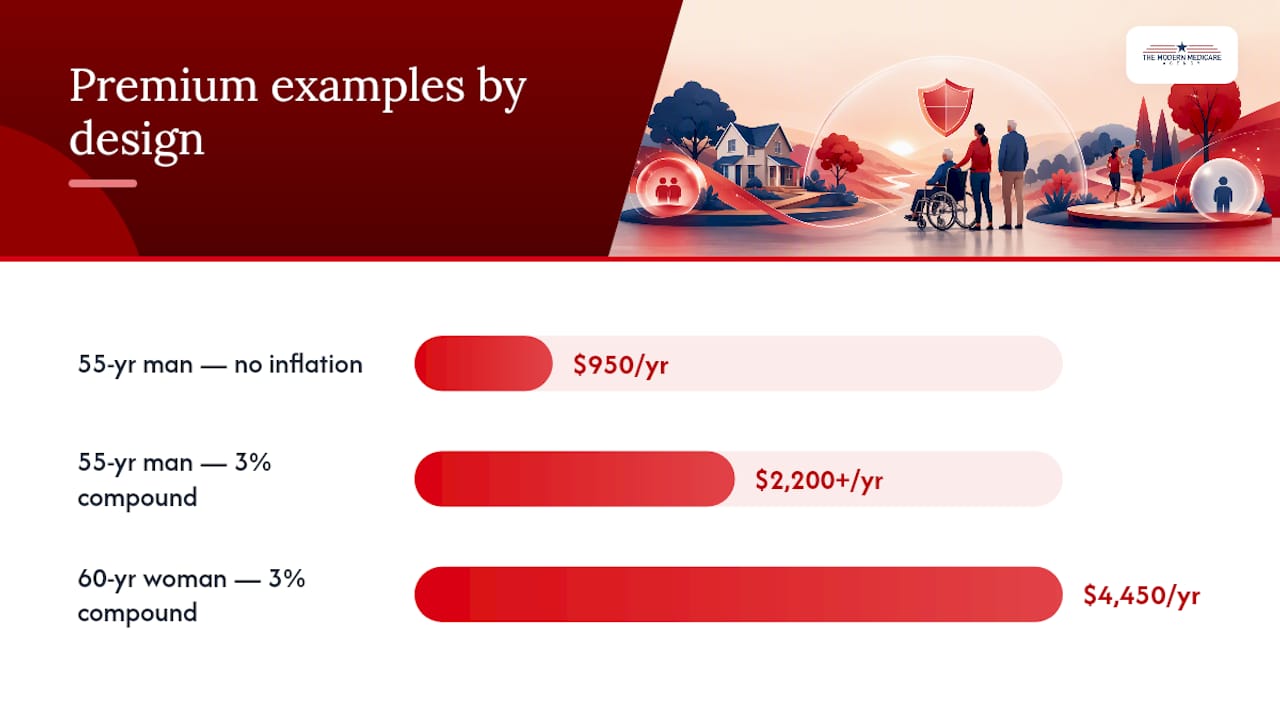
That spread is not just about age and gender. AALTCI’s data also shows carrier pricing for identical benefit designs can differ by as much as 80% between the cheapest and most expensive insurer. Two people with the same health profile buying the same coverage can walk away with wildly different bills based purely on which company they picked. Your state, your health class, and even your marital status shift these numbers further, which is exactly why a quote from a single carrier tells you very little about what you’re actually going to pay.
What Drives Your Long Term Care Insurance Premiums
Age and health do more to set your price than any other factor. Insurers place applicants into underwriting tiers, often called preferred, standard, or substandard, and moving up a tier because you’re a nonsmoker with well-controlled blood pressure can meaningfully lower what you owe every year. Wait five or ten years and your baseline health typically declines, so the same coverage costs more just from aging alone.
Beyond age and health, several policy design choices move the price:
- Benefit period: A three-year benefit costs less than a lifetime benefit, though unlimited benefit periods have mostly disappeared from new policies.
- Daily or monthly benefit amount: A higher payout cap raises your premium proportionally.
- Elimination period: A 90-day waiting period before benefits kick in usually costs less than a 30-day period.
- Inflation protection: A 3% compound rider can add hundreds of dollars a year versus no inflation protection at all.
- Gender: Women generally pay more than men for identical coverage, reflecting longer average claim durations.
- State of residence: Regulatory environment and local care costs both factor into a carrier’s rate filings.
Pro Tip: Get quotes from at least three carriers before you decide. Because underwriting standards vary so much company to company, one insurer might classify you as “preferred” while another calls the same health history “standard,” and that single difference can change your premium by hundreds of dollars a year.
Traditional vs. Hybrid Long Term Care Insurance: Comparing Costs
A traditional, standalone long-term care policy usually has the lowest starting premium of any LTC option. You pay annually, coverage kicks in if you need qualifying care, and if you never use it, that premium is gone, the classic “use it or lose it” complaint that drives a lot of buyers away. Standalone policies also carry real exposure to future rate increases; insurers can and do request approval to raise premiums on existing policyholders when claims experience runs worse than projected.
Hybrid, or linked-benefit, policies work differently. You pay either a large single premium or a fixed set of premiums over a defined number of years, and the policy is built on a life insurance or annuity chassis. According to AARP’s coverage of hybrid long-term care trends, the appeal is straightforward: if you never need long-term care, your beneficiaries still receive a death benefit, or in some designs you can get your premiums back. That guarantee costs money upfront, often tens of thousands of dollars more than a comparable standalone policy over time, but it eliminates the “wasted premium” fear entirely.
So which one fits you?
- Choose standalone coverage if lower annual outlay matters more than guarantees and you’re comfortable accepting some rate-increase risk.
- Choose hybrid coverage if you want a guaranteed return of value no matter what happens and you have the lump sum or cash flow to fund it.
Hybrid long term care policies also carry different tax and Medicare interactions worth understanding before you commit capital.
Sample Long Term Care Premiums by Age and Household
Couples often get a pricing break that single buyers don’t. AALTCI’s data shows married or partnered applicants frequently pay less combined than two people would pay for identical individual policies, since many carriers offer shared-care riders or straightforward couple discounts for joint applications.
| Household | Age | Inflation option | Approximate combined annual premium |
|---|---|---|---|
| Single male | 55 | None | $950 |
| Single female | 60 | 3% compound | $4,450 |
| Couple (both) | 55–60 | 3% compound | over $4,450 combined |
These figures assume “select health,” meaning both applicants qualify for a preferred underwriting tier with no major chronic conditions. A single diagnosis like early-stage diabetes or a recent cardiac event can push you into a higher-priced tier or trigger a decline altogether. One clear takeaway from AALTCI’s price index: the same coverage from different carriers can vary by roughly 80% in annual cost, which is the strongest argument for comparing multiple insurers rather than accepting the first quote you receive.
How to Lower Your Long Term Care Insurance Cost
Cost control starts well before you fill out an application. Here’s what actually moves the needle:
- Buy in your 50s, not your 60s. Premiums are locked in largely by your age and health at purchase, and both tend to work against you the longer you wait.
- Ask about preferred and select health discounts. Managing a condition well, staying tobacco-free, and keeping recent labs on hand can shift you into a cheaper underwriting tier.
- Choose a longer elimination period. Stretching the waiting period from 30 to 90 days before benefits start can meaningfully lower your annual premium.
- Consider a shared-care rider if you’re part of a couple. It lets both spouses draw from one combined benefit pool, often at a lower combined cost than two separate policies.
- Weigh single-pay hybrid against multi-pay. A one-time lump sum avoids decades of annual bills but ties up capital you could otherwise keep invested, so run the opportunity-cost math both ways.
- Work with an independent agent who represents multiple carriers. Given the wide pricing spread AALTCI documents across insurers, one agent’s ability to compare underwriting classes across companies is often worth more than any single discount.
Pro Tip: If you’re comparing a hybrid single-premium policy against self-funding, look at the internal rate of return the insurer is effectively offering you and weigh it against what your money could reasonably earn if you kept it invested and self-insured instead, as Morningstar’s analysis of hybrid policies lays out. The right answer depends heavily on your health outlook and risk tolerance, not just the sticker price.
Is Long Term Care Insurance Worth the Cost?
Medicare does not pay for custodial long-term care, the kind of help with bathing, dressing, and daily living that most people eventually need. It covers short-term skilled nursing after a hospital stay, but that’s a narrow slice of what long-term care actually looks like, a distinction worth understanding fully if you’re weighing long term care insurance against what Medicare covers. The Administration for Community Living confirms this gap directly, which is exactly why long-term care insurance exists as a separate product.
Whether it’s worth buying comes down to a short checklist:
- How much do you have to protect? If a nursing home stay costing over $120,000 a year would meaningfully damage your retirement savings, insurance transfers that risk off your balance sheet.
- Do you have family who could or would provide care? Unpaid family caregiving changes the math, but it’s rarely sustainable for years at a time.
- What’s your health trajectory and family history? Longer expected lifespans generally mean more years of potential exposure.
- Do you care about leaving an inheritance? Self-funding care can erode the estate you intended to pass on.
If your assets are modest enough that Medicaid would eventually step in, or large enough that you could self-fund years of care without real strain, insurance may matter less. For the broad middle, it’s usually the better bet.
An Agent’s View on Long Term Care Insurance Costs
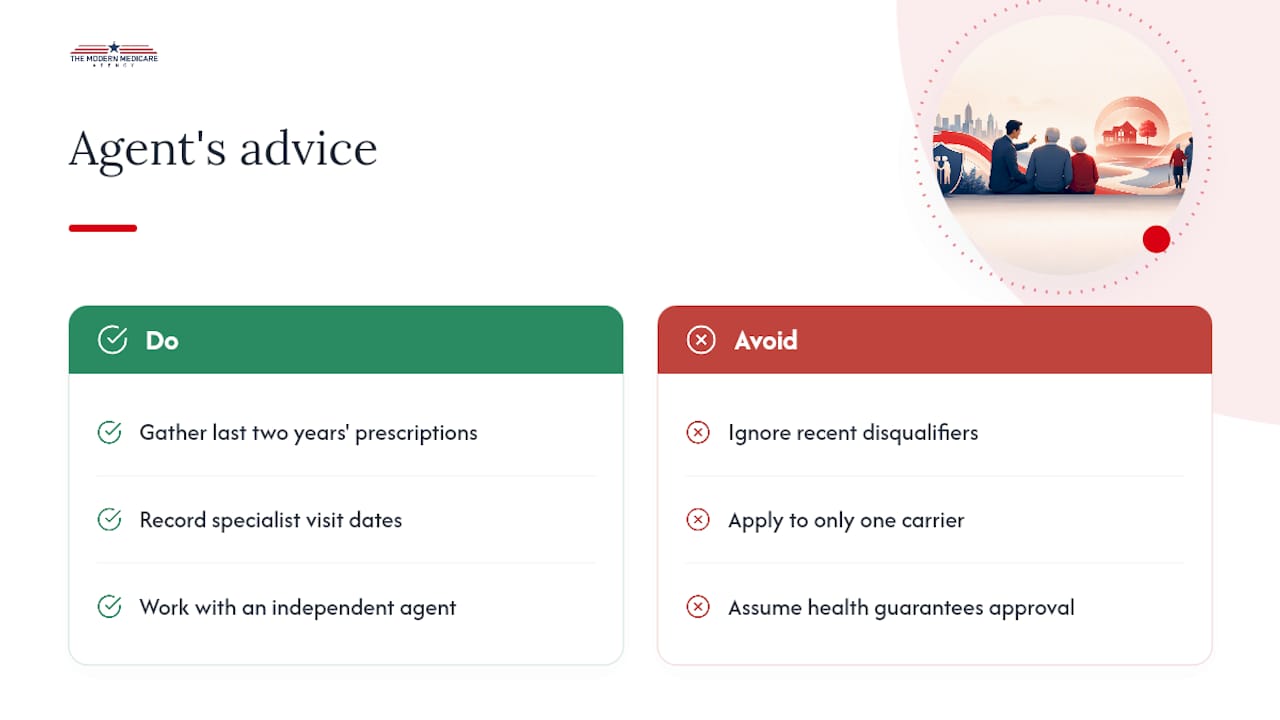
Paul Barrett has spent years watching applicants get surprised by underwriting, and the pattern is predictable: people underestimate how much recent medical history matters. Before you apply, gather your last two years of prescription records and any specialist visit dates. Common disqualifiers, like a recent fall, a new diabetes diagnosis, or a cognitive screening flag, often surprise applicants who felt perfectly healthy.
This is where an independent agent earns their keep. Because carrier underwriting standards differ so much, one company’s decline can be another’s approval at a good rate. An agent working across multiple carriers can steer you toward the insurer most likely to view your specific health history favorably, rather than betting everything on one application.
— Paul
Get Help Comparing Long Term Care and Medicare Costs
Long-term care decisions rarely happen in isolation. They sit alongside Medicare Supplement choices, Medicare Advantage tradeoffs, and how much of your retirement income you want exposed to future medical costs. Independent agencies provide comparisons like carrier spreads, underwriting tiers, and hybrid versus standalone tradeoffs, offering analysis to help consumers choose among insurers without steering toward one product line.

If you’re already exploring Medicare Supplement options alongside long-term care planning, the Medicare Supplement cost guide is a useful next stop, since your Medigap or Medicare Advantage choice affects how much financial exposure long-term care insurance actually needs to cover. From there, comparing Medicare Supplement plans directly with an independent agent costs you nothing and can clarify exactly where long-term care coverage fits into your broader retirement budget. Reach out to start that conversation.
This article is general information, not a substitute for advice from a qualified financial advisor. Consult a qualified financial professional about your own circumstances before acting on anything here.
Sources
- 2026 AALTCI Long-Term Care Insurance Price Index
- What to Know About Hybrid Long-Term Care Insurance (AARP)
- Is a long‑term care hybrid policy right for you? (Morningstar)
- ACL: What is long‑term care insurance? (Administration for Community Living)