



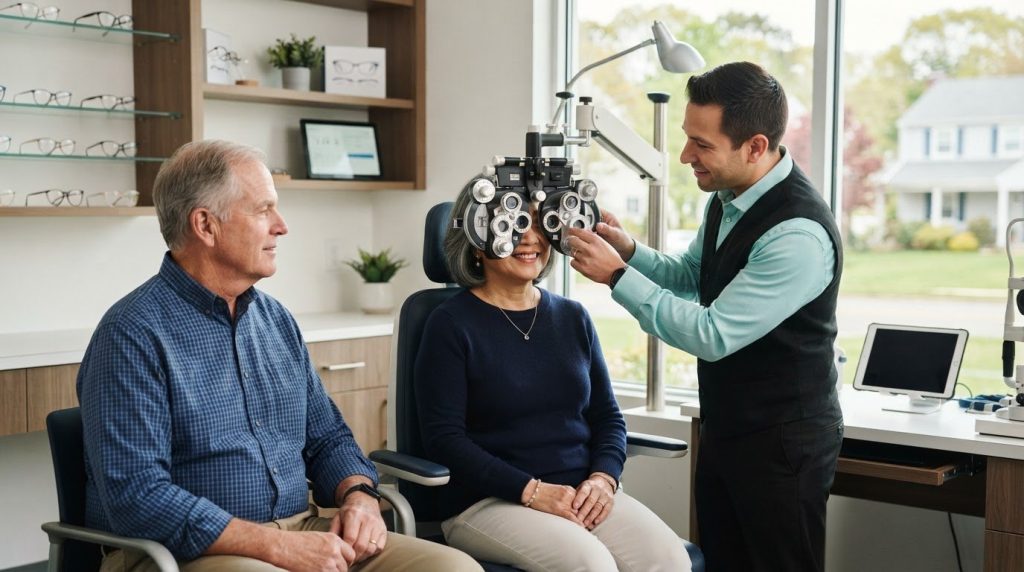
What if the routine checkup you rely on most to stay independent is the very thing your insurance ignores? If you have questions about medicare coverage for eye exams and glasses in 2026, you aren’t alone. It’s incredibly frustrating to finish a basic vision test, only to discover you must pay for everything out of your own pocket. Most folks assume Medicare naturally helps with new lenses and updated frames, but Original Medicare leaves a major blind spot when it comes to everyday eye care.
You shouldn’t have to guess whether a doctor visit is covered or brace yourself for surprise optical bills at checkout. In this guide, you’ll discover how Medicare handles routine vision care, where the coverage gaps are, and how to protect your eyesight in 2026. We’ll walk through what Original Medicare does and does not pay for, examine important exceptions, and show you how smart choices like Medicare Advantage or standalone plans can keep your vision clear and your costs predictable.
Key Takeaways
- Original Medicare leaves out routine checkups and standard corrective lenses, meaning you are responsible for those bills out of pocket.
- Part B steps in for medical eye health, covering treatments for conditions like glaucoma and diabetic retinopathy, along with a standard pair of glasses after cataract surgery.
- You can secure dependable medicare coverage for eye exams and glasses in 2026 by comparing Medicare Advantage benefits against standalone vision policies.
- Checking your eye doctor’s network status and verifying annual frame allowances ahead of time protects you from surprise optical expenses.
- Working with an independent broker allows you to review plans across dozens of carriers to find the vision protection that fits your lifestyle.
What Medicare Covers for Eye Exams and Glasses in 2026
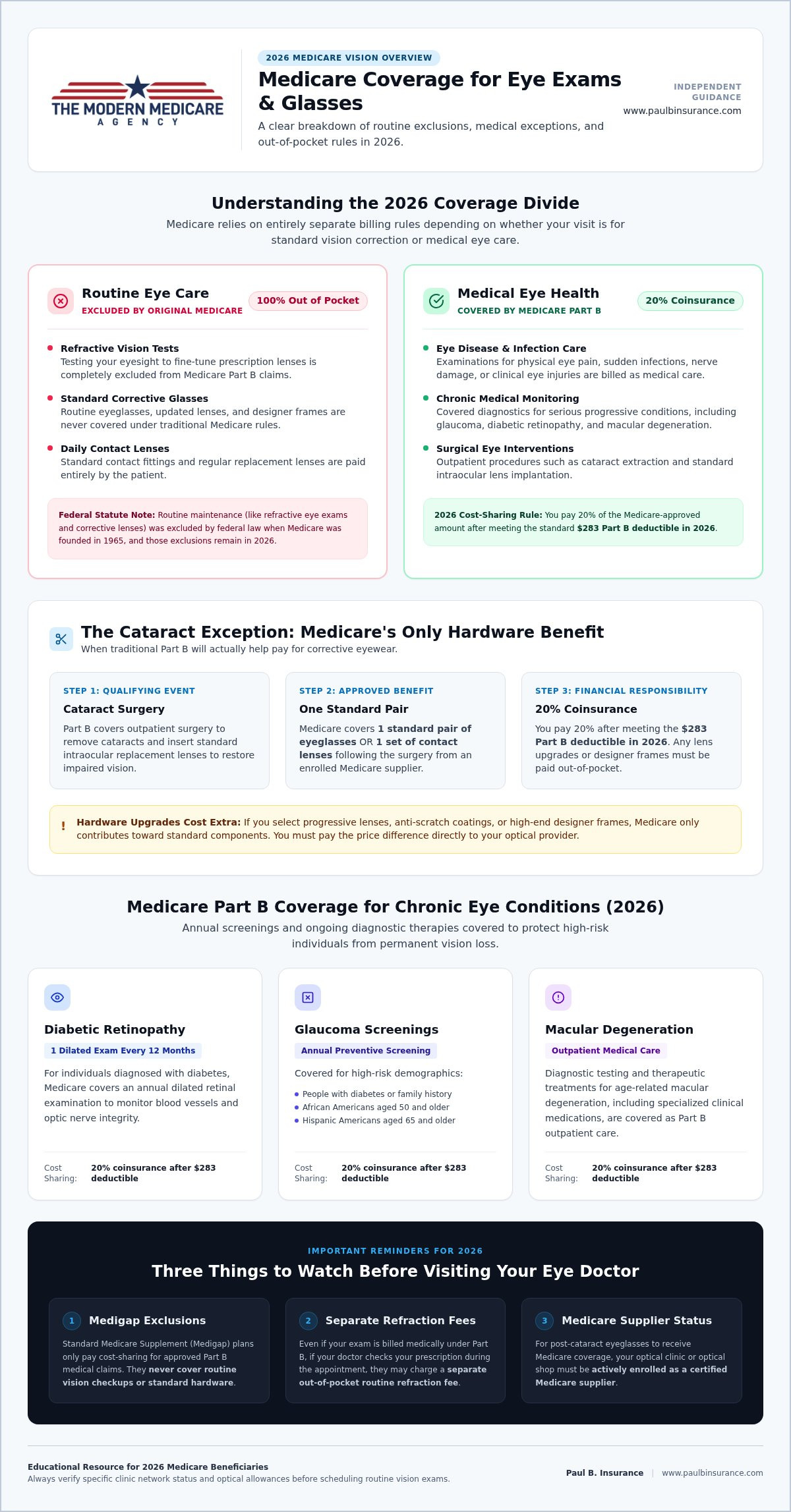
Stepping up to the counter at your eye doctor’s office only to face an unexpected bill is a terrible feeling. Many people assume medicare coverage for eye exams and glasses works just like standard health insurance. Unfortunately, Original Medicare does not cover routine eye checkups to check your eyesight or write an updated prescription. It also excludes standard eyeglasses, designer frames, and daily contact lenses under traditional Part B rules. Because of this gap, you are responsible for 100 percent of the costs out of pocket when getting an annual vision test.
The Difference Between Medical and Routine Eye Care
To avoid unexpected charges, you need to understand how clinics categorize your visits. While routine vision checks focus on testing refractive errors to fine-tune your prescription lenses, clinical pathology exams evaluate biological health issues and physical diseases affecting your eyes. Medicare relies on entirely separate billing pathways for these two situations. If your eye doctor checks whether you need stronger reading glasses, Part B denies the claim. However, if that same physician evaluates physical eye pain, an infection, or optic nerve damage, the visit is billed as medical treatment.
Why Traditional Medicare Excludes Routine Vision Services
Why does this frustrating gap exist in the first place? When Congress created the Original Medicare program structure back in 1965, the system was designed strictly for acute illnesses, major hospital stays, and emergency medical interventions. Routine maintenance, such as dental cleanings, hearing aids, and refractive eye care, was intentionally excluded by federal statute. Those historic rules still apply in 2026.
Many people expect their supplemental coverage to pick up the tab, but that is another common misconception. Standard Medigap policies follow Original Medicare guidelines, which means they only pay cost-sharing for approved medical claims and do not cover routine hardware. It helps to review what is Medicare supplement insurance so you can verify these standard exclusions and plan your vision budget with total confidence.
The Medical Exceptions: When Part B Pays for Vision Care
While routine checkups are excluded, traditional Medicare does not abandon your eyes entirely. If you face an acute illness, injury, or progressive eye disease, Medicare Part B provides dependable medical support. Understanding when medicare coverage for eye exams and glasses shifts from an excluded routine service to a covered clinical procedure can save you hundreds of dollars when health issues arise.
Cataract Surgery and Post-Operative Eyeglasses
When cataracts cloud your vision and impair daily activities, Part B steps in to cover outpatient surgery and the placement of standard intraocular lenses. This specific procedure opens the door to Medicare’s only exception for purchasing corrective hardware. After a successful surgery, Medicare helps pay for one standard pair of eyeglasses or one set of contact lenses.
Under official Medicare coverage rules for eyeglasses, you pay a 20 percent coinsurance of the approved cost after satisfying your $283 Part B annual deductible in 2026. Your optical provider must be enrolled directly as a Medicare supplier to submit the claim properly. If you prefer premium upgrades like progressive lenses, scratch-resistant coatings, or designer frames, you can still get them by paying the difference out of pocket.
Coverage for Glaucoma, Macular Degeneration, and Diabetes
Part B also covers ongoing diagnostic monitoring for severe ocular conditions. You don’t have to shoulder the financial burden of managing these chronic illnesses alone:
- Diabetic retinopathy: If you have diabetes, Medicare covers one dilated eye exam every 12 months to check for nerve and blood vessel damage.
- Glaucoma screenings: Annual preventive tests are covered for high-risk individuals, including folks with diabetes, a direct family history of glaucoma, African Americans aged 50 and older, and Hispanic Americans aged 65 and older.
- Macular degeneration: Diagnostic testing and therapeutic treatments for age-related macular degeneration, including specialized clinical medications, are covered as outpatient medical care.
For each of these medical services, you are responsible for the standard 20 percent coinsurance after meeting your $283 deductible. Be aware that if your doctor tests your prescription during the exam, they may charge a separate routine refraction fee. If you ever feel uncertain about how these medical rules apply to your current health needs, reaching out to an independent specialist at The Modern Medicare Agency can help you make sense of your benefits.
Comparing Vision Solutions: Medicare Advantage vs. Standalone Vision Plans
Facing Original Medicare’s optical gap doesn’t mean you have to go without clear eyesight. You have two dependable paths to secure reliable medicare coverage for eye exams and glasses in 2026. One approach bundles your routine benefits through private Part C insurance, while the other pairs independent coverage with your traditional benefits. Understanding the distinct pros and cons of each choice brings clarity and keeps your overall health expenses predictable.
How Medicare Advantage Handles Routine Vision Benefits
Medicare Advantage plans combine hospital, medical, and often drug coverage into an all-in-one package. According to a KFF analysis of Medicare Advantage supplemental benefits, more than 99% of individual plan members have access to routine vision perks. These bundled plans usually offer $0 or low copayments for your annual routine checkup, alongside an annual allowance toward prescription frames, progressive lenses, or contact lenses. Over 55% of all eligible beneficiaries enroll in these plans in 2026. However, provider networks are tightly managed. Medicare Advantage members often have access to an average of just 48% of the physicians in their local area who take traditional Medicare. You must confirm that your favorite optometrist participates in the network before enrolling. You can explore these tradeoffs in detail through our comprehensive Medicare Advantage guide.
Using Standalone Vision and Dental Insurance Policies
If you prefer the flexibility of Original Medicare paired with a Medigap policy, you can see any doctor across the country who accepts Medicare. The downside is that Medigap leaves routine optical care entirely unpaid. Private standalone vision policies bridge this exact gap without altering your core health structure. These policies provide dedicated allowances for frames and lenses, plus preventive exam benefits, while letting you visit private retail optical shops or independent optometrists.
Many seniors also choose to pair their optical protection with a separate dental insurance plan to protect their total wellness routine under one simple strategy. Taking time to review independent options with an advocate at The Modern Medicare Agency ensures you find a solution that fits your exact budget, your preferred eye clinic, and your ongoing prescription needs.
How to Evaluate Your Vision Needs Before Choosing a Plan
Selecting the right path for your eyesight doesn’t have to feel overwhelming. To find the best medicare coverage for eye exams and glasses in 2026, you simply need a clear, methodical framework. Following a step-by-step assessment helps you balance what you spend each month against the actual optical care you require.
Auditing Your Annual Eyewear and Prescription Costs
Start by looking closely at your current vision routine and anticipating upcoming expenses. How often do you replace your frames? If you only update single-vision reading glasses every few years, a plan with a modest hardware allowance might meet your needs. On the other hand, if you require progressive lenses, bifocals, or anti-reflective coatings, optical bills add up fast.
Make sure to check the plan’s exact copayments for these specialized lens enhancements. Many policies provide an allowance that covers basic frames, but leaves you paying out of pocket for premium features. Calculating your anticipated hardware upgrades against the annual premium gives you the true financial value of the policy.
Confirming Doctor Networks and Freedom of Choice
Next, verify whether your long-term optometrist participates in the carrier network you are considering. Many Medicare Advantage options operate as HMO or PPO networks, which restrict which clinics you can visit without paying extra charges. If you value keeping your trusted neighborhood doctor, confirm their participation before making any plan change. If your eye doctor is out-of-network, look into standalone vision policies that offer flexible reimbursement for independent optical shops.
Taking a few minutes to compare these details protects you from unpleasant surprises in the exam chair. When you want to evaluate your options side by side, connect with the team at The Modern Medicare Agency to review plans tailored specifically to your visual health and personal budget.
Finding the Right Vision Coverage with an Independent Broker
Sorting through optical allowances, network directories, and out-of-pocket limits can feel exhausting. You shouldn’t have to decipher complex policy details all on your own. Securing dependable medicare coverage for eye exams and glasses becomes straightforward when you have an experienced ally walking beside you. An independent broker acts as your personal guide, helping you move from uncertainty to total clarity so you can protect both your eyesight and your wallet in 2026.
The Advantage of an Independent Broker Over a Captive Agent
When you seek insurance guidance, the type of agent you partner with makes a substantial difference. A captive agent works directly for a single insurance company. Because they represent only one brand, they can only offer that carrier’s specific products, even if a competitor provides stronger eyewear allowances or includes your long-time optometrist in their network. Their hands are tied.
Independent brokers operate with complete autonomy. At The Modern Medicare Agency, founder Paul Barrett and his team compare options across more than 40 top-rated carriers throughout more than 34 states. Instead of steering you into a narrow corporate catalog, an independent broker evaluates your unique prescription history, reviews your preferred eye clinic, and surveys the broader market. This unbiased comparison helps you secure an arrangement tailored around your actual lifestyle.
Step-by-Step Guidance for Your 2026 Vision and Health Strategy
Routine optical care does not exist in isolation. Your eye checkups and eyewear allowances should integrate smoothly with your overall health plan. A dedicated broker coordinates your vision benefits alongside your primary medical care, hospital protections, and prescription needs, including selecting an appropriate Medicare Part D plan for your medications.
Most importantly, that support continues well past your initial enrollment. As insurance benefits adjust in 2026 and into future plan years, you enjoy ongoing advocacy. Whether you need assistance sorting out billing questions after an eye exam, want to verify an optical reimbursement, or need to evaluate updated carrier networks during the annual review period, an independent advisor stands with you at every step.
Protect Your Vision and Your Budget in 2026
Navigating your optical health shouldn’t mean worrying about surprise bills at the checkout counter. While Original Medicare leaves out everyday checkups and lenses, you now understand how medicare coverage for eye exams and glasses works. Medical exceptions protect your health during serious diagnoses or cataract procedures, but day-to-day care requires a proactive choice. Whether you prefer the all-in-one convenience of Medicare Advantage or pair standalone optical benefits with Medigap, clear sight is entirely achievable.
You don’t have to make these decisions by yourself. When you connect with Paul Barrett at The Modern Medicare Agency, you gain access to more than 40 leading carriers across over 34 states. We provide unbiased, patient guidance with zero high-pressure tactics, ensuring your benefits fit your life. Take control of your vision care today and step forward with complete confidence.
Frequently Asked Questions
Does Original Medicare Part B pay for routine eye exams?
No, Original Medicare Part B does not pay for routine eye exams or vision tests for glasses. If you visit an optometrist simply to check your eyesight or get an updated prescription, Medicare considers it non-covered routine care. You are responsible for 100 percent of the bill out of pocket. Medicare only covers exam visits that evaluate medical conditions, such as acute eye pain, infections, or glaucoma.
Will Medicare pay for eyeglasses after cataract surgery in 2026?
Yes, Medicare Part B covers one standard pair of eyeglasses or one set of contact lenses after cataract surgery that implants an intraocular lens. In 2026, you pay a 20 percent coinsurance of the Medicare-approved cost after meeting your $283 annual deductible. Your optical provider must be an enrolled Medicare supplier. Beneficiaries pay the difference out of pocket for lens upgrades or designer frames.
Does Medicare Supplement insurance (Medigap) cover eyeglasses and routine vision care?
No, standard Medigap plans do not cover eyeglasses, contact lenses, or routine checkups. Medigap policies are designed strictly to pay cost-sharing, like deductibles and coinsurance, for treatments approved by Original Medicare. Because traditional Medicare excludes routine refractive care, Medigap policies cannot pay those claims either. Medigap does, however, help cover your 20 percent coinsurance for covered medical procedures or post-cataract eyewear.
How do Medicare Advantage plans provide coverage for eye exams and glasses?
Medicare Advantage plans package extra benefits that usually include routine eye checkups and annual optical allowances. Private insurance carriers bundle these perks directly into Part C plans, often providing annual vision exams at a zero-dollar copayment and a set allowance toward frames or contacts. When seeking medicare coverage for eye exams and glasses through Medicare Advantage, you must use network optical providers to ensure coverage.
Can I purchase a standalone vision insurance policy if I have Medicare?
Yes, you can buy an independent standalone vision policy alongside Original Medicare or a Medigap plan. Many beneficiaries choose this option so they can keep the broad doctor freedom of traditional Medicare while gaining dedicated allowances for lenses, frames, and routine vision checks. Standalone policies operate independently of your Medicare benefits, giving you predictable annual optical costs without joining a Medicare Advantage network.
What does a Medicare diabetic eye exam cover and who is eligible?
Medicare Part B covers an annual dilated eye exam once every 12 months for anyone clinically diagnosed with diabetes. This specialized medical exam checks for diabetic retinopathy, which damages blood vessels in the retina. A state-licensed ophthalmologist or optometrist must perform the test. You pay a 20 percent coinsurance after meeting your $283 deductible, while any refraction test for glasses is billed separately.
How much will I pay out-of-pocket for glasses if Medicare approves coverage?
If Medicare approves post-cataract eyewear, you pay 20 percent of the Medicare-approved amount after satisfying your $283 Part B deductible in 2026. Medicare covers basic single-vision or bifocal lenses and standard frames from an enrolled supplier. If you select elective upgrades like anti-glare coatings, progressive lenses, or luxury frame designs, you pay the extra balance out of pocket. Understanding these limits keeps your optical expenses predictable.

Article by
Paul Barrett
Paul Barrett, CMIP is the founder of The Modern Medicare Agency, an independent Medicare-only brokerage based in Melville, NY. With 18 years of Medicare-exclusive experience, a CMIP designation, and more than 5,000 clients served across 37 states, Paul is one of the most credentialed independent Medicare specialists on Long Island — and one of the most direct.
He represents 40+ carriers with no quotas and no allegiances, which means his recommendations are based entirely on what fits each client's specific situation. He is the author of Medicare Mastery Unlocked and host of the Wise Guys Retirement Talk podcast. His content is grounded in primary sources, real carrier intelligence, and 18 years of watching what happens when people get Medicare right — and when they don't.
📞 631-358-5793 | paulbinsurance.com