




What if the biggest Medicare mistake isn’t choosing the “wrong” plan, but deciding before checking how all the pieces fit together? In 2026, avoiding the biggest medicare mistakes means looking beyond the monthly premium and reviewing enrollment timing, doctors, prescriptions, and the care you may need.
If deadlines and plan details feel confusing, you’re not alone. A notice can be easy to overlook, and a plan that worked last year may change its costs, provider network, or drug coverage. A straightforward review can help you spot what deserves attention before you make your next move.
This checklist walks you through enrollment timing, comparing coverage with your needs, and reviewing plan changes for 2026. It also covers practical next steps for comparing Medicare Advantage, Medigap, and Part D options, with guidance available if you want help understanding the choices.
Key Takeaways
- An organized review can help you catch timing, coverage, or plan-fit issues before they become bigger problems.
- Check which enrollment window and rules apply to you, then verify dates and penalty details through current official guidance.
- Look beyond the monthly premium: consider your doctors, prescriptions, out-of-pocket costs, and expected care when comparing coverage.
- Use 2026 plan information and your current coverage documents to make a careful keep-or-change decision.
- Avoiding the biggest medicare mistakes is easier when you compare options with your own needs in mind, with independent guidance if you want help.
Avoiding the Biggest Medicare Mistakes Starts With a Clear Plan
Medicare decisions can feel like a lot to sort through, but you don’t have to solve everything at once. A focused review can show you what needs attention now. A Medicare mistake is an avoidable oversight involving timing, coverage, or whether a plan fits your needs. For a broad overview of the program’s parts and eligibility, see Medicare in the United States.
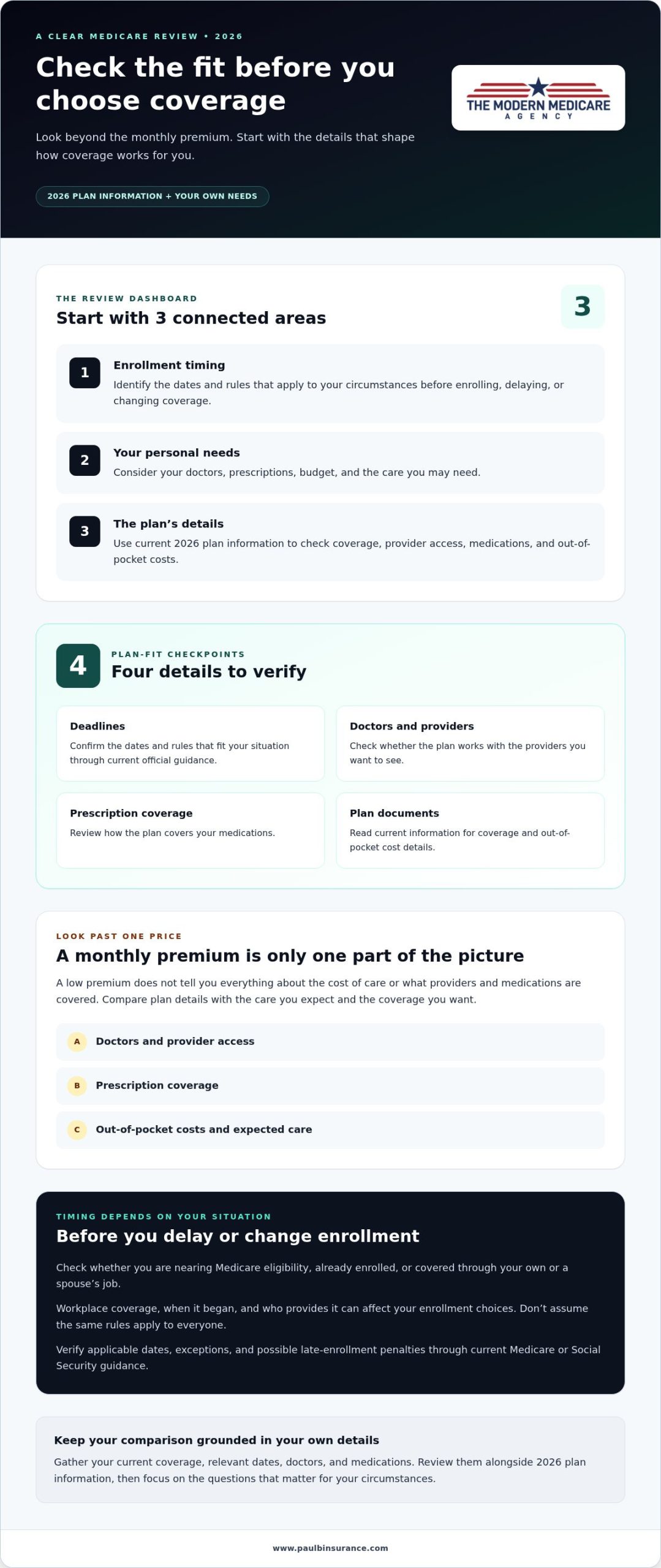
Start with three things: enrollment timing, your personal needs, and the plan’s details. Together, these help you look beyond a premium or a familiar plan name. Check how the coverage works for your doctors, prescriptions, and likely care needs, then compare those details with the plan documents.
A checklist can organize your questions, but your circumstances determine which answers matter most. Eligibility, existing coverage, and health needs vary from person to person. Avoiding the biggest medicare mistakes starts with your situation, not someone else’s experience.
Which Medicare decisions deserve a second look?
First-time enrollment and an annual plan review call for different questions. If you’re new to Medicare, focus on the enrollment rules and dates that apply to you. If you already have coverage, check whether it still fits and whether 2026 plan information affects your choices. The right steps depend on your eligibility and any coverage you already have.
As you review, pay particular attention to:
- Deadlines: Identify the dates that apply to your circumstances and verify them with current official guidance.
- Provider access: Check whether the plan works with the doctors and other providers you want to see.
- Prescription coverage: Review how the plan covers your medications.
- Plan documents: Read current information for details that could affect your coverage or out-of-pocket costs.
How to use this Medicare mistake checklist
Gather the information you already have before comparing options. Write down your current coverage, relevant dates, doctors, and medications. Then review the 2026 plan information alongside that list. It’s easier to spot questions or changes that could affect your decision when the details are together.
Before changing coverage, verify current 2026 details, including applicable dates and plan information. Not every warning applies to every person. Use the checklist to focus on what fits your situation, and work through those points one at a time.
Avoid Medicare Enrollment Mistakes by Checking Your Timing First
Enrollment timing varies from person to person. Your next step depends on whether you’re approaching Medicare eligibility, already enrolled, or covered through work. A date that matters to one person may not apply to another, so don’t rely on a friend’s experience or assume it’s safe to wait. Check the timing and rules for your circumstances before deciding to enroll or delay.
In 2026, confirm which enrollment window applies to you, whether an exception may affect your options, and whether a late-enrollment penalty could apply. The rules can depend on details such as the type of coverage you have and when it began. Verify dates, exceptions, and penalty information through current official Medicare or Social Security guidance before acting.
What should you check before delaying Medicare enrollment?
Start by identifying your situation: Are you nearing eligibility, already enrolled in Medicare, or still covered through your own or a spouse’s job? Employer coverage can affect enrollment decisions, but workplace plans and employment circumstances differ. Don’t assume that having insurance through work means you can delay every part of Medicare without consequences.
Gather details that can help clarify your situation, including who provides your workplace coverage, whether you or your spouse is still working, and when the coverage started. Then use official guidance to understand how those details affect your enrollment choices. If you’re unsure, get personalized help before delaying or changing coverage.
How can you avoid missing a Medicare enrollment window?
Make timing visible. Write down the dates connected to your eligibility and current coverage, then set reminders to confirm what you need to do and when. Automatic enrollment doesn’t work the same way for everyone, so don’t assume you’ll be enrolled without taking action. Check your status and next steps with Medicare or Social Security.
Keep a note of what you verified and where you found the information. It gives you a clear reference if questions come up later. For another plain-language overview of eligibility and timing in 2026, read this Medicare eligibility guide for 2026.
A clear process can make avoiding the biggest medicare mistakes feel more manageable. You don’t need to know every rule by heart. Focus on your circumstances, verify the guidance that applies, and make your decision with the relevant details in front of you.
Avoid Choosing Medicare Coverage by Premium, Habit, or Someone Else’s Advice
A plan that works well for a friend may not fit your doctors, prescriptions, or budget. The same is true of a plan you’ve kept for years simply because it feels familiar. In 2026, compare coverage with your own needs and current plan materials, not habit or someone else’s experience. A low monthly premium can be appealing, but it doesn’t tell you everything about the cost of care or which providers and medications are covered.
No single type of Medicare coverage suits everyone. The useful question is how each available option fits your health needs, provider preferences, prescriptions, and comfort with potential out-of-pocket expenses. Include the Medicare Advantage guide and information about Medigap coverage in your comparison.
Which personal details should guide a Medicare plan comparison?
Before comparing plans, make a short list of the care and coverage you want. Include:
- Your preferred doctors and specialists
- Your current prescriptions and preferred pharmacies
- Expected care needs, such as regular appointments or ongoing treatment
- Any provider access or coverage details that matter to you
Then compare that list with current 2026 plan documents. Check whether your providers are included and how your prescriptions are covered. Don’t rely only on last year’s information or a general plan description. Benefits, provider access, and coverage can vary by plan and location, so details that matter to you may differ from someone else’s.
Why can the lowest premium be the wrong comparison?
A premium is one part of a plan’s financial picture, not the whole picture. Plan documents may also describe deductibles, copayments, coinsurance, and coverage limits that affect what you pay when you receive care. Compare those details with the monthly premium and consider how they relate to the services you expect to use. No one can predict every health need, but thinking through likely care can make the trade-offs clearer.
To keep the comparison manageable, ask the same questions about each option: Does it work with my providers? How are my medications covered? What costs could I face when I use care? Are there coverage limits I should understand? Comparing the answers side by side helps you judge overall fit instead of focusing on one appealing detail. That’s a practical step toward avoiding the biggest medicare mistakes.
If you’d like help understanding how Medicare Advantage, Medigap, and Part D options compare, learn about personalized Medicare guidance and focus on the coverage details that matter to you.
Use This 2026 Medicare Review Checklist Before You Keep or Change Coverage
A plan that suited you last year may not fit your needs in 2026. An annual Medicare review means checking your current coverage against your needs for the year ahead. Before you keep or change coverage, compare your current plan documents with the latest 2026 information. Verify changes, dates, and costs in the materials for your specific plan instead of relying on memory, advertisements, or someone else’s summary.
What should you look for in an Annual Notice of Change?
If you have a Medicare Advantage or Part D plan, read its Annual Notice of Change carefully. It explains changes to your current plan that may affect benefits, prescription coverage, providers, or what you pay when you receive care. Review the items that matter to you and note anything you need to confirm in the current plan documents.
For prescription coverage, compare your medications and pharmacy preferences with the plan’s latest information. The Medicare Part D guide can help you understand the role of drug coverage as you review your options.
How do you turn the review into a personal checklist?
Keep your review simple and specific. Gather your current plan information, the 2026 materials, and a list of your needs. Compare each detail in the same order so important questions don’t get lost. Mark anything that needs confirmation in current plan documents or official guidance.
- Doctors and specialists: Check whether your preferred providers are covered under the plan’s current terms.
- Prescriptions and pharmacies: Confirm how your medications are covered and whether your preferred pharmacy fits your needs.
- Expected care: Consider appointments, treatments, or other care you anticipate needing in 2026.
- Costs and budget priorities: Review the plan’s current premium and cost-sharing details, including deductibles, copayments, or coinsurance that may apply.
- Changes to the plan: Note differences between your current coverage and the 2026 plan information, then verify details that are unclear.
Compare like with like. For example, check the same prescriptions and providers across each option instead of comparing one plan’s headline benefit with another plan’s full details. This gives you a clearer basis for deciding whether to stay with your current coverage or consider a change. A careful review helps you avoid Medicare mistakes without assuming that every plan change affects every person in the same way.
For help making sense of your Medicare options, explore personalized Medicare guidance.
Get Personal Medicare Guidance Before a Small Oversight Becomes a Big Problem
You don’t have to sort through every Medicare plan detail on your own. An independent broker can help turn plan documents into clearer questions and comparisons. In 2026, that support can be useful if you’re weighing Medicare Advantage, Medigap, and Part D options or trying to understand how coverage details connect to your priorities.
When can an independent Medicare broker help?
An independent broker can compare plan information with your doctors, prescriptions, and personal priorities. The Modern Medicare Agency works with more than 40 carriers, giving eligible individuals a way to review options across multiple insurers. Plan availability can depend on location and circumstances, so a useful comparison focuses on options relevant to your situation.
The goal is to help you understand the differences, not pressure you to enroll. Ask about details that feel unclear, such as provider access, prescription coverage, or how plan costs work. Clear explanations can help you make an informed choice at your own pace. Guidance supports your decision, it doesn’t replace it.
What should you have ready for a Medicare conversation?
A little preparation can make your discussion more useful. Gather your current plan documents and note the details that matter in your day-to-day life. You might bring:
- Your current coverage and any notices about changes for 2026
- A list of prescriptions and preferred pharmacies
- The doctors and specialists you want to keep seeing
- Your expected care needs and coverage priorities
- Questions about enrollment timing, plan details, or a change you’re considering
You don’t need to have everything figured out first. Bring your questions, including anything you’re unsure about, and use the conversation to understand what to review next. Personalized support can connect plan details to your circumstances and bring more clarity to your decision.
A small detail can matter, but you can take the next step calmly and with support. If you’re ready to talk through your Medicare options, talk with a Medicare guide for personalized guidance on your 2026 coverage decisions.
Take Your Next Medicare Step With Confidence
Medicare decisions feel more manageable when you start with your own circumstances. In 2026, check which enrollment timing applies to you, compare coverage with your doctors and prescriptions, and read current plan materials before deciding whether to keep or change coverage. These habits can make avoiding the biggest medicare mistakes less stressful and help you focus on what matters most.
You don’t have to make every comparison alone. The Modern Medicare Agency is an independent brokerage with access to plans from more than 40 carriers. Its team provides personalized guidance and year-round support across more than 34 states, helping you understand Medicare Advantage, Medigap, and Part D options without pressure.
Get personalized, unbiased help comparing your Medicare options. With clear information and support tailored to your needs, you can move forward with greater confidence in your 2026 coverage decisions.
Frequently Asked Questions
What is the biggest mistake people make with Medicare?
One of the biggest mistakes is making an enrollment or coverage decision without checking how it fits your circumstances. Missing a deadline, assuming a familiar plan still meets your needs, or choosing based only on its premium can create problems. In 2026, avoiding the biggest medicare mistakes starts with checking your enrollment situation, personal care needs, and current plan information before deciding what to do.
Can I keep my Medicare plan without reviewing it each year?
You may be able to keep your current plan, but reviewing it each year helps you make that choice with up-to-date information. Plan benefits, provider access, prescription coverage, and cost-sharing details can change. In 2026, read your plan’s latest materials and compare them with your doctors, medications, expected care, and budget priorities. If nothing important has changed, you can make an informed decision to stay instead of relying on habit.
What happens if I miss a Medicare enrollment deadline?
What happens depends on which enrollment window you missed and your circumstances. You may need to wait for another applicable enrollment opportunity, and a delay in coverage or a late-enrollment penalty may apply in some situations. Exceptions can depend on details such as existing coverage. Check current Medicare or Social Security guidance for the rules that apply to you in 2026, and act promptly if you think you missed a deadline.
Should I choose a Medicare plan based on its monthly premium?
No. A monthly premium is only one part of a plan’s overall cost and fit. Review the plan’s current documents for deductibles, copayments, coinsurance, coverage limits, provider access, and prescription coverage. Consider how those details relate to the care you expect to use in 2026. The lowest premium may not be the best match for your priorities, and no one plan type is right for every person.
Do I need to check whether my doctor accepts my Medicare plan?
Yes. Check current plan materials to see whether your doctors and specialists participate in the plan, especially if you’re considering Medicare Advantage, where provider networks can matter. Provider participation can change, so don’t rely only on last year’s information or a friend’s experience. If you have Original Medicare with a Medigap plan, review how your providers work with Original Medicare and confirm any details that affect your access to care.
Can employer health insurance affect when I enroll in Medicare?
Yes. Employer coverage can affect your Medicare enrollment choices, but the answer depends on the type of workplace coverage and your circumstances. Don’t assume every employer plan or work situation allows you to delay Medicare without consequences. Before deciding, gather details about whose employment provides the coverage and when it began, then verify the applicable 2026 enrollment rules and possible penalties through current Medicare or Social Security guidance.
How can I avoid choosing a Medicare plan that does not cover my prescriptions?
Make a current list of your medications, including drug names and strengths, and check it against each plan’s 2026 prescription coverage information. Review whether your medications are covered and whether your preferred pharmacy fits the plan’s terms. Don’t rely on a previous year’s documents, because coverage details may change. If a medication or pharmacy detail is unclear, verify it in the current plan materials before enrolling or switching.

Article by
Paul Barrett
Paul Barrett, CMIP is the founder of The Modern Medicare Agency, an independent Medicare-only brokerage based in Melville, NY. With 18 years of Medicare-exclusive experience, a CMIP designation, and more than 5,000 clients served across 37 states, Paul is one of the most credentialed independent Medicare specialists on Long Island — and one of the most direct.
He represents 40+ carriers with no quotas and no allegiances, which means his recommendations are based entirely on what fits each client's specific situation. He is the author of Medicare Mastery Unlocked and host of the Wise Guys Retirement Talk podcast. His content is grounded in primary sources, real carrier intelligence, and 18 years of watching what happens when people get Medicare right — and when they don't.
📞 631-358-5793 | paulbinsurance.com