




What if life insurance proceeds could reach your loved ones without waiting for probate, but an outdated beneficiary form changed that? If you’re asking, “does life insurance avoid probate,” the usual answer is yes when a living beneficiary is properly named. The beneficiary designation generally directs who receives the proceeds, rather than the will.
It’s understandable to feel unsure about who will receive the money or how the proceeds will be handled. A few key details can help clarify what happens. This guide explains how beneficiary designations work, when proceeds may become part of an estate, and how naming a trust compares with naming an individual.
We’ll also cover common issues, such as having no beneficiary, naming someone who has died without a backup, or naming the estate itself. These details can affect whether probate is involved. Use this overview to identify questions to discuss with an insurance or estate-planning professional as you review your plans in 2026.
Key Takeaways
- Does life insurance avoid probate? It depends on the beneficiary records and the circumstances of the claim.
- Compare naming a person with naming a trust. Each approach affects how proceeds are handled.
- Review your policy, primary and backup beneficiaries, and any life changes that could make your choices outdated.
- Keep policy questions separate from questions about trusts or estate documents, which may depend on state law.
- Paul B Insurance is an independent insurance broker that offers life insurance with educational, personalized guidance.
Does life insurance avoid probate? The usual answer and why it matters
Usually, yes. Life insurance proceeds commonly pass outside probate when the policy has a valid beneficiary designation. Probate is the court-supervised process for handling a person’s estate after death, including assets that need to be gathered and distributed. The Probate process can involve court filings and administration, but a policy payout may follow a different path when someone is named to receive it.
So, does life insurance avoid probate? In many cases, the beneficiary designation directs who receives the proceeds. The insurer reviews the claim and beneficiary information under the policy. If the claim can be processed according to those records, the proceeds are generally paid to the named beneficiary rather than handled as part of the estate. The policy terms and claim details matter, so this isn’t a guaranteed timeline or outcome.
A life insurance payout can go to its named beneficiary while other estate assets may still go through probate. People sometimes think of an estate as one bundle of money and property, but different assets can follow different routes after someone dies. A beneficiary designation identifies who is meant to receive the policy proceeds; it doesn’t decide how other assets are handled.
How a named beneficiary changes the payout path
When a person is named, the insurer uses the policy and claim information to assess who should receive the proceeds. That differs from estate administration, where a court-supervised process handles assets belonging to the estate. A direct payment doesn’t mean there’s no paperwork or review. It means the beneficiary information generally provides a separate route for the proceeds, subject to the policy and claim details.
Probate and life insurance are related, but not identical
Consider a hypothetical: a policy names Jordan’s adult daughter as beneficiary, while Jordan also owns a home in their name alone. The policy proceeds may follow the beneficiary designation, while the home may need separate attention through the estate process. This example doesn’t determine what happens in any particular case. It shows why avoiding probate for one asset doesn’t necessarily avoid it for the rest of an estate.
As you review your arrangements in 2026, keep the policy’s beneficiary information distinct from your will and other estate documents. They may address different assets and serve different purposes. If you’re unsure how a policy’s wording applies to a specific situation, an insurance or estate-planning professional can help clarify the relevant questions.
When life insurance proceeds may become part of the probate estate
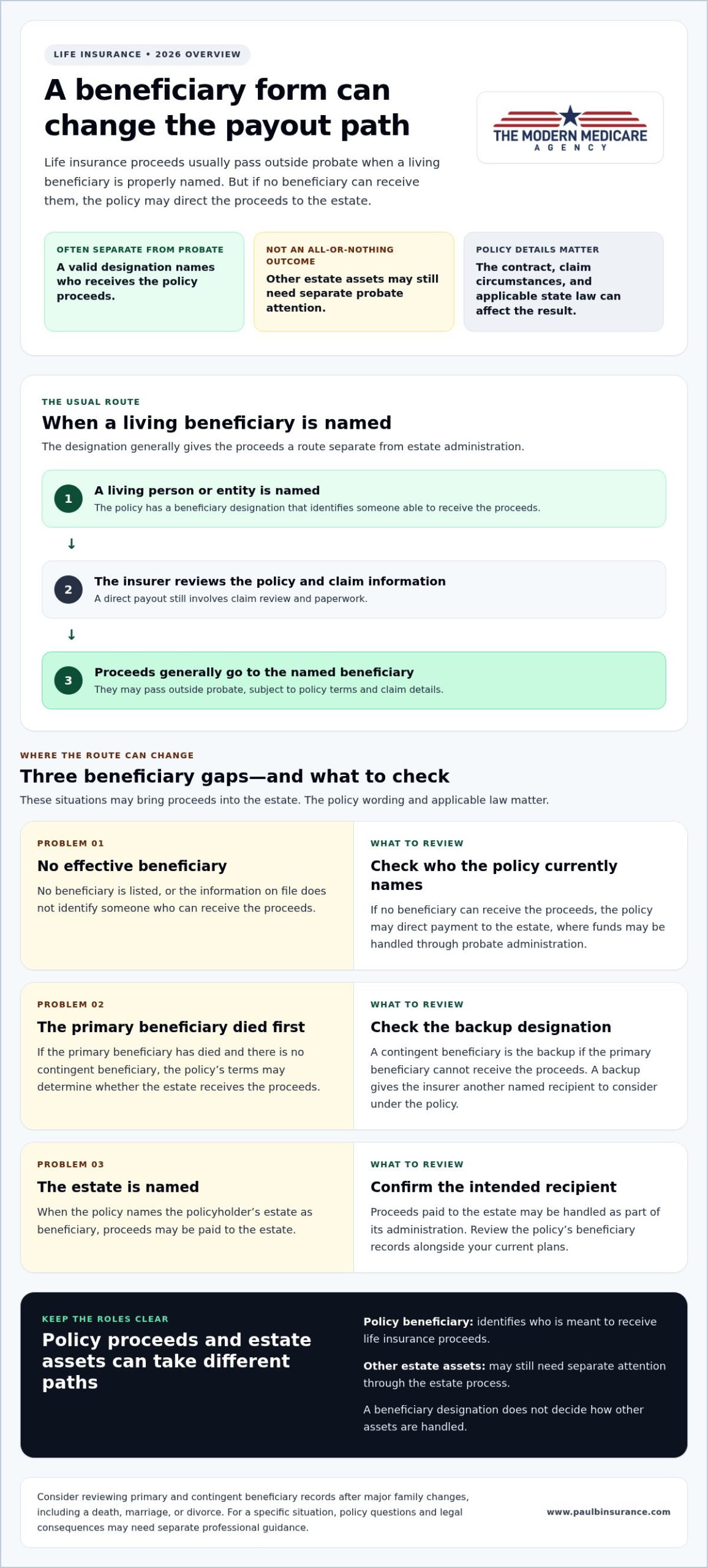
A beneficiary form can provide a clear direction, but it may not settle every situation. If no beneficiary can receive the proceeds, the policy’s terms may direct payment to the estate. Once proceeds become part of the estate, they may be handled through probate administration, the court-supervised process for managing estate assets. The precise result depends on the policy wording, claim circumstances, and applicable state law.
That’s why the answer to “does life insurance avoid probate” isn’t an unconditional yes. A designation that’s missing, outdated, or no longer workable can change the route. Here are common situations to understand:
- No effective beneficiary: The policy may have no beneficiary listed, or the information on file may not identify someone who can receive the proceeds.
- The named beneficiary died first: If the primary beneficiary has died and no contingent beneficiary is listed, the policy’s terms may determine whether the estate receives the proceeds.
- The estate is named: If the policy names the policyholder’s estate as beneficiary, proceeds may be paid to the estate and handled as part of its administration.
What happens if no beneficiary can receive the proceeds?
When no listed person can receive the proceeds, the policy may direct payment to the estate. That can bring the funds into probate administration, where they’re handled alongside other estate assets. This isn’t a universal rule: the contract and relevant state law matter. If the outcome could affect your plans, a qualified attorney in the applicable state can explain the legal implications.
Why primary and contingent beneficiaries both matter
A primary beneficiary is the first person or entity named to receive proceeds. A contingent beneficiary is the backup choice if the primary beneficiary can’t receive them. Naming a backup may address a gap if circumstances change, but it doesn’t prevent every dispute or legal challenge. The IRS explains beneficiary designations for retirement plans; those rules aren’t the same as life insurance, so review the applicable policy documents.
For example, imagine Sam names a sibling as primary beneficiary and an adult child as contingent beneficiary. If the sibling dies before Sam, the backup designation may give the insurer another named recipient to consider under the policy. If Sam never named a backup, the policy wording and applicable law become especially important. Review beneficiary records after major family changes, such as a death, marriage, divorce, or a change in who you want to receive the proceeds.
State rules can affect how a particular estate or claim is handled, so avoid relying on a nationwide assumption. In 2026, bring the policy and current beneficiary records to an insurance professional for policy questions, and discuss legal consequences with qualified counsel. If you’re also reviewing coverage, you can explore life insurance through Paul B Insurance, an independent insurance broker.
Beneficiary designation vs. revocable or irrevocable trust
A direct beneficiary designation is often the simpler arrangement: the policy names a person to receive the proceeds. Naming a trust instead can place the proceeds under instructions in a legal document, which may set out how the money is managed or distributed. Neither choice is right for everyone. Whether life insurance avoids probate can depend on the policy, the designation, the trust documents, and applicable law.
It also helps to separate two choices that can sound alike:
- Name a trust as beneficiary: The trust is listed to receive proceeds, which are then handled under its terms.
- Transfer policy ownership to a trust: The trust becomes the policy owner. This differs from naming it only as the beneficiary and may change who controls the policy.
A trust may be considered when someone wants instructions for managing proceeds rather than having a beneficiary receive and control the money directly. For example, trust terms may set out how funds are managed for a younger beneficiary. That doesn’t automatically make a trust the better choice or guarantee a particular probate result. The exact arrangement matters.
How a revocable trust may fit into life insurance planning
A revocable trust can generally be changed by its creator, subject to the trust document and applicable law. Naming this trust as a policy’s beneficiary is not the same as transferring ownership of the policy to it. If the trust receives proceeds, its terms may guide how they’re managed and distributed. Review the trust document and policy together before making changes.
How an irrevocable trust differs
An irrevocable trust generally offers less flexibility: its creator may have limited ability to change its terms or reclaim assets transferred to it. The trust document and applicable law determine who controls the trust and how distributions are made. Before changing policy ownership or beneficiary arrangements, get advice from a qualified attorney familiar with the relevant state law.
To compare the arrangements, start with what you want to happen after your death:
- Direct recipient: Do you want a named person to receive and manage the proceeds?
- Instructions for distribution: Do you want trust terms to guide how proceeds are handled?
- Control during your lifetime: Are you considering naming a trust as beneficiary, transferring ownership, or both?
These choices can have consequences beyond the beneficiary form. Trust ownership, beneficiary status, control, and probate effects depend on the documents and applicable law, so a general explanation can’t determine the right structure for your circumstances. An insurance professional can help explain policy details, while a qualified estate-planning attorney can advise on trust terms and legal effects. Keep those roles clear and review proposed changes with the appropriate professional before acting.
A practical checklist for reviewing a life insurance beneficiary
A beneficiary review doesn’t need to feel overwhelming. In 2026, start with the current policy records and take the process one step at a time. A name in an old file or a note in a will may not show what the insurer currently has on record, so use the policy documents and insurer records as your starting point.
- Locate the policy and current records. Find the policy, recent statements, and any confirmation of beneficiary information. If you can’t find the paperwork, note what you know about the policy and ask the relevant insurance professional how to locate the current records.
- Review the primary beneficiary. Check the person or entity named, including spelling and identifying details. Consider whether this choice still reflects your wishes and whether the person’s circumstances have changed.
- Check the contingent beneficiary. Confirm whether a backup recipient is named and whether that choice still makes sense. A backup may matter if the primary beneficiary can’t receive the proceeds.
- Write down questions before making changes. Note anything unclear about the policy, the people named, or the process for submitting an update. Keep a record of when you reviewed the information and any steps you take.
Review designations after major family or life changes. A marriage, divorce, birth, or death in the family can be a useful prompt to revisit the records. Don’t assume a change to a will or another estate document automatically updates the beneficiary information held for a policy. Any requested update must follow the insurer’s process and the policy’s requirements. Check that the revised information is recorded as intended.
Questions to consider before changing a designation
Before requesting an update, ask: Who should receive the proceeds? Does the current designation still reflect that intention? If a trust is involved, should it receive the proceeds, own the policy, or have both roles? These are separate arrangements. A clear list of questions can help you discuss policy details with an insurance professional and legal implications with a qualified attorney.
When to seek legal or insurance guidance
Some situations call for more than a routine form review. If a minor, trust, estate, or complex family arrangement is involved, get legal advice before changing a designation. A qualified attorney can address questions about state law and estate documents. For policy wording and insurer procedures, speak with the relevant insurance professional. Keeping these roles distinct helps you get guidance on the right part of the decision.
Wondering whether life insurance avoids probate in your circumstances? Reviewing the beneficiary information is a practical first step, but it can’t resolve every legal or policy question. For help understanding life insurance policy details and beneficiary records, explore life insurance guidance from Paul B Insurance, an independent insurance broker. Discuss trust and estate questions with a qualified attorney.
How Paul B Insurance can help you explore life insurance
Understanding probate can raise practical questions about the policy itself: what options are available, how coverage fits your needs, and where to find beneficiary information. Paul B Insurance, operating as The Modern Medicare Agency, is an independent insurance broker that offers life insurance. The agency provides educational, personalized guidance as you explore insurance options, while keeping policy discussions separate from legal advice.
Keep insurance questions separate from legal decisions
An insurance professional can discuss life insurance options and help explain policy information. Questions about whether a trust should receive proceeds, how estate documents work, or what state law means for your situation belong with a qualified attorney. Keeping these roles clear can make a complex decision easier to approach, especially if you’re considering a beneficiary change or trust arrangement.
No policy or beneficiary choice should be treated as a guaranteed way to avoid probate. The outcome can depend on the policy’s terms, the beneficiary information on record, the claim circumstances, and applicable law. Your family situation matters too. A straightforward designation for one person may raise different questions from an arrangement involving a trust, a minor, or several relatives.
As you explore your options in 2026, keep two short lists. First, write down insurance questions, such as what types of life insurance are available and which policy details you need explained. Separately, note legal questions about trusts, estate documents, or how a particular arrangement may be treated. Bring insurance questions to an insurance professional and legal questions to an attorney.
Take a calm next step
You don’t have to resolve every estate question before learning about life insurance. Start with what you know: your goals for coverage, questions that came up while reading, and any current policy information you have. If you already have a policy, keep its records available so you can ask focused questions about its terms and how to review beneficiary information.
Avoid making a legal change based on a general explanation alone. A broker can discuss insurance choices, but trust documents and legal consequences call for advice tailored to your circumstances. That distinction helps you know where to turn for each answer.
When you’re ready, explore life insurance options with Paul B Insurance and bring the questions you’ve gathered to the conversation.
Make your next step a clear one
If the question “does life insurance avoid probate” has prompted you to revisit your plans, use that concern to guide a calm, focused conversation. Write down what you want your coverage to do for the people you care about, what you’re unsure of, and which questions call for legal guidance. You don’t need to resolve everything at once. A clear question is a useful place to begin.
As you consider life insurance in 2026, focus on understanding the available options and how they fit your priorities. Paul B Insurance offers educational, personalized, unpressured guidance as an independent insurance broker. Discuss legal questions about trusts, estate documents, or state law with a qualified attorney, so each decision gets the right kind of attention.
When you’re ready to take that next step, explore life insurance options with Paul B Insurance. A thoughtful conversation can help you move forward with greater clarity and confidence.
Frequently Asked Questions
Does life insurance always avoid probate?
No. Does life insurance avoid probate in every situation? No, because the result depends on the policy records and whether a beneficiary can receive the proceeds. If you’re helping a family member organize paperwork, compare the insurer’s latest beneficiary record with the policy documents rather than relying only on an older copy. If those records conflict or the estate is named, ask an insurance professional about the policy and an attorney about legal implications.
What happens if my life insurance beneficiary dies before me?
If your primary beneficiary dies before you, the next step depends on whether you named a contingent beneficiary and what the policy says. For example, if your spouse is primary and your adult child is listed as backup, the insurer will review those designations under the policy. If there’s no backup, don’t assume your will automatically updates the policy. Review the current records and ask how to make any needed change.
Can I name a trust as my life insurance beneficiary?
Yes, a trust may be named as beneficiary if the policy permits it and the designation is completed according to the insurer’s requirements. Before doing so, coordinate the name of the trust and the person authorized to act for it with the trust document. A mismatch or outdated trust document can create questions during a claim. An attorney can help ensure the designation and trust instructions work together.
Does a revocable trust automatically receive my life insurance proceeds?
No. Creating a revocable trust doesn’t by itself make it the policy’s beneficiary. The beneficiary information on file and the policy’s terms determine who is designated to receive proceeds. Trust ownership is separate from naming the trust as beneficiary, so check both the policy records and trust paperwork. If your intention is for the trust to receive or own the policy, get legal advice before changing either arrangement.
Is a life insurance payout taxable if it avoids probate?
Avoiding probate doesn’t, by itself, determine the tax treatment of life insurance proceeds. Probate and tax rules address different questions, and the details can depend on the policy, ownership, recipient, and circumstances of the estate. Don’t assume that a payout is taxable or tax-free based only on how it is distributed. For a decision in 2026, ask a qualified tax professional to review your specific situation and current guidance.
Can life insurance proceeds be affected by state law?
Yes. State law may matter when questions arise about an estate, a trust, or a dispute over who should receive proceeds. The answer can depend on the facts and applicable policy terms, so a general explanation can’t promise the same result in every state. If family members disagree or legal documents appear inconsistent, gather the policy and relevant records, then ask a qualified attorney about the law that applies to your circumstances.

Article by
Paul Barrett
Paul Barrett, CMIP is the founder of The Modern Medicare Agency, an independent Medicare-only brokerage based in Melville, NY. With 18 years of Medicare-exclusive experience, a CMIP designation, and more than 5,000 clients served across 37 states, Paul is one of the most credentialed independent Medicare specialists on Long Island — and one of the most direct.
He represents 40+ carriers with no quotas and no allegiances, which means his recommendations are based entirely on what fits each client's specific situation. He is the author of Medicare Mastery Unlocked and host of the Wise Guys Retirement Talk podcast. His content is grounded in primary sources, real carrier intelligence, and 18 years of watching what happens when people get Medicare right — and when they don't.
📞 631-358-5793 | paulbinsurance.com