




What if the best Part D choice this year is to keep the plan you already have? Can I change my Part D plan every year? Yes. You can review your coverage and switch during Medicare Open Enrollment, which runs from October 15 to December 7, 2026. Any change you make during this period generally takes effect January 1, 2027.
It’s understandable to worry that switching could affect access to your prescriptions. But reviewing your options doesn’t mean you have to change plans. A plan’s covered-drug list, costs, and pharmacy network can change from year to year. Compare those details with your current prescriptions and preferred pharmacy to decide whether staying or switching makes sense.
This guide explains the yearly enrollment opportunity, when certain circumstances may let you change plans at another time, and what to compare before enrolling. You’ll also find practical steps to help you make a confident choice for 2027, with your prescriptions and preferred pharmacy in mind.
Key Takeaways
- Yes, can i change my part d plan every year? Learn which enrollment periods may let you switch and when exceptions could apply.
- Compare plans using an up-to-date medication list, including dosage details where available, and the pharmacies you prefer.
- Review each plan’s drug coverage rules and cost information before deciding whether it fits your prescription needs.
- Follow a clear enrollment sequence, save your confirmation, and check the new plan’s effective date.
- An independent Medicare broker can help compare Part D options. The initial consultation and Medicare review with The Modern Medicare Agency are free.
Can I Change My Part D Plan Every Year? The Short Answer
Yes. If you’re wondering, can i change my part d plan every year, eligible beneficiaries can generally change plans during an enrollment period that applies to them. For most people, the main yearly opportunity is Medicare’s Annual Enrollment Period. You can review your current coverage and compare other options without committing to a switch. A review helps you make an informed choice, but it doesn’t require you to leave your plan.
In 2026, the Annual Enrollment Period runs from October 15 through December 7. A Part D change made during this window generally takes effect on January 1, 2027. Keep that timing in mind: your current plan remains relevant until the new coverage begins. Submitting an application does not mean the new plan is already active.
Other opportunities to change may be available if your circumstances qualify, such as moving to a new service area, losing other creditable drug coverage, or qualifying for Extra Help. The rules and timing depend on the situation. If you think an exception may apply, confirm the enrollment window that fits before submitting a change.
Does everyone need to switch Part D plans every year?
No. An annual review can be useful even if your prescriptions haven’t changed. It gives you a chance to check whether your plan still fits your needs for the coming year. Reviewing means examining your current coverage and comparing it with your situation. Switching means enrolling in a different plan. You can review your options and decide to stay with your current plan.
For example, if you take the same medicines as last year, check how your plan covers them and whether your preferred pharmacy remains convenient. If the plan still suits you, staying may be the right choice. The point is to make a decision based on current information, not assume you must change because enrollment is open.
What does changing your plan mean for your coverage?
A plan change arranges future prescription coverage, so pay close attention to the new plan’s stated effective date. During the 2026 Annual Enrollment Period, a change generally starts January 1, 2027. Keep your enrollment confirmation and check the plan name and effective date. If anything differs from what you expected, follow up through the appropriate enrollment channel before relying on the new coverage.
Part D helps cover prescription drugs. For a broader explanation of how the benefit works, see this Medicare Part D overview. Keep prescription drug coverage distinct from other types of insurance. For example, a dental plan addresses a different coverage need, as explained on our dental insurance plan page.
Before making a change, use this simple check:
- Confirm which enrollment opportunity applies to you.
- Review the new plan’s confirmation and effective date.
- Keep a copy of your enrollment details for reference.
This quick check helps you understand when your new coverage is meant to begin before you rely on it.
When Can You Change a Part D Plan in 2026?
So, can i change my part d plan every year? For many people, the main opportunity is Medicare’s Annual Enrollment Period, but the dates and rules depend on the type of coverage they have and the enrollment period that applies. Knowing which window fits your situation helps distinguish the general yearly review from a separate opportunity available only to certain enrollees.
The annual window for changing a standalone Part D plan
In 2026, the Annual Enrollment Period runs from October 15 through December 7. It’s the main yearly opportunity for many beneficiaries to review and change standalone Part D coverage. Changes made during this period generally take effect on January 1, 2027. The enrollment dates and effective date serve different purposes: the first is when you can act, and the second is when the new coverage generally begins.
This window can be a useful checkpoint even if you’re unsure about switching. Compare how plans cover your prescriptions and whether they include the pharmacies you use. Then decide whether another option fits better. You can review your options and stay with your current coverage if you choose. An annual review is not an instruction to enroll in a different plan.
Medicare’s rules can depend on your coverage and circumstances. Before submitting an application, use current official Medicare guidance to confirm that the enrollment period applies to you and that you understand when a change would start. This is especially helpful if you’re planning around upcoming prescriptions or want to know which plan will be active at a particular time.
When Medicare Advantage enrollment rules may also matter
The Medicare Advantage Open Enrollment Period runs from January 1 through March 31, 2026, but it’s for people already enrolled in Medicare Advantage. Eligible people can make a one-time switch to another Medicare Advantage plan or leave Medicare Advantage and return to Original Medicare. In the latter case, they can also enroll in a standalone Part D plan. This window isn’t a general opportunity for everyone with standalone Part D to switch drug plans.
The distinction is the kind of coverage you have. A standalone Part D plan provides prescription drug coverage separately, while some Medicare Advantage plans include drug coverage as part of the plan. If you’re comparing these coverage types, the Medicare Advantage plans guide can help explain how Medicare Advantage works. Before enrolling, check how a proposed change affects both your medical and prescription coverage.
Other change opportunities may apply outside these annual windows when specific circumstances qualify. Examples can include moving to a new service area, losing other creditable prescription drug coverage, or qualifying for Extra Help. These are not routine yearly options, and eligibility and timing depend on the situation. Check current Medicare guidance before relying on an exception.
If you’d like help understanding which enrollment window may fit your situation, an independent Medicare broker can help you review Part D options. Learn more about personalized Medicare plan guidance as you consider your next step.
How to Compare Part D Plans Before You Decide to Switch
A useful Part D comparison starts with your current medications and pharmacies. A plan that works for someone else may not suit your prescriptions, preferred pharmacy, or budget. Gather current information and compare the same details across each option. That makes it easier to see which plan may fit your needs and whether changing is worthwhile.
Check your prescriptions and pharmacy access
Start with an up-to-date list of every prescription you take. Include the medication name and, where available, its dosage and how often you take it. Then check each plan’s current information to see whether it covers your medications and whether any coverage rules apply. Also confirm whether your preferred pharmacy is in the plan’s network.
Details that seem small can affect how convenient a plan feels. For example, a plan may cover your medicines, but its pharmacy network may not include the location you use most. Consider every prescription and pharmacy together rather than choosing based on one item alone.
- Medications: Record each prescription, dosage, and schedule where available.
- Coverage: Check whether each plan covers your listed medicines and note any rules that apply.
- Pharmacy: Confirm whether your preferred pharmacy is in the plan’s network.
- Costs: Compare the plan’s current cost information for the medicines you take.
For a clearer comparison, keep the same list beside each plan’s details. If a medication name or dosage has changed, update your list before relying on an older comparison. This helps you assess the options based on your current needs instead of assumptions about what a plan covers.
Look beyond a single cost figure
A monthly premium is only one part of the cost picture. Review current plan information for other costs that may apply to your prescriptions, including any deductible, copayments, or coinsurance. Consider costs across the year based on the medicines you take, not just the monthly amount shown at a glance. Plan details differ, so use current information for the specific options you’re comparing.
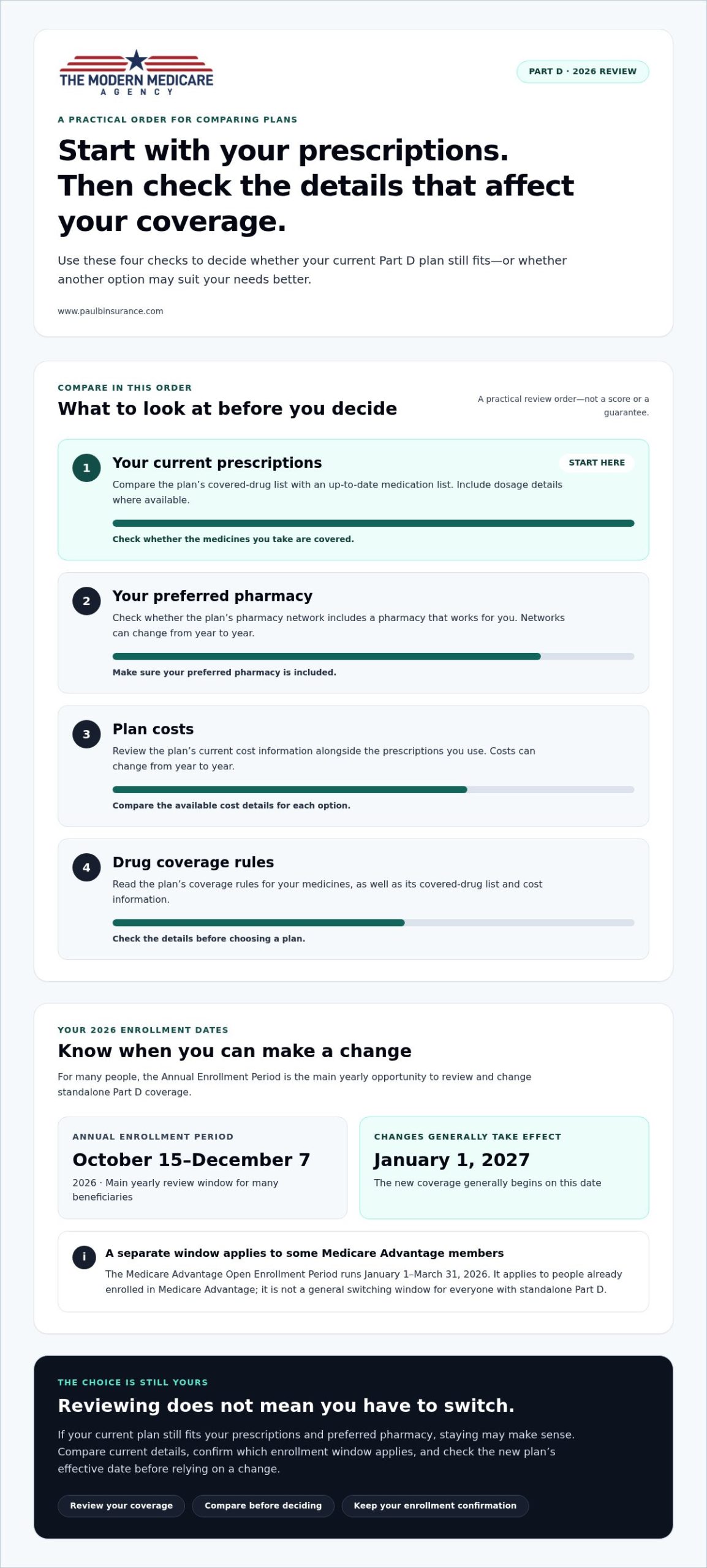
If you’re asking, can i change my part d plan every year, comparing your medications, pharmacy access, coverage rules, and costs can help you decide whether a change makes sense for the year ahead. There isn’t one universal best plan for every person. Compare options using the details that matter in your situation, then choose whether to stay with your current coverage or consider another plan.
How to Change Your Part D Plan Without Losing Track of Next Steps
If you’re asking, can i change my part d plan every year, knowing the enrollment rules is only part of the process. A little preparation makes the transition easier to follow. Keep your medication and pharmacy details close, confirm that the enrollment period applies to you, and save the information you receive after submitting an application.
Prepare before submitting a plan change
Before enrolling, gather a current list of your prescriptions, including dosage details where available, and note the pharmacies you prefer. Use these details to compare plan options, then confirm that the enrollment period fits your situation. In 2026, the Annual Enrollment Period is October 15 through December 7. A change made during this period generally takes effect January 1, 2027.
When you’re ready to enroll, follow the application instructions for the plan and enrollment method you choose. Review the information before submitting it, especially the plan name and coverage start date. Keep a copy of the application details and any enrollment confirmation where you can find it later. These records help you track what you selected and follow up if something doesn’t match your expectations.
- Review your prescriptions and preferred pharmacies. Have your current information ready before comparing or enrolling.
- Compare available options. Check medication coverage, pharmacy access, coverage rules, and current cost information.
- Confirm your enrollment timing. Make sure the enrollment opportunity applies to your circumstances.
- Submit the application and save the confirmation. Keep the plan details together so you can refer to them during the transition.
Confirm the new plan’s start date
After you enroll, check the effective date shown in the confirmation or other enrollment information. It tells you when the new plan is scheduled to begin. For an annual-period change, that’s generally January 1 of the following year. If the date or plan information differs from what you expected, follow the instructions in your plan documents or on Medicare.gov rather than guessing.
In general, your old Part D coverage ends when the new coverage begins. Don’t assume you need to cancel the current plan yourself, and don’t end it without checking the official instructions for your circumstances. The transition can depend on the type of coverage you have and how you enrolled. Confirming the effective date and following the instructions helps you keep track of which plan should cover your prescriptions at each point.
A simple record can bring peace of mind: keep the confirmation, note the new plan’s stated start date, and store any instructions you need to follow. If you’d like personal support reviewing Part D options and keeping the steps clear, schedule a Medicare review.
Get Personal Help Reviewing Your Part D Options
Plan information can feel like a lot to sort through, especially when you’re trying to understand whether your prescriptions and pharmacy fit a particular option. Paul B Insurance is an independent Medicare broker that offers personalized Part D comparisons. The initial consultation and Medicare review are free, and guidance is never rushed or pressured. The aim is to help you understand your options and make a decision that feels right for you.
What a personalized Part D review can help you consider
A useful review starts with your current medication list and preferred pharmacies. These details give the comparison a practical focus: how available options relate to the prescriptions you take and where you fill them. You can also discuss plan information that’s unclear, making it easier to understand what to look for as you weigh your options.
If you’d like background before discussing specific options, the Medicare Part D explained guide offers foundational information about prescription drug coverage. Then a personalized conversation can connect that context to your circumstances. You don’t have to arrive with every answer. Your questions and an up-to-date medication list are a helpful place to begin.
Paul B Insurance has 18 years of experience and works with 40+ carriers. As an independent Medicare broker, the agency compares options from multiple carriers rather than representing a single carrier. The agency has served 5,000+ clients served. These facts offer context for the support available, but your plan decision remains yours.
A clear next step from uncertainty to confidence
If you’re still wondering, can i change my part d plan every year, a review can help you understand the options and timing that apply to your situation. The agency’s 5-step Medicare Process gives the conversation a clear structure, helping you move through your questions and review choices at a manageable pace. It’s guidance, not a promise of a particular plan or enrollment result.
Support doesn’t have to end once you’ve reviewed your choices. Paul B Insurance provides year-round support for claims, billing, and plan changes. You can turn to the agency with questions that come up after enrollment, too.
Ready to talk through your Part D options for 2026? Schedule a free Medicare review. Bring your medication list, pharmacy preferences, and questions. You can take the next step at your own pace, with help understanding what to consider before making a decision.
Make Your Next Part D Decision With Confidence
The next step doesn’t have to be a plan change. It can simply be a clearer understanding of what matters most to you and whether your current coverage still feels like the right fit. If questions remain, a personal conversation can help you sort through them and make a decision you feel comfortable with.
So, can i change my part d plan every year? In many cases, yes, during an enrollment period that applies to you. Whether you decide to stay or switch, take the time you need to understand your options and feel confident about what comes next.
Paul B Insurance is an independent Medicare broker with 18 years of experience, 5,000+ clients served, and access to 40+ carriers. If you’re ready for personal guidance, schedule your free Medicare review. You can take the next step at your own pace, with support as you make the choice that feels right for you.
Frequently Asked Questions
Can I change my Part D plan at any time during the year?
Not usually. If you’re asking, can i change my part d plan every year, the answer is generally during Medicare’s Annual Enrollment Period or when a qualifying circumstance gives you another enrollment opportunity. The annual period runs from October 15 through December 7, 2026. Other opportunities have their own eligibility rules, so don’t assume they apply to you. Check Medicare.gov or your plan information for current 2026 guidance before acting.
Do I need to cancel my old Part D plan when I join a new one?
Usually, you don’t need to send a separate cancellation request when you switch as directed. Medicare.gov explains that your old drug coverage generally ends when your new coverage begins. Still, keep your enrollment confirmation and verify the effective date in the new plan’s information. If you’re changing other Medicare coverage at the same time, follow the official instructions for your situation rather than assuming the standard switching process applies.
What happens if my new Part D plan does not start when I expect?
If the date in your plan documents doesn’t match what you expected, contact the plan or Medicare using official contact information and ask them to clarify your enrollment status. Have your confirmation and plan details ready so you can explain what you submitted and when. Don’t rely on an assumed start date or make decisions based on incomplete information. The confirmed effective date helps you understand which coverage applies and when.
Can I change my standalone Part D plan during the Medicare Advantage Open Enrollment Period?
Not as a general extra switching window. The Medicare Advantage Open Enrollment Period runs from January 1 through March 31, 2026, and applies to people already enrolled in Medicare Advantage. Eligible enrollees have specific change options, including returning to Original Medicare and enrolling in standalone Part D. Having a standalone Part D plan by itself doesn’t make you eligible for this period. Check current Medicare guidance for rules that fit your coverage.
Should I change my Part D plan if my prescriptions have not changed?
Not necessarily, but unchanged prescriptions don’t automatically mean your current plan remains the best fit. An annual check can show whether your medicines are covered, whether your preferred pharmacy works for you, and whether any coverage rules or costs deserve a closer look. Use current plan information for the coming year. If your existing coverage still meets your needs, you can review other options without switching.
Will changing my Part D plan affect when my coverage begins?
Yes, the effective date depends on the enrollment opportunity you use, so check the new plan’s enrollment information rather than relying on a general assumption. For changes made during the 2026 Annual Enrollment Period, coverage generally begins January 1, 2027. Save your confirmation and note the date it gives you. If the information is unclear or unexpected, check Medicare.gov or contact the plan using its official details.
Can someone help me compare Part D plans for free?
Yes. Paul B Insurance offers a free initial consultation and Medicare review. As an independent Medicare broker, the agency compares Part D options from 40+ carriers and can help you consider how they relate to your prescriptions and pharmacy preferences. A review can make plan information easier to understand, but it doesn’t guarantee a particular plan, savings, or outcome. You remain in control of whether you make a change.

Article by
Paul Barrett
Paul Barrett, CMIP is the founder of The Modern Medicare Agency, an independent Medicare-only brokerage based in Melville, NY. With 18 years of Medicare-exclusive experience, a CMIP designation, and more than 5,000 clients served across 37 states, Paul is one of the most credentialed independent Medicare specialists on Long Island — and one of the most direct.
He represents 40+ carriers with no quotas and no allegiances, which means his recommendations are based entirely on what fits each client's specific situation. He is the author of Medicare Mastery Unlocked and host of the Wise Guys Retirement Talk podcast. His content is grounded in primary sources, real carrier intelligence, and 18 years of watching what happens when people get Medicare right — and when they don't.
📞 631-358-5793 | paulbinsurance.com