



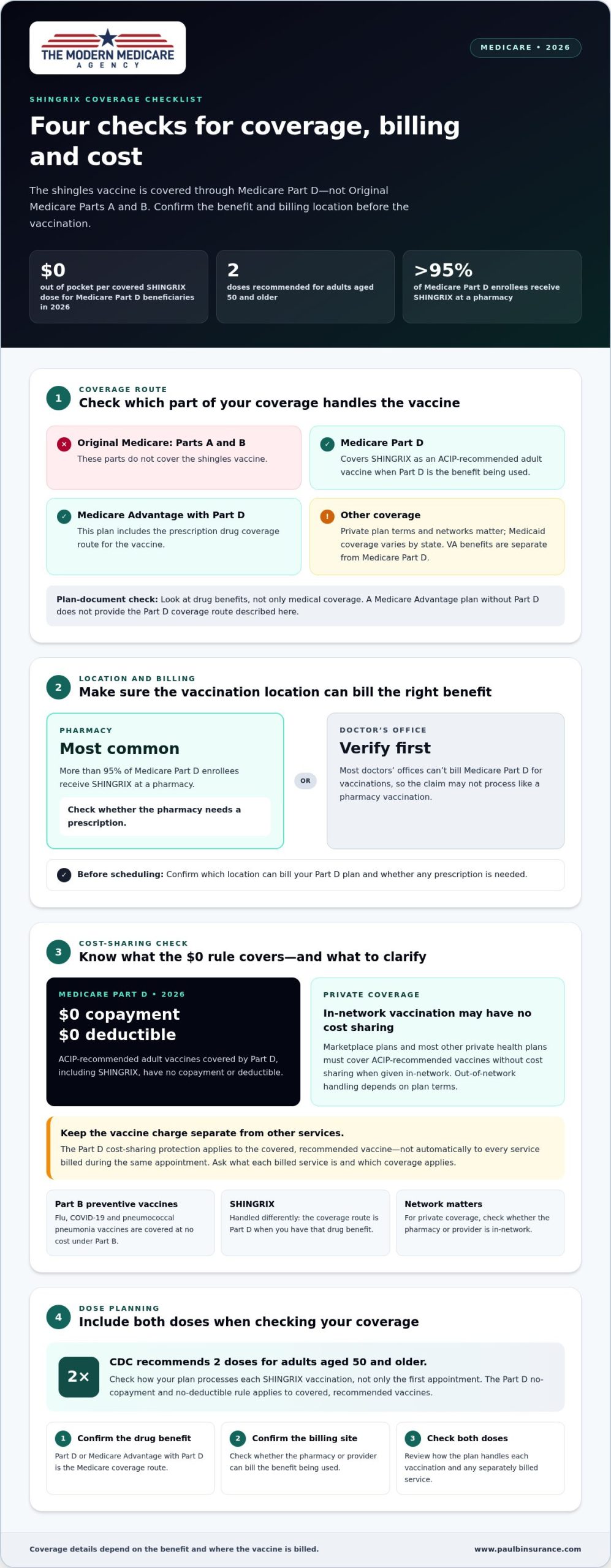
Medicare Part D beneficiaries pay $0 out of pocket per SHINGRIX dose in 2026. Original Medicare Parts A and B don’t cover the shingles vaccine; coverage comes through a Part D plan or a Medicare Advantage plan that includes Part D drug coverage. To understand how to find a plan that covers the shingles vaccine, start by checking whether your coverage includes Part D.
Finding a plan that covers the shingles vaccine can feel confusing because coverage depends on both your plan and where you get the shot. Medicare Part D covers recommended adult vaccines without a deductible or copayment, but the location and billing process can affect how that coverage works in practice.
This article explains how Medicare coverage works, why the pharmacy or doctor’s office matters, and what to know about cost sharing. You’ll also learn what to compare when reviewing plans, so you can make an informed coverage decision.
Key Takeaways
- Learn which types of Medicare coverage include prescription drug benefits relevant to shingles vaccination.
- See why where you receive the vaccine can affect how your plan processes the claim.
- Understand the cost-sharing rules for recommended vaccines and what they mean for your out-of-pocket costs.
- Know what to consider when comparing plan coverage, including how vaccine access fits with your broader prescription drug needs.
- Review the recommended shingles vaccine schedule and how it shapes planning for the full vaccination series.
Does Medicare Cover the Shingles Vaccine?
Yes, Medicare Part D covers SHINGRIX, the shingles vaccine, and Medicare Part D beneficiaries pay $0 out of pocket per dose in 2026. The key is knowing which part of your coverage handles the vaccine and where it can be billed.
Medicare Part D Coverage for Shingrix
Medicare Part D is prescription drug coverage that pays for SHINGRIX, a vaccine against shingles, also called zoster. Part D covers adult vaccines recommended by the Advisory Committee on Immunization Practices when Medicare Part B doesn’t cover them. Having Medicare alone doesn’t tell you whether you have the drug coverage needed for the shot.
Comparing Original Medicare and Other Coverage
Original Medicare Parts A and B don’t cover the shingles vaccine. Coverage comes through Part D or a Medicare Advantage plan that includes Part D drug coverage. When comparing plan documents, check the drug benefits, not just the medical coverage. A Medicare Advantage plan without Part D drug coverage doesn’t provide the coverage route described here. This is an important step in how to find a plan that covers the shingles vaccine.
Coverage Through Other Programs
Private insurance, Medicaid, and VA benefits each have their own coverage arrangements. Many private health plans cover SHINGRIX, and eligible in-network vaccinations may have no cost sharing under ACA rules. Medicaid coverage varies by state, so the program and its network matter. VA benefits are separate from Medicare Part D, and coverage depends on which system is providing your care.
Where you receive the shot can affect how Part D coverage works. More than 95% of Medicare Part D enrollees receive SHINGRIX at a pharmacy. Most doctors’ offices can’t bill Medicare Part D for vaccinations, so a doctor’s office visit may not process like a pharmacy vaccination. Before scheduling, identify which location can bill your Part D plan and whether the pharmacy needs a prescription.
Shingrix protects against the varicella-zoster virus, which causes shingles. The virus can remain in the body after chickenpox and later cause shingles. Vaccine coverage is a payment question, separate from prevention guidance or advice about a health condition. Discuss headaches or other health concerns with your healthcare professional. The plan’s drug benefits determine the Part D coverage route.
For Medicaid, state rules affect whether SHINGRIX is covered and where an eligible person can receive it. More than two-thirds of states and the District of Columbia are likely to cover the vaccine for Medicaid patients aged 50 years and older. Private-plan coverage also depends on the plan’s network and billing arrangement. A dental benefit is separate from vaccine coverage, but dental insurance plan options may be relevant when reviewing other coverage needs.
Cost-sharing rules for recommended vaccines
In 2026, the cost-sharing rule depends on the coverage paying for the vaccine. For Medicare Part D, ACIP-recommended adult vaccines have no copayment or deductible. The Inflation Reduction Act eliminated cost-sharing for these vaccines starting in 2023. That means the plan’s usual deductible and drug copay structure doesn’t apply to a covered, recommended vaccine such as SHINGRIX.
This protection is specific to vaccines covered under the applicable benefit. Medicare Part B covers flu, COVID-19, and pneumococcal pneumonia preventive vaccines at no cost. SHINGRIX is handled differently: Part D coverage applies when a person has that drug benefit. Knowing which part pays can help explain why two preventive shots may follow different billing rules.
For private coverage, the Affordable Care Act requires Marketplace plans and most other private health plans to cover ACIP-recommended vaccines, including SHINGRIX, without cost sharing when given in-network. The network condition matters: an in-network pharmacy or provider may follow the no-cost rule, while the plan’s terms determine how an out-of-network visit is handled. This rule concerns cost sharing, not whether every location bills the same way.
Age and dose timing also shape the vaccination plan. The Centers for Disease Control and Prevention recommends that adults aged 50 years and older receive 2 doses of shingles vaccine. SHINGRIX helps prevent herpes zoster, the painful condition commonly called shingles. Two doses are part of the recommended schedule, so consider the cost-sharing rule for the full course, not only the first appointment.
Side effects such as soreness, fatigue, or headache can happen after vaccination. Temporary side effects usually last 2 to 3 days. A reaction after the first dose doesn’t automatically answer whether to continue; discuss a severe or concerning reaction with a healthcare provider. This separates a health question from the plan’s payment rule.
Use these points when reviewing vaccine benefits:
- Identify whether Medicare Part D or another plan benefit covers SHINGRIX.
- Look for the plan’s network terms and where the vaccination will be given.
- Consider both doses and how the plan processes each vaccination.
A clear view of Medicare Part D coverage can help you compare vaccine benefits alongside your prescription drug needs.
Coverage conditions and cost-sharing
In 2026, what you owe depends on which benefit covers the vaccination and whether you use its network. Medicare Part D has no copayment or deductible for ACIP-recommended vaccines. That rule applies to the covered vaccine, not automatically to every service billed during the same appointment. Separating the vaccine charge from other services can help explain an unexpected bill.
A doctor may recommend a service Medicare doesn’t cover, or covers only at certain intervals. That service could lead to an additional charge. Ask what each billed service is and which coverage applies. For a Medicare-covered service, the amount owed can depend on other insurance, the doctor’s charge, whether the doctor accepts assignment, the facility type, and the location.
Private insurance has a different condition: the Affordable Care Act requires Marketplace plans and most other private health plans to cover ACIP-recommended vaccines, including SHINGRIX, without cost sharing when administered in-network. The network requirement matters. If vaccination takes place outside the plan’s network, the no-cost-sharing rule may not apply in the same way. In 2026, review both the vaccine benefit and the location’s network status.
In 2026, 96% of privately insured people pay $0 for each SHINGRIX dose. That figure concerns the vaccine, not necessarily every service during an appointment. The ACA added SHINGRIX to the list of vaccines covered without out-of-pocket costs in 2022. The practical distinction is between the vaccine itself and other care a patient receives during the visit.
Medicaid cost sharing has its own conditions. Coverage varies by state, so the state program, eligibility, and use of an in-network location all matter. More than two-thirds of states and the District of Columbia are likely to cover SHINGRIX for Medicaid patients aged 50 years and older.
Before an appointment, organize the coverage details that determine how the claim is handled:
- Identify whether Medicare Part D, private insurance, or Medicaid pays for the vaccine.
- Match the vaccination location to the plan’s network and billing rules.
- Separate the vaccine charge from any additional service recommended during the visit.
- Review the coverage terms for each dose, not just the first appointment.
These distinctions help you understand whether cost sharing applies to the immunization itself or to a separate service. They also make it easier to discuss a bill by identifying the plan, network, location, and service involved.
Zoster vaccine
Zoster is another name for shingles, a painful rash caused by the varicella-zoster virus. A zoster vaccine helps prevent shingles and some serious complications, including long-term pain. In the United States, SHINGRIX is the shingles vaccine currently available. Knowing its name helps when comparing plan documents, pharmacy records, or a vaccination bill.
SHINGRIX is a two-dose vaccine available at pharmacies and doctors’ offices. For adults aged 50 years and older, the Centers for Disease Control and Prevention recommends two doses, usually separated by 2 to 6 months. That interval gives you a useful planning window for the follow-up dose. A pharmacy may require a doctor’s prescription, so the location and prescription process can affect how you arrange vaccination.
The series doesn’t need to restart if more than 6 months pass after the first dose. You can still receive the second dose to complete it. Keep the date of your first vaccination, since that helps the provider understand where you are in the series. If your record is unclear, the vaccination provider can use your available immunization history to guide the next appointment.
SHINGRIX is recommended for adults aged 50 years and older, even if they previously had shingles, received the chickenpox vaccine, or received Zostavax, according to the Centers for Disease Control and Prevention. The recommendation also includes adults aged 18 years and older who are or will be at increased risk because of a weakened immune system caused by disease or treatment. Personal vaccination timing can depend on the person’s health circumstances.
Zostavax is not an alternative that patients can currently receive in the United States. It was no longer available for use as of November 18, 2020. That date helps explain why older records may name a different shingles vaccine, while current coverage discussions generally concern SHINGRIX. If a plan document or past record uses “zoster vaccine,” look for the specific vaccine name before comparing its benefit.
When reviewing coverage, keep the vaccine name, dose number, appointment location, and any prescription details together. A pharmacy vaccination and a doctor’s-office vaccination may follow different billing processes under Medicare Part D. The vaccine is the same, but the location can affect how the plan processes the claim. These details help clarify whether a record describes the first dose, the second dose, or an older vaccine.
The term “zoster vaccine” refers to protection against shingles, while SHINGRIX identifies the vaccine currently used in the United States. Matching the name to your plan’s benefit and the provider’s billing process can help avoid confusion between vaccination history and current coverage.
Prevention shingles
Shingles prevention involves vaccination against the varicella-zoster virus, which causes shingles. The virus can remain in the body after chickenpox and later reactivate. Shingles may bring a painful rash and complications, including lasting nerve pain. Vaccination planning is therefore about more than arranging one appointment. It also means understanding the recommended series and how your coverage handles its doses.
Adults aged 50 years and older are recommended to receive 2 doses of the shingles vaccine, according to the Centers for Disease Control and Prevention. The two-dose schedule matters when planning appointments and reviewing coverage. A plan’s vaccine benefit should be considered across the full series, rather than only the first vaccination. Keep your vaccination record so the provider can see which dose comes next.
For most adults, the second SHINGRIX dose is usually given 2 to 6 months after the first. Adults with weakened immune systems may receive the second dose 1 to 2 months after the first, if needed. These different intervals can make scheduling more manageable when treatment or a health condition affects timing. The appropriate interval depends on the person’s situation and the recommended schedule.
Completing the series does not require starting over if more than 6 months pass after dose one. The series can continue with the second dose. This can help if illness, travel, or a scheduling change interrupts the original plan. Bring the first-dose date to the next appointment, and ask the vaccination provider to record the follow-up dose.
SHINGRIX is recommended for adults aged 50 years and older, including those who previously had shingles, received the chickenpox vaccine, or received Zostavax. Adults aged 18 years and older with weakened immune systems due to disease or therapy are also recommended to receive two doses. A past shingles episode or older vaccination does not by itself remove the recommendation for eligible adults.
Protection is meaningful, though it isn’t a substitute for understanding symptoms. Two SHINGRIX doses are more than 90% effective at preventing shingles and postherpetic neuralgia, according to the Centers for Disease Control and Prevention. Temporary side effects usually last 2 to 3 days. If a concerning reaction affects your appointment plans, discuss timing with your healthcare provider.
For coverage planning, connect the prevention schedule to the benefit that pays. Medicare Part D beneficiaries pay $0 out of pocket per SHINGRIX dose in 2026, but location can affect how a claim is processed. Keep your plan details and dose dates together, then review how Medicare Part D coverage fits your prescription drug needs.
The Modern Medicare Agency: Medicare Advantage Plans
The Modern Medicare Agency is an independent Medicare broker that helps you compare Medicare Advantage, Medicare Supplement (Medigap), and Medicare Part D plans. If vaccine coverage is part of your decision, look beyond the plan’s name: review whether its drug coverage includes the benefit you need, along with how its pharmacy network and vaccine billing work.
If you’re weighing Medicare Advantage against standalone drug coverage, an independent comparison can help clarify how each option fits your prescription and healthcare needs. The Modern Medicare Agency provides personalized guidance to help you understand those differences and choose with greater confidence. You can also explore its Medicare Advantage plan information as part of that review.
Book a free Medicare review with The Modern Medicare Agency to compare your coverage options.
Make Your Next Coverage Review Count
Use your next plan review to connect vaccine coverage with the care you want throughout the year. A short list of priorities can keep the conversation focused: your prescriptions, preferred pharmacies, and doctors. Looking at these together can help you judge whether a plan fits your needs, not just one vaccination.
If you’re still weighing how to find a plan that covers the shingles vaccine, an independent conversation can help you compare options at your own pace. The Modern Medicare Agency offers personalized comparisons of Medicare Advantage, Medigap, and Part D plans, so you can consider what matters most and understand how your coverage choices fit together.
There’s no need to have every detail figured out before you begin. Bring your questions and take the next step at your pace. Contact The Modern Medicare Agency to discuss your Medicare coverage options.
Frequently Asked Questions
What else should I know?
Keep your vaccination record with your Medicare and prescription plan details. The record helps distinguish a first dose from a follow-up dose, especially if you received one at a different location. If a pharmacy requests a prescription, your doctor can help with that part of the process. In 2026, matching the vaccine record, location, and plan benefit can make billing questions easier to sort out.
Which health insurance plans cover the shingles vaccine in the United States?
Coverage may come through Medicare Part D, a Medicare Advantage plan with Part D drug coverage, private insurance, Medicaid, or VA benefits. Original Medicare Parts A and B alone don’t cover the shingles vaccine. Private plan coverage and network rules depend on the plan, while Medicaid coverage varies by state. If you have more than one type of coverage, identify which plan is handling the vaccination before comparing its terms.
Does Medicare Part D cover Shingrix, and what are the coverage rules?
Yes. Medicare Part D covers SHINGRIX as an ACIP-recommended adult vaccine that Medicare Part B doesn’t cover. Part D plans don’t charge a copayment or apply a deductible for ACIP-recommended vaccines. The practical detail is how the vaccination is billed: most doctors’ offices can’t bill Medicare Part D for vaccinations, so a pharmacy is often the more straightforward setting for using this benefit.
How much does Shingrix cost with Medicare Part D in 2026?
Medicare Part D beneficiaries pay $0 out of pocket per SHINGRIX dose in 2026. This applies to the vaccine under the Part D benefit, not automatically to every other service during an appointment. If a visit includes another service, that service may have separate coverage rules. Keep any bill or explanation of benefits so you can identify whether a charge relates to the vaccine or something else.
Does Medicare Advantage cover the shingles vaccine, and what costs apply?
A Medicare Advantage plan covers the shingles vaccine through its Part D drug coverage. In 2026, eligible beneficiaries pay $0 out of pocket per SHINGRIX dose under Part D vaccine rules. The important distinction is whether the Medicare Advantage plan includes prescription drug coverage. Review the drug benefit and vaccination billing arrangements together, since the place you receive the shot can affect how the plan processes it.
How can I check whether my insurance covers Shingrix at a pharmacy or doctor’s office?
Start with your plan’s vaccine or prescription drug benefit, then compare it with the location where you plan to get vaccinated. For Medicare Part D, find out whether the pharmacy can bill the plan directly and whether it needs a prescription. Most doctors’ offices can’t bill Part D for vaccinations. For private coverage, review whether the pharmacy or provider is in-network, since that affects cost-sharing rules.
What steps should I take if my health plan denies coverage for Shingrix?
Check whether your coverage includes Part D, then confirm that the vaccination location can bill your plan and meets its network rules. A pharmacy may need a prescription. If a claim is denied, ask which charge was denied and whether it was for the vaccine or a separate service.

Article by
Paul Barrett
Paul Barrett, CMIP is the founder of The Modern Medicare Agency, an independent Medicare-only brokerage based in Melville, NY. With 18 years of Medicare-exclusive experience, a CMIP designation, and more than 5,000 clients served across 37 states, Paul is one of the most credentialed independent Medicare specialists on Long Island — and one of the most direct.
He represents 40+ carriers with no quotas and no allegiances, which means his recommendations are based entirely on what fits each client's specific situation. He is the author of Medicare Mastery Unlocked and host of the Wise Guys Retirement Talk podcast. His content is grounded in primary sources, real carrier intelligence, and 18 years of watching what happens when people get Medicare right — and when they don't.
📞 631-358-5793 | paulbinsurance.com