




The key difference is provider choice: Medicare SELECT is a type of Medigap that may require you to use network hospitals or pay more for out-of-network care. If you’re asking what is the difference between Medigap and Medicare SELECT, the short answer is that both supplement Original Medicare, but SELECT adds network rules that can affect where you receive care.
The names can make these options sound like separate types of coverage. Medicare SELECT is still Medigap, so the key question is whether its network rules fit the way you want to access care.
This guide compares eligibility, provider choice, Original Medicare coverage, premiums, and out-of-pocket costs. It also explains Medigap’s role as a supplement, the trade-offs to consider, and how to decide whether a network-based SELECT policy or broader provider choice better suits your needs.
Key Takeaways
- Medicare SELECT is a type of Medigap, but its provider network can limit where you receive care or affect out-of-network costs.
- Compare plan benefits and network rules together; Medigap options with the same letter generally offer the same basic benefits in most states.
- Medigap works alongside Original Medicare to help cover certain costs, while you keep paying your Medicare Part B premium.
- Your age, Medicare enrollment, and state can affect eligibility and the options available to you.
- Switching plans may involve timing rules and medical underwriting, so understand your enrollment protections before making a change.
Medigap plan types and eligibility
Medigap is another name for Medicare Supplement insurance. Medicare SELECT is one type of Medigap policy, not a separate category of Medicare coverage. The key distinction is that SELECT policies may include network rules, while other Medigap policies generally let you use any provider that accepts Medicare. In most states, insurers offer lettered plans, and policies with the same letter provide the same basic benefits. Medigap coverage options can help you understand how those benefits fit alongside Original Medicare.
Plan letters make it easier to compare benefits across insurance companies. In most states, the available standardized plans are A through D, F, G, and K through N. An insurer can offer up to 10 plans, each labeled with a letter. Massachusetts, Minnesota, and Wisconsin use different standardization systems, so a letter may not mean the same benefit package there as it does elsewhere. Compare benefits within your state’s system.
Eligibility generally depends on age and Medicare enrollment. According to the Centers for Medicare & Medicaid Services, people generally need to be at least 65 years old and enrolled in Medicare Parts A and B to buy Medicare Supplement insurance, although some states allow eligible people under 65 to buy it. If you qualify before age 65, your options depend on your state. Having Medicare Part A alone, or Part B alone, generally does not meet the stated enrollment requirement.
Medigap covers one person per policy. If both spouses want coverage, each needs an individual policy. That means comparing each person’s plan letter, benefits, and premium separately, rather than treating the household as one policyholder. Standardized benefits clarify what each plan letter covers, but premiums can vary by insurer and location.
Prescription drug coverage is another important distinction. Medigap plans sold after 2005 do not include prescription drug coverage, so a Medigap policy does not replace Medicare Part D. Consider prescription coverage separately when comparing how to cover medical and medication needs. Also, people who first joined Medicare on or after January 1, 2020, cannot newly buy Medigap Plans C or F. Other plan letters remain available subject to state rules and insurer offerings.
Start by checking eligibility, then compare the standardized benefits available where you live. Consider whether a network-based SELECT policy fits your provider preferences, and account for prescription drug coverage separately. These distinctions explain why Medicare SELECT is a Medigap option with different access rules, not a separate form of Medicare.
Provider choice and network restrictions
Medigap and Medicare SELECT differ most in how provider networks affect access to care. The practical question is whether your preferred hospitals and doctors fit a SELECT plan’s network.
Medicare SELECT Hospital Networks
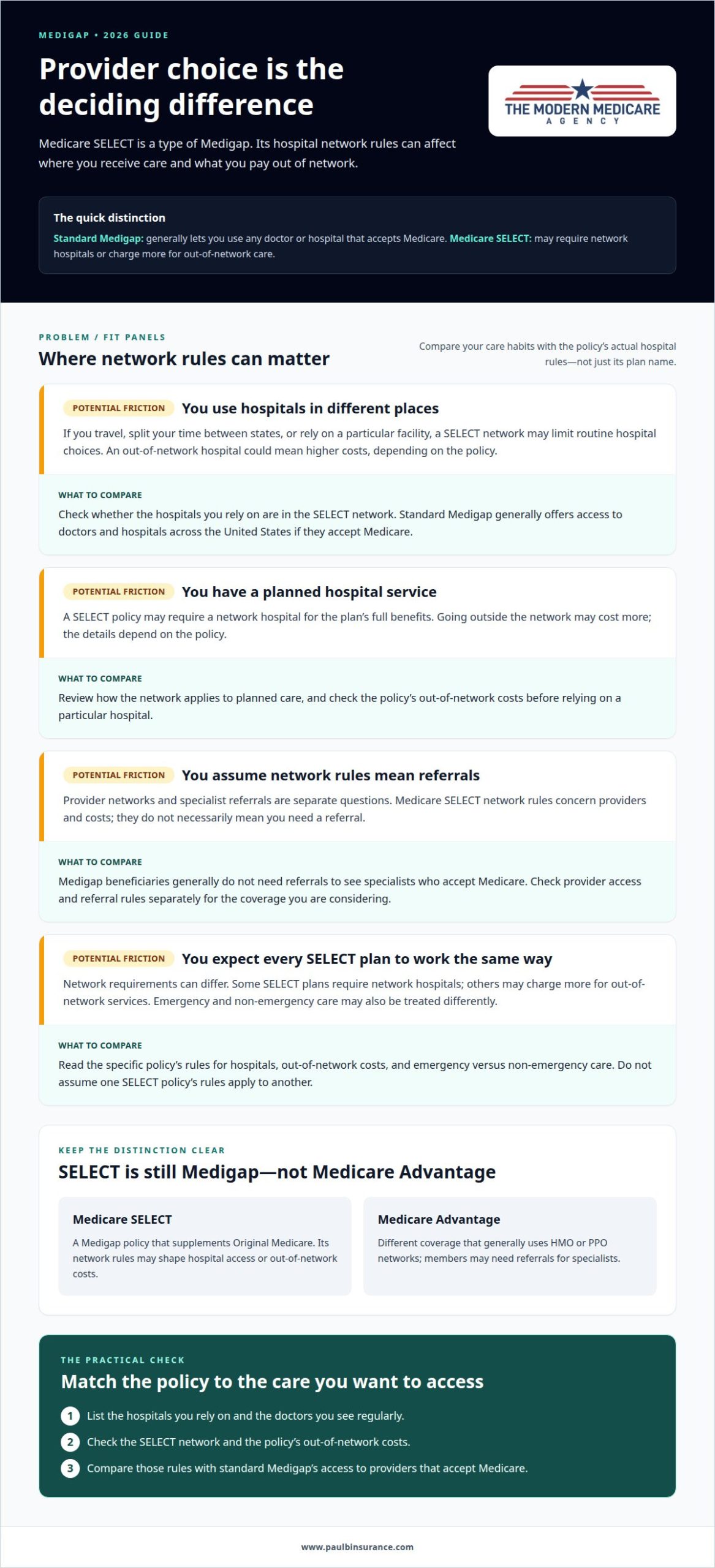
Medicare SELECT is a Medigap policy with hospital network rules that can shape where you receive care. Some SELECT plans require network hospitals, while others may charge more for out-of-network services. This matters if you travel, use hospitals in different states, or want to keep access to a particular facility.
Consider a planned hospital service. A SELECT policy may require you to use a network hospital to receive the plan’s full benefits. Going to an out-of-network hospital could mean higher costs, depending on the policy’s rules. Emergency and non-emergency care may also be treated differently, so review how the network applies to each.
Standard Medigap policies generally offer broader provider choice. You can use doctors and hospitals across the United States if they accept Medicare. This can help if you split your time between states or receive care away from home. The trade-off is flexibility: a SELECT network may limit routine choices, while standard Medigap gives you access to Medicare-accepting providers.
Provider Choice and Referrals
Provider choice is about which doctors and hospitals you can use; a referral is approval to see a specialist. Medigap beneficiaries generally don’t need referrals to see specialists who accept Medicare. This can make it easier to arrange specialist care without first getting approval from a primary care doctor.
Medicare SELECT’s network rules address providers and costs, not necessarily referrals. A SELECT member may still have broad access to Medicare-accepting doctors, while the policy sets hospital network requirements or charges more for out-of-network care. Consider these separately: which providers you can use, and what costs apply when you do.
Medicare Advantage is different from Medicare SELECT. Advantage plans generally use HMO or PPO networks, and members may need referrals for specialists. Medicare Advantage network rules can help distinguish those arrangements from Medigap. Medicare Part D drug coverage is another separate coverage decision; it doesn’t determine which hospital a SELECT policy includes.
Before choosing a network-based policy, consider where you receive care, including the hospitals you rely on and the doctors you see regularly. Compare the SELECT plan’s access rules with standard Medigap’s access to Medicare-accepting providers. This helps clarify how each option may affect your care choices and out-of-pocket costs, including coinsurance or added charges for out-of-network services.
Medigap as a supplement to Original Medicare
Original Medicare pays its share of covered services first. A Medigap policy may then help pay certain remaining costs, such as deductibles and coinsurance. The two types of coverage work together, but Medigap doesn’t replace Medicare Parts A and B. Original Medicare remains your primary coverage, and the supplement may reduce some of the costs left over.
That distinction matters because Original Medicare doesn’t set an annual limit on your total out-of-pocket spending. Medigap can help with eligible costs, but the amount depends on the plan letter and the service. For example, some Medigap plans cover the 20 percent Part B coinsurance for doctor visits and other outpatient care. Other plan benefits vary, so the letter helps show what costs a policy may cover.
Hospital care is another example. Certain Medigap plans help cover Medicare deductibles or coinsurance, according to their benefit design. Medigap can also cover up to 365 additional hospital days over a person’s lifetime after Medicare benefits are used up. These benefits can matter if an extended hospital stay would otherwise leave you with substantial expenses.
Medigap generally works with Original Medicare across state lines, which can suit people who receive care in different states. To use a doctor or hospital with Original Medicare and Medigap, that provider must accept Medicare. Most Medigap plans also cover emergency care while traveling outside the United States. They generally don’t add routine dental, vision, or hearing benefits, so those needs require separate coverage.
Prescription drugs are separate, too. Medigap policies sold after 2005 don’t include prescription drug coverage. A person who wants that benefit typically considers a separate Medicare Part D plan, rather than expecting the supplement to pay for prescriptions. Medicare Part D coverage addresses prescription medicines and is distinct from Medigap’s help with Original Medicare costs.
Medigap doesn’t pair with a Medicare Advantage plan. These are different ways to receive Medicare coverage, and Medigap can’t pay a Medicare Advantage plan’s premiums, deductibles, or copayments. If you switch from Original Medicare with Medigap to Medicare Advantage, the supplement won’t cover that plan’s cost-sharing. The change affects how your coverage works, not simply which supplement you carry.
Consider what you want your coverage to do: help pay certain Original Medicare costs while preserving access to Medicare-accepting providers, or provide coverage through a Medicare Advantage plan’s structure. Your plan letter, care needs, prescription coverage, and travel habits all shape the comparison.
Can I switch from Medicare SELECT to another Medigap plan, and what are the rules?
Yes. In the United States, someone who buys a Medicare SELECT policy has 12 months to change their mind and switch to a standard Medigap policy. This right gives you time to decide whether the SELECT network works for your care. It is a specific window, not a yearly switching period that automatically returns.
After that 12-month period, you can still apply to change Medigap plans, but different rules may affect approval. In most states, insurers can use medical underwriting outside protected enrollment periods. They may deny an application or charge more because of a pre-existing condition, unless an enrollment protection applies. Your health history and state rules can therefore affect whether a later switch is available.
Before making a change, consider three separate questions: which benefits you want, whether the new policy will accept your application, and when the new coverage begins. A standard Medigap plan may offer different provider access from SELECT, but in most states its letter determines its standardized benefits. Compare the benefits and network rules, not just the policy name.
Timing matters. Medigap’s Open Enrollment period is a one-time period tied to having Medicare Part B at age 65 or older. It is not the same as Medicare’s annual Open Enrollment period. Certain guaranteed-issue rights can also protect a person during specific circumstances. Outside those protections, a health review may apply, even if you have held SELECT coverage for years.
Keep your current policy active while considering an application for a replacement. This helps avoid a gap if the new insurer doesn’t approve your application or the effective date differs from your expectations. Review the written policy terms, including the premium, benefits, network rules, and effective date. Benefits may be standardized by letter, but premiums can vary by insurer and location.
If you are still within the first 12 months of Medicare SELECT, the right to switch to standard Medigap gives you a defined choice. After that window, your state, health status, and any guaranteed-issue protections become more important. A change from SELECT to another Medigap plan is different from switching to Medicare Advantage, which is a separate type of coverage and follows different enrollment rules.
Use the timing to make a careful comparison, rather than assuming every Medigap policy can be changed on the same terms. A switch can affect provider access and future approval, so identify the protection that applies before ending existing coverage.
When can I buy Medigap or Medicare SELECT without medical underwriting?
The clearest protection is the Medigap Open Enrollment period. According to the Centers for Medicare & Medicaid Services, this period lasts 6 months and begins in the first month a person has Medicare Part B and is 65 or older. During this period, an insurer cannot deny Medigap coverage because of pre-existing health problems. That protection can matter if a medical condition is already part of your health history.
The Medigap Open Enrollment Period happens once and doesn’t return each year during Medicare’s annual Open Enrollment period, which is mainly for changing Medicare coverage. The two periods serve different purposes. For example, someone who has had Medigap for several years can’t assume annual Medicare Open Enrollment provides the same guaranteed access to another Medigap policy.
Outside Medigap Open Enrollment, insurers can generally use medical underwriting unless a guaranteed-issue right applies. Underwriting means an insurer reviews health information when deciding whether to issue a policy or what to charge. As a result, applying to change plans later can have a different outcome than applying during the protected six-month period. State rules and the reason for changing coverage also matter.
Some state protections extend beyond the standard federal window. People in Connecticut, Massachusetts, Maine, or New York may be able to buy Medigap after the enrollment period without answering medical underwriting questions. The rules vary by state, so the same health history and application timing can lead to different protections depending on where you live.
Medicare SELECT is also Medigap, but its enrollment rules and restrictions can differ. If you’re considering SELECT, distinguish the policy’s provider network conditions from the rules governing enrollment. Network limits determine where the policy provides its benefits; underwriting determines how health information affects an application. They are separate considerations, even though both can shape your coverage decision.
Some people also have guaranteed-issue rights during specific circumstances. For example, a person who joined Medicare Advantage when first eligible for Medicare Part A at age 65 can buy certain Medigap policies if they switch to Original Medicare within the first year. The right applies to certain policies, not automatically every plan. That distinction makes timing and the reason for leaving Medicare Advantage important.
Before replacing coverage, identify whether you are in the six-month Medigap Open Enrollment period, qualify for a guaranteed-issue right, or face underwriting. Then compare the policy’s benefits and network terms separately. Review Medigap coverage options as you consider which policy fits your enrollment protections and care needs.
The Modern Medicare Agency: Medicare Supplement (Medigap) Plans
The Modern Medicare Agency helps you compare Medicare Supplement plans when you’re weighing standard Medigap against Medicare SELECT. As an independent brokerage, it offers personalized, unbiased guidance and helps eligible individuals compare options from over 40 carriers. That can make it easier to weigh plan benefits, network rules, and how a policy fits your needs.
If you’re also considering another way to receive Medicare coverage, the agency can help compare Medicare Advantage Plans and Medicare Part D Plans. Its guidance is available year-round to clients across more than 34 states, so you can discuss your questions as your needs change. The goal is to help you understand your options without pressure.
Contact The Modern Medicare Agency to talk through your Medicare coverage choices.
Choose the Coverage That Fits Your Priorities
Decide what matters most in your day-to-day care: keeping access to familiar providers, managing medical costs, or choosing coverage that fits your broader needs. If you’re still weighing what the difference is between Medigap and Medicare SELECT, focus on the trade-offs that matter most to you rather than looking for one option that suits everyone.
A clear conversation can turn your priorities into a practical comparison. Bring questions about provider access, coverage needs, and how a plan fits alongside your Medicare benefits. The Modern Medicare Agency offers free Medicare consultations and can help you compare available choices at your own pace.
Contact The Modern Medicare Agency to discuss your Medicare coverage options. You can take the next step with a clearer sense of what you value and what you want your coverage to support.
Frequently Asked Questions
What are the cons of Medigap?
Medigap may mean paying a separate monthly premium in addition to your Medicare Part B costs. It doesn’t cover every health expense or automatically include prescription drug coverage. For example, someone who wants help with prescriptions may need to consider Part D separately. Applying outside protected enrollment periods may also involve medical underwriting, which can affect your choices.
What are the pros of Medigap?
Medigap may help make Original Medicare costs easier to plan for by paying certain eligible expenses. It also lets you use Medicare-accepting providers without relying on a Medicare Advantage network. Standardized policies renew each year as long as premiums are paid, including if you develop health problems. For someone who sees providers in different areas, that continuity and provider flexibility can be valuable.
What else should I know about these lettered plans?
A plan letter helps you compare benefits, but it doesn’t show the full cost of coverage. Insurers may charge different premiums for the same letter, and location can affect the price. Each policy covers one person, so spouses need separate policies if both want Medigap. Massachusetts, Minnesota, and Wisconsin use different standardization systems, so compare plans according to your state’s rules.
What is Medicare Supplement (Medigap) insurance?
Medicare Supplement insurance is private coverage that works alongside Original Medicare. Depending on the policy’s benefits, it helps pay certain costs remaining after Medicare pays its share. For example, a plan may help with a deductible or coinsurance for covered care. It doesn’t replace Medicare or pay Medicare Advantage plan costs. Think of it as an added layer for eligible Original Medicare expenses.
What is Medigap (Medicare Supplement Insurance)?
Medigap and Medicare Supplement Insurance are two names for the same type of coverage. The word “supplement” describes its role: the policy works with Original Medicare rather than replacing it. If you’re reviewing paperwork or comparing options, either name refers to this coverage category. The policy’s letter and terms explain which eligible costs it may help pay.
What is Medicare SELECT and how does it work?
Medicare SELECT is a Medigap policy with hospital network rules. Depending on the policy, you may need to use network hospitals or pay more for out-of-network services. For example, planned care at an out-of-network hospital could cost more under the policy’s terms. The network affects where you receive care; the Medigap benefits describe which Medicare expenses the policy helps cover.
What are the main differences between Medigap and Medicare SELECT?
The difference between Medigap and Medicare SELECT is that SELECT is a network-based type of Medigap. Both work with Original Medicare, but a SELECT policy can shape hospital access or out-of-network costs. Standard Medigap generally offers more provider flexibility when a doctor or hospital accepts Medicare. For a 2026 comparison, consider whether a network’s limits fit your regular care and travel patterns.
How do Medigap and Medicare SELECT premiums and costs compare?
Both types of policy may have a premium in addition to the Medicare Part B premium. The premium depends on the policy and insurer, while your costs when receiving care depend on covered services and any cost-sharing rules. SELECT may charge more for out-of-network services under its terms. Compare the recurring premium with the possible costs of using your preferred doctors and hospitals.

Article by
Paul Barrett
Paul Barrett, CMIP is the founder of The Modern Medicare Agency, an independent Medicare-only brokerage based in Melville, NY. With 18 years of Medicare-exclusive experience, a CMIP designation, and more than 5,000 clients served across 37 states, Paul is one of the most credentialed independent Medicare specialists on Long Island — and one of the most direct.
He represents 40+ carriers with no quotas and no allegiances, which means his recommendations are based entirely on what fits each client's specific situation. He is the author of Medicare Mastery Unlocked and host of the Wise Guys Retirement Talk podcast. His content is grounded in primary sources, real carrier intelligence, and 18 years of watching what happens when people get Medicare right — and when they don't.
📞 631-358-5793 | paulbinsurance.com