




What if the Alignment Health plan that looks best on paper isn’t the one that works best for you? In 2026, the plan name is only a starting point. Benefits, costs, doctors, hospitals, and prescription coverage can differ by plan and location, so details that suit one person may not suit another.
If the terminology feels confusing, you’re not alone. A $0 monthly premium, for example, doesn’t tell you what you may pay for visits, prescriptions, or other covered care. Comparing the plan documents can help you see the full picture.
This guide explains what to check for your ZIP code, how to review provider networks and prescriptions, and how to compare premiums, copays, deductibles, and out-of-pocket limits. You’ll also learn which 2026 plan documents to use. An independent Medicare broker can help you compare options from multiple carriers against your priorities.
Key Takeaways
- Check the 2026 plan documents for your location, since benefits and availability can vary by plan.
- Use the Summary of Benefits and Evidence of Coverage to compare costs, services, and coverage details.
- Before choosing an alignment health plan, list the doctors, hospitals, and prescriptions that matter most to you.
- Compare plan options side by side, separating essential needs from benefits that would simply be nice to have.
- Work through the decision one step at a time, starting with your care needs and location.
What Is an Alignment Health Plan in 2026?
Medicare Advantage is a way to receive Medicare Part A and Part B coverage through a private health plan instead of directly through Original Medicare. Each plan sets its covered benefits, costs, and provider network, so details can vary by plan and location.
That’s why an alignment health plan’s name alone can’t tell you whether your doctors are in network, your prescriptions are covered, or the costs and benefits suit your needs. The current documents for the plan and location you’re considering can answer those questions.
How an Alignment Health plan fits into Medicare
Medicare Advantage plans provide Medicare Part A and Part B coverage through a private plan. Some also include prescription drug coverage. With Original Medicare, you may instead choose a Medicare Supplement plan, also called Medigap, to help with certain out-of-pocket costs, and enroll in a separate Medicare Part D plan for prescription coverage. These are different ways to arrange coverage, not interchangeable plan names.
For a plain-language overview of Medicare Advantage, you can review how this type of coverage fits within Medicare. For more foundational guidance, read the Medicare Advantage guide before comparing specific 2026 options.
Dental coverage is another detail to consider. It may be included as a benefit in some Medicare Advantage plans, while dental insurance plans can be reviewed as a separate coverage option. Check the plan documents to see what applies to the option you’re considering.
Why your location matters when reviewing plan choices
Plan availability and benefits can differ across counties and ZIP codes. A plan’s network, covered services, and costs in one area may not match what’s available where you live. A friend’s experience or a plan summary from another county may not reflect your options.
Start with documents for your location and the 2026 plan year. The Summary of Benefits offers an overview, while the Evidence of Coverage explains more fully how coverage works. Check the plan’s service area and review the terms that matter to you. This turns a broad brand comparison into a local, personal one.
Which Alignment Health Plan Details Should You Review First?
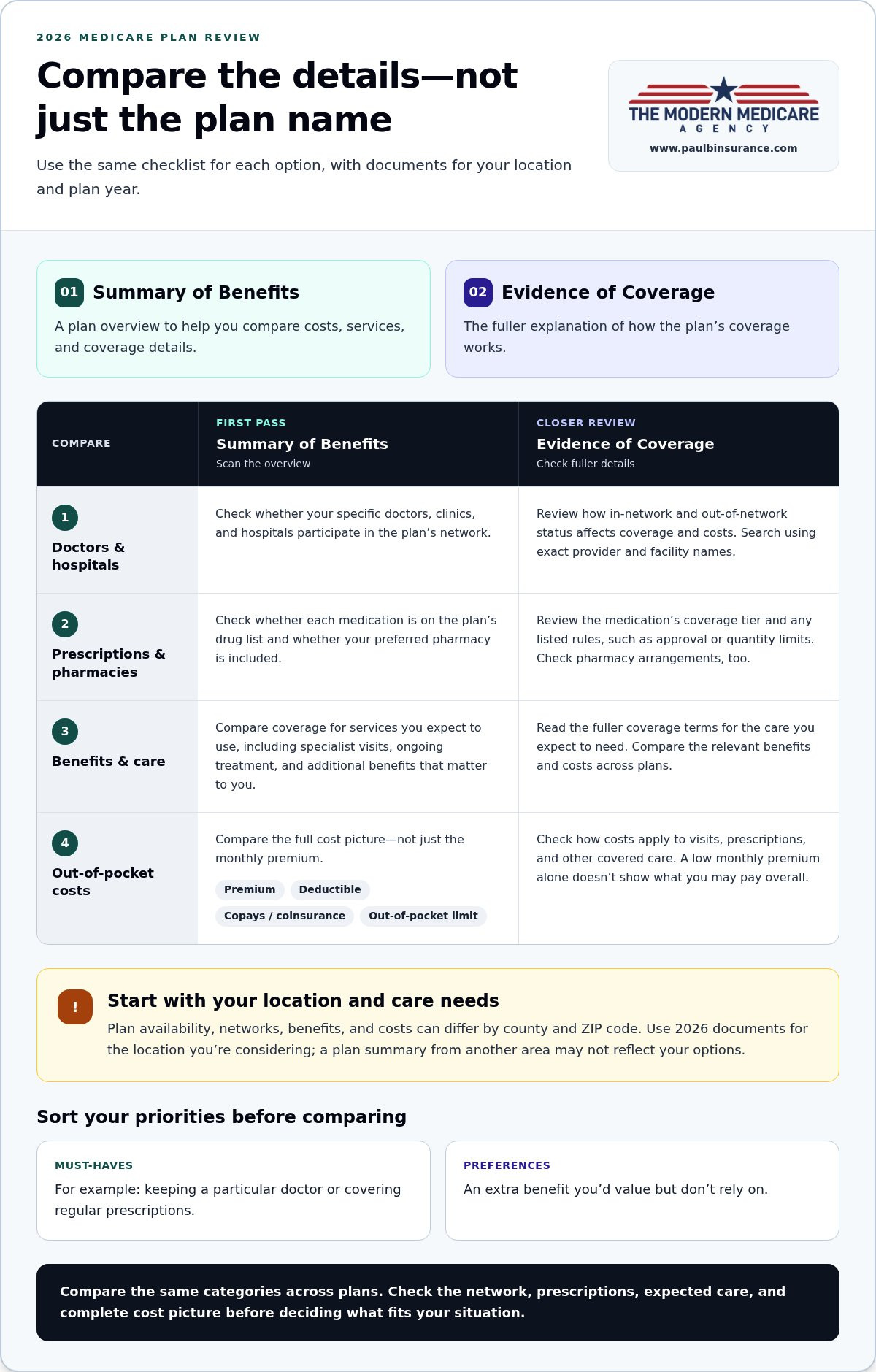
Start with the care you use and the expenses you want to understand. For 2026, use the plan’s current Summary of Benefits for an overview and its Evidence of Coverage for fuller details. Compare the same categories across plans instead of relying on a plan name or one advertised benefit.
| What to compare | What to check |
|---|---|
| Doctors and hospitals | Whether your specific doctors, clinics, and hospitals participate in that plan’s network. |
| Prescriptions and pharmacies | Whether each medication appears on the plan’s drug list, what coverage rules apply, and whether your preferred pharmacy is included. |
| Benefits and care | Coverage for services you expect to use, including any additional benefits that matter to you. |
| Out-of-pocket costs | Monthly premium, deductible, copays or coinsurance, and the plan’s maximum out-of-pocket limit. |
A monthly premium is only one part of what you may pay. A low-premium plan may still have costs for visits, prescriptions, or other covered care. Compare the full cost picture with the services you expect to use. The KFF analysis of Medicare Advantage offers broader context on plan benefits and out-of-pocket spending.
Are your doctors, hospitals, and pharmacies included?
Check provider and pharmacy information for the specific plan. Search using the exact names of your doctors, facilities, and pharmacy. Don’t rely on a general claim that a plan has a broad network. An in-network provider participates in the plan’s network; an out-of-network provider doesn’t. The plan documents explain how that distinction affects coverage and costs.
Does the plan cover your prescriptions and expected care?
Review the 2026 drug list for every prescription you take. Check its coverage tier and any listed rules, such as approval or quantity limits. Confirm your preferred pharmacy, too, because pharmacy arrangements can affect what you pay. For more background on prescription drug coverage, see this guide to Medicare Part D plans.
Next, consider care you expect to use during the year, such as specialist visits or ongoing treatment. Compare the relevant benefits and costs in each plan’s documents. This helps you judge whether an alignment health plan fits your routine, rather than choosing based on headline benefits.
Alignment Health vs. Other Medicare Choices: What Should You Compare?
A familiar brand may feel like an obvious choice, but that alone doesn’t show whether coverage fits your needs. In 2026, compare current plan documents side by side using the same criteria for each option. Separate must-haves, such as keeping a particular doctor or covering regular prescriptions, from preferences, such as an extra benefit you’d value but don’t rely on.
When might Medicare Advantage or Medigap fit different priorities?
Medicare Advantage provides Medicare Part A and Part B coverage through a private plan. Its provider network, costs, and covered benefits depend on the specific plan. Medigap works differently: it supplements Original Medicare by helping with certain out-of-pocket costs. It doesn’t replace Original Medicare, and prescription coverage is generally considered separately.
Neither approach is right for everyone. Think about how important provider choice is to you, how you prefer to manage healthcare costs, and whether you’re comfortable following a plan’s network rules. Your care preferences matter as much as the headline features. For more detail on supplement coverage, read about Medigap plans.
How to compare plans without getting lost in the details
Use one comparison sheet for every 2026 option, including an alignment health plan and alternatives. Review each plan’s current documents and record the same details in the same order:
- Providers: Are the doctors and facilities you rely on included?
- Prescriptions: Are your medications covered, and what rules or costs apply?
- Costs: What are the premium, deductible, copays or coinsurance, and maximum out-of-pocket amount?
- Coverage: Does the plan cover the care and benefits that matter to you?
- Access: What network rules could affect where you receive care?
A few terms can make the documents easier to read. A premium is the recurring amount paid for coverage. A deductible is what you may need to pay for covered services before the plan begins paying under its terms. A copay is a set amount for a service, while coinsurance is a percentage of its cost. Check each plan’s documents to see how these terms apply; they can differ from one plan to another.
Mark unclear or missing details rather than guessing. A Medicare professional can explain unfamiliar terms and help you compare options based on your circumstances. Comparing plans from multiple carriers can also give you a broader view than choosing based on one familiar brand alone.
How to Evaluate an Alignment Health Plan for Your Situation
A useful comparison begins with your care needs, not a list of benefits. Before reviewing an alignment health plan for 2026, consider the care you use now and what you may reasonably expect to need during the year. Then work through these steps:
- Identify your needs. Note regular appointments, ongoing care, prescriptions, and services you expect to use. Mark what’s essential and what would simply be a welcome extra.
- Confirm your location. Check the plan’s 2026 service area for your county or ZIP code. Plan options and details can vary by location.
- Check your providers. Look up the exact doctors, hospitals, and other facilities you rely on in the plan’s current provider information.
- Review prescriptions. Compare your medications with the plan’s current drug list, including coverage rules and pharmacy details.
- Compare costs. Review the premium, deductible, copays or coinsurance, and out-of-pocket limit in the plan documents. Consider how these costs could add up based on the care you expect to use.
A simple checklist for reviewing plan documents
Use the current 2026 Summary of Benefits for an overview, then read the Evidence of Coverage for fuller terms. Confirm the service area first. Then check providers, hospitals, pharmacies, and prescriptions against your own list. Pay attention to cost-sharing, the amounts you may pay for covered care, and any conditions that affect coverage. If a detail is unclear, note the question instead of making an assumption.
When personal guidance can make the comparison clearer
Plan documents can feel like a lot to sort through, especially when you’re weighing several options. An independent broker can help organize your questions and compare available Medicare Advantage, Medigap, and Part D plans from multiple carriers. The Modern Medicare Agency provides personalized guidance based on your circumstances, helping you understand the trade-offs as you compare options.
For more information about the agency’s guidance, visit The Modern Medicare Agency.
Get Help Comparing Alignment Health and Other 2026 Medicare Options
You now have a practical way to assess an alignment health plan alongside other Medicare choices: start with what’s available in your area, then consider providers, prescriptions, benefits, and potential costs. The details can feel like a lot at first, so take the comparison one question at a time and use current 2026 plan documents to guide each step.
What to have ready before discussing plan options
A little preparation can make a conversation more focused. You don’t need every answer in advance. Gather notes on the care and coverage that matter most to you:
- The names of doctors, specialists, hospitals, and other facilities you prefer.
- Your regular prescriptions and preferred pharmacies.
- Benefits or services you expect to use during 2026.
- Your priorities, such as keeping a particular provider or understanding costs for ongoing care.
- Questions or unclear details you’ve marked in the plan’s Summary of Benefits or Evidence of Coverage.
This list gives you a starting point for discussing how plan details line up with your needs. Focus on the questions that matter instead of trying to interpret every page on your own.
How an independent Medicare agency can support your decision
An independent agency can help you compare Medicare Advantage, Medigap, and Part D options from more than one carrier. The Modern Medicare Agency works with plans from more than 40 carriers and offers personalized guidance and year-round support. This broader view can help you weigh options based on your circumstances instead of relying only on one carrier’s choices or a familiar brand name.
The goal is to help you understand the trade-offs, clarify questions, and make a decision with more confidence. Plan availability, provider networks, benefits, and costs depend on the specific 2026 plan and location, so ground your comparison in the documents for your area.
Learn more about comparing Medicare plans with an independent agency.
Make Your 2026 Medicare Choice With Confidence
A strong Medicare comparison starts with your needs, not a familiar name. For an alignment health plan, review the current 2026 documents and check local availability, doctors, prescriptions, benefits, and costs. Comparing these details side by side can show which options fit your priorities and where you need more information.
You don’t have to sort through every detail alone. The Modern Medicare Agency is an independent brokerage representing plans from more than 40 carriers, with personalized guidance and year-round support across more than 34 states. That broader perspective can help you compare Medicare Advantage, Medigap, and Part D options based on your circumstances.
Review your priorities and plan documents, then get personal help comparing Medicare plans. Take it one question at a time to move forward with greater clarity and confidence.
Frequently Asked Questions
Is Alignment Health a Medicare Advantage plan?
Yes. Alignment Health offers Medicare Advantage plans, which provide Medicare Part A and Part B coverage through a private plan. Some options may also include prescription coverage, but what’s included depends on the plan. For 2026, use the plan’s current Summary of Benefits and Evidence of Coverage to confirm benefits, provider rules, and costs for your location. The name alone doesn’t establish whether it fits your needs.
Are Alignment Health plans available in my area?
Alignment Health’s 2026 plans are offered in Arizona, California, Nevada, North Carolina, and Texas, but not every plan is available in every county or ZIP code. Check the service area for your address and review documents for the specific plan you’re considering. A plan shown for another county may have different availability, benefits, or provider access, so local details matter.
Does an Alignment Health plan include my doctors and prescriptions?
It depends on the specific plan. Check its current provider information using the names of your doctors, hospitals, and preferred pharmacy. Then compare every prescription you take with the 2026 drug list, including any coverage rules. Don’t rely on a general network description or assume a medication is covered because another plan includes it. Verify the details in the documents for your location.
How much does an Alignment Health plan cost in 2026?
There isn’t one price for every plan or location. Your total costs can include the plan’s monthly premium, deductibles, copays or coinsurance, and other care expenses. The standard Medicare Part B premium is $202.90 per month in 2026, though it can be adjusted based on income. A $0 plan premium doesn’t mean coverage has no costs. Compare the full cost details in the plan documents.
Can I compare Alignment Health with Medigap plans?
Yes. You can compare a Medicare Advantage plan with Medigap, but they work differently. Medicare Advantage provides Part A and Part B coverage through a private plan. Medigap supplements Original Medicare by helping with certain out-of-pocket costs. Consider provider access, how you prefer to manage costs, and your prescription coverage needs. Review current plan documents for your area; neither option is automatically the best fit for everyone.
What should I check before choosing an Alignment Health plan?
Start by confirming the plan is available where you live, then check your doctors, hospitals, prescriptions, and preferred pharmacy. Review the 2026 Summary of Benefits for an overview and the Evidence of Coverage for fuller terms. Compare premiums, deductibles, copays or coinsurance, and the out-of-pocket limit. Make a short list of essential providers, medications, and care needs so you can assess each plan against what matters to you.

Article by
Paul Barrett
Paul Barrett, CMIP is the founder of The Modern Medicare Agency, an independent Medicare-only brokerage based in Melville, NY. With 18 years of Medicare-exclusive experience, a CMIP designation, and more than 5,000 clients served across 37 states, Paul is one of the most credentialed independent Medicare specialists on Long Island — and one of the most direct.
He represents 40+ carriers with no quotas and no allegiances, which means his recommendations are based entirely on what fits each client's specific situation. He is the author of Medicare Mastery Unlocked and host of the Wise Guys Retirement Talk podcast. His content is grounded in primary sources, real carrier intelligence, and 18 years of watching what happens when people get Medicare right — and when they don't.
📞 631-358-5793 | paulbinsurance.com