




Asset-based (hybrid) long-term care insurance combines a life insurance policy or annuity with long-term care benefits, so unused value passes on as a death benefit instead of disappearing. It typically fits retirement-age buyers with enough liquid assets to fund a larger premium upfront, who want legacy protection alongside LTC coverage. The tradeoff is real: you pay more per dollar of guaranteed value than with standalone coverage, yet you never lose the whole premium if you stay healthy.
TL;DR:
- Hybrid policies often require higher initial premiums but provide a guaranteed death benefit if LTC benefits are unused, unlike traditional LTC insurance.
- Life-based hybrids tend to offer more LTC value per premium but involve stricter underwriting, while annuity-based versions are easier to qualify for with health conditions.
- Confirm partnership and tax status in writing before purchasing, as state recognition and IRS treatment vary and can affect asset protection and tax benefits.
- Funding options include single premiums, limited-pay plans, or using existing life insurance and annuities; each impacts liquidity and future flexibility.
- Comparing illustrations carefully is critical to understand benefit amounts, benefit periods, inflation protection, and claim procedures, as policies can differ significantly.
Table of Contents
- What hybrid long-term care insurance is and how it differs from traditional coverage
- Life-based vs annuity-based hybrids and LTC riders: what changes for buyers
- Pros and cons: tradeoffs and mistakes buyers make
- Costs and funding options: single premium, limited pay, or self-funding
- Medicaid, partnership policies, and tax rules you need to confirm
- How to choose: a checklist and questions to ask before you buy
- A practical perspective on evaluating hybrid policies
- How Paulbinsurance can help you compare your options
- Sources
- FAQ
What hybrid long-term care insurance is and how it differs from traditional coverage
A hybrid policy pairs life insurance or an annuity with a long-term care rider or benefit pool. If you need care, you draw down the benefit to pay for it. If you never need care, your beneficiaries still receive a death benefit, and many contracts also offer a surrender value if you cancel. Traditional long-term care insurance, by contrast, works more like standalone auto or home insurance: you pay premiums for coverage, and if you never file a claim, that money is gone.
According to NAIC’s overview of private financing options, hybrid or asset-based coverage combines life insurance or an annuity with LTC benefits, and unused value often remains as a death benefit or surrender value. Funding usually takes one of these shapes:
- Single premium: one lump sum, often funded from savings, a CD, or an existing annuity.
- Limited-pay: premiums spread over a set number of years, commonly 5 to 20.
- Ongoing pay: less common in hybrids, but some riders allow continued annual premiums.
Payment methods also matter. Indemnity policies pay the stated benefit regardless of your actual bill, while reimbursement policies pay only for documented care expenses up to the benefit limit. The NAIC’s private market options guide notes that hybrids can be structured either way, and the distinction affects how much paperwork you handle when filing a claim.
Life-based vs annuity-based hybrids and LTC riders: what changes for buyers
The chassis matters as much as the label. Life-based hybrids attach LTC benefits to a permanent life insurance policy, and according to the NAIC, they often provide more LTC value per premium dollar than annuity-based versions. The cost is stricter underwriting: medical questions, prescription checks, and sometimes a paramedical exam.
Annuity-based hybrids are easier to qualify for, which makes them a common choice for buyers with health conditions that would disqualify them from a life-based product. The LTC benefit draws from the annuity’s account value, and an extension rider can let benefits continue after that value runs out.
- Life-based hybrids: stricter underwriting, typically stronger LTC leverage per premium dollar, death benefit reduces as LTC benefits are paid.
- Annuity-based hybrids: simplified or guaranteed-issue underwriting is more common, account value funds the LTC benefit, extension riders add years of coverage beyond the account balance.
- LTC riders on existing policies: terms vary widely by carrier, so the rider language, not the product name, determines what actually pays out.
Pro Tip: Ask for the “benefit dollars per premium dollar” figure in writing rather than comparing product names, since two policies labeled “hybrid” can pay out very differently.
Pros and cons: tradeoffs and mistakes buyers make
Hybrids solve a real objection to traditional LTC insurance: the fear of paying for years and never using it. The ACL reports that someone turning 65 has almost a 70% chance of needing some form of long-term care, and average use runs about three years, with women averaging longer than men. A significant minority of people need care for longer than five years. Even with those odds, some people never file a claim, and a hybrid guarantees they get value either way.
- Advantage: legacy protection. Unused benefit typically converts to a death benefit for heirs.
- Advantage: premium guarantees. Many hybrids lock in premiums at issue, avoiding the rate increases that have hit some traditional LTC policyholders.
- Disadvantage: higher upfront cost. You generally pay more for comparable LTC coverage than with a standalone policy.
- Disadvantage: inflation protection gaps. Not all hybrids include robust inflation riders, which matters over a multi-decade retirement.
- Mistake: skipping partnership verification. Buyers often assume a policy is Medicaid partnership certified without confirming it in writing.
A large majority of people turning 65 will need some form of long-term care during their lifetime, according to the Administration for Community Living, which is why the death-benefit safety net matters to so many buyers weighing the cost difference.
Costs and funding options: single premium, limited pay, or self-funding
How you fund a hybrid changes its role in your broader retirement plan. A single premium ties up a lump sum immediately, which can make sense if you have an underperforming CD or an old annuity you no longer need for income. Limited-pay designs spread the cost over several years, preserving more liquidity in the near term while still locking in a guaranteed premium schedule.
Before committing, inventory what you already have:
- Existing life insurance: some contracts allow a tax-free 1035 exchange into a hybrid, which can reduce the new policy’s cost basis needs.
- Annuities: older annuities are common single-premium funding sources for annuity-based hybrids.
- Retirement accounts: IRA and 401(k) funds generally cannot fund a hybrid without triggering taxable withdrawals, so factor that into your math.
Traditional long-term care insurance can still be the better fit for buyers who want the largest possible LTC benefit per premium dollar and are comfortable with the possibility of paying premiums without ever filing a claim. Self-funding, where you simply set aside savings and invest them, works for buyers with substantial liquid assets who want maximum flexibility and are willing to accept the risk of underestimating future care costs. An annuity-based funding strategy is worth exploring if you already hold an annuity you are not using for income. For a side-by-side look at how hybrids stack up against standalone policies, see this comparison of traditional and hybrid LTC coverage.
Medicaid, partnership policies, and tax rules you need to confirm
Medicaid is means-tested, and long-term care Medicaid eligibility rules vary by state. Some states offer partnership policies that let you protect an equivalent amount of assets from Medicaid spend-down requirements, but partnership recognition and the specific protections differ from state to state.
State partnership recognition is a detail consumers should never assume. Confirm it in writing from the state insurance department or the carrier before you count on that protection.
On the tax side, the IRS guidance following the Pension Protection Act shapes how qualified long-term care contracts are defined and how 1035 exchanges are treated for tax purposes. A few points worth confirming with a tax professional before you buy:
- Qualified LTC contract status affects whether benefits are received tax-free under Section 7702B.
- 1035 exchanges can move value from an existing life policy or annuity into a hybrid without triggering immediate tax on the gain.
- Form 1099-LTC reports LTC benefits and accelerated death benefits paid out, which you or your tax preparer will need at filing time.
Surrender values and extension riders can affect both Medicaid treatment and tax reporting, so ask your agent to walk through your specific contract before you sign anything. For a deeper look at how partnership protections work, see these five questions to ask an agent.
How to choose: a checklist and questions to ask before you buy
Comparing hybrid illustrations side by side is the only way to spot meaningful differences, since two policies with similar premiums can pay out very differently.
- Confirm the monthly benefit amount and how it compares to average costs in your area.
- Check the benefit period and whether an extension rider adds years beyond the account value.
- Note the elimination period, the waiting time before benefits start.
- Ask about inflation protection and whether it is built in or optional.
- Clarify indemnity versus reimbursement payment methods.
- Request the guaranteed premium language in writing, not just verbally.
- Verify partnership certification with the state insurance department, not just the carrier’s marketing materials.
- Review surrender values at multiple future policy years, not just year one.
Underwriting timing matters more than most buyers expect. The NAIC’s shopper’s guide notes that medical records, prescription checks, and sometimes cognitive assessments are routine parts of underwriting, and applying earlier can preserve eligibility and higher benefit amounts before health changes complicate approval.
Pro Tip: Request the actual policy illustration and rider language, not a summary brochure, so you can compare benefit dollars per premium dollar across carriers.
Ask for documents including the full illustration, the extension rider terms, and written partnership certification before comparing offers. For more on why timing affects your options, see why most people wait too long to buy LTC coverage.
A practical perspective on evaluating hybrid policies
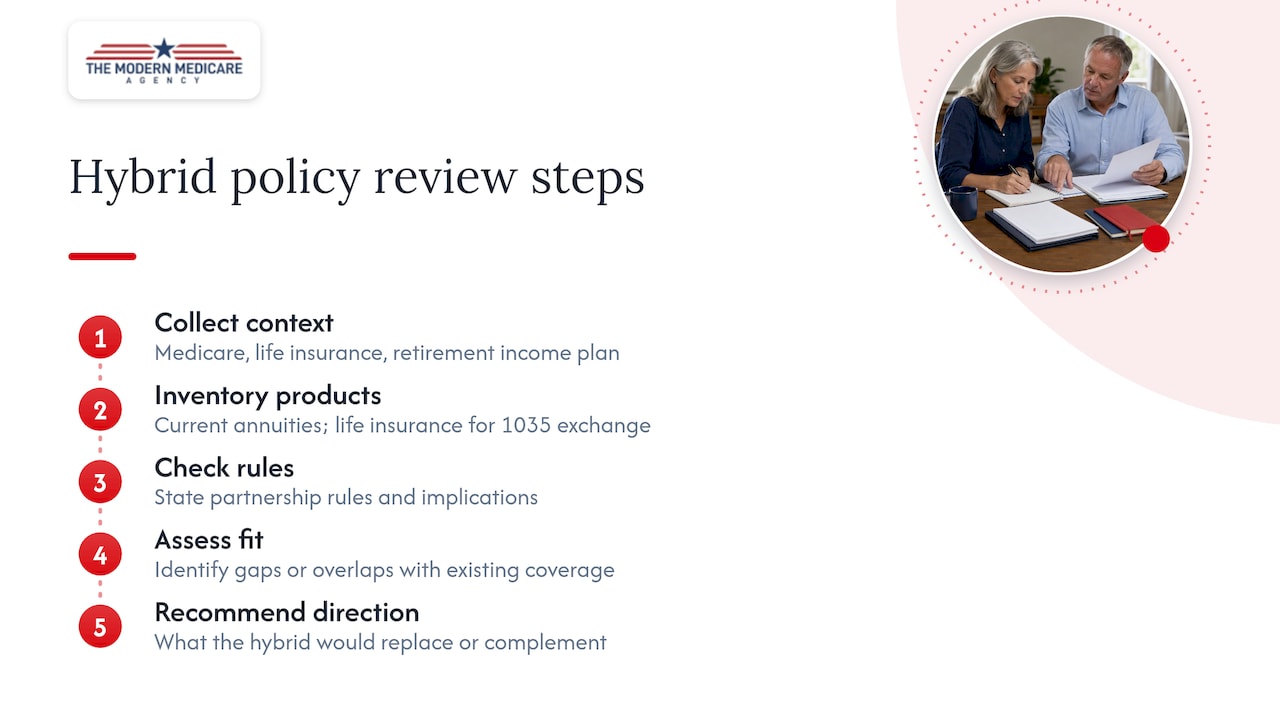
Paul Barrett has worked with Medicare consumers since 2007 as the principal agent at Paulbinsurance, an independent brokerage that also handles long-term care insurance and annuities. When a client brings up a hybrid policy, the review does not happen in isolation. It gets weighed against their Medicare coverage, existing life insurance, and overall retirement income plan, since a hybrid purchased in a vacuum can create gaps or overlaps elsewhere.
A typical review looks at the client’s current annuities, any life insurance that might qualify for a 1035 exchange, and their state’s partnership rules before recommending a direction. The goal is a clear picture of what a hybrid would actually replace or complement, not a sales pitch for the product itself.
— Paul
How Paulbinsurance can help you compare your options
Working through hybrid illustrations, partnership verification, and how a policy fits alongside your Medicare coverage takes time most people do not have to spare. As an independent agency with access to more than 40 carriers, Paulbinsurance reviews your existing annuities, life insurance, and retirement income sources alongside any long-term care quotes you are considering, without pushing you toward a single carrier.

A consultation typically starts with a look at your current policies and a plain-language walk-through of how a hybrid or traditional LTC policy would fit your situation. Bring your existing life insurance and annuity statements if you have them. Visit our long-term care insurance page to schedule a review.
Sources
For consumer-facing guidance on long-term care products, the NAIC’s shopper’s guide walks through the full selection process. The Administration for Community Living tracks how much care Americans typically need. The IRS publishes guidance on qualified LTC contract tax treatment, and your state Medicaid office can confirm partnership policy status where you live.
This article is general information, not a substitute for advice from a qualified financial advisor. Consult a qualified financial professional about your own circumstances before acting on anything here.
- Administration for Community Living — How much care will you need
- NAIC — Private market options for financing long-term care services
- IRS notice N-11-68 and related guidance on qualified LTC contracts and exchanges
FAQ
What are the pros and cons of asset-based long-term care insurance?
The main advantage is that unused benefits typically convert to a death benefit or surrender value, so the premium is never entirely lost. The main disadvantage is a higher upfront cost for comparable LTC coverage compared with traditional insurance, along with less robust inflation protection in some contracts.
What is the maximum amount of assets you can have to qualify for Medicaid?
Medicaid is means-tested, and asset limits for long-term care eligibility vary by state, so there is no single nationwide figure. Some states offer partnership policies that protect a specific amount of assets from spend-down requirements, but you need to confirm your state’s rules with your state Medicaid office or insurance department.
How to avoid losing assets to a nursing home?
Common approaches include purchasing long-term care insurance, a hybrid policy, or a state partnership policy that protects an equivalent amount of assets from Medicaid spend-down where available. Verifying your state’s partnership rules early, ideally before you need care, gives you more options than waiting until a health crisis forces the decision.
What does hybrid long-term care insurance cover that traditional policies do not?
Both hybrid and traditional LTC policies generally cover similar care settings, including home care, assisted living, and nursing facilities. The real difference is what happens if you never use the benefit: a hybrid typically pays a death benefit to your heirs, while a traditional policy’s premiums are simply gone if you never file a claim.
Why does applying earlier for long-term care coverage matter?
Underwriting typically involves medical records, prescription checks, and sometimes cognitive assessments, and health changes over time can limit your eligibility or reduce your benefit amount. Applying while you are still in good health generally preserves more options and can lead to better approval terms.