
What if your prescription appears on a plan’s drug list but still isn’t covered the way you expect? If you’re asking, “how do I know if my prescriptions are on a plan’s formulary,” look beyond a quick search result. A drug may have restrictions, fall into a higher-cost tier, or be covered differently depending on the plan and pharmacy.
For 2026, check the formulary or drug search tool for the exact plan you’re considering, and make sure the information applies to the 2026 plan year. Then review each medication’s tier and any limits, such as prior authorization, step therapy, or quantity limits. Check the plan’s pharmacy information too, since coverage may vary depending on where you fill a prescription.
This guide explains how to check each medication, understand restrictions, and follow up if a prescription isn’t listed. You’ll also learn how to compare plans around your medication needs before enrolling. If the plan documents feel confusing, an independent agent can help you review options. Use current plan materials to confirm coverage details.
Key Takeaways
- To answer “how do I know if my prescriptions are on a plan’s formulary,” check the exact plan and 2026 drug list, not just a general search result.
- Gather each medication’s name, strength, and dosage form before searching so you can match the listing accurately.
- Look beyond whether a drug appears covered. Check its tier and any requirements, such as prior authorization, step therapy, or quantity limits.
- If a medication is missing or restricted, confirm the spelling, brand or generic name, dosage form, and plan year, then ask the plan to clarify its rules.
- Compare every prescription and your preferred pharmacy across plans. An independent agent can help you review options, alongside current plan materials.
What Is a Prescription Drug Formulary, and Why Check It for 2026?
If you’re wondering, “how do I know if my prescriptions are on a plan’s formulary,” start with the plan’s own drug list. A formulary is the list of prescription drugs a plan includes for coverage. It can show whether a medication is listed, but the listing alone doesn’t explain every rule that may apply or what you’ll pay.
Each plan sets its own formulary and coverage requirements, and these can change from one plan year to the next. An older drug list, or a result for a different plan, may not reflect your coverage in 2026. Check the current 2026 materials for the specific plan you’re considering. A general prescription drug formulary overview can explain the concept, but it can’t confirm an individual plan’s current coverage.
What does it mean when a drug is on a formulary?
A drug is on a plan’s formulary when the plan lists it for coverage under the plan’s rules. That doesn’t necessarily mean the drug is covered without restrictions or tell you your final out-of-pocket amount. The plan may place it in a cost tier or require certain steps before covering it. Review the full listing and the plan’s rules to understand what the entry means for your prescription.
The medication’s strength and dosage form may matter too. A plan could show one version of a medication while applying different rules to another, so check the details rather than relying on the name alone.
Why can the same prescription differ between plans?
Drug lists are plan-specific. One plan may list a medication while another does not, or the plans may cover it under different requirements. A brand-name drug and its generic version may also appear separately or have different coverage details. Check the exact name and version you take rather than assuming one listing applies to both.
Coverage details can affect what you pay and what steps you need to take. A drug’s tier can influence your share of the cost, while restrictions may require approval, a different treatment step, or a limit on how much the plan covers at a time. The plan’s current 2026 drug list and documents are the best place to verify these details. Keep other insurance benefits separate from prescription coverage: a dental insurance plan, for example, does not confirm prescription drug coverage.
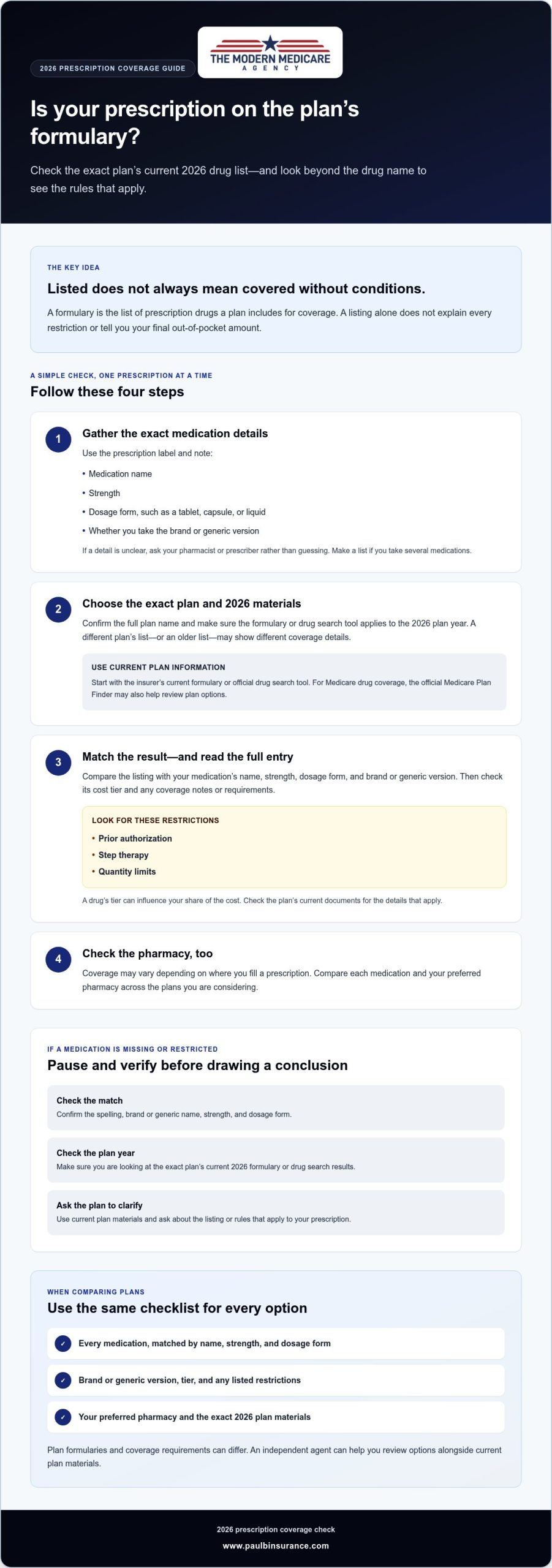
Once you’ve identified the right 2026 list, check your medications one by one. Match each prescription to the exact plan and review the details shown in its search results.
How to Check Whether Your Prescription Is on a Plan’s Formulary
A careful search starts with the right medication details and the right plan. If you’re asking, “how do I know if my prescriptions are on a plan’s formulary,” use the steps below for each prescription and check the current 2026 materials before relying on a result.
Gather the details needed for an accurate search
Start with your prescription label. Copy the medication name as written, then note its strength and dosage form, such as a tablet, capsule, or liquid. Similar names or different forms of the same medication may appear as separate entries, so these details can help you find the right match.
If you’re unsure about the spelling, strength, or form, ask your pharmacist or prescriber to clarify it. Don’t guess or choose the closest-looking result. If you take several medications, make a list so you can check each one consistently.
Search the correct 2026 plan documents or tool
Identify the exact plan you’re considering. Confirm its full name and that the drug search or formulary applies to the 2026 coverage year. A list for another plan, or an older year, may show different coverage details.
Use the insurer’s current formulary or official drug search tool. For Medicare drug coverage, the official Medicare Plan Finder may also help you review plan options. A Medicare Part D guide can provide background, but use current plan materials to verify a specific medication’s coverage.
Search and verify each result
Enter the drug name and compare the result with the strength and dosage form you recorded. Don’t stop at finding a matching name. Check whether the listing is for the brand or generic version you use, and look for coverage notes or requirements. Plan drug lists are managed according to plan rules; the Academy of Managed Care Pharmacy explains how formularies are developed.
- Record the result: Note the plan, plan year, medication version, and any details shown.
- Check the plan materials: Review the formulary or coverage documents for explanations of symbols and requirements.
- Confirm anything unclear: Contact the plan and ask how the listed rules apply to your prescription and preferred pharmacy.
Repeat the process for every medication. If you’re comparing Medicare Part D options, personalized guidance can help you review medication needs across available plans. Confirm the final details in each plan’s current 2026 materials.
How to Read Formulary Results, Tiers, and Drug Restrictions
A matching medication name is only part of the answer. To understand how a plan may cover a drug in 2026, check its tier, any listed restrictions, and the plan’s explanation of those details. They can affect both how you access the medication and your share of its cost.
What do drug tiers tell you?
Tiers are categories plans use to group covered drugs. Each tier may have different cost-sharing rules, so a drug’s tier can help you understand how its costs compare with those of other covered medications. Don’t assume tier names or rules are the same across carriers. Check the 2026 plan’s drug list and benefit documents for that plan’s definitions and current amounts.
Formulary rules are set by each plan. The Academy of Managed Care Pharmacy’s explanation of formulary management offers background, but the plan’s own materials are what you’ll need to interpret a specific listing.
What do common formulary restrictions mean?
A restriction is a plan requirement attached to a drug. Not every plan uses every type, so look for notes beside the medication and check the plan’s explanation of each term.
- Prior authorization: The plan may require a review before it covers the medication. Ask what information is needed and who should submit it.
- Step therapy: The plan may ask you to try another medication first. Your prescriber can help explain whether that requirement applies to your care.
- Quantity limit: The plan may limit how much medication it covers within a set period. Confirm the limit and what to do if your prescription differs.
A restriction doesn’t automatically mean a medication won’t be covered. It does mean you should understand the steps before relying on that coverage. Ask the insurer how the rule applies to your prescription, and speak with your prescriber about clinical questions or alternatives.
As you check each medication, record the details in a compact comparison table. Use one row per drug and include:
- Medication: Name, strength, and dosage form.
- Plan result: Listed, not listed, or unclear.
- Tier and restriction: Copy the plan’s wording, including any abbreviations.
- Pharmacy: Note the pharmacy you expect to use and confirm how the plan applies there.
If you’re still asking, “how do I know if my prescriptions are on a plan’s formulary,” use this record to follow up with the plan. Verify current 2026 cost-sharing amounts and requirements in its documents or directly with the insurer. Reviewing every medication, restriction, tier, and pharmacy together makes plan comparisons more useful.
What to Do If Medication Is Missing or Restricted
Finding no match, or seeing an unexpected restriction, can feel worrying. Don’t assume the search result is final. First, check that you selected the exact plan and the 2026 coverage year, then review the medication details before deciding whether the plan fits your needs.
Confirm an apparent missing drug before making a decision
Check the spelling and compare the listing with your prescription label. Look at the brand or generic name, strength, and dosage form. A tablet and a liquid version, for example, may appear as separate entries. Search the full formulary as well as the plan’s drug tool, and read any notes beside a similar listing.
Only try another medication name if your pharmacist or the plan confirms it’s an appropriate way to search. If you still can’t find the drug, contact the plan and ask it to check the exact prescription against its current 2026 formulary. Ask whether the medication is missing, listed under another name, or subject to a coverage rule. Keep a note of the answer and who you spoke with.
Ask about alternatives or a coverage review
If the medication is not listed or has a restriction, talk with your prescriber before making any change. Ask whether there’s a clinically appropriate alternative covered by the plan. Your prescriber can help weigh that option against your treatment needs.
If an alternative isn’t suitable, ask the plan what review or exception process may apply and what information it requires. Confirm the current steps directly with the plan. A review isn’t a promise of coverage, and requirements and outcomes depend on the plan’s rules. Don’t stop or change a prescribed medication based only on a search result.
If you’re comparing options, review your prescriptions across the plans available to you, not just the one medication that prompted the search. The Medicare Advantage plan guide can help you understand plan choices. An independent agent can help compare medication needs across available plans, while current plan documents remain essential for confirming coverage.
Still wondering, “how do I know if my prescriptions are on a plan’s formulary” after checking the listing? Talk with an agent about comparing plan options and bring your medication list and any answers you received from the plan.
Compare Plans Around Your Prescriptions Before Enrolling
A plan that covers one important medication may still not fit your full prescription list. Before choosing a 2026 plan, compare every medication, its coverage rules, and the pharmacy you expect to use. This gives you a clearer picture than checking one drug in isolation.
Create a medication checklist for each plan
Use the same checklist for each plan you’re considering. For every prescription, record the exact name, strength, and dosage form, then add what the plan’s current 2026 materials say about coverage.
- Formulary status: Is the exact medication listed?
- Tier: Which plan category is shown, and what does the plan say it means for your share of costs?
- Restrictions: Are prior authorization, step therapy, quantity limits, or other requirements listed?
- Pharmacy: Does the plan include your preferred pharmacy, and what do its documents say about coverage there?
- Questions: Mark anything missing or unclear so you can confirm it with the plan or your prescriber.
Repeat this for every drug and each plan. Check the plan’s current documents for the relevant year, since formularies and cost-sharing details can change. Don’t rely on an older list or assume a drug’s tier or rules carry over from another plan. If an answer affects your decision, get it confirmed before enrolling and keep a note of the response.
Get help reviewing the options
It can be difficult to compare several drug lists at once. An independent broker can help you review available plans and their formularies side by side, while current plan materials remain the source for confirming specific coverage. The plans available to you depend on your location and eligibility. If you’re weighing Medicare drug coverage, this Medicare Part D plan overview can help explain the coverage type.
Take your medication checklist into any plan review and ask about items you haven’t been able to confirm. You don’t have to make the comparison from memory. A clear, drug-by-drug record can help you see how each option fits your needs in 2026.
Talk through your Medicare plan options when you’re ready to review the choices and questions on your list.
Make Your 2026 Plan Choice With Confidence
To answer “how do I know if my prescriptions are on a plan’s formulary,” check every medication against the specific plan’s current 2026 drug list. Confirm the exact drug, strength, and dosage form, then review its tier, restrictions, and how coverage works at your preferred pharmacy. A medication’s listing is only one part of the decision, so compare your full prescription list and the plan’s other details before enrolling.
If a drug is missing or a rule is unclear, ask the plan to verify the information. Your prescriber can discuss whether an alternative may be appropriate. You can also review your options with an independent brokerage that compares plans from more than 40 carriers. The Modern Medicare Agency offers personalized guidance and year-round support across more than 34 states, subject to current availability in your area.
With careful checks and the right support, you can move forward better prepared to choose a plan for 2026. Get personal help comparing Medicare plan options and review your medication needs with an independent agent.
Frequently Asked Questions
Is my prescription covered if it appears on a plan’s formulary?
A formulary listing means the plan includes the drug for coverage under its rules, but it doesn’t confirm unrestricted coverage or your final cost. The medication may have a tier or requirements, and the plan’s rules may depend on your prescription details. For 2026, check the exact drug and plan in current plan documents, and confirm how coverage applies at your pharmacy. Ask the insurer to clarify anything that’s unclear before making a decision.
How do I check whether a prescription is covered by Medicare Part D?
To answer “how do I know if my prescriptions are on a plan’s formulary,” identify the exact Part D plan and confirm you’re checking its 2026 coverage information. Search the plan’s current formulary or use an official Medicare plan tool. Enter the medication’s precise name, strength, and dosage form, then review any tier or restriction shown. If a result is unclear, confirm it directly with the plan before enrolling or relying on the coverage.
Can a Medicare Advantage plan cover my prescription drugs?
Yes, some Medicare Advantage plans include prescription drug coverage, but benefits vary by plan. Don’t assume all plans cover the same medications or apply the same rules. Check the specific plan’s current 2026 formulary for each prescription, including any tier or restriction. If you’re considering a plan without drug coverage or aren’t sure how enrollment works, review its official materials or speak with a qualified Medicare professional before deciding.
What should I do if my medication is not on a plan’s formulary?
First, check the spelling, brand or generic name, dosage form, selected plan, and plan year. Then contact the insurer and ask it to confirm the search result and explain what review or exception options may apply. You can also ask your prescriber whether a clinically appropriate alternative is available. An exception isn’t guaranteed, and the decision depends on the plan’s rules and your circumstances, so verify the current process directly with the plan.
What does prior authorization mean on a drug formulary?
Prior authorization means the plan may need to review a prescription before covering it under the plan’s rules. A drug can appear on the formulary and still require this step. Ask the insurer what information it needs and how the review works for your specific prescription. Your prescriber can help address medical questions or provide requested information. Requirements can vary, so confirm the plan’s current 2026 process rather than assuming a timeline or outcome.
Can a plan change its formulary after I enroll?
Yes, drug lists and coverage rules may change, so a past formulary isn’t a guarantee of future coverage. For 2026, review the plan’s current documents and official notices for information about changes that may affect your medication. If a drug’s status changes or a notice is hard to understand, contact the plan to ask what applies and discuss next steps with your prescriber. Check the relevant year’s information before making coverage decisions.
Should I check my pharmacy as well as my prescription?
Yes. A formulary search can show whether a drug is listed, but it may not tell you how coverage works at the pharmacy you plan to use. Check the plan’s current 2026 pharmacy information for your preferred location, and ask how the plan applies to your prescription there. Confirm unclear details with the insurer or pharmacy before choosing a plan, so you understand both the drug listing and how you can fill it.

Article by
Paul Barrett
Paul Barrett, CMIP is the founder of The Modern Medicare Agency, an independent Medicare-only brokerage based in Melville, NY. With 18 years of Medicare-exclusive experience, a CMIP designation, and more than 5,000 clients served across 37 states, Paul is one of the most credentialed independent Medicare specialists on Long Island — and one of the most direct.
He represents 40+ carriers with no quotas and no allegiances, which means his recommendations are based entirely on what fits each client's specific situation. He is the author of Medicare Mastery Unlocked and host of the Wise Guys Retirement Talk podcast. His content is grounded in primary sources, real carrier intelligence, and 18 years of watching what happens when people get Medicare right — and when they don't.
📞 631-358-5793 | paulbinsurance.com