




A typical funeral with burial runs near the NFDA median, while cremation with a viewing costs noticeably less. A $10,000 final expense policy in 2026 generally runs somewhere between $25 and $150 a month depending mostly on your age and health. Rates vary widely by underwriting class, so the only way to know your real number is a personalized quote.
TL;DR:
- NFDA funeral medians exclude cemetery property, vault installation, grave markers, and cash advance items, so request itemized local prices before setting a burial budget.
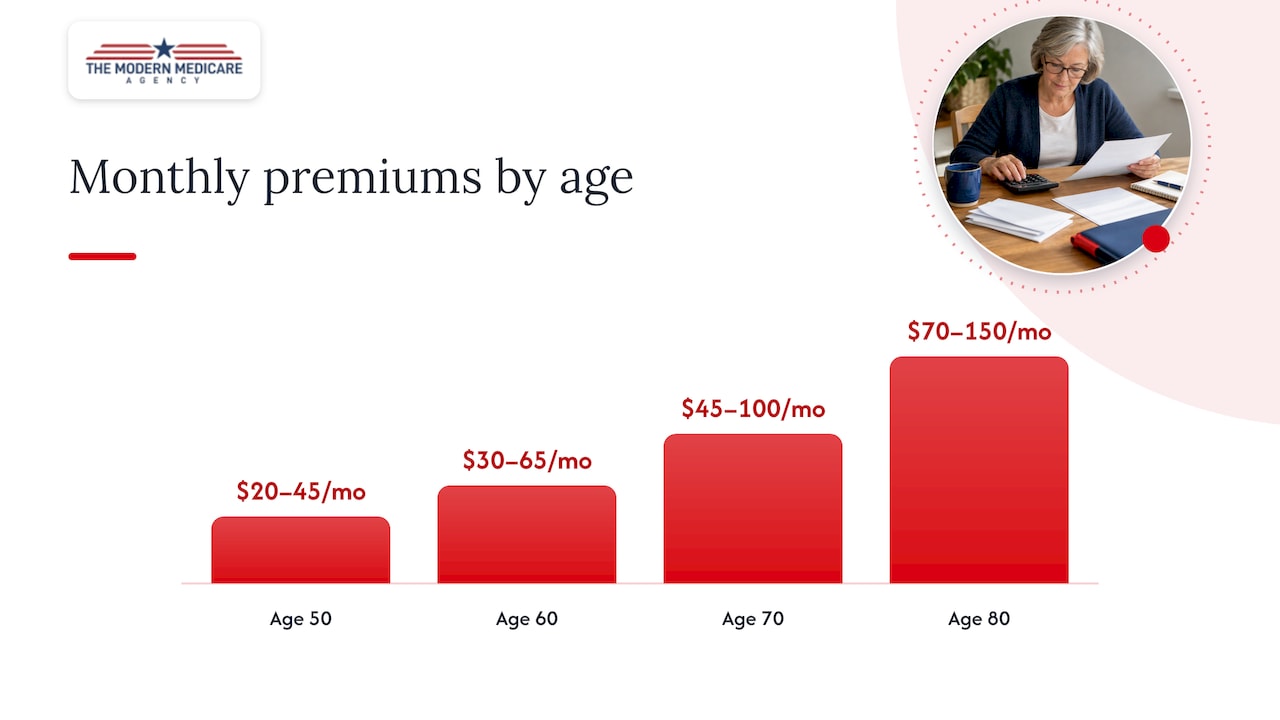
- For applicants who do not use tobacco, monthly premiums run $20 to $45 at age 50, $45 to $100 at 70, and $70 to $150 at 80.
- Simplified issue coverage often provides full benefits from day one after health screening; guaranteed issue skips screening but costs more and usually has a waiting period.
- Build coverage from local funeral and cemetery costs, unpaid final bills, and any desired gift, add a 10% to 20% inflation cushion, then subtract existing benefits.
- Compare written quotes across carriers using the same coverage amount, health class, and state, and check premium guarantees, waiting periods, missed payment rules, and cancellation rights.
Table of Contents
- The 2026 U.S. funeral cost picture: what the medians include and leave out
- 2026 final expense premiums: typical monthly ranges for a $10,000 policy
- Factors that most change your premium
- Policy types: simplified-issue, graded, and guaranteed-issue explained
- How to calculate how much final expense coverage you need
- Getting accurate quotes: questions to ask before you buy
- Agent perspective: why education-first planning matters
- If you want personalized final expense pricing, here’s how we help
- FAQ
- Sources
The 2026 U.S. funeral cost picture: what the medians include and leave out
Funeral costs are the starting point for any final expense budget, and the most reliable benchmark comes from the funeral industry’s own trade association. The 2024 NFDA Cremation & Burial Report tracks median charges for the services families actually buy, broken out by whether the family chooses burial or cremation.
The median cost of a funeral with viewing and burial sits in the thousands of dollars, while a funeral with viewing and cremation typically costs less, according to NFDA’s reporting. That gap exists mainly because burial requires a casket, a vault in most cemeteries, and interment fees that cremation skips or reduces.
Those medians are narrower than most people assume. The 2023 NFDA General Price List Study notes that the funeral-with-burial median excludes cemetery property, vault installation, the grave marker, and cash-advance items like obituary notices or clergy honoraria. Add those in and your real out-of-pocket number climbs well above the headline figure.
The itemized charges that make up the median typically include:
- A nondeclinable basic services fee that covers the funeral home’s overhead and staff time.
- Embalming or other preparation of the body.
- Use of a hearse and staff for transportation.
- A casket, priced separately and often the single largest line item.
- A burial vault or grave liner, required by most cemeteries but not included in the funeral home’s median.
Prices also shift by region and by the choices a family makes. A full-service funeral home in a major metro area tends to charge more than a smaller operation in a rural county, and adding services like a second viewing or a larger casket pushes the total up fast. Before committing to anything, ask the funeral home for its General Price List. The FTC’s funeral pricing checklist recommends comparing itemized price lists across providers rather than relying on a single quoted package, since funeral homes are required to give you that list on request.
2026 final expense premiums: typical monthly ranges for a $10,000 policy
Once you know what a funeral might cost, the next question is what it takes to insure against it. Final expense premiums for a $10,000 policy scale heavily with age, and the following bands are illustrative examples based on common industry pricing patterns, not quotes from any specific carrier.
- Around age 50: roughly $20 to $45 a month for a healthy, non-tobacco applicant.
- Around age 60: roughly $30 to $65 a month, depending on health class.
- Around age 70: roughly $45 to $100 a month, with wider spread based on underwriting.
- Around age 80: roughly $70 to $150 a month, often with fewer carrier options.
These ranges assume a standard or preferred health class. Tobacco use typically raises premiums by a meaningful margin at every age, and gender plays a role too since women generally pay less than men of the same age due to longer average life expectancy. Carriers also price differently by state, so a policy that looks affordable in one part of the country may cost more or less elsewhere for the exact same coverage.
Be cautious of advertisements promising rock-bottom prices for everyone. MoneyGeek’s 2026 guidance points out that the cheapest-looking premium on a flyer or commercial rarely applies to every applicant, and what matters more is understanding exactly what the policy guarantees before you sign anything. Read the policy details, not just the advertised rate, before deciding a plan fits your budget.
Factors that most change your premium
A handful of variables account for most of the difference between a low premium and a high one, and understanding them helps you ask better questions when you request quotes.
- Underwriting type sets the baseline. Simplified-issue policies ask health questions but skip the medical exam, guaranteed-issue policies ask no health questions at all, and each approach carries a different price and waiting-period structure.
- Health conditions and age interact to place you in a pricing class. An applicant’s health conditions and other complications can affect which policy options are available.
- Tobacco use adds a surcharge at nearly every carrier, often raising the premium by a significant percentage over a non-tobacco rate for the same age and coverage amount.
- Coverage amount scales the premium directly: a policy with a higher coverage amount costs more for the same applicant, though the per-thousand-dollar cost often improves slightly at higher face amounts.
- State of residence affects pricing because insurance is regulated at the state level, and carrier availability and approved rate filings differ from state to state.
Pro Tip: Ask every agent for your health class before comparing premiums, since two carriers quoting the same dollar amount can place you in very different underwriting tiers.
Policy types: simplified-issue, graded, and guaranteed-issue explained
Final expense policies generally fall into three categories, and the right one depends on your health and how quickly you need coverage to take full effect.
- Simplified-issue whole life asks a short list of health questions, typically about recent diagnoses, hospitalizations, or serious conditions, with no medical exam required. Applicants who qualify usually get the most competitive pricing and full death benefit coverage from day one.
- Graded or modified whole life exists for applicants with health issues that would otherwise be declined. These policies may pay a limited benefit if the insured dies of natural causes during an initial period, then pay the full face amount afterward. The limited early benefit is the trade-off for guaranteed acceptance into a graded tier.
- Guaranteed-issue whole life requires no health questions and no exam, so it is the easiest to obtain. It also carries the highest premiums for the coverage amount and typically includes a waiting period before the full death benefit applies. Our guide to guaranteed-issue final expense walks through how that waiting-period language typically works.
How to calculate how much final expense coverage you need
A coverage target should reflect your actual wishes and obligations, not a round number picked at random. Work through these steps to land on a figure that fits.
- Start with your expected funeral package cost, using the NFDA median for burial or cremation as your baseline and adjusting for your preferences.
- Add cemetery property, vault, and marker costs if you’re planning a burial, since these sit outside the funeral home’s median.
- Add any unpaid final bills you expect to leave behind, such as medical debt or credit card balances.
- Add a small legacy or gift amount if you want to leave something for family beyond covering costs.
- Build in a 10 to 20 percent cushion for inflation between now and when the policy might be needed.
As an illustrative example, a modest direct cremation with no viewing may cost less than a full burial with a vault and marker. Request itemized local prices to estimate either option. Once you have a total, subtract any existing life insurance, group coverage through a former employer, or veteran burial benefits you already qualify for. What remains is your net final expense need, and that’s the number to request quotes against.
Getting accurate quotes: questions to ask before you buy
Before contacting an agent, gather your age, tobacco status, a brief list of current health conditions and medications, your desired coverage amount, and your state of residence. Having this ready lets an agent pull real quotes instead of rough estimates.
When you talk to a carrier or agent, ask directly:
- Is this premium guaranteed to never increase for the life of the policy?
- Is there a waiting period, and what exactly does it cover if I die of natural causes during that window?
- What happens to my coverage if I miss a payment?
- Are there any riders included or available, and what do they cost?
- Is there a free-look period where I can cancel for a full refund?
An independent agent who works with multiple carriers can run these questions across several companies at once and hand you written quotes and policy documents side by side, which is the only reliable way to compare apples to apples.
Pro Tip: Always request the quote in writing before you apply, since verbal estimates sometimes don’t reflect your actual health class.
Agent perspective: why education-first planning matters
Having helped Medicare consumers navigate coverage decisions, I’ve watched final expense planning go wrong most often when someone buys the first policy offered instead of understanding what they’re agreeing to. An education-first approach means walking through guarantees, waiting periods, and underwriting classes before ever talking price.
Our process involves explaining the options plainly and helping you understand your choices. We stay available if your situation changes. Documenting your wishes and talking with family now, while you’re able to make clear decisions, prevents confusion and disagreement later. If you want a no-pressure conversation about what fits your situation, we’re here for it.
— Paul
If you want personalized final expense pricing, here’s how we help
Comparing final expense carriers on your own means wading through dozens of advertised rates that may not apply to your actual health class. As independent agents, we help you compare options based on your specific details.

Here’s what that looks like in practice:
- We explain which underwriting type (simplified-issue, graded, or guaranteed-issue) fits your health and timeline.
- We lay out exactly what’s guaranteed in a policy and what waiting periods apply before you sign anything.
- We help you compare your options side by side.
- We stay available year-round after enrollment if your needs or budget change.
Our approach stays education-first the whole way through, with no pressure to buy anything before you’re ready. If you’d like a personalized quote, visit our final expense insurance page to request one.
This article is general information, not a substitute for advice from a qualified financial advisor. Consult a qualified financial professional about your own circumstances before acting on anything here.
FAQ
What is the most expensive part of a funeral?
The casket is typically the single largest line item in a funeral with burial, though the combined cost of the basic services fee, embalming, and vault often rivals or exceeds it. Cemetery costs like the vault, plot, and marker sit outside the NFDA’s reported median and can add substantially to the total.
How do I know which final expense insurance company fits my situation?
The right company depends on your age, health class, and state, since pricing and availability vary by carrier. Working with an independent agent who compares multiple carriers, rather than relying on one company’s advertised rate, is the most reliable way to find a fit for your specific health profile.
How much is a $10,000 burial policy?
A $10,000 final expense policy in 2026 typically runs between roughly $20 and $150 a month depending heavily on your age and health class at the time of application. Younger, healthier applicants land toward the lower end, while older applicants or those needing guaranteed-issue coverage pay more.
Is there a $25,000 burial benefit for seniors?
Final expense policies are commonly available in face amounts that suit typical final expense needs, though the exact amount offered depends on the carrier and your health class. Guaranteed-issue options with no health questions are available at various face amounts but typically carry higher premiums and a waiting period for full benefits.
Does Medicare pay for funeral or burial costs?
No. Medicare’s hospice benefit materials confirm that Medicare covers medical care related to a terminal illness but does not pay for funeral or burial expenses, which is why final expense insurance exists as a separate budgeting tool.
Sources
- 2024 NFDA Cremation & Burial Report
- Medicare Hospice Benefits
- Final Expense Insurance Cost (2026 Rates) | MoneyGeek