
Hospital indemnity insurance is usually worth it if you carry a high deductible, have limited emergency savings, are planning a pregnancy, or manage a chronic condition that raises your odds of an inpatient stay. It tends to be a poor fit if you already have low out-of-pocket costs or enough savings to absorb a hospital bill without strain. The right call depends on three things: how your monthly premium stacks up against the daily payout, whether you can get the plan through an employer at group rates, and how it interacts with Medicare or Medigap if you’re 65 or older. Below is a worked example and a checklist to help you decide.
TL;DR:
- Hospital indemnity insurance is most beneficial for high-deductible plan enrollees who have limited savings and face predictable hospital costs, such as childbirth.
- Payouts typically range from $100 to $1,000 per day, and a plan covering a five-day hospital stay could provide around $1,200 in cash benefits.
- Employer-sponsored policies often cost less and require no underwriting, while individual plans may deny coverage for preexisting conditions or require medical underwriting.
- Because it is classified as an excepted benefit, hospital indemnity does not offer the same consumer protections as ACA-compliant plans and includes limits like waiting periods and exclusions.
- Carefully comparing premiums, payout structures, and specific policy details helps determine if hospital indemnity insurance truly fits your health risks and financial situation.
Table of Contents
- What hospital indemnity insurance is and how it works
- How much plans pay: payout structures and a worked example
- Who is most likely to benefit from a policy
- Limits, exclusions, and consumer-protection concerns
- Decision checklist: weighing cost against likely value
- How hospital indemnity fits with Medicare and Medigap
- Author perspective: when I recommend hospital indemnity and when I don’t
- How PaulBInsurance can help you decide
- Sources
- FAQ
What hospital indemnity insurance is and how it works
Hospital indemnity insurance pays you a fixed cash amount when a covered hospital event happens, regardless of what the hospital actually bills. It doesn’t pay providers directly and doesn’t coordinate with your major medical plan the way a deductible or copay does. That distinction matters because a $300 daily payout doesn’t reduce your hospital’s charges. It lands in your bank account and can go toward rent, a copay, lost wages, or anything else, according to insurer explainers on how these plans pay policyholders.
Federal guidance treats hospital indemnity as an excepted benefit, meaning it sits outside many of the consumer protections that apply to ACA-compliant major medical plans, according to CMS guidance on excepted benefits. That classification is also why it functions as a supplement, never a replacement, for real health coverage.
A few structural points shape whether a policy fits your situation:
- Employer group plans typically cost less than individual policies and often come with guaranteed-issue enrollment windows.
- Individual hospital indemnity policies may require medical underwriting, which can mean denial or higher rates if you have preexisting conditions.
- Payouts go to you, the policyholder, not to the hospital or your provider network.
If you want more detail on how these policies are structured before comparing premiums, this explainer on hospital indemnity payout mechanics breaks down the basics.
How much plans pay: payout structures and a worked example
Most hospital indemnity policies use one of three payout structures, sometimes combined:
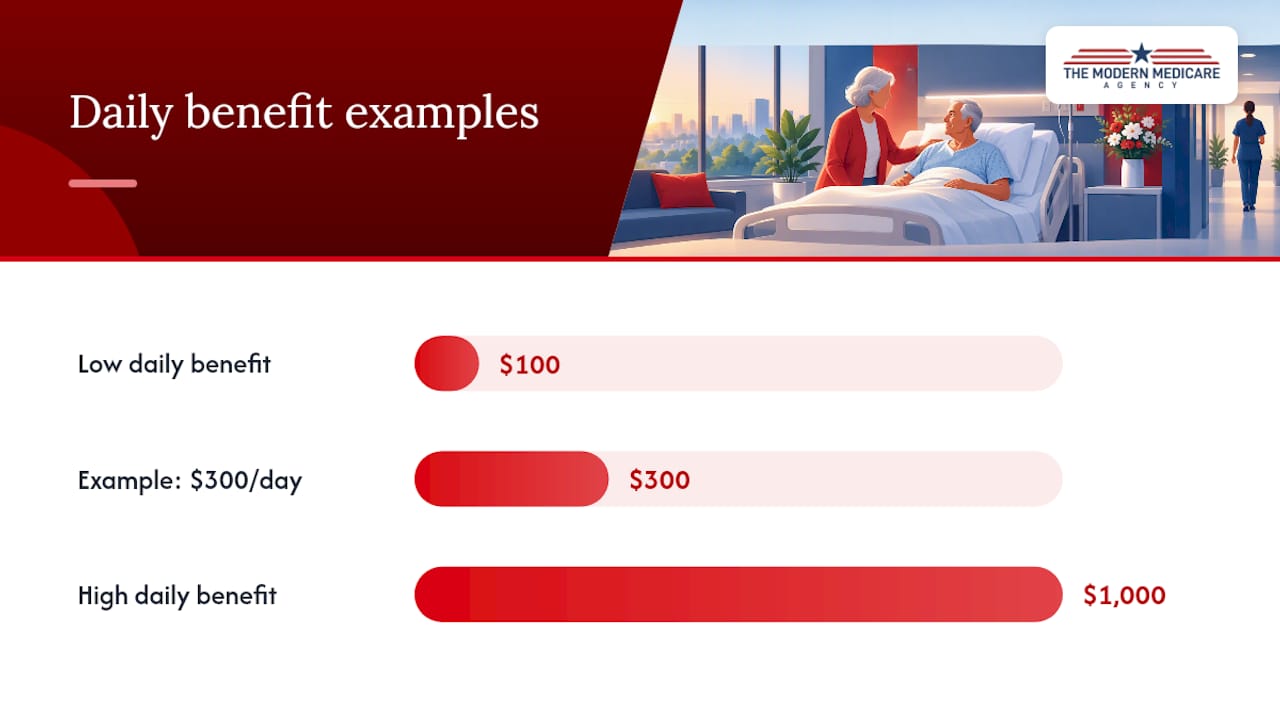
- A flat daily benefit for each day you’re admitted, commonly in the $100 to $1,000 range depending on the plan.
- A lump-sum benefit triggered by specific events, such as ICU admission or a scheduled surgery.
- Add-on riders for things like ambulance transport or a newborn’s nursery stay.
Hospital indemnity policies are one of the most common excepted-benefit products sold in the United States, with industry data showing millions of policies in force, which reflects how often employers and individuals use them to fill gaps left by major medical coverage.
Here’s how the math can play out. Your out-of-pocket exposure could run well past the deductible once coinsurance kicks in on the hospital bill. A hospital indemnity plan paying $300 per day would deliver $1,200 for that stay, cash you can apply directly against the deductible or coinsurance, or toward the wages you lose while you’re out of work. Whether that $1,200 is worth the monthly premium depends on your odds of ever needing it, which is where the next sections come in.
Group and employer-sponsored versions of these plans are usually priced lower than what you’d find shopping individually, and they often skip underwriting entirely during open enrollment.
Who is most likely to benefit from a policy
Hospital indemnity tends to pay off for specific profiles rather than as a blanket recommendation:
- People enrolled in high-deductible health plans, especially those pairing an HSA with a deductible above $2,000, since a hospital stay can burn through that deductible fast.
- Households with limited emergency savings or irregular income, where a lump-sum or daily payout that softens a cash-flow shock.
- Pregnant people and families planning for childbirth, since a hospital stay for delivery is a near-certain event rather than a remote risk.
- Medicare beneficiaries with coverage gaps, particularly around Part A hospital costs, which is covered in more depth further down.
On the other end, if you carry a low-deductible comprehensive plan or already have enough set aside to cover a worst-case hospital bill without disrupting your budget, the monthly premium is harder to justify. You’re paying for a cushion you may not need, and that money often does more for you sitting in savings or going toward a plan with broader protections, such as accident insurance compared against hospital indemnity.
Limits, exclusions, and consumer-protection concerns
Hospital indemnity policies come with real limits worth reading closely before you buy.
- Preexisting condition exclusions and waiting periods are common, sometimes running several months before certain benefits kick in.
- Outpatient care, observation stays that don’t count as a formal admission, and some mental health or substance use services may fall outside what the policy covers.
- Because these plans are classified as excepted benefits under HIPAA guidance, they don’t carry the same consumer protections as ACA-compliant major medical coverage, per CMS’s excepted-benefit rules.
- Regulators have flagged limited-benefit products, including some fixed indemnity plans, for being marketed as if they substitute for comprehensive coverage when they reimburse a fixed amount rather than actual provider charges.
Pro Tip: Ask for the full schedule of benefits before you enroll, and check your state Department of Insurance site for any consumer alerts on the specific carrier or plan.
Decision checklist: weighing cost against likely value
Run through these steps with your own numbers before deciding.
- Quantify your exposure. Add up your deductible, expected coinsurance, and any costs your major medical plan doesn’t touch, then compare that total to your emergency savings.
- Compare premium to expected payout. Multiply your rough probability of a hospital stay in a given year by the plan’s payout, then compare that expected value to what you’d pay in annual premiums.
- Confirm the specifics that actually matter. Check the daily rate, maximum covered days per year, waiting periods, any benefit reductions tied to age, and exactly which events trigger a payout.
- Ask the right questions. Find out whether your employer’s plan is guaranteed-issue, whether exclusions are clearly spelled out, and whether the agent is steering you away from ACA marketplace options without explaining why.
Pro Tip: If an agent can’t clearly explain the waiting period or what counts as a covered admission, treat that as a red flag rather than a detail to sort out later.
How hospital indemnity fits with Medicare and Medigap
Hospital indemnity can help offset Medicare Part A and Part B cost-sharing, but it isn’t a substitute for a Medigap policy or comprehensive coverage. Guaranteed-issue rules typically apply during your initial Medicare enrollment window or an employer’s open enrollment, while buying an individual policy later often means underwriting.
- Independent Medicare agents can compare hospital indemnity against Medigap based on your actual utilization and timing.
- Reading the schedule of benefits before enrolling avoids surprises about what a plan does and doesn’t cover, a step covered in more detail in this guide to hospital indemnity and Medicare gaps.
- Understanding your Part A hospital costs first makes it easier to see where a supplement actually helps, as explained in this breakdown of Medicare Part A coverage and costs.
Author perspective: when I recommend hospital indemnity and when I don’t
If you’re pregnant on a high-deductible plan, I usually say yes. If you’re a retiree with solid savings and a low-deductible Medigap plan, I usually say no, the coverage is already doing that job. Take the employer version when it’s guaranteed-issue and cheaper, shop the individual market only when you have no other option, and always read the policy before you sign.
— Paul
How PaulBInsurance can help you decide
Weighing hospital indemnity against your Medicare options is easier with someone who compares plans for a living rather than sells just one. An independent Medicare brokerage can work with many carriers, so the comparison isn’t limited to a single company’s product line.

- We review your current benefits and out-of-pocket exposure before recommending anything.
- We compare hospital indemnity, Medigap, and Medicare Advantage side by side using your actual numbers.
- We offer yearly coverage checkups so your plan keeps pace with your health and budget.
| What you get in a free consultation | Why it matters |
|---|---|
| Benefits review | Shows where your current plan leaves gaps |
| Cost comparison across carriers | Avoids overpaying for overlapping coverage |
| Enrollment timing guidance | Helps you use guaranteed-issue windows before they close |
If Medigap looks like the better fit once we’ve compared your options, you can explore Medicare Supplement plans and start a conversation about enrollment.
Sources
For further reading, consult CMS’s excepted-benefits guidance, the CFPB’s report on medical debt, and the NAIC’s supplemental benefits overview.
This article is general information, not a substitute for advice from a qualified financial advisor. Consult a qualified financial professional about your own circumstances before acting on anything here.
- Insurance Standards Bulletin Series – Circumstances Under Which Supplemental Health Insurance Coverage Satisfies the Requirements for Excepted Benefits (CMS)
- Supplemental Benefits overview (NAIC / ACLI)
- Is hospital indemnity insurance worth it? (Guardian)
FAQ
Is it worth getting hospital indemnity coverage?
It depends on your deductible, savings, and health situation: a high-deductible plan with little savings makes it more worthwhile, while ample savings or a low-deductible plan makes it less so. Compare the premium against your realistic chance of hospitalization before deciding.
What is the average hospital indemnity payout?
Payout structure varies by policy, with common daily benefits ranging from $100 to $1,000 depending on the plan you choose. Some plans add lump-sum benefits for events like ICU admission or childbirth on top of the daily rate.
What is the disadvantage of indemnity health insurance?
Indemnity plans pay a fixed amount rather than covering your actual medical bills, so a serious hospitalization can still leave you with costs the payout doesn’t fully offset. They also carry excepted-benefit status, meaning they skip many consumer protections built into ACA-compliant major medical plans.
What is one major drawback of indemnity plans?
Waiting periods and exclusions for preexisting conditions can delay or block benefits exactly when you need them most. Regulators have also flagged some limited-benefit products for being marketed as substitutes for comprehensive coverage when they function very differently.