
How can you reduce unwanted Medicare calls without missing important information about your coverage? Start by controlling where you share your phone number, verifying callers before responding, and reporting calls that concern you. Learning how to avoid medicare marketing calls can help you feel safer and more in control.
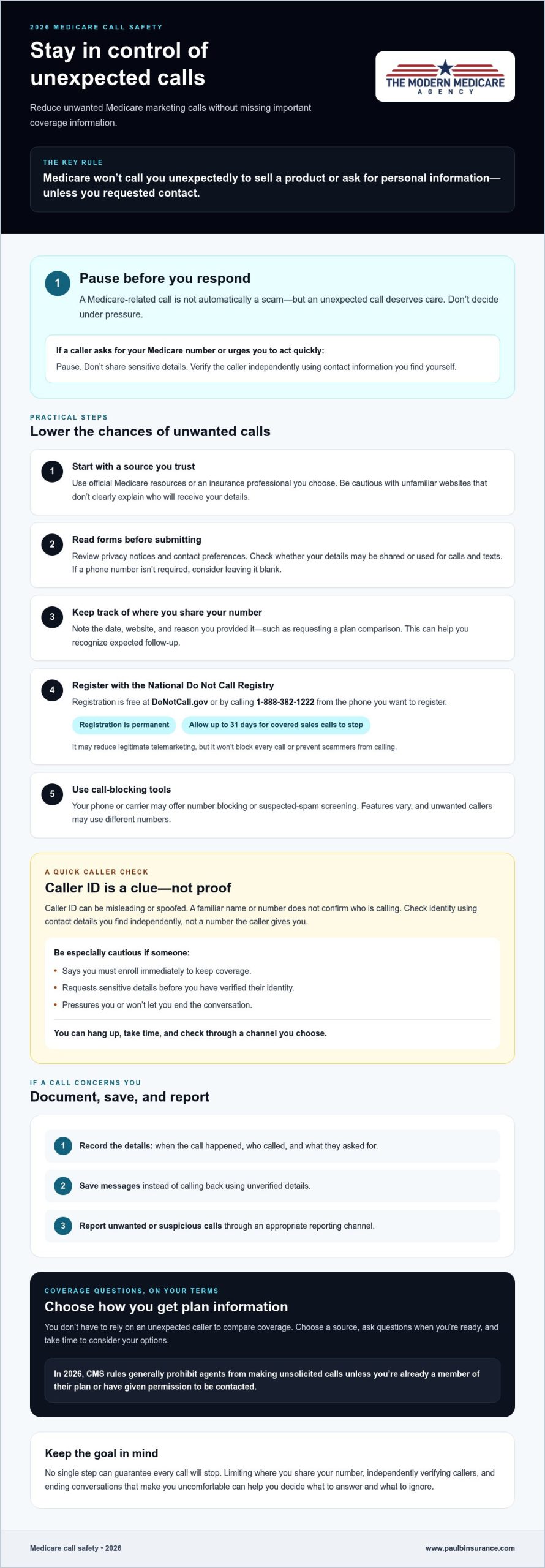
Repeated calls can interrupt your day, and it isn’t always easy to tell a legitimate contact from a deceptive one. You don’t have to decide under pressure. In 2026, Medicare won’t call you unsolicited to sell a product or ask for personal information unless you’ve requested contact. If a caller asks for your Medicare number or urges you to act quickly, pause and don’t share sensitive details.
This guide covers practical ways to limit calls, what to say when an unexpected caller reaches you, and how to document and report suspicious or unwanted contact. It also explains how to get answers about coverage through a channel you choose, rather than relying on an unexpected caller.
Key Takeaways
- Learn how to avoid medicare marketing calls by limiting where you share your phone number and choosing which contacts to respond to.
- Recognize pressure tactics and end a call if you feel uncomfortable. Take time to verify a caller independently.
- Record concerning calls, including when they happened, who called, and what they asked for.
- Learn where to report unwanted or suspicious calls, and save messages instead of calling back using unverified details.
- Get Medicare plan information through channels you choose, so you can ask questions and compare options without relying on an unexpected caller.
Why Are You Getting Medicare Marketing Calls: What Can You Control?
Repeated calls about Medicare can feel intrusive, confusing, or alarming, especially when you’re unsure who’s calling or what they want. A caller who mentions Medicare isn’t automatically calling from Medicare. The name or number on your caller ID isn’t proof of identity either, because caller ID can be misleading.
You can take steps to limit unwanted calls and protect your information, but no single action can guarantee that every call will stop. The goal is to make it easier to decide which calls to answer, which to verify, and when to hang up.
Why might Medicare-related calls reach you?
A request for plan information, a quote form, or a past inquiry may lead to follow-up from an insurance representative. You may not remember submitting your details, and the call alone won’t tell you how the caller got your number. In 2026, you can also register your number on the National Do Not Call Registry to help reduce telemarketing calls. Registration can’t guarantee that all calls will stop.
Caller ID can be spoofed, which means a caller may make a number or name appear familiar or official. Treat it as a clue, not confirmation. To check a caller’s identity, use contact information you find independently rather than relying on a number they provide.
Are all Medicare marketing calls automatically scams?
No. An unexpected call deserves caution, but it doesn’t prove fraud. A representative may be following up on a request you made. Consider whether you invited the contact and whether the caller communicates transparently, without pressure or misleading claims.
Under CMS’s 2026 Medicare marketing rules, agents generally can’t make unsolicited calls unless you’re already a member of their plan or have given permission to be contacted. Medicare itself won’t call unexpectedly to sell you a product or ask for personal information unless you requested contact. If a caller claims you must enroll immediately to keep coverage, asks for sensitive details before you’ve verified their identity, or won’t let you end the conversation, don’t rely on their assurances. Pause and check through a channel you choose.
Knowing how to avoid medicare marketing calls starts with understanding what you can control: be thoughtful about where you share your number, verify callers independently, and don’t feel obligated to stay on the phone. These steps can help reduce unwanted contact and make suspicious calls easier to recognize, even if they can’t prevent every call.
How to Avoid Medicare Marketing Calls
You may not be able to stop every call, but practical habits can reduce unwanted contact and help you stay in control. In 2026, try these steps when researching coverage or handling calls:
- 1. Start with a source you trust. Use official Medicare resources or an insurance professional you choose to learn about coverage. Be cautious with unfamiliar websites that promise to find a plan but don’t explain clearly who will receive your contact details.
- 2. Read forms before submitting them. Check the privacy notice and contact preferences on forms requesting plan information. Look for whether your details may be shared or used for calls and texts. If a form doesn’t require your phone number, consider leaving it blank.
- 3. Track where you share your number. Note the date, website, and reason you provided it, such as requesting a plan comparison. This can help you recognize expected follow-up and remember which forms you may want to avoid in the future.
- 4. Register for the Do Not Call list. In 2026, you can register for free at DoNotCall.gov or call 1-888-382-1222 from the phone you want to register. Registration is permanent, and it can take up to 31 days for covered sales calls to stop. It may reduce legitimate telemarketing, but it won’t block every call or prevent scammers from calling.
- 5. Use call-blocking tools. Your phone or carrier may offer options to block numbers or screen suspected spam. Features vary, so check your device or carrier’s instructions. Blocking a number can help with repeat callers, though unwanted callers may use different numbers.
For more ways to manage unwanted calls and texts, see the FCC guide to stopping unwanted calls. Blocking and registration can help, but neither guarantees that every call will stop. Use your judgment, especially if a caller asks for personal information or pressures you to act.
Choose how you get plan information
You don’t have to respond to an unexpected call to compare coverage. Choose a source and ask questions on your terms. For example, explore this Medicare Advantage plan guide to start learning about coverage.
These steps are a practical start to how to avoid medicare marketing calls. They help you limit where your number goes, reduce some interruptions, and choose who you speak with.
What to Do During an Unwanted Medicare Marketing Call
You’re allowed to end a call that feels uncomfortable. You don’t need to explain yourself or stay on the line to hear a pitch. Pause, avoid sharing private information, and verify important claims on your own.
What warning signs should make you pause?
Be cautious if a caller pressures you to act immediately, threatens that you’ll lose coverage unless you enroll, asks for your Medicare number or financial details, or makes unusually certain promises. Under 2026 Medicare marketing rules, agents can’t use high-pressure tactics such as claiming you’ll lose coverage if you don’t join a particular plan, or mislead you with claims that a plan is “the best.”
A warning sign is a reason to stop and check, not proof by itself that a caller has committed fraud. Don’t let urgency decide for you. If you’re comfortable, ask for the caller’s name and organization, then end the call before looking into the claim.
How can you verify a caller without sharing private information?
Hang up and find the organization’s contact details independently. For Medicare information, start at Medicare.gov. If the caller says they represent an insurance company or plan, use contact information you find yourself, not a number they provide or one displayed on caller ID.
You can ask general questions without providing your Medicare number, bank or card details, or other sensitive information. Don’t send those details to an agency or share them in a public comment or message while checking a call. If you’re unsure, wait until you’ve confirmed who you’re speaking with.
A short script can help you end the conversation:
- “I’m not interested in discussing this by phone. Please don’t call me again. Goodbye.”
- “I’ll verify this through the organization directly. I’m ending the call now.”
Then hang up. You don’t have to debate the caller or answer more questions. If the call concerns a plan you asked about, follow up later through a contact method you trust.
To make how to avoid medicare marketing calls more manageable, protect your information, take time to verify, and choose when and how to continue a conversation. A legitimate question about coverage can wait until you’re ready to address it safely.
How to Document and Report Suspicious Medicare Marketing Calls
A clear record can make it easier to explain what happened if you decide to report a call. You don’t need to prove that the caller broke a rule. Write down what you remember while it’s fresh, and keep related messages in a safe place.
What details should you save after a call?
Make a brief, factual note. Include:
- The date and time of the call
- The number shown on caller ID, even if you’re unsure it was genuine
- The name or organization the caller claimed to represent
- What the caller asked you to do or share, and any statements that concerned you
Keep voicemails, texts, and screenshots if practical. Store them somewhere private, and avoid sharing images that reveal your Medicare number, financial details, or other personal information. Don’t call back using contact details in an unexpected message. Avoid recording a call unless you’ve checked the requirements that apply where you live.
Where can you report a suspicious or unwanted call?
The right reporting route depends on what happened. For an unwanted telemarketing call, you can file a complaint through the National Do Not Call Registry complaint page. For suspected Medicare fraud, call 1-800-MEDICARE (1-800-633-4227) or the HHS Office of Inspector General hotline at 1-800-HHS-TIPS (1-800-447-8477). You can also report suspected fraud to the Federal Trade Commission. A local Senior Medicare Patrol may also help with marketing concerns and suspected fraud.
If you think someone used your identity or caused a financial loss, make that clear when reporting and follow the relevant official agency’s instructions. Reporting can help authorities identify patterns, but it doesn’t guarantee an individual response or a particular outcome. Keep your notes and any confirmation details together in case you need to refer to them.
These records support a careful approach to how to avoid medicare marketing calls: note what happened, protect your information, and use reporting channels you choose. If a call leaves you with questions about plan coverage, review Medicare Advantage coverage options through a source you selected rather than relying on an unexpected caller.
How to Get Medicare Plan Help Without Relying on Unsolicited Calls
You can choose where to get information and when to discuss your coverage. Start with official Medicare resources, such as Medicare.gov, or contact an advisor you trust directly. A plan decision should reflect your needs and preferences, not a caller’s urgency.
How can you seek plan information on your own terms?
If you’re learning about Medicare Advantage, start with a clear overview of how these plans work. This Medicare Advantage guide can help you review the basics at your own pace. When you’re ready to ask questions, choose whom to contact and what information to share. You don’t have to respond to an unexpected call to explore your options.
What can an independent Medicare broker help you understand?
An independent broker can help you compare available Medicare Advantage, Medicare Supplement (Medigap), and Part D options. The Modern Medicare Agency is an independent brokerage with access to plans from over 40 carriers. That gives you options to discuss, but it doesn’t guarantee that a particular plan will fit your needs. Ask how the broker works, which plans they can review with you, and what to consider before making a decision.
If you’d like help understanding your choices, contact an independent broker directly and ask questions on your own terms. There’s no need to make a decision during an unsolicited call.
Keep this simple checklist in mind in 2026:
- Pause if a call catches you off guard or makes you feel pressured.
- Verify the caller’s identity using contact details you find independently.
- Protect your Medicare number and other sensitive information.
- Document calls that concern you, including what the caller asked for.
- Report the call through an appropriate official channel when needed.
These steps won’t guarantee that every unwanted call stops, but they can help you stay in control of the conversation and your next steps. A steady approach to how to avoid medicare marketing calls means choosing your sources, taking time to compare coverage, and getting help when you’re ready.
Choose a Safer Way to Explore Your Medicare Options
In 2026, you can take more control of Medicare conversations by choosing where to request information, verifying callers independently, and keeping a record of calls that concern you. These steps may reduce unwanted contact, but they can’t guarantee every call will stop.
Knowing how to avoid medicare marketing calls also means remembering that you don’t have to make coverage decisions under pressure. Seek information through channels you choose and take time to compare options based on your needs.
If you’d like to talk through Medicare questions, The Modern Medicare Agency is an independent brokerage with access to plans from over 40 carriers. It offers personalized Medicare guidance and year-round client support across more than 34 states. Talk through your Medicare questions with an independent guide.
You’re allowed to pause, ask questions, and decide at your own pace. A calm, informed next step can help you feel more confident about your coverage choices.
Frequently Asked Questions
How can I stop Medicare marketing calls?
You can reduce unwanted calls, but no single step can guarantee they’ll all stop. In 2026, consider registering your number with the National Do Not Call Registry, using your phone or carrier’s call-blocking tools, and being selective about where you share your number. Read contact preferences before submitting forms. If a caller catches you off guard, end the call and verify any claims independently.
Is it safe to answer a call about Medicare?
Answering a call doesn’t mean you have to share information or make a decision. A call mentioning Medicare isn’t automatically from Medicare, and caller ID alone can’t confirm who’s calling. If you’re unsure, avoid giving personal or financial details, end the conversation, and contact the organization using details you find independently. A call you requested may be a legitimate follow-up, but you can still verify it.
Can I put my phone number on the Do Not Call Registry to avoid Medicare calls?
Yes. In 2026, you can register for free at DoNotCall.gov or call 1-888-382-1222 from the phone you want to register. Registration is permanent, and it can take up to 31 days for sales calls to stop. The registry may reduce covered telemarketing calls, but it won’t block every call or prevent scammers from contacting you. You can also use blocking tools and report concerning calls.
What should I do if a Medicare caller asks for my Medicare number?
Don’t provide it to an unverified caller. Your Medicare number is sensitive, so pause the conversation and end the call if you feel pressured. To check a claim, find the organization’s contact information independently, such as through Medicare.gov, and contact it yourself. If you already shared the number and suspect misuse, contact 1-800-MEDICARE at 1-800-633-4227 to ask about reporting suspected fraud.
How do I report unwanted Medicare marketing calls?
Choose a reporting channel based on what happened. For unwanted telemarketing, file a complaint at complaints.donotcall.gov. For suspected Medicare fraud, contact 1-800-MEDICARE at 1-800-633-4227 or the HHS Office of Inspector General at 1-800-447-8477. You can also report suspected fraud to the FTC at ReportFraud.ftc.gov. Save the date, caller details, and what was requested. A report may help identify patterns, but a response isn’t guaranteed.
Will blocking a Medicare marketing number stop future calls?
Blocking a number can help stop calls from that particular number from reaching you, depending on your phone and carrier settings. It may not stop future calls if the caller uses different numbers or misleading caller ID information. Check your phone or carrier’s instructions for available blocking and screening features. If calls continue, keep a record of them and consider registering your number or reporting concerning contact.
Does Medicare call people to sell Medicare Advantage plans?
Medicare itself won’t call you unsolicited to sell a product or ask for personal information unless you requested contact. Under 2026 Medicare marketing rules, agents generally can’t make unsolicited calls unless you’re already a member of their plan or have given permission. If someone says they’re calling from Medicare to sell you a Medicare Advantage plan, don’t share sensitive information. Verify the caller through a contact channel you find independently.

Article by
Paul Barrett
Paul Barrett, CMIP is the founder of The Modern Medicare Agency, an independent Medicare-only brokerage based in Melville, NY. With 18 years of Medicare-exclusive experience, a CMIP designation, and more than 5,000 clients served across 37 states, Paul is one of the most credentialed independent Medicare specialists on Long Island — and one of the most direct.
He represents 40+ carriers with no quotas and no allegiances, which means his recommendations are based entirely on what fits each client's specific situation. He is the author of Medicare Mastery Unlocked and host of the Wise Guys Retirement Talk podcast. His content is grounded in primary sources, real carrier intelligence, and 18 years of watching what happens when people get Medicare right — and when they don't.
📞 631-358-5793 | paulbinsurance.com