




What if the lowest Medigap quote in your ZIP code isn’t the best match? Rates can vary between insurers in the same area, and a quote is useful only when you’re comparing the same plan and pricing basis. If you’re figuring out how to compare medigap rates by zip code, use your ZIP code as a starting point, not as the whole decision.
It’s understandable to feel unsure when quotes look similar but may be based on different details. Your ZIP code can help identify local options and rates, but it doesn’t tell you whether two quotes use the same plan letter, age, tobacco status, or pricing method. In 2026, comparing those details side by side can make the results clearer.
This guide explains what a ZIP-code lookup can and can’t tell you, what information to gather, and how to compare equivalent Medigap options. You’ll also learn what to consider beyond the initial premium, including how rates may change over time. If you’d like a patient second look, an independent Medicare broker can help you review options without pressure.
Key Takeaways
- Learn how to compare medigap rates by zip code, using your location to find relevant options rather than treating it as the whole comparison.
- Match the plan option and quote assumptions before comparing premiums, so you’re looking at equivalent choices.
- Record each insurer, quote date, pricing basis, and assumptions in one table to make differences easier to spot.
- Before choosing, review the plan details and effective date. A starting premium doesn’t show every future rate change.
- An independent Medicare broker can help you review options. The Modern Medicare Agency has 5,000+ clients served, 18 years of experience, and works with 40+ carriers.
Why your ZIP code matters when comparing Medigap rates
Searching for Medigap rates by location can make a comparison feel more complicated than it needs to be. One ZIP code may bring up several insurers and quote options, while another may show a different mix. That local search is useful, but it’s only the first step in understanding your options in 2026.
A ZIP-code rate comparison narrows your search to options relevant to a geographic area. It doesn’t account for every detail that can shape an individual rate. Local availability tells you which options may be offered in an area; only a quote based on your details can show the rate an insurer may offer you.
What a ZIP-code search can tell you
Entering your ZIP code helps focus a lookup on your location rather than presenting options from elsewhere. It can be a practical way to identify insurers and Medigap plan choices that appear relevant to your area. If you’re learning how to compare medigap rates by zip code, treat the results as a shortlist, not a final price or recommendation.
Availability and an individual quote aren’t the same thing. A search result may show a starting rate or invite you to request more information, but it may not reflect your age, tobacco use, or other quote details. The Medigap overview explains the role of these policies and notes that details can vary by state. You can also explore Medigap plan options.
Why rates can differ within one ZIP code
Several insurers may offer the same plan letter in the same area and show different premiums. Insurers set their own prices and may use different pricing methods. A lower quote from one company doesn’t mean that company will always have the lowest rate for every person or situation.
Personal details can also affect whether two quotes are comparable. Age and tobacco use may be among the information used to calculate a quote. A household discount may apply under an insurer’s terms, so note whether it’s included in the quoted rate and whether it has specific qualifications. State rules can also affect Medigap options and how quotes are handled. Don’t assume one state’s process applies everywhere. Compare the details relevant to your location in 2026.
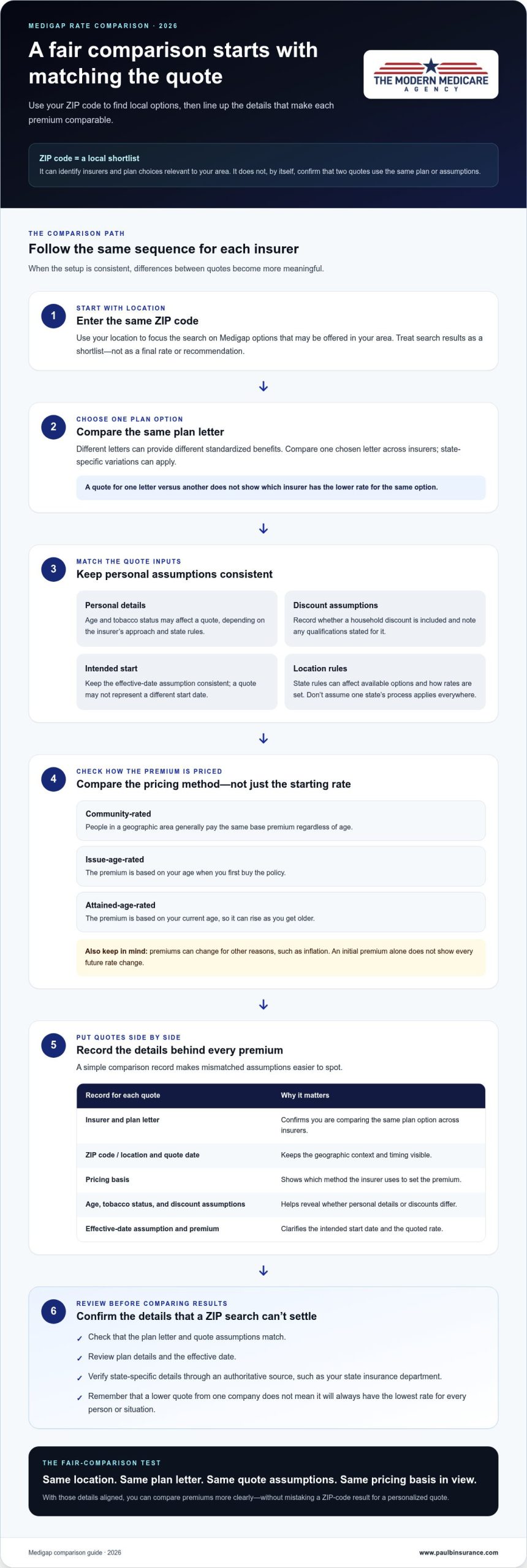
As you gather quotes, record the assumptions behind each one. Include the plan letter, insurer, quote date, location, and any personal details or discounts used. This makes it easier to spot when two results aren’t an apples-to-apples comparison. Then you can compare the same plan option under consistent assumptions instead of choosing based on a ZIP-code result alone.
Which details can change a Medigap quote in your area?
Two quotes can show different premiums for reasons beyond location. To make a fair comparison in 2026, match the plan option and assumptions used to calculate each quote. Otherwise, a lower figure may reflect a different plan, pricing method, or discount, rather than a better rate for the same option.
Keep the plan letter, age, tobacco status, household-discount assumptions, pricing method, and effective-date assumptions consistent across quotes. Not every detail affects every quote, but recording them helps you spot results that aren’t directly comparable.
Match the same Medigap plan option first
Medigap plans are identified by letters, and different letters can provide different standardized benefits. Comparing a quote for one letter with a quote for another doesn’t tell you which insurer offers the lower rate for the same option. Start with the plan letter you want, then compare that letter across insurers.
For a given letter, basic benefits are generally standardized, but state-specific variations can apply. Don’t assume every detail is identical in every state. A Medigap plan overview can help you understand the plan category as you decide which option to compare.
Check the pricing basis and quote assumptions
Insurers may use different methods to set premiums. With community-rated pricing, people in a geographic area generally pay the same base premium regardless of age. Issue-age-rated pricing is based on your age when you first buy the policy. Attained-age-rated pricing is based on your current age, so the premium can rise as you get older. Premiums can also change for other reasons, such as inflation. Compare the pricing method as well as the initial rate.
Age and tobacco use can affect a quote, depending on the insurer’s approach and state rules. A household discount may also be available under specific conditions, but don’t assume it applies just because another quote includes one. Record whether a discount is reflected and what assumptions the quote uses. Note the effective date too, since a quote may not represent the rate for a different start date.
State rules can affect available options and how rates are set. For a reliable 2026 comparison, verify state-specific details through an authoritative source, such as your state insurance department, rather than applying rules from another state. This matters especially if you’re comparing quotes across locations or reviewing information that doesn’t clearly identify the state it covers.
Once you’ve matched the plan and assumptions, differences between quotes become more meaningful. If you’d like help reviewing Medigap choices for your situation, explore plan options with an independent Medicare broker.
How to compare Medigap rates by ZIP code fairly
A useful comparison starts with a consistent setup. In 2026, take the same steps for each insurer: enter your ZIP code, choose the same Medigap plan option, and request a quote using the same personal details and intended start date. This keeps the comparison focused on differences between insurers, not differences in what each quote assumes.
Use one row per insurer in your notes. If a quote leaves out a detail, mark it as missing instead of assuming it matches the others. That pause can prevent a starting figure from appearing comparable when it isn’t.
Build a like-for-like quote comparison
Keep the columns consistent and fill them in as you receive each quote. Your blank comparison sheet might look like this:
Insurer: ____________________ Plan option: ____________________
Displayed rate: ____________________ Quote date: ____________________
Pricing basis: ____________________ Assumptions: ____________________
Effective date: ____________________ Eligibility or underwriting notes: ____________________
Copy these fields for each insurer. Use the same plan letter in every row; a quote for a different letter isn’t a fair price comparison, even if it appears lower. Add notes for details such as age, tobacco status, any household discount reflected, and the date coverage would begin. If the quote doesn’t explain a field, label it “unknown” and follow up before drawing a conclusion.
This record also makes it easier to review quotes collected on different days. Rates and quote assumptions can change, so keep the date visible and don’t treat an older result as current without checking it again.
Review more than the first displayed rate
A rate shown in a search result may be a starting point, not a confirmed offer for your circumstances. Separate that displayed figure from conditions that could affect your individual quote, including eligibility, any underwriting process, and the requested effective date. Rules can depend on your situation and state. Verify current 2026 requirements with a reliable source before relying on a quote, especially if you’re outside an enrollment period that may affect how an application is reviewed.
Also note how each insurer calculates its rate. Pricing methods can affect how premiums change over time, so the lowest initial figure doesn’t answer every question about long-term cost. For foundational terms, see this Medigap guide as you review the options.
When you record the same ZIP code, plan option, quote date, and assumptions, you can compare results more confidently. The goal isn’t to chase the smallest number on screen. It’s to understand what each quote represents before deciding which option deserves a closer look.
What to verify before choosing a Medigap rate
You’ve gathered the quotes. Before deciding, check that each one describes the same kind of option and the same situation. This final review can help you avoid choosing based on a figure that looks comparable but relies on different assumptions.
Questions to resolve before comparing final options
Use this checklist to review each quote side by side:
- Plan option: Does every quote show the same Medigap plan letter and type of plan?
- Quote date: When was each rate generated, and is it current for your comparison?
- Applicant details: Were the same age, tobacco status, and other relevant details used?
- Pricing and discounts: What pricing method does the quote use, and is any household discount included or conditional?
- Effective date: Does the quote assume the same date coverage would begin?
- Eligibility or review conditions: Does the displayed rate depend on eligibility, an application review, or other conditions?
If anything is unclear, mark it as unanswered rather than treating it as the same across quotes. Clarify the assumptions behind the displayed rate before comparing it with another figure. A quote is useful as a point of reference, but it shouldn’t be treated as a guaranteed offer or final rate for your circumstances.
Enrollment considerations and Medigap rules can vary by state. For a decision in 2026, verify the rules that apply to your location through an authoritative source, such as your state insurance department or Medicare.gov. This can help if you’re unsure whether your timing or circumstances could affect the application process. Avoid relying on guidance written for another state or an earlier year.
When a personal review can make the comparison clearer
The lowest initial quote may not answer every question about future rate changes. It also doesn’t tell you whether the plan and assumptions match your needs. No pricing method guarantees that one option will always cost less. Review the basis of each rate and consider your priorities alongside the current premium.
If your quotes use different assumptions, you don’t need to start over. An independent Medicare broker can help organize options around your stated needs and explain where the comparisons differ. Paul B Insurance provides personalized plan comparisons and free Medicare reviews, giving you space to talk through your options without pressure.
Once you’ve checked the details above, a personal review can help bring the comparison into focus. Book a free Medicare review to discuss your Medigap options with an independent broker.
Get help comparing Medigap rates with an independent broker
Comparing quotes on your own can help you get organized, but you don’t have to sort through every difference alone. An independent Medicare broker can help you review options from multiple carriers and understand how they relate to your needs. The broker isn’t the insurer. The insurer issues the policy and sets its rates.
For anyone learning how to compare Medigap rates by ZIP code, independent support can be especially useful when quote details don’t line up or you want to consider more than one type of Medicare coverage. The goal is to make the choices clearer, not to push you toward a particular plan.
What support from Paul B Insurance looks like
Paul B Insurance, operating as The Modern Medicare Agency, is an independent Medicare broker. It offers personalized comparisons of Medigap, Medicare Advantage, and Part D options, helping you consider choices in light of your priorities. The agency has 5,000+ clients served, 18 years of experience, and access to 40+ carriers.
Support is available in NY, CA, FL, TX, NC, +32 more states. After enrollment, year-round support is available for questions about claims, billing, and plan changes. That support can help you understand where to turn or what steps to consider, without promising a particular outcome from an insurer.
Take the next step at your pace
A review can begin with a conversation about what matters to you, such as the Medigap options you’re comparing and the details that affect your decision. You can book a free consultation by phone or Zoom. From there, the process is straightforward:
- Book a free consultation or Medicare review.
- Discuss your needs and the quote details you’ve gathered.
- Compare relevant plan options with help from an independent broker.
- Choose whether you want to enroll in an option that fits your needs.
- Receive support after enrollment if questions come up.
You’re in control at each step. A review is a chance to ask questions, understand your options, and move forward only when you feel ready. If you’d like a patient, personalized review of your 2026 Medigap choices, schedule a free Medicare review.
Move forward with confidence in your 2026 comparison
A Medigap choice doesn’t have to be made in a rush. Keep your comparison notes handy and use them to guide follow-up questions as you decide what fits your needs. If your circumstances or priorities change, taking another look can help you make a more informed choice.
For a personal perspective, Paul B Insurance is an Award-winning agency and an independent Medicare broker. A review can help you talk through your options and clarify the details that matter to you. You can decide what feels right for your situation and move at your own pace.
If you’d like a calm, personalized next step, schedule a free, no-pressure Medicare review. You’ve learned how to compare medigap rates by zip code. Now you can use that knowledge to ask clearer questions and feel more confident about the path ahead.
Frequently Asked Questions
Is a Medigap rate the same for everyone with the same ZIP code?
No. A ZIP code helps identify locally relevant options, but it doesn’t set an individual’s final quote. The plan option, insurer, applicant details, pricing basis, and state rules can all matter. For example, two neighbors could receive different quotes if they’re comparing different plan letters or the insurers use different assumptions. In 2026, compare quotes using consistent details and review how each rate applies to your circumstances.
How do I compare Medigap rates from different insurance companies?
Start with the same ZIP code and Medigap plan option. To make how to compare medigap rates by zip code practical, note each insurer, quote date, pricing basis, and applicant assumptions. Then compare the same fields across your records, not just the first rate shown. If one quote doesn’t say whether a discount or effective date is included, resolve that gap before treating the figures as a fair comparison.
Can I use my ZIP code to find Medigap plans available in my area?
Yes. A ZIP-code search can narrow your results to options associated with your geographic area, making it a useful starting point. It doesn’t confirm that every result applies to every applicant or establish your final quote. Personal details and state-specific circumstances may affect what’s available or how a quote is calculated. Review the information attached to each result, then verify that it’s current for your situation in 2026.
Why do Medigap rates vary by ZIP code?
ZIP codes help direct shoppers to options relevant to a location, and insurers set rates subject to applicable state rules. But geography alone may not explain why two quotes differ. The plan option, insurer, applicant information, and pricing assumptions may also play a part. A quote from a nearby ZIP code, or from someone with different circumstances, may not reflect your options. Compare details for your own location rather than relying on someone else’s rate.
Should I choose the lowest Medigap rate I find?
Not before checking what the displayed rate represents. Confirm that it’s for the same plan option as the other quotes, and review its date, pricing basis, and stated conditions. A lower figure may reflect different assumptions rather than a lower rate for an equivalent option. If you can’t tell whether the applicant details or start date match, pause and clarify them first. Then consider the full comparison, not just the smallest number.
Can an independent Medicare broker help compare Medigap rates?
Yes. An independent Medicare broker can help organize options from multiple carriers around your needs. Paul B Insurance is an independent broker, not a plan provider or carrier, and offers personalized Medicare reviews and plan comparisons. The initial consultation and Medicare review are free. You can use the conversation to discuss differences between quotes and ask questions without pressure; it doesn’t guarantee a particular rate or outcome.
When should I compare Medigap rates for 2026?
Compare current 2026 information when you’re preparing to enroll, reviewing coverage, or reconsidering an existing option. Your timing and the rules that apply can depend on your circumstances and state, so don’t assume someone else’s enrollment timing applies to you. Note when each quote was prepared and the date coverage would begin. If either date has passed or changed, review the information again before relying on that comparison.

Article by
Paul Barrett
Paul Barrett, CMIP is the founder of The Modern Medicare Agency, an independent Medicare-only brokerage based in Melville, NY. With 18 years of Medicare-exclusive experience, a CMIP designation, and more than 5,000 clients served across 37 states, Paul is one of the most credentialed independent Medicare specialists on Long Island — and one of the most direct.
He represents 40+ carriers with no quotas and no allegiances, which means his recommendations are based entirely on what fits each client's specific situation. He is the author of Medicare Mastery Unlocked and host of the Wise Guys Retirement Talk podcast. His content is grounded in primary sources, real carrier intelligence, and 18 years of watching what happens when people get Medicare right — and when they don't.
📞 631-358-5793 | paulbinsurance.com