



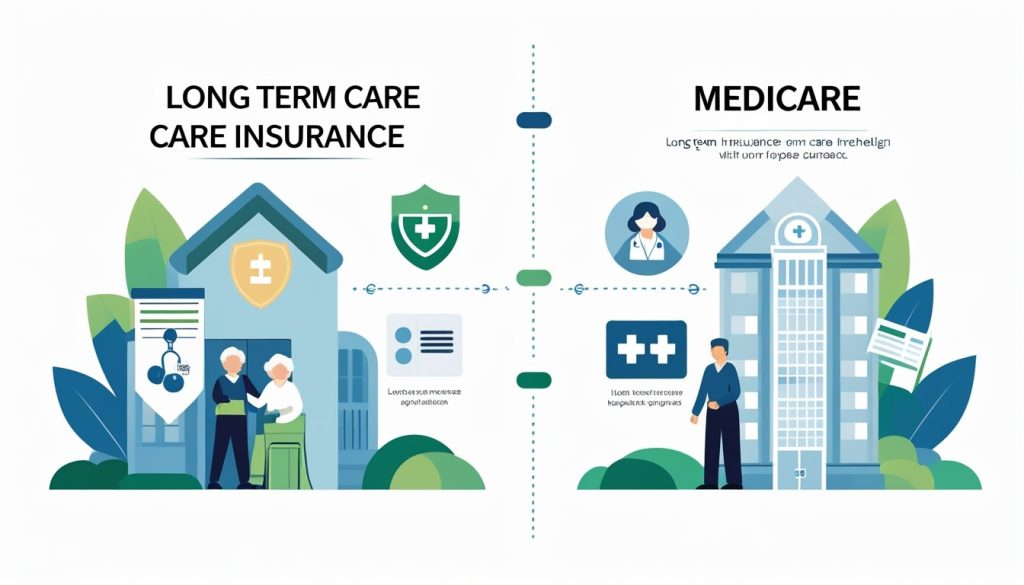
You need to know the real difference between Medicare and long-term care insurance so you can protect your health and savings. Medicare covers short-term medical care like hospital stays, rehab, and some skilled nursing, while long-term care insurance pays for ongoing help with daily activities that Medicare usually won’t cover.
This article walks you through what each covers, what they won’t, and how those gaps can affect your budget and choices. Deciding which path fits your life means weighing costs, limits, and how much daily help you might need over time.
The Modern Medicare Agency helps you explore Medicare plans and long-term care options with licensed agents you can speak to one-on-one, so you get clear comparisons and plans that match your needs without surprise fees. Keep this guide handy as you compare coverage limits, out-of-pocket risks, and alternatives like Medicaid or supplemental policies.
Overview of Long Term Care Insurance
Long-term care insurance helps pay for ongoing personal care when you can’t do everyday tasks on your own. It covers services and settings that Medicare usually does not, and it comes in different policy types and benefit levels.
What Long Term Care Insurance Covers
Long-term care insurance typically pays for help with activities of daily living (ADLs) such as bathing, dressing, eating, toileting, and transferring. It also often covers supervision for cognitive issues like dementia when you need monitoring to stay safe.
Coverage can apply in several places:
- Home care: aides who help with personal care or light housekeeping.
- Assisted living: personal care in a community setting.
- Nursing home: custodial care when you need 24-hour help.
Policies set a daily or monthly benefit, a waiting (elimination) period before benefits start, and a maximum number of years or lifetime cap. Most plans do not cover routine medical care, but they can help avoid spending down savings on daily care.
Types of Long Term Care Policies
You can choose from traditional, hybrid, and short-term policies. Traditional LTC policies pay a set benefit for eligible care after the waiting period.
They usually allow you to pick benefit amount, duration, and inflation protection. Hybrid policies combine life insurance or an annuity with LTC benefits.
They let you keep a death benefit if you don’t use LTC benefits, or they can return unused premiums. Short-term care policies cover care for a limited time, often under a year, and cost less than long-term plans.
Other features to compare:
- Inflation protection to keep benefits relevant as costs rise.
- Elimination period length affects premiums.
- Inflation rider cost and underwriting rules.
Who Should Consider Long Term Care Insurance
Consider buying LTC insurance if you have assets you want to protect from high care costs. If you expect to need daily personal care and want choices about where you receive it, a policy can preserve your savings and give you options.
Younger buyers (50s–60s) often pay lower premiums and may qualify more easily. If you have a family history of dementia, chronic illness, or limited family caregivers, an LTC policy can reduce the financial and caregiving burden on your family.
Also consider your health—preexisting conditions can limit eligibility or raise costs. For help comparing options and finding a plan that fits your budget, contact The Modern Medicare Agency.
Overview of Medicare
Medicare helps pay for specific medical services like hospital stays, doctor care, and short-term rehab. It does not usually pay for long-term custodial care or ongoing personal care at home.
What Medicare Covers
Medicare covers hospital care, outpatient services, and some skilled nursing and rehab after a hospital stay. Part A pays for inpatient hospital stays, hospice, and limited skilled nursing facility care.
Part B covers doctor visits, outpatient tests, durable medical equipment, and medically necessary preventive services. Medicare also helps with short-term skilled nursing care and limited home health services when a doctor orders them.
It won’t pay for most long-term care, custodial care, or daily help with bathing, dressing, or eating unless specific medical criteria are met. You can add Medicare Advantage (Part C) plans that bundle Parts A and B and often include extra benefits like vision or dental.
Those extra benefits vary by plan and may require network use or prior authorization.
Medicare Parts and Their Functions
Part A: Hospital insurance. It covers inpatient care, skilled nursing facility stays (limited), hospice, and some home health care.
You usually don’t pay a premium if you or a spouse paid Medicare taxes long enough. Part B: Medical insurance.
It pays for outpatient care, doctor services, preventive care, and some medical equipment. You pay a monthly premium and typically 20% coinsurance after the deductible for many services.
Part C (Medicare Advantage): Private plans that combine Parts A and B and may include Part D. They can offer extra benefits but follow plan rules and networks.
Costs and coverage vary by plan. Part D: Prescription drug coverage.
It helps lower drug costs and is offered through private insurers. You pay premiums, deductibles, and copays based on the drug plan you choose.
Eligibility Requirements for Medicare
You qualify for Medicare at age 65 if you or your spouse paid Medicare taxes for about 10 years. You can also qualify earlier if you have certain disabilities or end-stage renal disease (ESRD) or amyotrophic lateral sclerosis (ALS).
Enrollment windows matter. Initial Enrollment starts three months before you turn 65 and continues three months after.
Missing your window can lead to late enrollment penalties and higher premiums. If you already get Social Security benefits, you usually enroll automatically at 65.
Otherwise, you must sign up through Social Security during the right enrollment period to avoid gaps or extra costs.
Key Differences Between Long Term Care Insurance and Medicare
You will find big differences in what each pays for, how much you pay, and where you can get care. Read the details to know which option fits your needs and when to call an agent.
Coverage Comparison
Medicare covers medical and short-term skilled care. It pays for hospital stays, doctor visits, and limited rehabilitation in a skilled nursing facility if you need daily skilled nursing or therapy after a hospital stay.
Medicare will not pay for non-medical help with daily activities like bathing, dressing, or meal prep unless a medical reason exists. Long term care (LTC) insurance covers custodial care.
It pays for help with activities of daily living (ADLs) and can fund in-home aides, assisted living, or long nursing home stays. LTC policies vary by contract—look at benefit amount, benefit period, and elimination (waiting) period.
You can pair Medicare with LTC to fill gaps Medicare leaves.
Cost Differences
Medicare has predictable costs: monthly Part B premiums, deductibles, and coinsurance. Part A is usually premium-free if you or your spouse paid Medicare taxes long enough, but hospital deductibles still apply.
You may buy Medicare Advantage or Medigap plans that change your out-of-pocket profile. LTC insurance uses premiums based on your age, health, and chosen benefits.
Premiums can rise over time and depend on inflation protection options. Policies with higher daily benefits or longer benefit periods cost more.
Some people use life insurance riders or hybrid policies to offset costs. Talk with an agent to compare estimated lifetime costs for each option.
Service Limitations
Medicare limits length and setting for skilled care. Skilled nursing coverage typically caps at 100 days after a qualifying hospital stay, with coinsurance after day 20.
Medicare rarely covers custodial care at home or long-term residency in assisted living. LTC insurance limits depend on policy terms and exclusions.
Many policies require proof you need help with ADLs or have cognitive impairment. Pre-existing conditions can affect eligibility and premiums.
Both programs have provider network and documentation rules, so plan ahead to avoid claim denials.
Coverage Limitations and Exclusions
Long-term care insurance and Medicare cover different needs and have strict rules about when and how they pay. Know the limits, time caps, and specific services each policy excludes so you can plan costs and choose the right coverage.
Limitations of Long Term Care Insurance
Long-term care (LTC) insurance pays for custodial care like help with eating, bathing, and dressing, but policies vary a lot. Most policies set a daily benefit, a total benefit pool, and an elimination period (similar to a deductible) before payments start.
Benefits stop when the pool runs out or the policy ends. Policies may limit coverage to certain settings, like home care, assisted living, or nursing homes, and often require a doctor’s certification of need.
Premiums can rise over time, and preexisting conditions or waiting periods can reduce or delay claims. Riders can add inflation protection or shared benefits for couples, but they cost more.
Compare limits, exclusions, and rider costs to avoid surprise bills.
Exclusions in Medicare Coverage
Medicare generally does not cover long-term custodial care for daily living needs. Medicare Part A covers skilled nursing facility care only after a qualifying 3-day hospital stay and only for a limited time—typically up to 100 days with strict conditions.
Medicare pays for skilled nursing or rehabilitation services, not personal care when that is the primary need. Medicare Part B covers certain outpatient therapies and home health services if you meet clinical rules, but it won’t pay for most long-term in-home aides or ongoing custodial care.
Medicare Advantage plans sometimes offer extra benefits, but those vary by plan and are not a guaranteed substitute for LTC insurance.
Cost Considerations for Consumers
You will face trade-offs between monthly premiums, out-of-pocket fees, and how much protection you want. Think about what you can afford now and what could change if you need home care or a nursing facility.
Premiums and Out-of-Pocket Costs
Premiums for long-term care insurance rise with age and health risk. If you buy a policy in your 50s or early 60s, monthly rates usually stay lower than if you wait until your 70s.
Policies also differ by benefit amount, benefit period, and elimination (waiting) period—longer benefit periods and shorter waiting periods increase premiums. Medicare does not pay for most long-term custodial care, so you may pay daily facility fees, home health surcharges, or therapy costs yourself.
Consider cost-sharing features in private plans like inflation protection, which raises premiums but keeps benefits relevant over time.
Budgeting for Long Term Care Needs
Estimate realistic care costs in your area: home health aides, adult day care, and nursing homes vary widely by state and county. Use local price estimates to forecast annual expenses.
Plan for at least several years of care if you have chronic conditions or limited family support. Set aside funds in a liquid account for the elimination period and early expenses.
Think about hybrid policies, personal savings, and Social Security timing to reduce strain on your budget.
How to Choose Between Long Term Care Insurance and Medicare
Decide based on how much daily help you need, where you want care, how long you might need it, and how you will pay for it. Compare what Medicare covers now with what long-term care insurance pays for later.
Assessing Care Needs
List the daily tasks you expect to need help with: bathing, dressing, moving, cooking, and medication reminders. Track current limitations for several weeks.
If you already use home health aides or expect help for more than a few months, long-term care insurance can cover custodial care that Medicare typically won’t. Consider your family support.
If no one can provide regular help, plan for professional care at home, assisted living, or a nursing facility. Check your health history for conditions like dementia or stroke, which often require long-term support.
Use a simple checklist and talk with your doctor about likely future needs.
Important Factors to Consider
Compare costs side-by-side. Medicare pays for short-term skilled care after a hospital stay and some home health services.
Long-term care insurance pays for extended custodial care and assisted living, but you pay premiums. Ask an agent to show estimated premiums, benefit amounts, and elimination periods.
Review policy details: daily benefit limits, inflation protection, and maximum benefit period. Check underwriting rules and age-based pricing.
Consider hybrids (life insurance with LTC riders) if you want death benefits.
Alternatives and Supplemental Options
You can turn to public benefits or hybrid plans when traditional long-term care insurance seems too costly or Medicare leaves gaps. Each choice has rules, costs, and trade-offs you should weigh against your health needs and financial plan.
Medicaid Coverage
Medicaid pays for long-term custodial care for people who meet low-income and asset limits. Eligibility rules vary by state, so you must check your state’s income and resource thresholds and look into Medicaid “look‑back” periods that review past asset transfers.
If you qualify, Medicaid can cover nursing home care and some home- and community-based services. Many Medicaid programs require you to apply specific spend-downs of income or assets and may place service limits or care-setting rules.
Hybrid Insurance Policies
Hybrid policies combine life insurance or annuities with long-term care benefits. These policies let you use part of a death benefit or annuity payout to pay for care, and any unused funds go to your heirs.
That design reduces the risk of losing your premium dollars if you never need care. Costs and benefit triggers differ by policy.
Some hybrids require medical underwriting, and premiums often run higher than basic life policies. You get more predictability than traditional LTC policies and better legacy value than standalone long-term care insurance.
Future Trends in Long Term Care Funding
Policy changes and new programs may shift how long term care gets paid for in the coming years. Expect more public debate about national funding options and targeted reforms to support older adults who cannot pay out of pocket.
Technology will play a bigger role in care delivery and cost control. Telehealth, remote monitoring, and AI tools can lower some costs and help you stay independent longer.
These tools may also change what insurance covers and how providers bill for services. Private long term care insurance may evolve to become more flexible.
Insurers could offer shorter-term policies, hybrid life-LTC products, or benefits that work with Medicare. You should compare options carefully to see which fits your budget and needs.
Workforce shortages will affect supply and prices for home care and facility care. That can raise costs and reduce choice if supply does not grow with demand.
Planning early gives you more control over how and where you receive care.
Tips to act now:
- Review your current coverage and out-of-pocket risk.
- Ask about hybrid policies and Medicare-compatible supplements.
- Talk with a licensed agent at The Modern Medicare Agency to map options that fit your budget.
Frequently Asked Questions
This section answers common concerns about costs, timing, eligibility, and coverage differences between long-term care insurance, Medicare, and Medicaid. You will find clear facts to help compare options and decide what fits your needs.
What are the differences in cost between long-term care insurance and Medicare coverage?
Long-term care insurance requires monthly or annual premiums you pay for a policy that may cover custodial care, assisted living, and home care. Premiums vary by your age, health, benefit amount, and inflation protection.
Medicare generally does not pay for ongoing custodial care. It covers short-term skilled care after a hospital stay and limited home health services, which can leave you responsible for long-term costs.
You may face daily or monthly out-of-pocket expenses for care that Medicare won’t cover.
At what age should one consider buying long-term care insurance?
Many experts suggest buying long-term care insurance in your 50s or early 60s, when premiums are lower and you are more likely to qualify. Buying earlier usually costs less but may feel unnecessary if you have limited funds.
If you wait until your 70s, premiums rise and health issues may make you ineligible or force higher rates.
Will Medicaid provide coverage for long-term care needs?
Medicaid can cover long-term custodial care in nursing homes and some home- and community-based services for people who meet strict financial and medical eligibility rules. Qualifying usually requires very low income and limited assets, which may require spending down savings.
Eligibility rules vary by state and program.
Which specific part of Medicare, if any, is responsible for covering long-term care for seniors?
Medicare does not have a part that covers long-term custodial care. Medicare Part A covers inpatient hospital care and limited skilled nursing facility care after a qualifying hospital stay.
Medicare Part B covers some medically necessary outpatient and home health services, not ongoing personal care. You should not expect Medicare alone to pay for long-term custodial needs.
What are the eligibility requirements for receiving long-term care benefits under Medicare?
To get Medicare-covered skilled nursing facility care, you generally need a qualifying three-day hospital stay and a doctor’s order for skilled care. Medicare covers up to 100 days in a skilled nursing facility per benefit period, with coinsurance after day 20.
For Medicare-covered home health care, you must be homebound and need intermittent skilled nursing or therapy services ordered by a doctor. Custodial care for daily living tasks is usually not covered.
What factors determine the cost of long-term care insurance for an individual aged 75 or older?
At age 75, insurers focus on current health status, preexisting conditions, and functional ability. Higher risk from health problems or difficulty with daily activities raises premiums or can lead to denial.
Policy details also matter: daily benefit amount, benefit period, elimination (waiting) period, and whether the policy has inflation protection all change cost. Gender and location can affect pricing too.