




What if a preventive visit is covered but leads to a bill? In 2026, Medicare coverage for preventative care depends on the service, your eligibility, how often you’ve received it, and whether the appointment includes diagnostic care. Knowing what’s planned can help you understand the possible costs before you go.
If you’re unsure which services Medicare covers, or whether Original Medicare and Medicare Advantage follow the same rules, you’re not alone. Coverage can depend on details that are easy to miss, such as why a test is being done or when you last had it.
This guide explains common types of preventive care Medicare may cover, how eligibility and timing affect coverage, and why follow-up tests or treatment may be billed differently. You’ll also find practical steps for reviewing Medicare and plan information before an appointment.
Key Takeaways
- Preventive care can help prevent illness or identify health risks early, but eligibility and timing rules matter in 2026.
- Medicare may cover qualifying wellness visits, screenings, counseling services, and vaccines.
- A preventive service may still lead to costs if follow-up care is billed as diagnostic or the service doesn’t meet coverage rules.
- Use Medicare.gov to check a service’s current eligibility and frequency rules before your appointment.
- Original Medicare and Medicare Advantage cover eligible preventive services, but provider participation and plan procedures can affect how you access care.
What Does Medicare Coverage for Preventive Care Mean in 2026?
To understand whether a preventive service may be covered, start with two questions: Do you meet the eligibility rules, and are you due for the service? Preventive care includes services intended to help prevent illness or identify health risks early, such as certain screenings and wellness visits. In 2026, Medicare’s rules for each service determine whether it qualifies for preventive coverage.
“Covered” doesn’t always mean every part of an appointment is free. Medicare may cover an eligible preventive service under specific conditions, while another service during the same visit or care that follows may be billed differently. The details of medicare coverage for preventative care depend on the service, your circumstances, and how the care is provided and billed.
How preventive care differs from diagnostic care
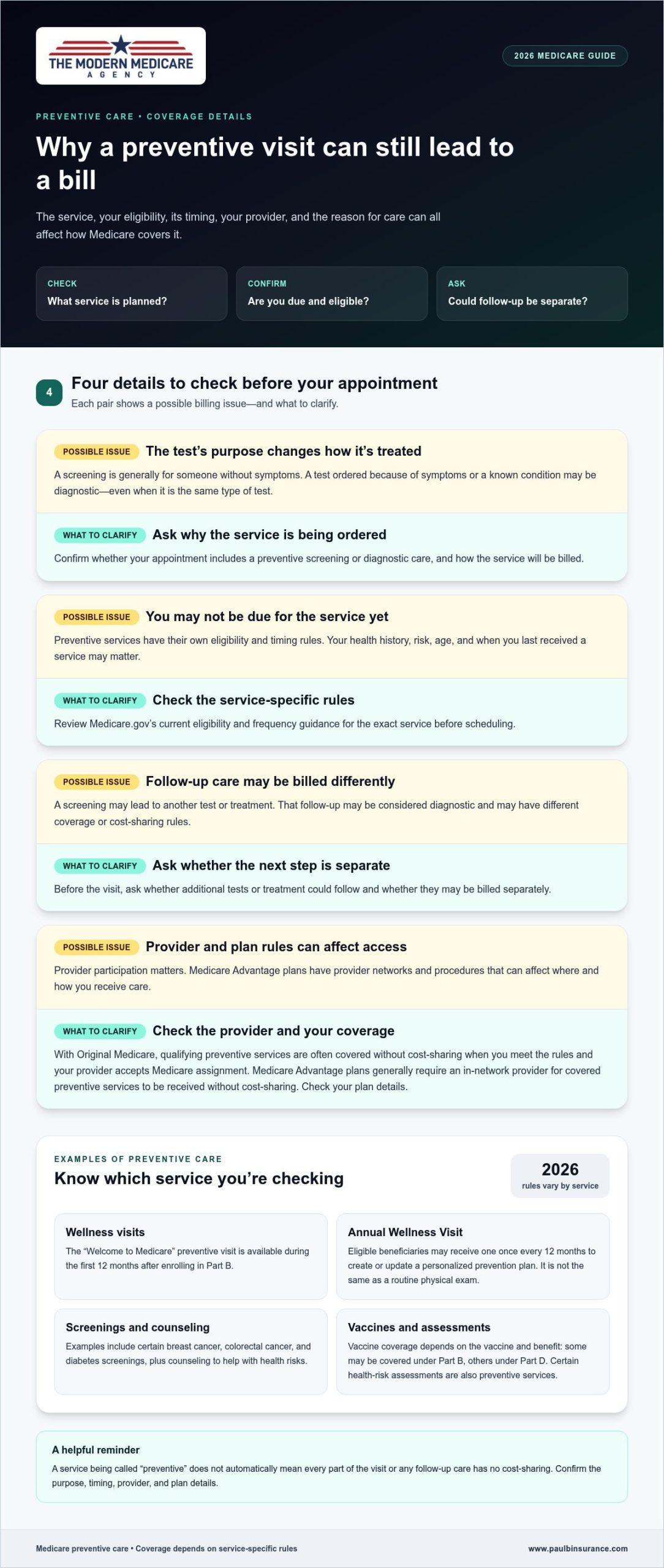
A screening is generally intended for someone without symptoms, to look for a health concern early. When a test is ordered because of symptoms or a known condition, it may instead be considered diagnostic. The same type of test can have a different purpose depending on why it’s ordered.
A screening can also lead to a separate diagnostic service. For example, if a screening finds something that needs closer examination, the next test or treatment may have different coverage and cost-sharing rules. Before your appointment, ask what service is planned and whether follow-up care could be billed separately.
Original Medicare and Medicare Advantage at a glance
Original Medicare includes Part A, which generally covers inpatient hospital care, and Part B, which covers doctor visits and many outpatient services, including preventive care. The Medicare program also includes other parts, but Parts A and B are the starting point for understanding these services.
Medicare Advantage plans cover Medicare-covered Part A and Part B services. Their provider networks and procedures can affect where and how you access care. Check your plan information alongside Medicare’s service-specific guidance to understand which providers you can use and what steps may apply.
Look beyond the word “preventive.” Confirm the service’s purpose, whether you meet its eligibility and timing rules, and whether follow-up care could be treated separately. These details give you a clearer basis for discussing coverage and possible costs before the appointment.
Which Preventive Services Can Medicare Cover?
Medicare’s preventive benefits include several kinds of care, but each service has its own coverage rules. In 2026, eligibility may depend on factors such as your health history, risk, age, and when you last received the service. Start with the Preventive services covered by Part B page to review the current list and service details.
Medicare preventive coverage varies by service, including who qualifies and how often the service may be covered. Use the examples below to identify common categories, then check Medicare.gov for the specific rules that apply to you.
Wellness visits, screenings, and counseling
Medicare offers a “Welcome to Medicare” preventive visit during the first 12 months after you enroll in Part B. After that, eligible beneficiaries may receive an Annual Wellness Visit once every 12 months to create or update a personalized prevention plan. This visit is not the same as a routine physical exam, so don’t assume it includes a full head-to-toe examination.
Other examples include certain screenings for breast cancer, colorectal cancer, and diabetes, as well as counseling to help with health risks. Each service has its own eligibility and timing rules. A screening for someone without symptoms may be treated differently from a test ordered to investigate a concern. Before scheduling, confirm which service is planned and whether you meet its criteria.
Vaccines and other preventive services
Vaccine coverage depends on the vaccine and which Medicare benefit applies. Some vaccines may be covered under Part B, while others may fall under Part D, the prescription drug benefit. That distinction can affect where and how you receive a vaccine. Check current Medicare.gov vaccine guidance and your plan details rather than assuming every vaccine follows the same rules.
Medicare’s preventive benefits also include services such as certain health-risk assessments. The service, eligibility requirements, and covered timing can vary. A listed preventive benefit doesn’t automatically mean related visits, tests, or follow-up care will have no cost-sharing.
To understand how medicare coverage for preventative care may work with your plan, compare Medicare’s service rules with your plan’s provider network and coverage details. This can help you prepare questions about access and possible costs. You can also review Medicare plan options as part of understanding how your coverage fits your needs.
When Might Medicare Preventive Care Still Lead to a Bill?
Preventive care isn’t automatically free in every circumstance. In 2026, the service, your eligibility, how recently you received it, the provider, and the reason for care can all affect what you owe. Original Medicare often covers qualifying preventive services without cost-sharing when you meet the rules and your provider accepts Medicare assignment. Medicare Advantage plans generally require you to use in-network providers for covered preventive services to receive them without cost-sharing. Other situations may involve costs.
How a service is billed can affect whether you owe money, even when the appointment begins with preventive care.
Preventive screening: A routine screening for someone without symptoms may qualify for preventive coverage if you meet the eligibility and timing rules.
Diagnostic follow-up: If a screening result needs further investigation, the next test or treatment may be billed as diagnostic care, with different cost-sharing rules.
Unrelated additional care: A separate concern addressed during the same appointment may be billed as another service rather than as part of the preventive screening.
Preventive screening versus diagnostic follow-up
The same test can serve different purposes. A test used to screen someone without symptoms may be preventive. If you have symptoms, a prior abnormal finding, or a concern that needs evaluation, the test may be diagnostic instead. The Medicare Rights Center’s list of Medicare-covered preventive services offers more context on how preventive and diagnostic care can differ.
If a screening could lead to another test or procedure, ask the provider how that follow-up is expected to be billed. When possible, check with your plan about applicable coverage and cost-sharing before the service. Coverage for a screening doesn’t guarantee that every next step will have the same terms.
How Original Medicare and Medicare Advantage may differ
Original Medicare and Medicare Advantage administer coverage differently. With Original Medicare, coverage depends on Medicare’s rules and provider participation. Medicare Advantage plans cover Medicare-covered Part A and Part B services, but their networks and procedures can affect where and how you receive care. Getting care from a provider outside your plan’s network may change your costs or access, depending on the plan’s terms.
For a broader look at how plan networks and rules work, explore this Medicare Advantage guide. Understanding your plan can help you ask clearer questions before an appointment and make sense of how medicare coverage for preventative care applies to you.
How to Check Preventive-Care Coverage Before an Appointment
A little preparation can help you understand how a service may be covered and reduce the chance of surprises. In 2026, review current Medicare guidance and your plan information. Eligibility, timing, and provider rules can vary by service and coverage type.
A simple checklist for your next visit
- Name the exact service. Find out whether the appointment is for a preventive screening, a wellness visit, or a test to investigate a symptom or known concern.
- Check Medicare’s current rules. Look up the service on Medicare.gov and review its eligibility criteria and how often it may be covered. Consider whether your health history or the date of your last service affects eligibility.
- Confirm provider participation. With Original Medicare, check whether the provider accepts Medicare assignment. With Medicare Advantage, review your plan’s network and any procedures that apply to the service.
- Ask about next steps. Find out whether additional tests, treatment, or other care could be billed separately if the screening identifies a concern.
These steps can help you understand how medicare coverage for preventative care may apply before you arrive. Keep notes about what you checked and any information the provider or plan gives you.
What to do if a bill seems unexpected
Compare the bill with the provider’s explanation of the services provided. If you have Original Medicare, review your Medicare Summary Notice, which shows claims Medicare processed and the amount you may owe. If you have Medicare Advantage, check the statement from your plan. The service description and billing classification can help explain a charge.
If something doesn’t make sense, ask the provider to explain what was billed and whether it was classified as preventive or diagnostic care. For questions about how a claim was processed, use the official Medicare or plan contact information shown on your notice or member documents.
If you’d like broader context on how plan networks and coverage work, read this Medicare Advantage plan overview. You can also discuss how your Medicare plan fits your needs as you consider access to preventive care.
Make Medicare Preventive Coverage Easier to Understand
In 2026, start with four details: the service, your eligibility, when you last received it, and whether follow-up care may be billed separately. These details can help you prepare for an appointment and ask clearer questions about possible costs. Medicare.gov is the place to confirm official service rules. Your plan information can explain how your specific coverage works, but it doesn’t replace Medicare’s rules.
When a plan conversation may help
If you’re unsure whether a provider is in your plan’s network or how your plan handles a service, reviewing your plan details can clarify how you access care and what procedures may apply. The Modern Medicare Agency is an independent brokerage that helps eligible individuals compare Medicare Advantage, Medigap, and Part D options from multiple carriers, with guidance tailored to their needs.
If you have Original Medicare and are exploring supplemental coverage, the Medigap guide offers more context. A plan conversation can help you understand coverage choices, while official Medicare resources remain the source for service eligibility and coverage rules.
A calm next step for 2026
Before your next appointment, make a short list of the preventive services you’re considering and the questions you want answered. Note when you last received each service, whether the provider participates in your coverage, and what could happen if a screening leads to more care. Having those details together can make it easier to discuss coverage without feeling rushed.
Understanding medicare coverage for preventative care doesn’t require you to sort through every detail alone. Use Medicare.gov to confirm official service rules, then review your plan documents or contact your plan with questions about its network, procedures, or a specific claim. The Modern Medicare Agency helps people compare Medicare plan options and understand how they fit their needs. If personal guidance would help, request help reviewing your Medicare plan options.
Take the Next Step With More Confidence
In 2026, understanding medicare coverage for preventative care starts with checking the service, your eligibility, and when you’re due for it. A preventive screening and diagnostic follow-up may be treated differently, and your plan’s provider network or procedures can affect how you access care.
Use Medicare’s official resources to confirm service rules, then review your plan details if you have questions about providers or coverage. The Modern Medicare Agency is an independent brokerage that helps people compare Medicare options from more than 40 carriers, with personalized guidance and year-round support across more than 34 states. The agency can help you understand plan options, while Medicare remains the source for official service rules.
For help reviewing your options, explore personalized Medicare plan guidance. The Modern Medicare Agency can help you compare Medicare Advantage, Medigap, and Part D options. Reach out to discuss which plan options fit your needs.
Frequently Asked Questions
Does Medicare cover preventive care at no cost?
Some qualifying preventive services may have no deductible or coinsurance, but coverage isn’t automatically free in every situation. With Original Medicare, many preventive services have no cost-sharing when you meet the service’s eligibility and timing rules and your provider accepts Medicare assignment. Medicare Advantage members generally need to use in-network providers for covered preventive services to avoid cost-sharing. Diagnostic follow-up or other care may be billed separately.
What preventive services does Medicare cover in 2026?
Medicare may cover wellness visits, screenings, counseling, and certain vaccines in 2026. Examples include the Welcome to Medicare visit, the Annual Wellness Visit, and eligible screenings for breast or colorectal cancer and diabetes. A standardized physical activity and nutrition assessment may also be part of an Annual Wellness Visit every six months. Eligibility and frequency vary by service, so check current Medicare.gov guidance for the specific benefit.
Is a Medicare wellness visit the same as a physical?
No. The Annual Wellness Visit helps you create or update a personalized prevention plan, but it isn’t a traditional physical exam. It focuses on your health history, risk factors, and preventive-care needs. If you want a routine physical, clarify that with your provider before the appointment, since it may be billed differently from a covered wellness visit. The Welcome to Medicare visit is a separate initial preventive appointment.
Can Medicare charge me for a preventive screening?
Yes, you may owe costs in some circumstances. The service might not meet Medicare’s eligibility or frequency rules, the provider may not accept Medicare assignment, or the screening may lead to diagnostic testing or treatment. The service’s purpose matters too: a test prompted by symptoms or a previous finding may be billed as diagnostic rather than preventive. Ask how planned follow-up care will be billed.
Does Medicare Advantage cover preventive care?
Yes. Medicare Advantage plans cover services covered under Medicare Parts A and B, including eligible preventive services. However, the plan’s network and procedures can affect how you access care. Check your plan documents or member resources to confirm provider participation and any plan-specific requirements for the service. If you receive care outside the network or need follow-up services, coverage and costs may differ under your plan’s terms.
Are vaccines covered by Medicare preventive benefits?
Some vaccines are covered by Medicare, but the applicable benefit depends on the vaccine. Coverage may fall under Part B or Part D, Medicare’s prescription drug benefit, and the rules can differ. Don’t assume that every vaccine is covered in the same way or at the same location. Check current Medicare guidance and your plan details for the vaccine you’re considering, including where it may be covered.
What should I do if Medicare denies a preventive-care claim?
Review your Medicare Summary Notice or, if you have Medicare Advantage, your plan’s statement to see the reason for the denial and the service description. Ask the provider to explain how the service was billed and whether it was classified as preventive or diagnostic. Then contact Medicare or your plan through the official channel shown on your notice. If you disagree, follow the appeal instructions included with the denial.

Article by
Paul Barrett
Paul Barrett, CMIP is the founder of The Modern Medicare Agency, an independent Medicare-only brokerage based in Melville, NY. With 18 years of Medicare-exclusive experience, a CMIP designation, and more than 5,000 clients served across 37 states, Paul is one of the most credentialed independent Medicare specialists on Long Island — and one of the most direct.
He represents 40+ carriers with no quotas and no allegiances, which means his recommendations are based entirely on what fits each client's specific situation. He is the author of Medicare Mastery Unlocked and host of the Wise Guys Retirement Talk podcast. His content is grounded in primary sources, real carrier intelligence, and 18 years of watching what happens when people get Medicare right — and when they don't.
📞 631-358-5793 | paulbinsurance.com