




What if the help you need to recover in the comfort of your own living room didn’t come with a mountain of medical bills or a confusing list of restrictions? You’ve likely heard that qualifying for medicare coverage for home health care is an exhausting maze of “homebound” definitions and shifting 2026 regulations. It’s stressful to worry about whether you’ll be forced into a facility simply because the paperwork feels too heavy to lift. I understand that fear, and I want to help you replace it with a clear plan of action.
I promise that by the end of this guide, you’ll know exactly how to meet the four essential qualification rules and which Medicare plans provide the most security for your specific health needs. We’re going to walk through the latest 2026 cost updates, explain the “homebound” status in plain English, and compare how different plans protect your independence. You don’t have to navigate this journey alone. Let’s move from a state of uncertainty to total confidence in your care.
Key Takeaways
- Learn the four essential requirements you must meet to be certified as “homebound” and eligible for professional medical care in your residence.
- Discover exactly which skilled services are covered, from wound care to physical therapy, and which daily tasks Medicare typically doesn’t pay for.
- Understand how your specific plan choice impacts your medicare coverage for home health care costs and out-of-pocket limits in 2026.
- Find out how an independent advocate can help you navigate changing regulations to ensure you receive the support you need to stay in your home.
What Exactly is Medicare Home Health Care in 2026?
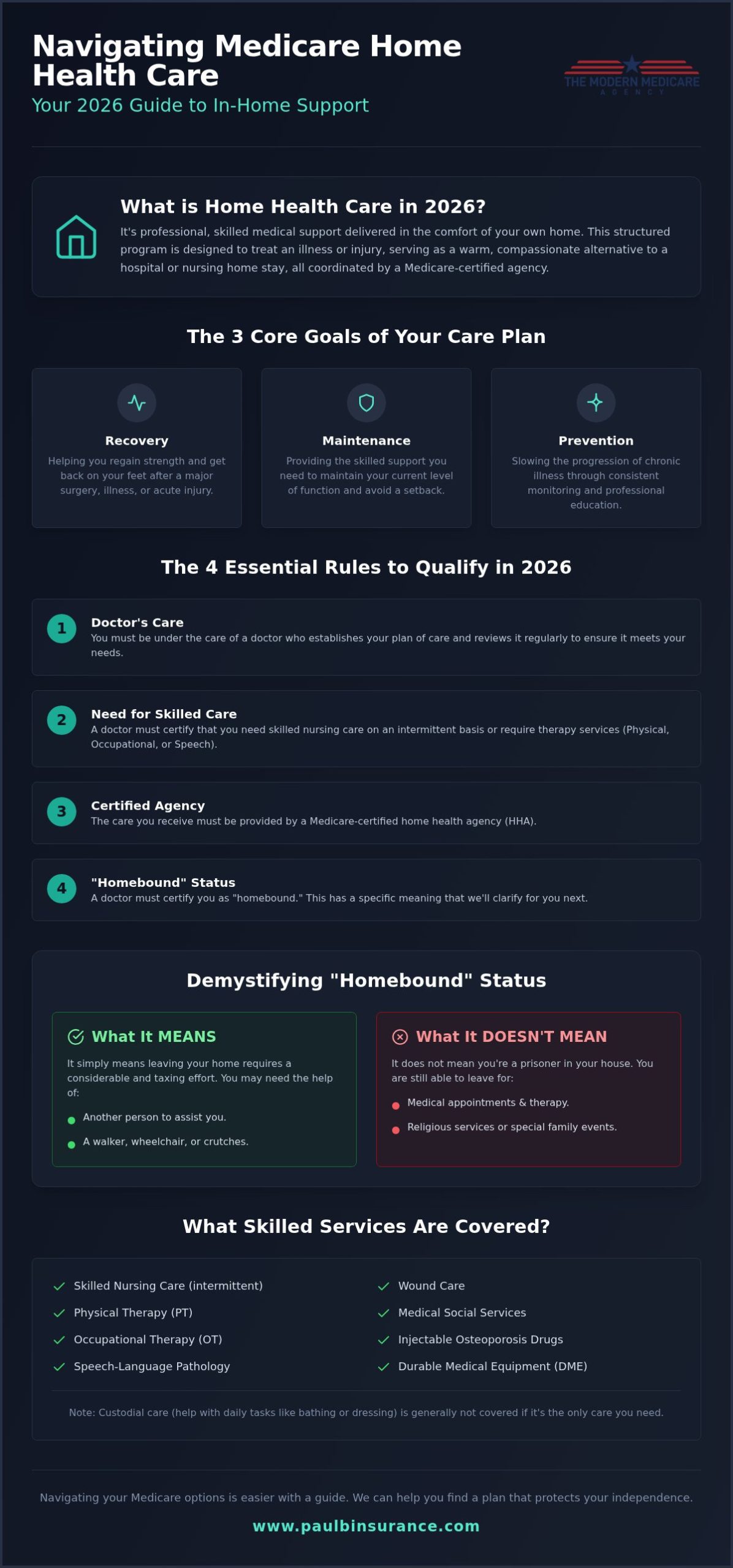
Understanding What Exactly is Medicare Home Health Care? is the first step toward finding true peace of mind for you and your family. In 2026, this service is defined as professional medical support delivered directly in your residence. It isn’t just a casual check-in. It is a structured program of clinical care designed to treat an illness or injury. Medicare coverage for home health care allows you to receive high-quality medical attention without the cold, sterile environment of a hospital. It serves as a vital, compassionate alternative to nursing homes or long-term hospital stays that can often feel isolating and overwhelming.
Your journey is coordinated by a Medicare-certified Home Health Agency (HHA). Think of the HHA as the manager of your recovery team. They ensure that every nurse, therapist, or aide who enters your home is working toward the same objective. The ultimate goal of these services is to restore your independence. We want to see you moving freely and managing your health with confidence again. By bringing the care to you, the system removes the physical and emotional exhaustion of constant travel to clinics, letting you focus entirely on the healing process.
The Goal of Home Health Services
Every care plan is unique because every person’s health journey is different. In 2026, the focus remains heavily on personalized outcomes that prioritize your comfort. These services are specifically designed to help you in three ways:
- Recovery: Helping you get back on your feet and regain strength after a major surgery or an acute injury.
- Maintenance: Providing the skilled support needed to maintain your current level of function so you don’t experience a setback.
- Prevention: Slowing the progression of a chronic illness through consistent, professional monitoring and education.
This approach ensures that you aren’t just a patient in a system. You’re a person in your own home, receiving the exact level of help needed to stay there safely.
Who Provides the Care?
You won’t be navigating this path alone. A team of specialized professionals will visit you, but your own doctor remains the “captain” of your care. Your doctor is responsible for establishing your care plan and reviewing it regularly to make sure it’s working. The HHA then provides the staff to carry out those orders. This team often includes skilled nurses, physical therapists, and occupational therapists. Having an independent expert by your side helps you understand how different plans handle these logistics. While the agency provides the medical staff, your choice in medicare coverage for home health care determines how smoothly the billing and support side of the process feels for you.
How to Qualify: The 4 Rules for Home Health Coverage
Qualifying for help at home can feel like you’re trying to solve a puzzle with missing pieces. Let’s simplify that process together. To secure medicare coverage for home health care in 2026, you must meet four specific requirements. These rules exist to ensure you get the right level of care in the right setting. When you follow this path, you can focus on healing instead of worrying about the fine print. It’s about protecting your health while staying in the place you love most.
- Rule 1: You must be under the care of a doctor who establishes and regularly reviews your plan of care.
- Rule 2: A doctor must certify that you need skilled nursing care or therapy on an intermittent basis.
- Rule 3: You must receive your services from a Medicare-certified home health agency.
- Rule 4: You must be certified by a doctor as “homebound.”
If you’re feeling unsure about how these rules apply to you, you can connect with a guide who can help you understand how your specific insurance fits into this picture.
Understanding the “Homebound” Status
Many people worry that “homebound” means they can never leave their front door. That isn’t true. In 2026, being homebound simply means that leaving your residence requires a considerable and taxing effort. You might need a walker, a wheelchair, or the help of another person to get around safely. You are still allowed to leave for medical appointments, religious services, or unique family milestones like a graduation or a wedding. Being homebound means your home is the safest place for your recovery, not that you are a prisoner in your house. What Services Does Medicare Cover? Knowing this distinction helps you breathe a little easier as you plan your journey back to health.
The Doctor’s Certification Process
The process begins with a face-to-face meeting with your physician. This encounter can happen in person or via telehealth, which remains a standard part of the 2026 healthcare landscape. During this visit, your doctor documents your need for skilled care and creates a formal “Plan of Care.” This plan is not set in stone; it is updated every 60 days to reflect your progress and changing needs. Clear documentation is the key to maintaining medicare coverage for home health care without interruptions. If you have questions about how a Medicare Supplement (Medigap) plan might help with the costs of these visits, we can look at those options together. Accurate records protect your benefits and ensure your recovery stays on track.
What Services Does Medicare Cover (and What’s Left Out)?
Knowing what to expect from your medicare coverage for home health care helps you avoid stressful surprises during your recovery. Medicare focuses on medical necessity. This means the services must be specific to treating your condition or maintaining your current health status. In 2026, this includes skilled nursing care like wound care for a surgical site, administering injections, or monitoring your vital signs to prevent a relapse. These are tasks that require a professional’s touch to ensure you stay safe and comfortable in your own home.
Your recovery might also include physical, occupational, or speech therapy. These specialists work with you to regain mobility, improve your ability to perform daily tasks, or recover communication skills after an injury. In some cases, medical social services are provided to offer counseling or help you find community resources. You can find more detail on these specifics in the official guide on How to Qualify for Home Health Coverage, which remains the gold standard for understanding your rights as a beneficiary.
Skilled vs. Custodial Care: The Big Difference
The most common source of confusion is the difference between skilled and custodial care. Skilled care refers to medical tasks that only a licensed professional, such as a registered nurse or a therapist, can perform. Custodial care includes help with bathing, dressing, or preparing meals. Medicare does not pay for custodial care if it is the only help you need. However, if you are already receiving skilled nursing or therapy, a home health aide may be covered to help with these personal tasks as part of your overall plan. Understanding this distinction is vital for your financial peace of mind.
What Medicare Does NOT Pay For
It’s my goal to protect you from unexpected out-of-pocket costs by being direct about what is excluded from the benefit. Even with the best medicare coverage for home health care, certain services are not part of the standard package. Medicare does not cover the following:
- 24-hour-a-day care at your home.
- Meal delivery services like Meals on Wheels.
- Homemaker services such as shopping, laundry, and cleaning.
Since Medicare doesn’t cover non-medical support like homemaker services, you might visit Modern Vintage Home Care to discover how specialized in-home assistance can bridge the gap in your care plan.
While you focus on your home recovery, don’t forget that other parts of your health still need protection to prevent future stress. For example, dental insurance is another vital supplement to consider since Original Medicare doesn’t cover routine cleanings or major dental work. Having a complete plan ensures that a small health issue doesn’t turn into a large, expensive problem later on. We want your journey to be one of certainty, not one of hidden costs.
How Your Choice of Plan Impacts Home Care Coverage
The plan you choose today acts as a blueprint for the care you’ll receive tomorrow. While every Medicare plan must cover the basics, the way you access those care services changes depending on your coverage type. Navigating these options in 2026 requires a bit of foresight. I’m here to help you understand the subtle differences so you can make a choice that feels right for your lifestyle. Your medicare coverage for home health care should be a source of strength, not a source of frustration.
Your choice often comes down to the balance between total freedom and extra perks. Because home health agencies are facing tighter budgets in 2026, some are becoming more selective about the plans they accept. This makes your enrollment decision even more critical for ensuring you can find a provider when you need one most. I want to help you avoid a situation where you have the benefit but can’t find an agency to use it.
Original Medicare and Medigap
If you prefer total freedom, Original Medicare combined with a Medicare Supplement (Medigap) plan is often the most straightforward path. One of the biggest advantages is that you aren’t restricted by a provider network. You can choose any Medicare-certified agency in the country that’s accepting new patients. This is especially helpful if you live in a rural area where options might be limited.
While Medicare covers many services at 100%, it typically only covers 80% of the cost for durable medical equipment, such as walkers or hospital beds. Without a supplement, you’re left to pay the remaining 20% out of your own pocket. A Medigap plan can step in to cover those gaps, effectively eliminating your out-of-pocket costs for essential home equipment. You can see our Medigap guide for more details on how these plans provide a safety net for your savings.
Medicare Advantage Considerations
Medicare Advantage plans offer a different experience. In 2026, many of these plans have expanded to include “Home and Bathroom Safety” benefits. These perks might cover the cost of grab bars or non-slip mats that Original Medicare doesn’t touch. These small additions can make a huge difference in preventing falls and keeping you safe at home. It’s a proactive way to manage your health and maintain your independence.
However, there’s a trade-off to consider. These plans usually require you to use specific contracted home health agencies. You may also face stricter “prior authorization” rules. This means the insurance company must approve your care before it begins. In 2026, these rules have become more common, making it essential to review your plan’s details every year. If you want to see how these plans compare, you can explore Medicare Advantage options for 2026 to find a network that includes your preferred providers.
Picking the right plan doesn’t have to be a lonely or stressful process. I’m here to act as your advocate and guide. If you’re ready to find a plan that fits your specific health needs, you can connect with an independent expert who works for you, not the insurance company.
Finding Peace of Mind with the Right Coverage
Navigating the 2026 landscape of medicare coverage for home health care shouldn’t feel like a lonely battle. The emotional weight of managing a recovery while trying to decipher complex government rules is enough to overwhelm anyone. You deserve to focus on getting better, not on whether a specific form was filed correctly. I understand that the system can feel cold and detached. My mission is to act as your calm, patient guide through this process, removing the anxiety that often comes with these high-stakes decisions.
The “Modern Medicare” approach is built on a simple promise: moving you from a state of distress to one of absolute certainty. We don’t just hand you a brochure and walk away. We help you look at the big picture, from how a plan handles the 2026 home health payment changes to how it supports your long-term independence. By having a dedicated advocate in your corner, you can stop worrying about the “what-ifs” and start feeling secure in the care you’ve chosen. We help you compare options from over 40 different carriers to find the exact fit for your specific home care needs.
Why Work with an Independent Broker?
The biggest difference between an independent broker and a company representative is who we answer to. I don’t work for the insurance companies; I work for you. While a restricted agent can only offer you a handful of options from a single carrier, we give you access to a wide range of plans from many different providers. This variety is essential because it allows us to find the specific plan that covers your preferred home health agency and medical equipment. Our year-round support means we are here for you long after the enrollment period ends.
- Impartial Support: We compare multiple carriers to find the best fit for your health and budget.
- Expert Advocacy: If you ever have trouble with your coverage or a claim, we provide the help you need to resolve the issue.
- Clarity: We explain the latest 2026 regulations in straightforward terms so you always know where you stand.
Your Next Steps for 2026
Taking the first step toward certainty is easier than you might think. Start by reviewing your current plan’s home health benefits to see if they still align with your recovery needs. If you find yourself feeling confused or stressed by the details, you can schedule a no-pressure consultation with our Melville-based team. We are here to listen, educate, and protect your interests. You can finally breathe a deep sigh of relief because professional help is available to guide you through every turn. Whether you are looking for Medicare Supplement (Medigap) Plans or want to explore Medicare Advantage options, we are ready to help you build a plan for a safe, supported future at home.
Your Path to a Safe and Supported Recovery
You’ve gained a clear roadmap for navigating your care at home. By understanding the “homebound” status and the vital difference between skilled and custodial services, you can protect yourself from unexpected costs. Choosing the right medicare coverage for home health care is the most important step you can take to ensure your 2026 recovery is smooth and stress-free. You now have the tools to move forward with confidence.
You don’t have to make these decisions alone. As an independent brokerage representing over 40 carriers, we provide the personalized guidance you need to find a perfect match. Paul Barrett and our dedicated team are here to act as your advocates; we ensure you aren’t limited by the narrow options of a single insurance company. We focus on your unique health needs to find the security you’ve been looking for.
Let us help you find the peace of mind you deserve; contact The Modern Medicare Agency today. We offer no-cost consultations for seniors to help you move from confusion to certainty. You have the power to stay in your home, and we’re honored to help you get there.
Frequently Asked Questions
Does Medicare Part B cover home health care services?
Yes, Medicare Part B covers these services if you meet the eligibility requirements. While Part A can cover care after a hospital stay, Part B covers it even if you haven’t been hospitalized. In 2026, you will still pay $0 for covered medical services like skilled nursing or physical therapy. This provides a reliable way for you to recover in your own home without added financial stress.
How long will Medicare pay for home health care in 2026?
Medicare pays for these services as long as you meet the eligibility rules and your doctor certifies the care is medically necessary. Your doctor must review and renew your plan of care every 60 days. There is no set limit on how many 60-day periods you can have. As long as you require skilled, intermittent care to improve or maintain your health, the support remains available.
Can I get home health care if I am not homebound?
No, you must be certified as “homebound” by a doctor to qualify for medicare coverage for home health care. This means leaving your house requires a major, taxing effort and the help of a device or another person. If you can leave home easily for non-medical reasons, you won’t qualify for this specific home benefit. However, you might still be able to receive care at an outpatient facility.
What is the “face-to-face” requirement for Medicare home health?
The face-to-face requirement means you must have a documented meeting with your doctor to discuss your medical needs. This encounter must happen either 90 days before your care starts or within 30 days after it begins. In 2026, this meeting can be done in person or through a telehealth visit. This ensures your doctor has a clear, current understanding of your health before certifying your care plan.
Will Medicare pay for a caregiver to stay overnight?
No, Medicare does not cover 24-hour-a-day care at home or full-time caregiver services. The benefit is designed for “intermittent” care, which generally means up to 28 hours per week of combined skilled nursing and aide services. This can sometimes extend to 35 hours in specific medical situations. If you need constant supervision or long-term help with daily living, you may need to explore long-term care insurance options or consider how your home’s equity can provide additional funding. For homeowners looking to stay in their residences, A Mortgage Central, LLC provides expert guidance on mortgage and refinance options to help secure your financial future.
You pay $0 for covered home health services under Original Medicare. However, if you need durable medical equipment like a walker or hospital bed, you are responsible for a 20% coinsurance. In 2026, this 20% applies after you meet the annual Part B deductible of $283. Many people choose a Medigap plan to help cover these specific out-of-pocket equipment costs and provide more financial peace of mind.
Can I choose my own home health agency with a Medicare Advantage plan?
Your choice is usually limited to the agencies that have a contract with your specific plan’s network. While these plans must cover everything Original Medicare does, they often require you to use their preferred providers to keep your costs low. It is vital to check your plan’s directory or work with an independent broker to ensure the agency you trust is included in your 2026 network coverage.
What happens if my doctor says I no longer need skilled care?
If your doctor determines you no longer need skilled medical care, your medicare coverage for home health care will end. Medicare only pays for home visits when you require professional nursing or therapy. If you still need help with daily tasks like bathing or dressing but no longer need medical attention, these are considered custodial services. Since Medicare doesn’t cover custodial care alone, you would need to find alternative support.

Article by
Paul Barrett
Paul Barrett, CMIP is the founder of The Modern Medicare Agency, an independent Medicare-only brokerage based in Melville, NY. With 18 years of Medicare-exclusive experience, a CMIP designation, and more than 5,000 clients served across 37 states, Paul is one of the most credentialed independent Medicare specialists on Long Island — and one of the most direct.
He represents 40+ carriers with no quotas and no allegiances, which means his recommendations are based entirely on what fits each client's specific situation. He is the author of Medicare Mastery Unlocked and host of the Wise Guys Retirement Talk podcast. His content is grounded in primary sources, real carrier intelligence, and 18 years of watching what happens when people get Medicare right — and when they don't.
📞 631-358-5793 | paulbinsurance.com