
Finding dental insurance that covers crowns and bridges for seniors takes more than comparing headline benefit amounts. In 2026, Original Medicare generally doesn’t cover routine crowns or bridges, while dental benefits in Medicare Advantage plans vary by plan. A plan’s dental benefit alone doesn’t confirm that it will help pay for the treatment your dentist recommends.
Waiting periods, annual benefit limits, provider networks, and your share of the cost can all affect whether a policy fits your needs, especially when treatment is already planned. Checking these details against your dentist’s written recommendation can help you understand what a plan may cover and what you still need to confirm.
This guide explains how Medicare and standalone dental insurance differ, what to review in crown and bridge coverage, and how to compare plan terms. Before deciding, check the plan documents for the procedure, timing, provider rules, and potential costs.
Key Takeaways
- Medicare dental benefits and standalone dental policies may differ in how they cover crowns and bridges.
- Use your dentist’s written treatment recommendation to check whether a policy’s terms fit the planned care and timing.
- Compare waiting periods, cost-sharing, annual limits, and dentist access when reviewing dental insurance that covers crowns and bridges for seniors.
- Gather current plan documents, benefit summaries, effective dates, and provider details before weighing your options.
- An independent brokerage can help compare Medicare plan options from more than 40 carriers. Confirm specific dental coverage with the applicable plan.
Dental insurance that covers crowns and bridges for seniors: where Medicare fits in 2026
A recommended crown or bridge can bring practical questions: Will your plan help pay? When can benefits begin? Will you need to use a network dentist? The answers depend on the specific policy, the proposed treatment, when coverage starts, and the plan’s terms.
It also helps to understand the treatment your dentist has proposed. For a plain-language overview of what a dental bridge is, including how it replaces a missing tooth, see this reference. Whether a particular bridge or crown is covered is a separate question that you must check against the policy.
Does Medicare cover crowns and bridges for seniors?
Original Medicare generally doesn’t cover routine dental care, including crowns and bridges. It may cover certain dental services in limited circumstances when they’re closely connected to the clinical success of another covered medical service. The details matter, so check whether the specific treatment and circumstances qualify instead of assuming it will be covered.
For a concise distinction: Medicare.gov explains that Original Medicare doesn’t cover most dental care, while some Medicare Advantage plans may offer dental benefits. Review the official Medicare dental services guidance and the plan’s own documents for current terms.
Medicare Advantage is different from Original Medicare. Some plans include dental benefits, but that doesn’t automatically mean a crown or bridge is covered. A plan may limit covered services or set conditions for when and how benefits apply. Confirm the proposed procedure with the plan before making treatment or enrollment decisions.
Standalone dental insurance or Medicare Advantage dental benefits?
These are two routes to investigate, not interchangeable coverage. If you have Original Medicare, you can look into a separate dental insurance policy. If you’re considering Medicare Advantage, check whether the specific plan includes dental benefits and whether those benefits apply to your dentist’s recommendation. Availability and coverage details can vary by plan and location.
Compare the actual terms, not just whether a plan says “dental.” Ask whether crowns and bridges are included, when coverage can begin, what costs you may share, and whether your dentist is in the plan’s network. The Medicare Advantage plan guide offers broader context as you consider that route.
There’s no single answer to which dental insurance that covers crowns and bridges for seniors will fit your situation. Start with your dentist’s written treatment recommendation, then compare it with plan documents and effective dates. This helps you focus on the specific care you need instead of relying on a broad benefit label.
What to check in dental insurance for crowns and bridges
A plan may list dental coverage without covering the specific crown or bridge your dentist recommends. Before enrolling or scheduling treatment, review the written policy and benefit summary. These documents explain what the plan pays for, when benefits begin, and what conditions apply. If you’re reviewing Medicare Advantage, compare the plan’s dental details with Medicare coverage for dental services, which explains what Original Medicare generally covers.
Start by checking these four terms:
- Annual maximum: The most the plan will pay toward covered dental care during its benefit period.
- Deductible: The amount you pay for covered care before the plan begins sharing costs, if the policy has one.
- Coinsurance: The portion of an allowed cost you pay after any deductible applies.
- Waiting period: A set span after coverage starts before certain services may qualify for benefits.
These definitions are a starting point, not a promise of coverage. Check the policy’s definitions and exclusions for crowns, bridges, replacements, and related services. Look for frequency limits, which restrict how often a service may be covered, and alternate-benefit language, which may let the plan calculate payment based on a different covered treatment. Also ask how the policy handles work recommended, started, or completed before coverage begins. Rules differ, so check the plan rather than assuming past treatment is covered or excluded.
How waiting periods and annual limits can affect treatment
Waiting periods and annual limits vary by policy. Confirm when the plan’s benefit period starts and whether your treatment is expected to fall within it. If care may continue into another benefit period, ask the insurer how it would handle each stage and whether the timing changes the available benefit. Request the explanation in writing when possible.
Are crowns and bridges treated as major dental services?
Plans classify procedures differently, so don’t rely on a general label such as “major services.” Check how the policy defines the exact procedure your dentist proposed, including any replacement or supporting work. If you’re comparing plans before enrolling, confirm the classification and applicable benefit with each insurer.
For dental insurance that covers crowns and bridges for seniors, written terms matter more than a broad benefit description. Review the policy, benefit summary, exclusions, waiting period, limits, and treatment rules against your dentist’s recommendation. A comparison can help you review available options, but only the applicable plan documents can confirm specific terms.
Compare dental plans by coverage, timing, and dentist access
Two plans can both advertise dental benefits and still work differently for a crown or bridge. Compare the written terms that apply to your treatment, not just whether the plan includes a dental benefit. A crown restores a damaged tooth; the American Dental Association explains what dental crowns are and why a dentist may recommend one.
The table below is a starting point for comparing standalone dental insurance with dental benefits included in some Medicare Advantage plans. It describes broad differences, not a promise about any particular plan.
| What to compare | Standalone dental insurance | Medicare Advantage dental benefits |
|---|---|---|
| Eligibility and availability | Check who can enroll and whether the policy is offered where you live. | Check plan eligibility, service area, and enrollment requirements. |
| Covered services | Review whether the policy specifically includes the proposed crown or bridge. | Check the plan’s dental benefit details; a listed benefit may not include every procedure. |
| Waiting periods and effective dates | Confirm when coverage starts and whether the service has a waiting period. | Confirm the plan’s effective date and when dental benefits can be used. |
| Cost-sharing and limits | Compare any deductible, your share of the cost, and the benefit limit. | Review the same details in the plan’s dental terms, including any service-specific limits. |
| Dentist access | Check whether your dentist participates and how out-of-network care is handled. | Confirm provider participation and the rules for care outside the network. |
What differs between standalone dental insurance and Medicare Advantage?
Standalone dental insurance is a separate policy. Medicare Advantage provides Medicare health coverage under plan-specific terms, and some plans include dental benefits. Neither route always offers better crown and bridge coverage. Confirm availability, eligibility, covered care, and dentist participation for your location and situation. For a broader look at how Medicare Advantage plans are structured, review plan details before comparing dental benefits.
How to assess a plan when treatment is coming soon
A dental benefit may still leave you paying for treatment you need soon. A waiting period, effective date, service limit, or network rule may affect whether benefits apply. Before relying on coverage, ask the insurer to confirm in writing whether the proposed procedure is covered, when benefits begin, what costs or limits apply, and how your dentist’s participation affects payment.
To explore the separate-policy route, review the available dental insurance options. The useful comparison is the one that matches your exact treatment, timing, and provider details.
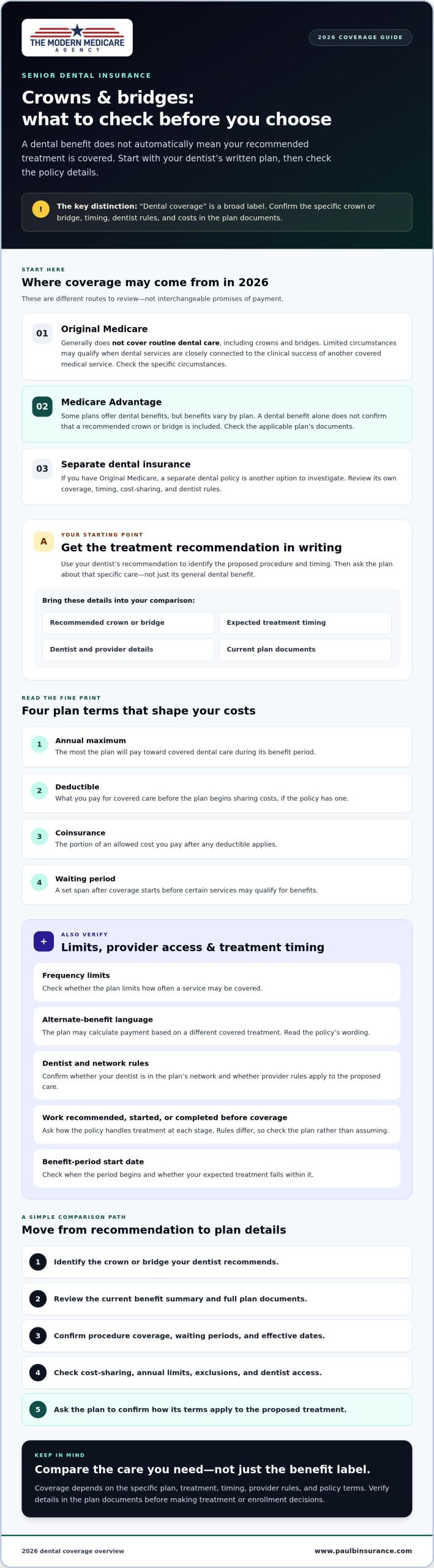
A practical checklist for comparing crown-and-bridge coverage
Start with the treatment your dentist recommends, not a plan’s general promise of dental benefits. Use this checklist to match the proposed care with the policy’s written terms.
- Request a written treatment recommendation. Ask your dentist for the proposed crown or bridge, any related services, procedure codes, and expected timing. This explains the recommended care, but it isn’t insurance approval.
- Gather your plan information. Collect the policy or evidence of coverage, benefit summary, effective date, and documents that explain exclusions, waiting periods, limits, and cost-sharing. Check that the documents are current.
- Match the treatment to the policy. Ask the insurer whether the specific procedure and related services are covered under the written terms. Confirm how each is categorized and what coverage level applies.
- Check timing and restrictions. Ask whether a waiting period applies, whether the treatment falls within the current benefit period, and whether exclusions, frequency limits, or rules for previously recommended treatment may affect benefits.
- Confirm dentist access and likely costs. Verify whether your dentist participates and how out-of-network care is handled. Ask about applicable limits and request a written estimate or explanation of benefits showing the insurer’s estimate and your expected share.
Questions to ask before enrolling or scheduling
Have the plan name, effective date, dentist details, and written treatment recommendation ready when you contact the insurer. Ask: “Is this specific crown or bridge covered?” “Does a waiting period or exclusion apply?” “What limit or cost-sharing applies?” and “Do I need a pre-treatment review?” Write down the response and ask where the relevant terms appear in the plan documents.
An estimate can help you plan, but it isn’t a guarantee of final payment. The amount paid may differ once the claim is reviewed under the policy’s terms.
Confirm benefits directly with the insurer before scheduling treatment. This can help you identify what remains uncertain and compare dental insurance that covers crowns and bridges for seniors against your dentist’s proposed care.
Want help exploring available dental insurance options? Explore dental coverage options, then verify the exact treatment, timing, provider, and cost-sharing details with the applicable insurer.
Get help comparing senior dental insurance options for 2026
Choosing coverage for a planned crown or bridge means matching the written plan terms with your dentist’s recommended treatment and timing. A benefit summary can help narrow your options, but it may not answer every question. Check the policy’s definitions, effective date, waiting period, limits, provider rules, and cost-sharing, then confirm how they apply to the procedure you expect to have.
When an independent insurance agent may help
Comparing dental policies alongside Medicare Advantage benefits can feel like a lot to sort through. The Modern Medicare Agency is an independent insurance brokerage specializing in Medicare plans. Its agents help people compare Medicare Advantage, Medigap, and Part D plans from more than 40 carriers. The agency also offers dental insurance options. Availability and eligibility vary by location, and the right fit depends on your needs, timing, and dentist.
Personalized guidance and year-round support can help you organize questions and understand differences between available options. An agent can help compare plans, but can’t guarantee that a specific crown, bridge, or related service will be paid. Confirm exact coverage and expected costs with the applicable insurer using current plan documents.
What to have ready for a plan conversation
You don’t need to know every insurance term before asking for help. These details can make the conversation more useful:
- Your dentist’s written treatment recommendation, including the proposed procedure and expected timing.
- The name of your preferred dentist and any details needed to check provider participation.
- Your current coverage information, plus any policy or benefit summary you’re reviewing.
- Questions about waiting periods, benefit limits, exclusions, cost-sharing, and when coverage begins.
Ask which plan documents are current and where the relevant terms appear. If treatment is planned soon, be clear about the expected date. This gives the agent and insurer context to discuss timing, while leaving the final coverage decision to the plan.
If you’re ready to review the separate-policy route, explore dental insurance options. Take your time, ask questions, and compare the written terms with your dentist’s recommendation before deciding. The goal is to understand your choices, not to rush enrollment.
Take your next step with confidence
Compare a plan’s written terms with your dentist’s proposed treatment, timing, and provider. A dental benefit alone doesn’t confirm that a specific crown or bridge is covered. Check the effective date, waiting period, limits, network rules, and your share of costs before deciding.
Finding dental insurance that covers crowns and bridges for seniors takes careful comparison, but you don’t have to sort through every detail alone. The Modern Medicare Agency is an independent brokerage that helps clients compare Medicare plan options from more than 40 carriers. The agency provides personalized guidance and year-round support across more than 34 states, and also offers dental insurance options. An agent can help you review available choices, while the insurer and plan documents confirm specific coverage.
Have your dentist’s treatment recommendation and current coverage details ready, then explore dental insurance options and get personal guidance. Contact The Modern Medicare Agency to discuss your options, and verify the plan’s terms before deciding.
Frequently Asked Questions
Is dental insurance likely to cover crowns and bridges for seniors?
Some plans may cover crowns or bridges, but coverage depends on the policy’s procedure definitions, waiting periods, cost-sharing, and benefit limits. A headline dental benefit isn’t proof that a specific treatment is included. Check the policy and benefit summary for the proposed procedure, then confirm the details with the insurer before treatment. Ask about exclusions and whether your dentist must be in the plan’s network.
Does Original Medicare cover crowns or bridges?
Medicare.gov’s guidance explains that Original Medicare generally doesn’t cover routine dental services such as crowns or bridges. It may cover limited dental services in specific circumstances when they’re connected to certain covered medical procedures. The circumstances matter. This differs from separate dental insurance or dental benefits that may be offered through some Medicare Advantage plans. Review Medicare’s dental coverage guidance and your plan documents before relying on coverage.
Can a Medicare Advantage plan include dental coverage for crowns and bridges?
Yes, some Medicare Advantage plans offer dental benefits, but services and terms vary by plan. Don’t assume a plan covers a crown or bridge just because it includes dental care. Check whether the specific procedure is included, whether your dentist participates, and whether waiting periods, benefit limits, cost-sharing, or other timing rules apply. Confirm the details in the plan documents and with the insurer before relying on coverage.
Do dental insurance plans have waiting periods for crowns and bridges?
They can, but waiting periods vary by policy and service. Coverage may not start as soon as you enroll, so check the effective date and the policy’s rules for crowns and bridges. Look for any service-specific waiting period and exceptions, and ask the insurer how they apply to your situation. Confirm the answer before scheduling treatment. Don’t assume a general dental benefit means major work is covered immediately.
What should seniors compare before choosing dental insurance for a bridge?
Compare how each policy defines covered bridge services, your share of costs, annual benefit limits, waiting periods, frequency rules, and dentist network requirements. Start with your dentist’s written treatment plan, including the proposed procedure and timing. Ask the insurer how the exact service is handled under the policy. Written terms determine benefits, not broad marketing language, so confirm details before choosing a plan or arranging care.
Can I use dental insurance for a crown I already need?
Possibly, but eligibility and payment depend on the policy’s effective date, waiting periods, exclusions, and treatment rules. A dentist’s existing recommendation doesn’t automatically mean the crown is covered or excluded. Share the planned treatment accurately when reviewing coverage, and ask the insurer for written information before enrolling or proceeding. Check whether the plan treats care recommended, started, or completed before coverage begins differently from new treatment.
How can I find out what I would pay for a crown or bridge?
Ask your dentist for a written treatment plan, then request a procedure-specific benefit estimate from the insurer. Your deductible, coinsurance, benefit limits, network status, and policy rules can affect the amount you may owe. An estimate isn’t a guarantee of final payment because the claim is reviewed under the plan’s terms. Confirm details with both the insurer and dental office before scheduling, including how your dentist’s network status affects costs.

Article by
Paul Barrett
Paul Barrett, CMIP is the founder of The Modern Medicare Agency, an independent Medicare-only brokerage based in Melville, NY. With 18 years of Medicare-exclusive experience, a CMIP designation, and more than 5,000 clients served across 37 states, Paul is one of the most credentialed independent Medicare specialists on Long Island — and one of the most direct.
He represents 40+ carriers with no quotas and no allegiances, which means his recommendations are based entirely on what fits each client's specific situation. He is the author of Medicare Mastery Unlocked and host of the Wise Guys Retirement Talk podcast. His content is grounded in primary sources, real carrier intelligence, and 18 years of watching what happens when people get Medicare right — and when they don't.
📞 631-358-5793 | paulbinsurance.com