




Last Tuesday, Martha sat at her kitchen table feeling defeated because her monthly prescription costs jumped by $145 despite the new $2,000 out-of-pocket cap for 2026. She realized too late that her specific medications weren’t on her plan’s list, prompting her to ask: what are the biggest mistakes people make with Medicare? We know that the Medicare system feels like a maze that keeps changing every year. It’s completely normal to feel overwhelmed by the constant mailers and the fear of making a choice that sticks with you for life. You deserve to feel secure in your coverage without the weight of “what-ifs” hanging over your head.
We’re here to help you move from confusion to confidence by simplifying the jargon and protecting your hard-earned savings. Our team has identified the most expensive pitfalls of the 2026 season, from hidden network changes to the subtle differences between Advantage and Medigap. This guide provides a clear path through the enrollment process, ensuring you keep your trusted doctors and avoid costly late penalties for good.
Key Takeaways
- We explain how to navigate tricky enrollment windows. Missing these dates is a top answer to what are the biggest mistakes people make with Medicare?, often leading to lifetime penalties.
- Learn why picking a plan on premium alone is a trap. A common answer to “What are the biggest mistakes people make with Medicare?” is failing to evaluate total network access and financial exposure.
- Discover why a “set it and forget it” approach is outdated. Not reviewing your drug plan annually is a crucial part of understanding what are the biggest mistakes people make with Medicare, especially with the new 2026 cost caps.
- This guide directly answers the question, “What are the biggest mistakes people make with Medicare?” so you can move from confusion to total confidence in your healthcare choices.
- Understand why choosing the wrong advisor is a critical error. Answering “What are the biggest mistakes people make with Medicare?” must include the vital difference between a captive agent and an independent advocate.
The High Cost of “I Didn’t Know”: Why Medicare Mistakes Happen
Stepping into the world of retirement should feel like a hard-earned reward, yet for many, the transition is clouded by anxiety. You have likely asked yourself, “What are the biggest mistakes people make with Medicare?” We see this concern every day. These errors are rarely simple typos on a form; they are strategic missteps in timing, plan selection, or network alignment. When you choose a plan that doesn’t include your primary doctor or you miss a critical deadline, the financial consequences stay with you for years. We understand the emotional weight of the “Medicare Maze.” It feels overwhelming because the stakes are high and the rules seem to change just as you start to learn them. Our mission is to lead you from a state of confusion to a place of total confidence.
The advice your friends or siblings followed back in 2021 no longer applies in 2026. This year marks a significant shift in how coverage works, especially with the full implementation of the $2,000 out-of-pocket cap for prescription drugs. If you are relying on old information, you are likely missing out on new protections or, worse, falling into traps that didn’t exist five years ago. We are here to protect you from those pitfalls by providing a clear roadmap through the current system. We believe that an educated beneficiary is an empowered one, and we take the time to ensure you aren’t rushed or pressured into a decision that doesn’t fit your life.
The Complexity of the 2026 Medicare Landscape
In 2026, the average senior must choose from over 40 different insurance carriers. This massive volume of options often leads to analysis paralysis, where the fear of making the wrong choice prevents you from making any choice at all. Aggressive TV marketing and celebrity endorsements often promise “free” benefits that are only available in specific zip codes or to those with specific income levels. These ads are designed to generate leads, not to provide genuine guidance. We simplify the jargon so you know exactly how it works. By filtering out the noise, we help you focus on the 3 or 4 plans that actually meet your specific health needs and budget.
Why “Free” Isn’t Always Free
A common misconception we encounter is the idea that Medicare is a totally free government benefit. To avoid the most expensive traps, you must understand Medicare basics and how the different parts work together. While Part A is often premium-free for those who worked at least 40 quarters, Part B requires a monthly premium that usually increases every year. In 2026, you must also account for deductibles and the 20 percent co-insurance that Medicare doesn’t cover. Without a supplemental plan, a single hospital stay or a series of specialist visits could result in bills totaling thousands of dollars. The Real Cost of Medicare is the sum of your monthly premiums plus your potential out-of-pocket exposure. We help you calculate this total number so there are no surprises when you visit the doctor. What are the biggest mistakes people make with Medicare? They often look only at the monthly premium and ignore the hidden costs of care. We make sure you see the whole picture before you sign anything.
Timing is Everything: Enrollment Pitfalls and Lifetime Penalties
We see the same look of worry on many faces when they walk into our office. The mailbox is full of flyers, the television ads are constant, and the fear of making a permanent error is very real. When people ask us, what are the biggest mistakes people make with Medicare?, the answer almost always involves a calendar. Timing isn’t just a detail; it’s the foundation of your entire retirement healthcare strategy. If you miss a deadline in 2026, the consequences aren’t just a one-time fee. They often follow you for the rest of your life.
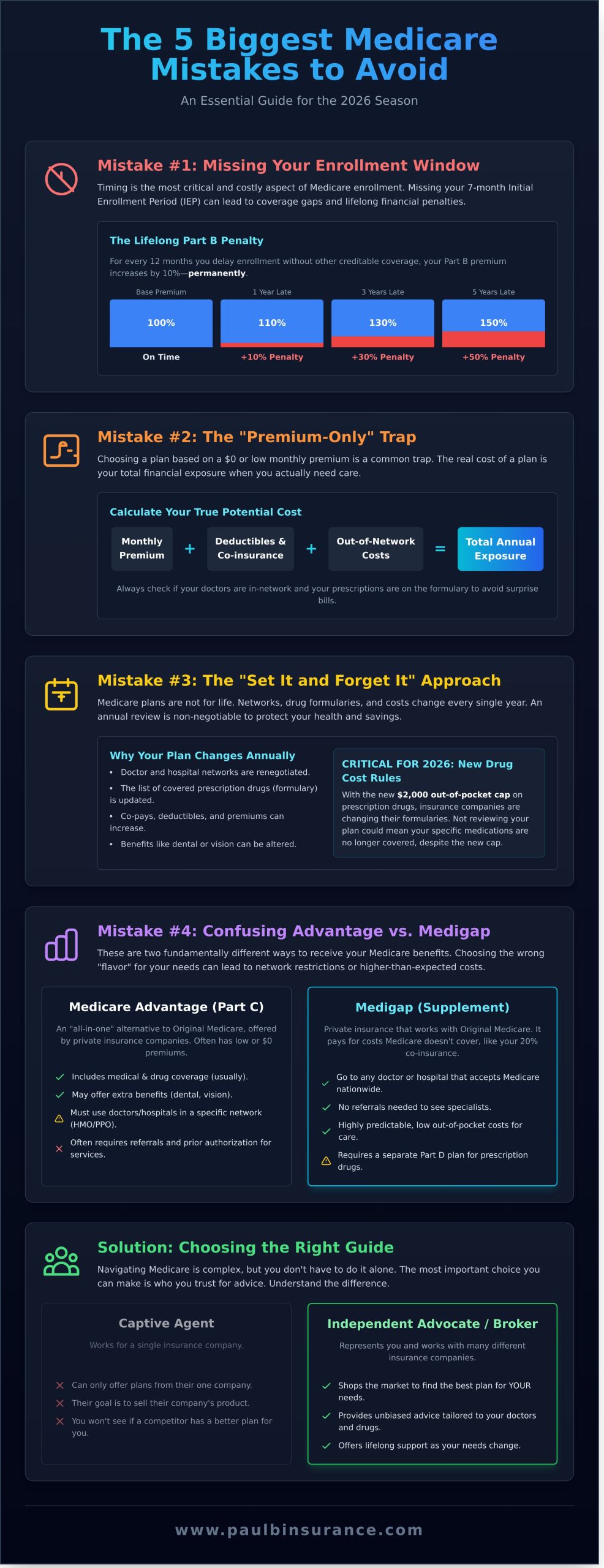
The most common myth we debunk is the “Age 65” rule. Many folks believe they can simply wait until they fully retire to look at Medicare. This is a dangerous gamble. Unless you have “credible coverage” from an employer with 20 or more employees, you must take action when you turn 65. If you don’t, you face the Part B late enrollment penalty. This is a 10% surcharge on your monthly premium for every full 12-month period you were eligible but didn’t sign up. Since this penalty stays with you for life, a three-year delay could mean paying 30% more for your doctor visits forever.
Understanding Your Initial Enrollment Period (IEP)
Your IEP is a strict 7-month window. It includes the 3 months before you turn 65, your birth month, and the 3 months after. We help our clients circle these dates in red. If you miss this window without having a Special Enrollment Period (SEP) through a large employer, you’re stuck waiting for the General Enrollment Period, which can leave you with months of no coverage. We often see people rely on COBRA after leaving a job at 65. This is a $1,000 mistake because Medicare doesn’t view COBRA as credible coverage for Part B. You can read more about these Biggest Medicare Enrollment Mistakes to see how easily these dates slip by.
The Part D Trap in 2026
The year 2026 has brought massive changes to how we handle prescriptions. Thanks to recent legislation, there’s now a $2,000 cap on out-of-pocket drug costs. While this is great news, it has caused many insurance companies to change their “Formularies” or drug lists. A plan that covered your heart medication last year might not cover it the same way now. Even if you don’t take any pills today, skipping Medicare Part D is a major risk. Medicare charges a penalty of 1% of the national base beneficiary premium for every month you go without coverage. These cents add up to hundreds of dollars over time. We recommend finding a $0 or low-premium plan just to “park” your coverage and avoid these future surcharges.
Finally, don’t ignore the Medigap Open Enrollment Period. This is a one-time, 6-month window that starts the month you’re 65 and enrolled in Part B. During this time, insurance companies cannot look at your health history or charge you more for pre-existing conditions. Once this window shuts, you might be locked out of Supplement plans forever if your health changes. We want to help you move from confusion to confidence by getting these dates right the first time. If you’re feeling overwhelmed by the dates, you can schedule a quick call with us to verify your specific deadlines.
Advantage vs. Supplement: Choosing the Wrong “Flavor” of Medicare
We often see folks get lured in by the flashy “zero dollar” premium advertisements they see on television every fall. It is one of the most common traps we encounter. When you ask, “What are the biggest mistakes people make with Medicare?” choosing a plan based solely on the monthly bill is right at the top of the list. We want you to look at your total financial exposure instead of just the sticker price. In 2026, the maximum out-of-pocket limit for Medicare Advantage plans can reach as high as $9,350 for in-network services. That is a significant amount of “what if” money you need to keep tucked away in a savings account just in case a health crisis hits.
Medicare Advantage is essentially an all-in-one bundle managed by private insurance companies. It feels simple at first, but it comes with specific strings attached. On the other hand, a Medigap plan offers a fixed cost path. You pay a higher premium upfront, but your medical bills are almost entirely covered by the plan. We find that many seniors prefer the peace of mind that comes with knowing exactly what their budget looks like every single month. Understanding what are the biggest mistakes people make with Medicare helps us guide you toward a choice that protects your savings for the long haul.
There is also a hidden danger that many people don’t realize until it’s too late. If you start with an Advantage plan and decide you want to switch to Medigap later in life, you might be stuck. In 46 states, insurance companies are allowed to use medical underwriting to look at your health history after your initial enrollment period ends. If you have developed a chronic condition like diabetes or heart disease by age 72, you could be denied a Medigap policy entirely. We want to help you get it right the first time so you aren’t locked out of the coverage you need when your health actually requires it.
The Network Trap in Medicare Advantage
Our Medicare Advantage Guide explains that these plans rely on specific networks. HMOs usually require you to stay within a strict list of providers, while PPOs offer a bit more flexibility at a higher cost. A major mistake is assuming your specialist will stay in-network forever. In 2025, data showed that 12 percent of providers shifted networks mid-year. We always recommend verifying your specific doctors through the plan’s 2026 provider directory before you sign anything.
The Underestimated Value of Medigap
A Medigap plan, specifically Plan G, remains the gold standard for those who travel. If a doctor accepts Medicare, they accept your Medigap plan; there are no networks to worry about. Just remember that Medigap does not include drug coverage. You will need a separate Part D plan to avoid late enrollment penalties. This setup offers incredible freedom for the 35 percent of seniors who travel across state lines to visit family or vacation in 2026.
The “Set It and Forget It” Trap: Why Annual Reviews are Non-Negotiable
Many seniors believe that once they find a plan, their work is finished. This is one of the most expensive assumptions you can make. If you’ve held the same Medicare Advantage or Part D plan for 5 years without a thorough check, you’re likely overpaying for coverage that no longer fits your life. Plans evolve, networks shift, and what worked for you in 2021 is almost certainly outdated today.
Every September, your current provider sends a document called the Annual Notice of Change (ANOC). We’ve seen many clients toss this in the trash, thinking it’s just more junk mail. It isn’t. This letter outlines exactly how your premiums, co-pays, and drug lists will change on January 1. When people ask us, “What are the biggest mistakes people make with Medicare?” our answer always starts with ignoring this vital document. Plans change their rules every single year; your favorite doctor might leave the network, or a medication you rely on could jump to a higher cost tier overnight.
Even with great medical coverage, there are still significant gaps to consider. Basic Medicare still doesn’t cover routine cleanings, fillings, or major procedures. To protect your savings and your health, you might still need separate dental insurance to handle those specific costs that your main plan leaves behind.
The 2026 Drug Coverage Revolution
This year marks a massive shift in how you pay for prescriptions. As of January 1, 2026, the Inflation Reduction Act has officially capped all out-of-pocket drug costs at $2,000 for the year. The confusing “Donut Hole” phase has finally been eliminated, which is a huge win for your wallet. However, don’t let this new safety net make you complacent. While your total costs are capped, insurance companies are restructuring their plans to stay profitable. They might move your local pharmacy out of “preferred” status, which could significantly increase your co-pays before you even hit that $2,000 limit. We help you look at these fine details so you don’t face surprises at the pharmacy counter.
The Annual Enrollment Period (AEP) Opportunity
The window from October 15 to December 7 is your annual “Medicare Tune-up.” It’s the only time most people can switch plans without a special life event. One of the biggest mistakes people make with Medicare is assuming their health will stay exactly the same. If you’ve received a new diagnosis or a new prescription in the last 12 months, your current plan might no longer be the most cost-effective option. We take the stress out of this window by comparing every available plan against your specific needs. Our goal is to move you from confusion to confidence by ensuring your coverage is locked in at the best possible price for the coming year.
Don’t let your coverage become outdated while you aren’t looking. We are here to guide you through these changes with a simple, pressure-free review of your current benefits. Schedule a call with our team today to ensure your plan still works for you.
From Confusion to Confidence: How to Navigate Medicare Safely
We’ve seen it hundreds of times. People walk into our office feeling like they’re drowning in a sea of glossy mailers and confusing television ads. When you ask, “What are the biggest mistakes people make with Medicare?”, the answer almost always starts with who you choose to listen to. The absolute biggest error is trusting your future to a captive agent. These agents work for one specific insurance company. They can’t tell you if a competitor has a better price or if your primary doctor just left their network for the 2026 plan year. They’re paid to sell one brand, even if it doesn’t fit your needs or your budget.
You deserve a partner who looks at the whole picture. We believe that Medicare shouldn’t feel like a high-stakes gamble. It should feel like a secure foundation for your retirement. Our mission is to strip away the jargon and replace it with simple, actionable facts. We want you to feel empowered, not pressured. You should never feel rushed into a decision that affects your health and your wallet for years to come. We take the time to ensure you understand every moving part of your coverage.
Independent Broker vs. Captive Agent
We work differently because we work for you. As independent brokers, we have access to over 40 different carriers. We don’t have a boss at a big insurance firm telling us which plan to push this month. Our only goal is finding the specific plan that fits your unique life. In 2026, with the $2,000 out-of-pocket cap on prescriptions now fully active, matching your medications to the right formulary is more critical than ever. We’ve seen cost differences of 20% or more between plans for the exact same set of drugs. We do all this research for you. Best of all, our services come at no cost to you. The insurance companies pay us directly, so you get expert guidance for free.
To ensure you stay protected, we follow a strict 5-step process designed to eliminate errors:
- Health Audit: We listen to your specific health history and budget goals.
- Medication Review: We check your prescriptions against 2026 formularies to ensure you benefit from the $2,000 spending cap.
- Provider Verification: We confirm your preferred doctors and specialists are in-network for the coming year.
- Side-by-Side Comparison: We compare dozens of plans to find the lowest total out-of-pocket cost.
- Continuous Support: We handle the enrollment and stay by your side every year as plan benefits change.
Your Next Steps to Peace of Mind
Don’t let the fear of making a wrong turn keep you from getting the benefits you’ve earned. When considering “What are the biggest mistakes people make with Medicare?”, remember that procrastination is often at the top of the list. Missing an enrollment window can lead to lifetime penalties that increase your monthly Part B premium by 10% for every year you waited. We don’t want that for you. We want you to enjoy your 2026 with the confidence that your healthcare is handled.
Start by gathering your current medication list and the names of your doctors. Having this data ready makes our conversation seamless and productive. We invite you to Schedule a Call with Paul for a genuine, no-pressure consultation. We’re here to protect your health and your wallet. Let us help you move from a state of total confusion to a place of absolute clarity. You’ve worked hard for your retirement, and we’re here to make sure your Medicare works just as hard for you.
Take Control of Your 2026 Medicare Journey
Navigating the 2026 Medicare landscape doesn’t have to feel like a maze. We’ve seen how easy it is to trip over missed deadlines or get stuck in a plan that no longer fits your budget. Many seniors ask us, what are the biggest mistakes people make with Medicare? Usually, it comes down to missing the 7 month Initial Enrollment window or ignoring the Annual Enrollment Period. These small oversights lead to permanent late enrollment penalties that stick with you for life.
We’re here to make sure that doesn’t happen. As The Modern Medicare Agency, an independent brokerage with access to over 40 insurance carriers, we provide unbiased guidance tailored to your health. We’re licensed in 34 states and offer year-round support to ensure you’re never left searching for answers alone. We simplify the jargon so you know exactly how your coverage works. You deserve a partner who stays by your side long after the paperwork is finished.
Schedule a Call With Paul – Move From Confusion to Confidence Today
You’ve worked hard for your retirement, and we’re ready to help you protect it. Let’s get your questions answered today.
Frequently Asked Questions
Is there a penalty if I don’t sign up for Medicare at 65?
Yes, you will face permanent financial penalties if you miss your Initial Enrollment Period without having “creditable” coverage from an employer. For Part B, the penalty is a 10% increase in your monthly premium for every full 12 month period you could have had it but didn’t. In 2026, these costs add up quickly and stay with you for life. We help you track these dates so you can avoid one of the biggest mistakes people make with Medicare.
Can I change my Medicare plan if I make a mistake?
You can certainly change your coverage if your current plan no longer fits your needs. Every year during the Annual Enrollment Period from October 15 to December 7, you can switch between Advantage plans or move back to Original Medicare. There’s also the Medicare Advantage Open Enrollment Period from January 1 to March 31. We find that 33% of beneficiaries review their plans annually to ensure they still have the right protection; it’s a key way to fix what are the biggest mistakes people make with Medicare.
Does Medicare cover dental, vision, and hearing?
Original Medicare doesn’t cover most routine dental, vision, or hearing services like cleanings, glasses, or hearing aids. However, 98% of Medicare Advantage plans in 2026 include these extra benefits as part of their package. If you stay with Original Medicare, we can help you find a separate stand-alone policy. This ensures you aren’t paying $500 or more out of pocket for a single basic dental crown or new prescription lenses.
What is the difference between a Medicare broker and an agent?
A Medicare broker is an independent expert who represents multiple insurance companies, while a captive agent works for just one specific provider. We act as brokers because it allows us to compare 15 or more different carriers to find your best fit. This unbiased approach is vital because no single company is perfect for everyone. Captive agents are limited to their own products, which often means you lose out on better pricing or specific doctor networks.
What is the “Donut Hole” and does it still exist in 2026?
The “Donut Hole” or coverage gap no longer exists in 2026. Thanks to the Inflation Reduction Act, the payment structure changed significantly on January 1, 2025. Now, you have a hard $2,000 out of pocket cap on your prescription drug costs for the entire year. Once you hit that $2,000 limit, you pay $0 for your covered medications. This change provides immense peace of mind and simplifies your yearly healthcare budgeting.
How much does it cost to use a Medicare broker?
It costs you exactly $0 to use our services. We’re compensated directly by the insurance companies, and your premium remains the same whether you use a broker or sign up alone. In fact, 0% of our clients pay a consultation fee for our guidance. We provide this expert help for free because we believe every senior deserves a clear path from confusion to confidence without a price tag attached to the advice.
What happens if my doctor leaves my Medicare Advantage network?
If your doctor leaves your Medicare Advantage network, you generally have to wait until the next enrollment window to switch plans. You can make a change during the Annual Enrollment Period starting October 15 or the Open Enrollment Period that begins January 1. Roughly 8% of providers shift networks annually, so we always double check your specific doctors before you sign up. We want to ensure your trusted relationships with your physicians remain uninterrupted and secure.
Do I need to sign up for Medicare if I am still working?
You might not need to sign up at 65 if your employer has 20 or more employees and the coverage is considered “primary.” If your company has fewer than 20 workers, Medicare usually becomes your primary insurance, making enrollment mandatory to avoid gaps. We recommend checking your specific group health plan details by July of your 65th year. This helps you determine if delaying Part B is a safe move or a costly error.