



Last Tuesday, a retiree named Martha received four different calls before lunch, each one claiming her 2026 Medicare benefits would be cancelled if she didn’t “verify” her ID number immediately. It’s exhausting to feel like your own phone is a minefield. We know how stressful it is to worry that one missed call might jeopardize your health coverage, which is why learning how to avoid medicare scams by phone is more important than ever. You deserve to feel safe and in control of your private information without the constant harassment of robocalls.
We’re here to help you move from confusion to confidence by providing the simple, unbiased rules you need to identify a fraudster in seconds. Our promise is to give you the tools to ensure your hard earned benefits remain secure throughout 2026. In this guide, we’ll walk through the specific red flags to watch for and give you a clear, logical plan to stop the scammers in their tracks once and for all. You’ll finally have the peace of mind that comes with knowing your identity is protected and your coverage is exactly where it should be.
Key Takeaways
- We explain the strict communication rules used by Medicare so you can instantly recognize why an unsolicited call is a major red flag.
- Discover how to spot the newest 2026 tactics, such as the “plastic card” scam and fraudulent offers regarding the new $2,000 drug cost cap.
- Learn the essential “Hang Up and Call Back” strategy to master how to avoid medicare scams by phone and keep your private information secure.
- Find out exactly how to report suspicious activity to the proper authorities to gain peace of mind and stop scammers in their tracks.
- See how a trusted independent broker acts as your personal shield, guiding you from confusion to confidence amidst the 2026 marketing noise.
Understanding the Surge in Medicare Phone Scams in 2026
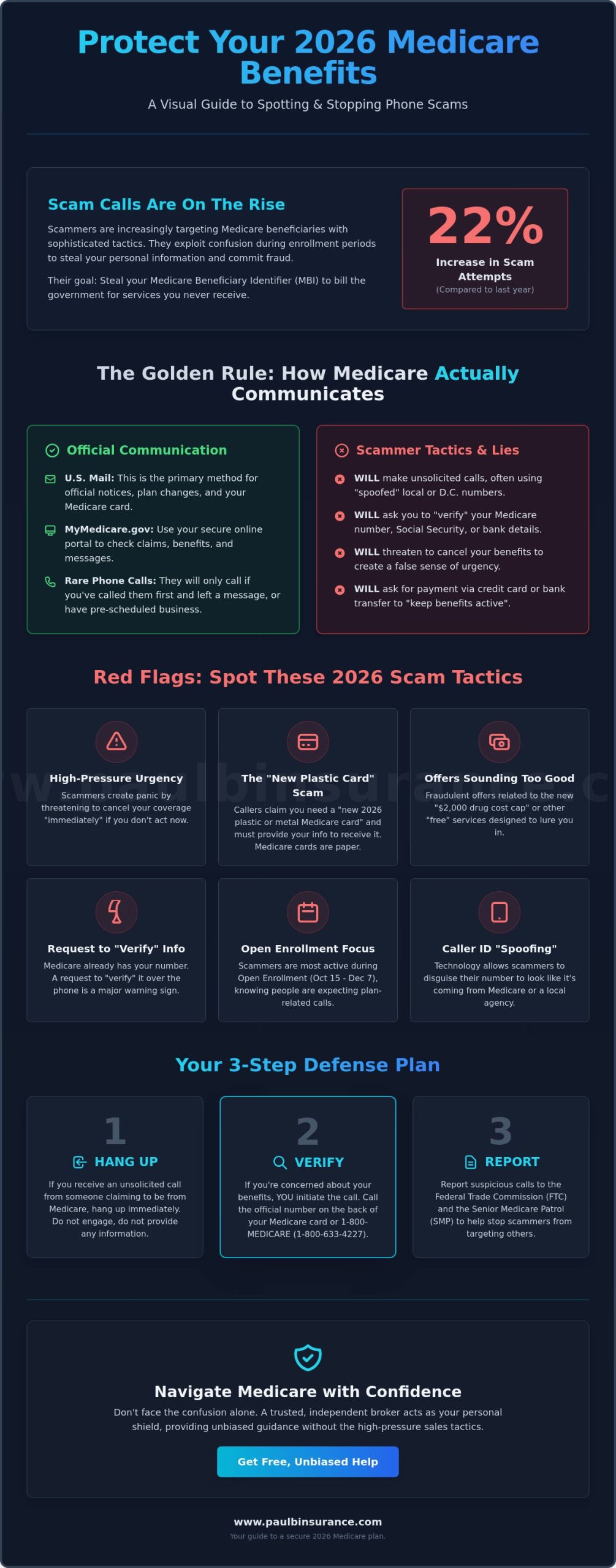
Your phone rings again. It’s the tenth time today. We know how exhausting this feels. In 2026, the number of unsolicited Medicare related calls has hit a record high, with industry reports showing a 22 percent increase in scam attempts compared to last year. Learning how to avoid medicare scams by phone starts with understanding why your number is on their list. Scammers buy your information from lead generators who scrape public records or trick people into filling out “free gift” forms online. They aren’t just guessing; they know you are approaching an age where Medicare decisions are vital.
These callers are experts at psychological manipulation. They use a false sense of urgency to make you feel like your benefits are at risk. You might hear that your “new 2026 plastic card” is waiting or that your current coverage will be canceled if you don’t verify your identity immediately. Scammers are constantly finding new ways to commit Medicare fraud, and your phone is their favorite tool. We want to help you move from confusion to confidence. We simplify the jargon so you know exactly how it works and how to protect your privacy.
Why Scammers Target Seniors During Enrollment
The Open Enrollment Period, which runs from October 15 to December 7, is the busiest time for bad actors. They know the system is complex. They use the “crazy maze of the medicare system” to their advantage, hoping you will be too overwhelmed to double check their claims. Their ultimate goal is to steal your Medicare Beneficiary Identifier (MBI). With this number, they can bill the government for services you never received, which can lead to massive headaches for you later. If you are feeling pressured to make a quick choice, remember that an unbiased expert will never rush you. You can always review our Medicare Advantage guide to see how real plans actually function without the high pressure sales tactics.
The Emotional Cost of Phone Harassment
The constant “blowing up” of your phone causes real stress and anxiety. It’s not just annoying; it’s a violation of your peace of mind. Scammers use “spoofing” technology to make their caller ID look like it’s coming from a local area code or even a government office in Washington, D.C. This makes it hard to know who to trust. It is okay, and we actually recommend it, to be skeptical of every unsolicited call you get. We are here to act as your dedicated advocate and educator. Our mission is to serve and protect you from these costly enrollment mistakes. We believe in a process where you are never pressured and never rushed. Our goal is to teach you how to avoid medicare scams by phone so you can reclaim your quiet afternoons and feel secure in your coverage.
The Golden Rule: How Medicare Actually Communicates With You
Understanding the strict protocols used by the Centers for Medicare & Medicaid Services (CMS) is your best defense. In 2026, the federal government still relies on a predictable, slow moving system for a reason; it protects your identity. We want you to remember one simple truth. Medicare will almost never call you out of the blue. If you receive an unexpected call from someone claiming to be a “government health representative,” your internal alarm should go off immediately.
Learning how to avoid medicare scams by phone starts with the Call-Back rule. Official agencies only call you if you’ve left a message or have an ongoing piece of business that requires a follow-up. They already have your information on file. They won’t call to “verify” your social security number or your bank details because they already have them. Most importantly, a genuine government employee will never ask you for money or a credit card number over the phone. If a caller asks for a payment to “keep your benefits active,” hang up. It’s a scam every single time.
We see many seniors feel pressured by these aggressive callers. Please know that your benefits are secure. Official communication happens through two primary channels. First is the US Mail, which remains the gold standard for official notices. Second is your secure “MyMedicare” online portal. If it’s not in your mailbox or your secure portal, it’s likely not real.
Who Will (and Won’t) Call You Unprompted
The Social Security Administration (SSA) is very conservative with phone calls. They typically only reach out if you have an active, open claim or if you’ve scheduled an appointment. Your current insurance carrier might call for legitimate reasons, such as a yearly wellness check-in or to discuss your Medicare Part D prescription drug coverage. However, independent brokers only call if you’ve explicitly requested a consultation. If someone calls claiming to be a “Medicare specialist” but you don’t recognize their name, they don’t have permission to be on the line with you.
The Paper Trail Priority
In 2026, the paper trail is still your greatest ally. Any significant changes to your medicare eligibility or your monthly premiums will arrive via an official letter on government letterhead. Before you take any action based on a phone call, wait for the letter. Fraudsters often use high-pressure tactics to make you act before you can think. Knowing these warning signs of a Medicare scam helps you stay one step ahead of fraudsters. We always tell our clients to “file and verify” rather than “act and regret.” If you get a suspicious call, write down the caller’s name and then call the official Medicare line at 1-800-MEDICARE to verify the claim. If you’re feeling overwhelmed by the options, we can help you move from confusion to confidence. You can schedule a call with us to review your current plan and ensure you’re fully protected.
Red Flags: Spotting the Most Common 2026 Phone Scam Tactics
We know how stressful it feels when your phone rings and a caller claims there’s a problem with your benefits. In 2026, scammers are using more sophisticated scripts than ever to catch you off guard. One of the most frequent lies we see is the “New Plastic Card” scam. A caller might tell you that your traditional paper card is expiring and you need to pay a fee or “verify” your Social Security number to get the new chip-embedded plastic version. This is a scam. Medicare hasn’t replaced paper cards with plastic ones, and they’ll never call you out of the blue to demand money for a card.
Another common trick involves threats of benefit cancellation. If someone calls and says your coverage will end today unless you provide your Medicare number, hang up immediately. Real Medicare officials don’t use high-pressure tactics or threaten people. They also don’t call to offer “free” medical supplies like back braces or DNA screening kits in exchange for your personal information. These are often schemes to bill Medicare for thousands of dollars in your name. Knowing these red flags is the first step in learning how to avoid medicare scams by phone.
- The Plastic Card Lie: Medicare is not issuing mandatory plastic cards in 2026.
- The Cancellation Threat: Your benefits won’t be canceled over a surprise phone call.
- The “Free” Equipment: DNA kits and braces offered over the phone are almost always fraudulent.
The 2026 Part D Scam Hook
The 2026 implementation of the $2,000 out-of-pocket cap for prescription drugs has given scammers a new “hook” to exploit. They might call claiming you’re owed a “prescription rebate” or need to “re-enroll” to benefit from the new cost protections. We want you to know that these medicare part d changes are applied automatically by your insurance company. You don’t need to do anything over the phone to qualify for the $2,000 limit. If someone asks for your bank details to “deposit your refund,” it’s a scam.
Aggressive Sales Tactics and Fake ‘Official’ Agents
You might encounter “captive” agents who only represent one company and pressure you to switch plans immediately. They often use “Limited Time Offers” that don’t exist under Medicare rules to create a false sense of urgency. We believe you deserve a patient, unbiased guide who looks at all your options. A legitimate professional will never rush you. To stay safe, always ask for the caller’s National Producer Number (NPN). Every licensed agent has this unique 10-digit number. If they refuse to provide it or seem defensive, they aren’t someone you should trust. Understanding these tactics is essential for anyone looking for how to avoid medicare scams by phone.
What to Do If You Receive a Suspicious Medicare Call
It’s normal to feel a bit shaken when a stranger calls and starts asking about your private medical details. We want you to know that your peace of mind is the priority. If a call feels “off,” you have the power to end the conversation immediately. Learning how to avoid medicare scams by phone is about more than just identifying the red flags; it is about having a plan of action for when the phone rings. If you feel pressured, just hang up.
Immediate Steps for Protection
Your first line of defense is simple. Stop talking and hang up. Don’t press any buttons to “be removed from the list,” as this often alerts scammers that your number is active. Once the line is clear, take these three steps:
- Step 1: Walk away from the phone for a moment to clear your head. You haven’t done anything wrong.
- Step 2: Write down the time of the call and the number that appeared on your caller ID. This data helps authorities track patterns.
- Step 3: Call the official Medicare line at 1-800-633-4227 or reach out to us directly. We can verify if there are actually any issues with your account.
After you’ve secured your line, use your phone’s “Block Caller” feature. In 2026, most smartphones and digital landline services have advanced filtering that can stop these repeat offenders from reaching you again. We also suggest telling a family member or a trusted friend about the incident. Sharing the experience takes away the scammer’s power and helps protect your loved ones from the same trick. This is a vital part of knowing how to avoid medicare scams by phone and keeping your community safe.
Recovery: If You Already Shared Information
If you realize you shared your Medicare Beneficiary Identifier (MBI) or Social Security number, don’t panic. We are here to help you fix it. You should call 1-800-MEDICARE right away to report the compromise. They can terminate your current MBI and mail you a new card with a different number. This process usually takes about 14 days to complete.
You must also stay vigilant by checking your “Explanation of Benefits” (EOB) statements every month. In 2026, scammers often try to bill for durable medical equipment or genetic tests that you never received. If you see a claim for a doctor you didn’t visit, report it immediately. You can also file a formal report through the Federal Trade Commission website. Taking these steps moves you from a place of confusion to a place of confidence.
Finding Confidence and Safety With a Trusted Medicare Broker
A scammer calls you out of the blue with a manufactured sense of urgency. They often use high-pressure tactics to try and grab your Social Security number or sensitive bank details. An independent medicare broker works in the opposite way. We only speak with you when you invite us into the conversation. Our primary role is to act as a protective shield between you and the aggressive marketing noise that often peaks during the enrollment seasons.
Learning how to avoid medicare scams by phone is the first step toward total peace of mind. It’s about having a professional you can call to verify every piece of information you receive. By the year 2026, the Medicare landscape has introduced several changes, including the established $2,000 out-of-pocket cap on prescription drugs. We help you filter out the noise so you can focus on your health. You are always in control of your Medicare journey. We provide the map and the expert guidance, but you remain in the driver’s seat.
The Advantage of Unbiased Guidance
We compare over 40 different carriers to find the specific plan that fits your lifestyle and budget. Unlike agents who work for a single insurance company, we aren’t tied to one brand. We translate the complex industry jargon into plain English. Our process focuses on three core pillars:
- Broad Comparison: We look at dozens of plans to find your best fit.
- Clarity: We explain 2026 benefit changes in simple terms.
- Patience: Our “Never Rushed” promise means we work at your pace.
If you’re looking at plan options for 2026, we explain exactly how your benefits work without the confusing sales talk. We won’t stop until you feel completely secure and confident in your coverage. We take the time to ensure you understand your premiums and co-pays before you ever sign a document.
Schedule a Safety Review
If you’ve received a suspicious offer or a “limited time” deal over the phone, don’t feel pressured to say yes. We offer a second opinion to help you spot red flags and avoid enrollment mistakes. Let us review your current 2026 coverage to ensure it still meets your needs and protects your finances. This simple check-up provides the peace of mind you deserve.
Our partnership lasts all year, not just during enrollment. We’re here to answer questions whenever they arise, ensuring you never have to face the system alone. Our goal is to show you how to avoid medicare scams by phone while ensuring you have the best possible coverage. Schedule a Call With Paul today for a scam-free Medicare experience.
Take Control of Your Medicare Security Today
Navigating the complex world of healthcare in 2026 shouldn’t feel like walking through a minefield. We’ve seen how scammers use increasingly clever tactics to target your private information; however, you now have the tools to stay safe. Remember that Medicare won’t call you out of the blue to sell a plan or demand your social security number. Knowing how to avoid medicare scams by phone is your best defense against these fraudulent attempts.
You don’t have to face these high-pressure callers alone. We provide a shield of protection for seniors by offering clear, independent advice tailored to your life. We compare more than 40 carriers to find the right fit for you and serve as a trusted advocate in over 34 states. We’re never rushed and never pressured because our goal is your security. We’ll help you steer clear of enrollment mistakes and keep your personal data where it belongs.
Let’s replace that confusion with a solid plan. Schedule a Call With Paul for Unbiased, Scam-Free Medicare Guidance. We’re ready to help you move forward with absolute confidence.
Frequently Asked Questions
Does Medicare ever call you to offer a new plastic card?
No, Medicare will never call you to offer a new plastic card or a “chip-enhanced” version. Your official Medicare card is made of paper, and the government hasn’t issued a plastic alternative as of January 2026. Scammers often use this trick to verify your identity or charge a fake fee. If someone calls claiming your card is expiring, hang up immediately; it’s a clear sign of a scam.
Can a Medicare representative ask for my Social Security number over the phone?
A legitimate Medicare representative won’t ask for your Social Security number over the phone because they already have your information on file. While they might ask you to verify your name or address if you called them first, they’ll never initiate a call to demand your SSN. Protecting your personal data is the best way to learn how to avoid medicare scams by phone and keep your identity safe.
What should I do if my caller ID says ‘Government’ or ‘Medicare’?
You should treat any unexpected call from “Government” or “Medicare” with extreme caution because scammers use technology to “spoof” these names on your caller ID. According to the FCC, roughly 25% of all scam calls in 2025 used some form of ID masking to look official. If you didn’t schedule a call, let it go to voicemail. We recommend calling the official 1-800-MEDICARE line yourself to see if there’s an actual issue.
Is it a scam if someone calls to tell me my Medicare benefits are being canceled?
Yes, it’s a scam if someone calls out of the blue claiming your benefits are being canceled or suspended. Medicare sends official notifications about coverage changes through the U.S. Mail, never via a sudden phone call. These callers often create a false sense of urgency to trick you into giving up your Medicare number. Stay calm and remember that your benefits won’t just vanish over a single phone conversation.
How can I tell if a Medicare agent is legitimate or a scammer?
You can tell an agent is legitimate if they’re licensed in your state and don’t use high-pressure sales tactics. A real professional, like an independent broker, will provide their National Producer Number (NPN) and won’t rush your decision. Scammers often refuse to give verifiable contact information or try to force you into a plan immediately. We believe in taking the time to ensure you feel confident and protected throughout the entire process.
Does Medicare call to ask about the new 2026 Part D prescription drug changes?
Medicare won’t call you to discuss the 2026 Part D changes, such as the $2,000 annual out-of-pocket spending cap that took full effect this year. While these changes are significant for your budget, the government doesn’t provide personalized phone consultations about them. If someone calls claiming they need to “update your file” for these new 2026 regulations, they’re likely trying to steal your information or switch your plan without your consent.
Will Medicare ever ask for my bank account information to give me a refund?
No, Medicare will never ask for your bank account details or credit card number over the phone to process a refund. Any legitimate rebates or adjustments are handled through your monthly Social Security check or via official mail. If a caller asks for your banking routing number to “deposit a bonus,” hang up. This is a common tactic used to drain accounts rather than fill them. We want to ensure your hard-earned savings remain safe.
What is the official phone number for Medicare to verify a call?
The official phone number for Medicare is 1-800-633-4227, and it’s available 24 hours a day. If you’re ever unsure about a call you’ve received, hang up and dial this number directly. Knowing this official contact is a key step in learning how to avoid medicare scams by phone. It gives you the power to verify your status without risking your personal security. We always suggest keeping this number near your phone for quick access.

Article by
Paul Barrett
Paul Barrett, CMIP is the founder of The Modern Medicare Agency, an independent Medicare-only brokerage based in Melville, NY. With 18 years of Medicare-exclusive experience, a CMIP designation, and more than 5,000 clients served across 37 states, Paul is one of the most credentialed independent Medicare specialists on Long Island — and one of the most direct.
He represents 40+ carriers with no quotas and no allegiances, which means his recommendations are based entirely on what fits each client's specific situation. He is the author of Medicare Mastery Unlocked and host of the Wise Guys Retirement Talk podcast. His content is grounded in primary sources, real carrier intelligence, and 18 years of watching what happens when people get Medicare right — and when they don't.
📞 631-358-5793 | paulbinsurance.com